How States Find Montana-Plated Vehicles
It's a common dream for many ATV and UTV enthusiasts: scoring a great deal on a machine and maybe, just maybe, sidestepping those pesky sales taxes and high registration fees that seem to plague so many states. Montana, with its no sales tax policy and unique permanent OHV registration, has, for years, been whispered about as a golden ticket for out-of-state buyers. But the truth is, what seems like a clever workaround often leads to significant headaches, fines, and even legal trouble, because your home state has a lot of ways to figure out if you're actually a resident or just trying to pull a fast one. This guide will peel back the layers of how states actually find Montana-plated vehicles that don't truly belong there, and what the real risks are.
The Lure of Montana Plates for Out-of-State Buyers
For years, the idea of registering an expensive ATV, UTV, or even a luxury car in Montana to avoid sales tax and annual registration fees in one's home state has circulated widely. It’s a concept that preys on the understandable frustration many people feel about the high costs of vehicle ownership. Who wouldn't want to save thousands of dollars if they thought they could do it legally?
Why the "Montana Loophole" Became Popular
Montana genuinely offers some attractive benefits for vehicle owners who are actual residents. First and foremost, Montana is one of the few states in the U.S. that does not have a general sales tax. For someone looking to buy a brand-new side-by-side that costs tens of thousands of dollars, avoiding a 6-8% sales tax can feel like hitting the jackpot. This alone can represent significant savings, making the idea of a "Montana registration" incredibly enticing.
Beyond the sales tax, Montana's approach to off-highway vehicle (OHV) registration is also unique. For ATVs and UTVs, Montana offers a [Montana's One-Time Permanent OHV Registration] option. This means you pay a registration fee once, and your machine is registered for as long as you own it. No annual renewals, no ongoing fees—just a single payment and you're done. Compare that to states where you might pay hundreds of dollars every year for registration, and you can see why the perceived "Montana loophole" gained so much traction, especially for recreational vehicles that might sit for parts of the year. The combination of no sales tax and a permanent registration fee seemed like an unbeatable proposition for many, especially those buying high-value machines.
The Core Problem: Avoiding Home State Taxes
The temptation is real: you find that perfect new Polaris RZR or Can-Am Maverick, and the thought of paying thousands in sales tax in your home state just stings. So, you hear about Montana and the idea clicks. The common strategy involves setting up a Montana Limited Liability Company (LLC) – sometimes sight unseen, sometimes through a remote service. The OHV is then titled and registered under this Montana LLC. Because the LLC is a legal entity located in Montana, the argument goes, the machine is registered in Montana, pays no sales tax, and enjoys the permanent registration benefits. When you drive it back to your home state, it has a Montana plate and registration, theoretically sidestepping your home state's taxes and fees. Many individuals believe that by using an LLC, they are creating a legitimate business reason for the Montana registration, even if the primary purpose is purely personal use and tax avoidance. However, this is where the lines get blurry and the legal risks begin to multiply.
Your home state, unlike Montana, likely has a sales tax and a use tax. While sales tax is charged at the point of purchase, use tax is essentially a sales tax on items purchased outside the state for use within the state. If you buy a machine in Montana and bring it to, say, California, which has a sales/use tax, California expects you to pay that use tax. Registering it under a Montana LLC doesn't automatically exempt you from this obligation if the machine's primary situs (where it's habitually garaged or operated) is clearly your home state. This is the fundamental disconnect that many out-of-state buyers fail to grasp, often leading them down a path of significant legal and financial peril.
How States Really Track Down Montana-Plated Vehicles
The belief that states won't notice a Montana-plated OHV that permanently resides elsewhere is a dangerous misconception. State revenue departments and law enforcement agencies are far more sophisticated than many people realize when it comes to identifying and pursuing tax evasion. They have a variety of tools and methods at their disposal, ranging from simple observations to advanced data analysis.
The Human Element: Neighbors, Dealerships, and Law Enforcement
Believe it or not, one of the most common ways states identify improperly registered vehicles is through good old-fashioned human observation. Neighbors, often annoyed by noise or simply noticing something amiss, might tip off local authorities. Imagine a shiny new side-by-side with Montana plates always parked in a suburban driveway in Arizona, never leaving the area, year after year. It stands out. People notice these things, and it's not uncommon for concerned citizens, or even disgruntled ex-spouses, to report what they perceive as suspicious activity to the local Department of Revenue or law enforcement.
Local dealerships and service shops can also play a role. When you bring your Montana-plated UTV in for service in your home state, the mechanics and service writers are typically residents of that state. They see vehicles registered out-of-state all the time, but if they see the same Montana-plated vehicle repeatedly for routine maintenance, it might raise a flag. Dealers, in particular, have an interest in fair competition and might report instances where they suspect tax evasion, as it directly impacts their sales tax collections and perceived fairness in the market. [Buying From a Montana Dealer: What They File] covers how dealers handle initial paperwork.
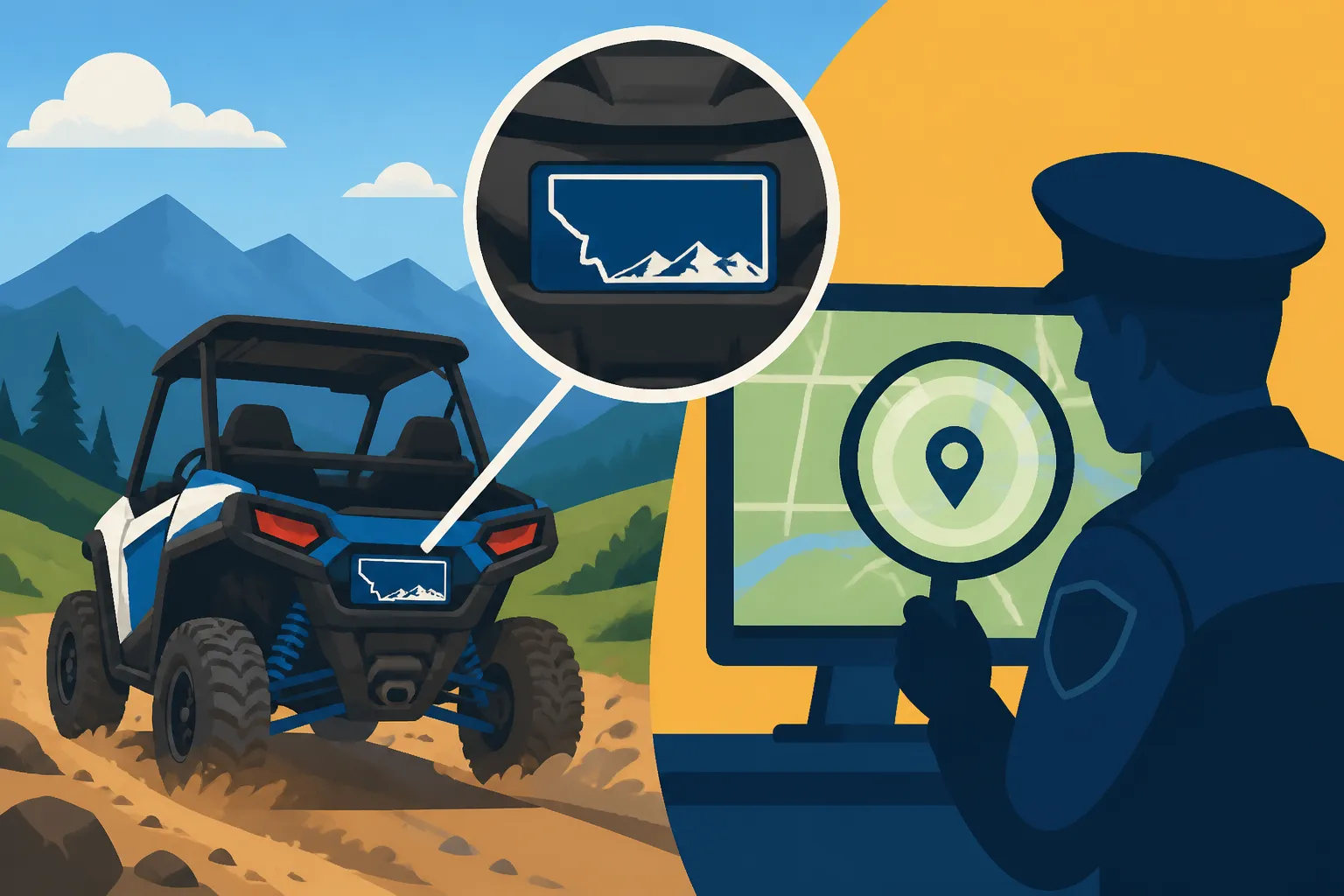
Then there's law enforcement. Local police officers, sheriff's deputies, and state troopers are trained to notice anomalies. If they pull over a vehicle for a traffic infraction and see a Montana plate, but the driver presents a driver's license from their home state and cannot articulate a legitimate reason for the out-of-state registration (like being a seasonal resident or just passing through), it can trigger a deeper inquiry. They might jot down the plate number and pass it along to the state's revenue department or tax fraud division.
Data Sharing and Digital Forensics
Beyond human observation, states have increasingly powerful digital tools to connect the dots. State Departments of Motor Vehicles (DMVs) and revenue agencies don't operate in isolated silos; they often share data with their counterparts in other states through interstate compacts and agreements. This means that if your home state's DMV has a record of you owning a vehicle, they might be able to cross-reference that with vehicle registrations in other states.
Furthermore, technology like Automatic License Plate Readers (ALPRs) are becoming ubiquitous. These cameras, mounted on police cars, toll booths, and even municipal infrastructure, scan thousands of license plates per minute, logging their location and time. If a Montana-plated OHV is consistently scanned in, say, suburban Pennsylvania over months or years, that data can easily be compiled to show a pattern of permanent residence. This information can then be flagged for investigation. How States Find Montana-Plated Vehicles and [States That Chase Montana-Plated Vehicles] delve deeper into this.
States also leverage other public and private data sources. Property tax records can show where you own a home, and utility bills confirm where you consume electricity or water. If your Montana LLC is merely a shell company, without any real business operations in Montana, and all your personal and financial ties are to another state, these discrepancies become glaringly obvious during an audit. Many states have specific anti-evasion units dedicated to identifying these types of schemes, and they are quite adept at piecing together a comprehensive picture of a vehicle's true domicile.
Vehicle Identifiers and Public Records
Every vehicle has a unique Vehicle Identification Number (VIN), and this number is tied to a wealth of information. When an OHV is purchased, financed, or insured, its VIN is recorded. Even if you try to obscure the ownership through an LLC, the VIN can often reveal the actual user's history. For example, if you finance your ATV through a bank in your home state, that bank will likely have a record of your address, and the VIN will be linked to that loan. [Where a Side-by-Side Hides Its VIN] is a related topic.
Insurance policies are another key data point. While you might try to obtain insurance through a Montana-based agent for your Montana LLC, most insurers will require the primary garaging address of the vehicle. If that address is consistently outside Montana, it raises a significant red flag for both the insurer and, potentially, state investigators who can request these records. If there's a lien on the title, the lienholder also knows the true location of the asset they have financed. [Lien Release After the Final Payment] is something to be aware of.
Beyond these, maintenance records, warranty claims, and even emissions testing (if applicable in your home state for certain vehicles) can all leave a digital breadcrumb trail back to your actual residence. These records are often shared or accessible through various databases, allowing states to cross-reference information and build a case against those attempting to evade taxes.
The Consequences and Risks of Getting Caught
The perceived savings from registering a vehicle in Montana while living elsewhere often pale in comparison to the financial and legal penalties if you get caught. What seems like a clever shortcut can turn into a very expensive and stressful ordeal.
Back Taxes, Penalties, and Interest
The most immediate and common consequence of getting caught is having to pay all the sales tax and use tax you tried to avoid, along with significant penalties and interest. For example, if your home state has an 8% sales tax on a $20,000 UTV, you're on the hook for $1,600 in back taxes. But that's just the beginning. States typically levy steep penalties for tax evasion, which can be 25%, 50%, or even 100% of the original tax amount. Plus, there's interest on the unpaid tax, compounded over the years it remained unpaid.
Let's do some quick math: $1,600 in tax + 50% penalty ($800) + a few years of interest could easily push your total bill to well over $3,000 for that $20,000 UTV. For more expensive machines or multiple vehicles, these figures can quickly escalate into five or even six figures. The financial hit often far outweighs any initial "savings" and can create a substantial unexpected burden. Many states also require you to re-register the vehicle in your home state, which means paying their registration fees from the date of purchase onward, adding another layer of cost. [Use Tax Your Home State Still Wants] provides more context here.
Legal Ramifications and Potential Felony Charges
While paying back taxes and penalties is a financial headache, the legal ramifications can be far more severe. In many states, deliberately evading taxes, especially significant amounts, can be considered a criminal offense. Depending on the specific laws of your home state and the amount of tax evaded, this could range from a misdemeanor to a felony. Felony charges carry the potential for substantial fines, probation, and even jail time.
It's crucial to understand the distinction between an honest mistake and deliberate fraud. If a state's revenue department determines that you intentionally set up a Montana LLC with the sole purpose of evading taxes in your home state, you could be facing serious charges. While setting up an LLC is a perfectly legal business practice, using it as a shell company to commit tax fraud is not. Service providers like LawDepot can help you set up an LLC with the proper legal forms, but they are not giving you tax advice or guaranteeing that using an LLC will exempt you from your home state's tax obligations. Remember, the Montana LLC is a legal entity, and its actions are attributed to its owners. [When a Montana LLC Becomes Tax Evasion] explores this topic in detail. The consequences of a criminal conviction, such as a permanent record, can affect employment, housing, and personal reputation for years to come.
Insurance Issues and Asset Forfeiture
An often-overlooked risk is how an improperly registered vehicle impacts your insurance. Many insurance policies have clauses that require vehicles to be registered and garaged at the actual primary residence of the owner. If you file a claim for theft or an accident and your insurer discovers that the vehicle was improperly registered in Montana while habitually garaged elsewhere, they could deny your claim. Imagine totaling your brand-new UTV and finding out your insurer won't pay because of a registration technicality—that's a catastrophic financial loss.
In extreme cases of deliberate and substantial tax fraud, states may even pursue asset forfeiture. This means the state could legally seize the vehicle itself as part of the penalty for tax evasion. While less common for a single ATV or UTV, it's a possibility, particularly if there are multiple vehicles involved or a clear pattern of criminal intent. The hassle of fighting these legal battles, even if you ultimately prevail, is immense and costly. It's a stark reminder that what seems like a simple way to save money can quickly unravel into a complex web of legal and financial peril.
Legitimately Using a Montana Plate for Your OHV
It's important to clarify that there are entirely legitimate reasons for a vehicle to be registered in Montana, even if the owner spends time elsewhere. The key distinction lies in genuine intent and adherence to the spirit, not just the letter, of the law.
When a Montana LLC Makes Sense (for Businesses, not Tax Evasion)
A Montana LLC can be a perfectly legitimate and useful business tool. For businesses that operate primarily in Montana, or those with mobile assets that genuinely reside there, establishing an LLC makes sound financial and operational sense. For instance, a company that provides guided ATV tours in Montana, or a ranching operation with a fleet of UTVs used exclusively on Montana property, would legitimately register and title those vehicles under a Montana LLC. In these cases, the LLC has a real business purpose, assets, and operations within the state.
An LLC can also be useful for consolidating ownership of multiple business assets, offering liability protection, and simplifying accounting. Reputable services, including resources like LawDepot, offer templates and guidance for forming an LLC and drafting crucial documents like operating agreements. However, these services are designed for legitimate business formation and do not endorse or facilitate tax evasion. They provide the legal framework for a business entity, but the responsibility for tax compliance always falls on the owner. The intent behind forming the LLC is paramount: is it a genuine business entity, or simply a legal fiction created to avoid taxes? For those considering the [The Montana LLC and Why Out-of-State Buyers Use It] route, understanding this distinction is crucial.
Establishing Legitimate Montana Residency
The most straightforward way to legitimately have a Montana-plated vehicle is to actually be a Montana resident. This means more than just having a mailing address in the state. To establish legitimate residency, you typically need to demonstrate a substantial physical presence and intent to reside in Montana. This usually includes:
- Obtaining a Montana driver's license.
- Registering to vote in Montana.
- Establishing utility accounts (electricity, water, internet) in your name at a Montana address.
- Filing Montana state income taxes (if applicable) and updating all financial records to your Montana address.
- Having a physical residence in Montana that serves as your primary domicile.
Simply purchasing a property or establishing a P.O. box in Montana while your primary life, work, and family remain in another state will not typically qualify you as a legitimate resident in the eyes of tax authorities. Many states have "30-day rules" or similar statutes regarding how long a newly acquired vehicle can be operated within their borders before requiring registration. If you are a seasonal resident, spending a significant portion of the year in Montana, then registering your OHV there is likely legitimate. However, simply visiting Montana for a week to buy a machine and then immediately returning to your home state is not. [Montana Registration for a New Resident] details the steps for those actually moving to Big Sky Country.
Understanding Your Home State's Use Tax Laws
Ultimately, the best advice for any ATV or UTV owner is to fully understand and comply with the tax and registration laws of their actual state of residence. Every state has laws regarding sales tax, use tax, and vehicle registration. If you purchase an OHV outside your home state, most states expect you to declare that purchase and pay the applicable use tax when you bring it home. This is not just about avoiding penalties; it's about contributing your fair share to the infrastructure and services of the state you live in.
Before making any decisions based on promises of tax savings, it's always wise to consult with a qualified tax professional or your home state's Department of Revenue. They can provide accurate, up-to-date information specific to your situation. Using a service like LawDepot to understand the legal structure of an LLC is one thing, but relying on anecdotes or online forums for tax advice can be a costly mistake. The peace of mind that comes with knowing your registration and tax obligations are fully compliant is invaluable, especially when compared to the stress and financial burden of an audit or legal battle. [No Sales Tax on a Montana Machine Purchase] highlights the advantages, but [Use Tax Your Home State Still Wants] serves as a critical counterpoint.
By understanding how states monitor vehicle registrations and the genuine risks involved, you can make informed decisions about your Montana ATV or UTV and avoid the potential pitfalls that have ensnared many others.
| Feature | Perceived "Benefit" of Montana LLC | Actual Risk/Consequence |
|---|---|---|
| Sales Tax | Avoid home state sales tax | Pay back taxes + penalties + interest |
| Registration Fees | Permanent, one-time fees | Re-register in home state, pay annual fees and fines |
| Legal Status | Legitimate LLC ownership | Tax evasion charges (misdemeanor/felony) |
| Insurance Coverage | Standard policy coverage | Claim denial due to improper registration |
| Asset Security | Ownership under LLC | Vehicle seizure/forfeiture in extreme cases |
| Privacy | Anonymity through LLC | Scrutiny from neighbors, law enforcement, data tracking |
Disclaimer
This article is for general informational purposes only and does not constitute professional advice. Laws, prices and regulations vary by location and change over time. Consult a qualified professional for guidance on your specific situation.