Choosing a First Quad for a Ranch Kid
Choosing a first quad or UTV for a ranch kid in Montana is a decision that often feels like balancing a teeter-totter – you want to spark joy and independence, but safety and practicality must always be weighted heaviest. It’s tough to know where to start, especially with so many options and the unique demands of ranch life. This guide will help you navigate the process, from understanding safety requirements to picking a machine that can handle both chores and adventurous trail rides.
Prioritizing Safety: Age, Size, and Engine Displacement for Young Riders
When you're looking at that first ATV or UTV for a young rider, the shiny paint and cool graphics can be distracting. But what really matters is whether the machine is appropriate for their age, physical size, and skill level. There's a big difference between a nimble 50cc youth quad and a 250cc utility machine, and putting a kid on something too powerful or too large is a recipe for trouble.
Understanding Montana's Youth Rider Rules
Montana, like many states, has specific regulations designed to keep young riders safe, especially when operating on public lands or certain roads. These rules often dictate the maximum engine size based on the rider's age, and they frequently involve safety education requirements and adult supervision. It’s not just about what feels right; it’s about what the law says is safe. For example, a 10-year-old might be restricted to a much smaller machine than a 14-year-old, even if both are competent riders. These guidelines are in place to mitigate risks, like losing control of a machine that's too heavy or fast for a child's strength and reaction time. Knowing these rules upfront can save you a lot of headache and potential fines down the road. You’ll want to review [Youth Machine Size Rules Montana Parents Ask About] as a good starting point.
Matching Machine Size and Power to Experience
Finding the sweet spot between a machine that's too small and one that's overly powerful is crucial for a positive first riding experience. A common mistake is buying a machine "to grow into," which can lead to situations where the child struggles to control the weight, reach the controls, or manage the throttle. Youth ATVs and UTVs come in a range of sizes, often categorized by engine displacement (cc) or manufacturer-recommended age ranges. For the youngest riders, typically under 10, a 50-90cc ATV with an automatic transmission and parental speed limiter is often ideal. As they get older and more experienced, moving into the 125-250cc range for ATVs, or even small youth UTVs, becomes more appropriate.
The goal is for the rider to be able to comfortably sit, reach the handlebars or steering wheel, operate the brakes, and shift their weight without feeling unstable. A good rule of thumb for ATVs is that the rider should be able to stand on the footpegs, turn the handlebars full lock to left and right, and operate the throttle and brake levers without strain. For UTVs, ensure they can comfortably reach the pedals and steering wheel while securely belted in. Consider their physical strength, coordination, and maturity, not just their age. Some kids develop faster than others, but it's always best to err on the side of caution.
Essential Safety Features to Look For
Modern youth ATVs and UTVs come equipped with several features designed to enhance safety, and these should be at the top of your checklist. A speed limiter is perhaps the most important, allowing parents to restrict the top speed of the machine until the rider gains proficiency. These are usually adjustable and can be removed as the child develops. Electric start is another practical feature, eliminating the struggle of pull-starting, which can be difficult for smaller children.
Look for a robust suspension system that can absorb bumps and provide a stable ride, especially on uneven ranch terrain. Disc brakes, rather than drum brakes, offer superior stopping power and reliability. Some youth UTVs include roll-over protection structures (ROPS) and seatbelts, which are crucial. Always ensure the machine has working headlights and taillights, even if most riding will be during daylight hours; these improve visibility to others. And of course, helmets are non-negotiable for all riders, regardless of age or experience. Don't forget proper eye protection, gloves, and sturdy boots.
Here's a quick look at common youth machine recommendations:
| Age Range (Approx.) | Engine Size (ATV) | Key Features to Look For | Ideal Use Cases |
|---|---|---|---|
| 6-11 years | 50-90cc | Speed limiter, Electric start, Automatic transmission, Low seat height | Backyard riding, Supervised trail riding, Very light chores |
| 12-15 years | 90-250cc | Adjustable speed limiter, Reverse, Comfortable suspension, Ergonomics for growing riders | Ranch chores (fencing, checking animals), Moderate trail riding, Developing skills |
| 16+ years | 250cc+ or Youth UTV | Increased power and capacity, Manual/automatic transmission options, Full utility features on UTVs | Heavier ranch work, Extensive trail exploration, Advanced skill development |
Ranch Life and Recreation: Choosing the Right Type of Machine
Montana ranch kids aren't just joyriding; they're often an integral part of daily operations. The machine you choose needs to be able to pull its weight, quite literally, while also offering the thrill and independence that makes owning an ATV or UTV so appealing. This means thinking about more than just engine size – you need to consider the machine's overall design, its capabilities, and its versatility.
Utility Versus Sport: What Fits Your Kid's Needs?
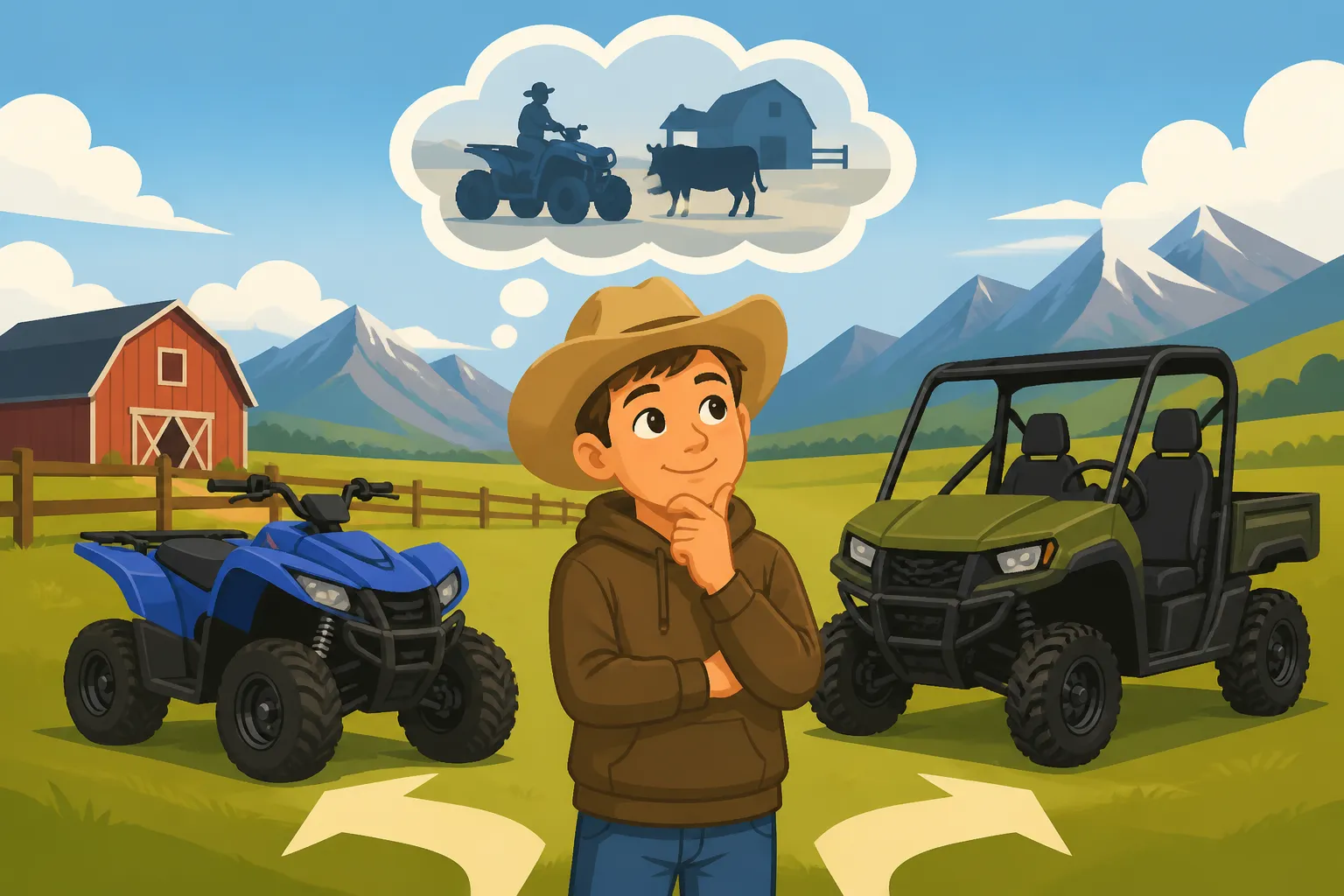
This is often the core dilemma for ranch families. Does your kid need a sport-oriented ATV for ripping around the property and hitting trails, or a more utility-focused machine that can help with daily chores?
Sport ATVs are typically lighter, have less carrying capacity, and are designed for speed, agility, and aggressive riding. They often have manual transmissions and responsive suspensions geared towards jumps and bumps. For a kid whose primary role is recreation and developing riding skills, a sport quad can be incredibly fun and teach valuable control techniques.
Utility ATVs, or youth UTVs, on the other hand, are built for work. They often feature racks for carrying gear, a hitch for towing small trailers, and a more robust, sometimes heavier, frame. UTVs offer side-by-side seating, a roll cage, and seatbelts, which some parents find reassuring from a safety standpoint. They might not be as fast or agile as a sport quad, but their ability to haul tools, feed, or even a fence post can make a huge difference on a busy ranch. Think about the balance: is the machine primarily a tool or a toy? For many Montana ranch kids, it needs to be a bit of both.
Navigating Terrain and Ranch Chores
Montana ranches encompass an incredible variety of terrain, from flat pastures to rocky hillsides, muddy creek beds, and snowy fields. The machine you choose needs to be up to the challenge. If your ranch has steep grades or rough tracks, a machine with good ground clearance and a reliable 4×4 system (for utility models) can be invaluable. Even for ATVs, a robust suspension and decent tire tread are important for maintaining traction and control.
Consider the actual chores your child will be doing. Will they need to carry fencing tools, check on livestock, haul small loads of feed, or just ride out to deliver lunch to the crew? If carrying capacity is key, look for models with sturdy front and rear racks, or a cargo bed in the case of a UTV. If towing a small trailer for water or tools is anticipated, ensure the machine has a tow hitch and sufficient towing capacity. The more specific you are about the tasks, the easier it will be to narrow down the right type of machine.
The All-Around Workhorse: Considerations for Versatility
Sometimes, the best choice is a machine that can do a bit of everything, offering a good blend of utility and recreational capability. Many manufacturers now offer "sport-utility" youth models that bridge this gap. These might have some cargo capacity or towing ability while still being nimble enough for enjoyable trail riding.
When evaluating versatility, think about the long-term. Will this machine still be useful as your child grows and their responsibilities on the ranch expand? A youth UTV, for example, might start as a fun recreational vehicle but quickly become indispensable for checking water lines, moving small equipment, or assisting with calving. Similarly, a slightly larger youth ATV (say, 150-250cc) can often handle light hauling while still providing a thrilling ride. Look for models with durable construction, easy maintenance, and readily available parts, as a machine that sees regular use on a ranch will undoubtedly experience wear and tear. Finding a good balance here ensures the investment pays off both in fun and functionality.
Montana Legalities and Practical Steps
Getting your ranch kid set up with their first ATV or UTV involves more than just picking out the right model. There are important legal and practical steps to navigate in Montana, from proper registration to ensuring they meet safety education requirements. Skipping these steps can lead to unnecessary headaches or even fines, detracting from the joy of their new machine.
Registering a Youth Machine in Montana
Just like any other off-highway vehicle (OHV) in Montana, a youth ATV or UTV needs to be properly registered if it's going to be used anywhere beyond your own private, deeded land. This includes riding on public trails, designated OHV areas, or even crossing certain county roads. Montana offers a unique "permanent" registration option for OHVs, which means you pay a one-time fee, and the registration doesn't need annual renewal. This is a huge convenience for ranch families.
The registration process typically involves visiting your local county treasurer's office. You'll need proof of ownership, such as a title or a bill of sale, and possibly proof of identification. It's crucial that the machine is registered in the appropriate name, often a parent's, as younger children cannot legally own property in the same way. The treasurer's office will issue you a registration decal that needs to be prominently displayed on the machine. This step is non-negotiable for legal riding and demonstrates your commitment to responsible ownership. Make sure to understand [Montana County Treasurer OHV Registration] before you head in.
Safety Education and Supervision Requirements
Montana takes youth OHV safety seriously, and for good reason. Riding these machines comes with inherent risks, and proper training can significantly reduce the chance of accidents. For children aged 12 to 16, Montana law requires them to complete a certified OHV safety education course if they operate a machine on public land. This course teaches crucial skills like throttle control, braking techniques, hazard avoidance, and responsible riding etiquette. Even if your child isn't legally required to take the course yet, it's highly recommended for any first-time rider. Many courses are available online and are tailored for different age groups.
Beyond formal education, adult supervision is paramount, especially for younger or less experienced riders. Even after completing a safety course, a child's judgment and reaction time are still developing. Always ensure a responsible adult is present and actively monitoring their riding, particularly when they are learning new skills or navigating unfamiliar terrain. Setting clear rules about where and how they can ride, and enforcing those rules consistently, instills good habits and keeps everyone safer. Consider this part of their ranch education, learning responsibility and judgment.
Important Paperwork for Your First Purchase
Whether you're buying a brand-new youth machine from a dealer or a used one from a private seller, having the correct paperwork is essential. For a new machine, the dealer will typically provide the manufacturer's statement of origin (MSO) or certificate of origin (MCO), which you'll need to title and register the machine. They often handle much of the initial paperwork for you, which simplifies the process.
When buying a used machine from a private party, you'll need a properly filled-out bill of sale. This document serves as your proof of purchase and is critical for transferring ownership. It should include details like the buyer's and seller's names and addresses, the machine's make, model, year, and VIN (Vehicle Identification Number), the purchase price, and the date of sale. Both parties should sign and date it. It's also vital to get the signed-over title from the seller. If the seller doesn't have a title, or if there's any discrepancy, it could lead to significant problems down the line when you try to register it. For drafting robust agreements like a bill of sale, resources like LawDepot can be very helpful to ensure all necessary legal details are included, protecting both buyer and seller. Proper documentation ensures a smooth transfer of ownership and allows you to legally register the machine under your name. Without it, you could face delays or even be unable to register the machine at all. Always be sure to get a clear [Proof of Ownership for a Montana Title].
Beyond the Purchase: Maintenance, Growth, and Future Value
Bringing home that first quad or UTV is just the beginning of the journey. To ensure it provides years of enjoyment and utility for your ranch kid, and to maximize its long-term value, it's crucial to think about ongoing maintenance, how the machine will adapt as your child grows, and what its future might hold.
Teaching Responsibility Through Machine Care
Owning an ATV or UTV is a privilege, and with that comes the responsibility of care and maintenance. Involving your ranch kid in the upkeep of their machine teaches them valuable life skills, fosters a sense of ownership, and helps them understand the mechanics of how things work. Start with simple tasks appropriate for their age, like checking tire pressure before each ride, cleaning the machine after a muddy outing, or learning where to check the oil.
As they get older, they can progress to more involved tasks: checking fluid levels, lubricating chains (on ATVs), learning basic troubleshooting, or even helping with oil changes. These activities not only extend the life of the machine but also build a foundational understanding of mechanics and problem-solving. This hands-on experience is invaluable, especially for a ranch kid who will likely be around equipment their entire life. It teaches them that machines need respect and care to perform reliably, a lesson that extends far beyond the quad itself.
Planning for the Future: Upgrades and Resale
Kids grow fast, and their skill levels advance even faster. The youth machine that was perfect at age 10 might be completely outgrown by age 14. This is a reality worth considering from the outset. Many parents choose to start with a smaller, less powerful machine, knowing they will likely upgrade in a few years.
When it's time to move on, a well-maintained youth machine holds its value surprisingly well. By keeping up with regular maintenance, storing it properly, and teaching your child to ride responsibly to minimize damage, you're not just ensuring safe operation now; you're also protecting your investment. When you're ready to sell, having a complete set of maintenance records and a clean title will make the process much smoother. Alternatively, some families opt to keep the smaller machine for younger siblings or as a backup for lighter tasks. Planning for this transition—whether it's an upgrade to a larger model or a different type of machine altogether—can make the long-term ownership experience less stressful and more financially sound. For example, if you decide to finance a new machine, understanding [What Lenders Look at for a UTV Loan] can be very useful.
Building a Lifetime of Safe Riding Habits
Ultimately, the goal isn't just to provide a machine; it's to instill a lifetime of safe and responsible riding habits. The lessons learned on that first quad or UTV—about respecting equipment, understanding risks, adhering to rules, and being prepared—are fundamental. Continually reinforce the importance of wearing proper safety gear, never riding under the influence, staying on designated trails, and being courteous to other users.
Ranch kids have a unique opportunity to learn these lessons in a practical environment, often blending work and play. By fostering a strong foundation of safety, responsibility, and good judgment, you're not just preparing them for future riding adventures but also for many other challenges they'll face in life. That first machine can be a powerful tool for teaching independence, capability, and the sheer joy of exploring the vast Montana landscape, all while building habits that will keep them safe for years to come.
Disclaimer
This article is for general informational purposes only and does not constitute professional advice. Laws, prices and regulations vary by location and change over time. Consult a qualified professional for guidance on your specific situation.