Driver’s License Rules for Montana Road Riding
Ah, the open road – or at least, the open backroad – calls to every ATV and UTV owner here in Montana, doesn't it? There's a certain freedom that comes with hopping on your machine at camp and being able to ride directly to the trailhead, or even pop into a small town for a burger without having to load up on a trailer. But for many, the idea of legally riding an OHV on public roads can feel like navigating a legal labyrinth. This guide is going to strip away the confusion and lay out exactly what Montana's driver's license rules mean for those of us wanting to venture onto roads with our ATVs and UTVs.
The Montana Dream: Why Road Riding Even Comes Up
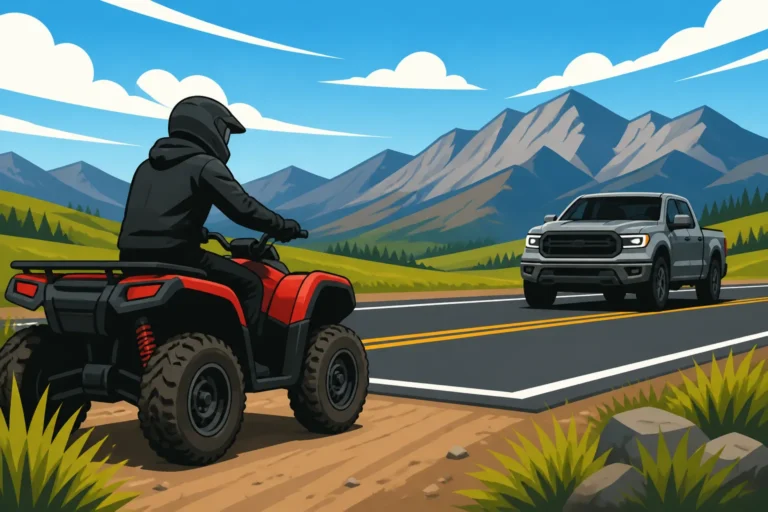
You've probably been there: you're planning a weekend trip, looking at maps, and you see that perfect trail system. The only catch? The trailhead is just a few miles down a county road from your campsite, or maybe the nearest gas station is a quick jaunt through a small town. The thought immediately springs to mind: "Can I just ride there?" It's a completely natural question, driven by convenience and the sheer joy of staying on your machine. Montana's vast landscapes and numerous small communities often blur the lines between wilderness and civilization, making the desire to connect the two with your OHV incredibly strong. Nobody wants to spend precious riding time constantly loading and unloading their machine if there's a legal alternative.
The Appeal of Town-to-Trailhead
Imagine waking up at your camp spot near the Lolo National Forest. The air is crisp, the coffee is brewing, and your side-by-side is ready to go. Instead of wrestling with ramps, winches, and tie-downs to get your machine onto a trailer, you simply jump in, fire it up, and head down the gravel Forest Service road, which quickly becomes a paved county road, right to the designated trailhead. This isn't just about saving time; it's about extending the adventure. That short segment of road becomes part of the journey, not a frustrating interruption. It allows you to seamlessly transition from pavement to dirt, or from one trail system to another, without breaking the flow of your ride. For many, this uninterrupted flow is a significant part of the Montana OHV experience. It’s particularly appealing when you’re exploring multi-use areas or simply trying to get to that one perfect fishing spot that requires a brief stint on a paved surface.
When a Short Road Section Just Makes Sense
Sometimes, it's not about a grand town-to-trailhead adventure, but simply needing to traverse a short stretch of road to connect two fantastic trail systems. Perhaps there's a public land access point just across a highway, or a fuel stop in a small community. For example, if you're riding near West Yellowstone, you might want to quickly pop into town for supplies before heading back out onto the expansive trail networks. These short road sections, while seemingly minor, can make a huge difference in the overall convenience and enjoyability of a ride. Without the ability to use these connectors, riders might be forced to backtrack for miles, or worse, avoid entire areas due to logistical headaches. It's about maximizing your time on the machine and minimizing the hassle of transport. These seemingly small allowances in the law can open up a vast new world of riding opportunities, making remote areas more accessible and linking disparate sections of public land that would otherwise be difficult to navigate.
Montana's Core Driver's License Requirements for OHVs on Roads
So, you're ready to hit that county road or cruise through a small town on your quad or UTV. The big question is: do you need a driver's license? The straightforward answer for most adults is a resounding "yes." Montana takes road safety seriously, and operating any motorized vehicle on a public road, even an off-highway vehicle, generally falls under the same licensing requirements as a car or truck. It's not just about knowing how to steer; it's about understanding traffic laws, yielding, signaling (even if it's hand signals!), and being aware of other vehicles.
The Basics: What the Law Says for Adults
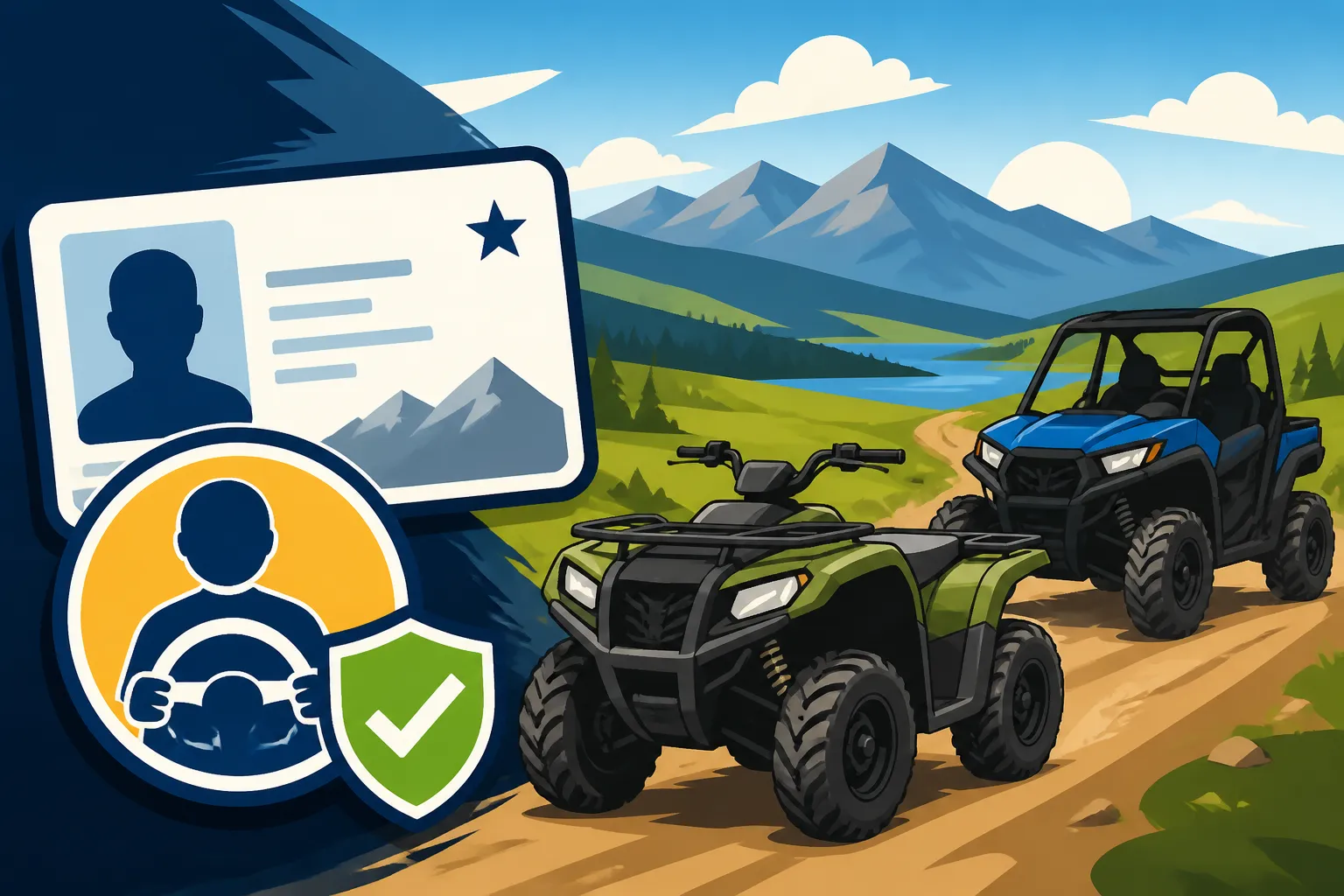
If you're 16 years of age or older and want to operate an ATV or UTV on a public street or highway in Montana where it's legally permitted, you must possess a valid driver's license. This isn't a suggestion; it's a requirement outlined in Montana's statutes. This means your regular Class D driver's license, the same one you use to drive your pickup truck, is what you need. There's no special "OHV endorsement" or separate license required for adults. The state essentially views you as operating a motor vehicle on the road, and therefore, you need to be a licensed driver. This applies whether you're just crossing a paved road to get to another trail or cruising through a small town that has adopted an OHV ordinance. Failure to have a valid license can result in a citation, even if your machine is fully registered and equipped. It’s critical to remember that "valid" means not suspended, revoked, or expired. Always keep your license with you when riding on roads, just as you would when driving any other vehicle. For more on what's generally required for a legal ride, check out [What Montana Requires on an OHV Road Ride].
Special Rules for Young Riders Under 16
Now, here's where things get a bit more intricate, especially for our younger riders. Montana has specific provisions for minors operating OHVs, and these rules become even stricter when a public road is involved. Generally, a person under 16 years of age cannot operate an ATV or UTV on a public road or street. Period. This is a critical distinction from riding on trails or private land. On designated trails or private property, a 12-to-15-year-old may operate an OHV if they possess a valid OHV Safety Certificate and are under the direct supervision of an adult. However, this exception does not extend to public roads. The intent here is to protect younger, less experienced riders from the inherent dangers of mixed traffic environments. You can imagine the risks involved with a 14-year-old on a quad encountering a semi-truck on a county road. The law prioritizes safety above all else in these scenarios. Parents, this is a crucial rule to understand, as violations can lead to serious consequences. For specific information on age restrictions for younger riders, see [Montana's Rule for Riders Aged 12 to 15].
The Role of Safety Education
While a driver's license covers the general rules of the road, Montana also places a strong emphasis on specific OHV safety education, especially for younger riders. For anyone aged 12 to 17, completing a state-approved OHV safety education course is mandatory before they can operate an OHV on public land (which includes some designated trails and roads if they're riding off-road, not street-legal). Even for adults, taking an OHV safety course is highly recommended. It teaches vital skills like proper machine control, safe riding practices, environmental awareness, and specific laws pertaining to off-highway vehicles that aren't typically covered in a standard driver's education course. Think of it as specialized training for your machine. While the safety certificate doesn't replace a driver's license for road riding, it complements it by ensuring riders understand the unique handling characteristics and responsibilities that come with operating an ATV or UTV. If you're a parent thinking about getting your teenager involved, or even if you're an adult new to the sport, consider enrolling in a course. More details can be found in [Montana OHV Safety Education Requirements].
Beyond the License: What Else You Need for a Legal Road Ride
Having the right driver's license is your first step, but it's not the only hurdle. Montana's legal framework for OHV road riding is a mosaic of different requirements that extend beyond just who is behind the handlebars. Your machine itself needs to meet certain standards, and you need to ensure it's properly registered and insured. Ignoring any of these components can quickly turn a fun outing into a costly one, or worse, a dangerous situation. Think of it like preparing for a multi-stage race; you need the right driver, the right vehicle, and all the necessary permits to even get to the starting line.
Essential Machine Equipment
Just because your ATV or UTV is a powerhouse on the trails doesn't mean it's ready for road duty straight out of the box. Montana law requires specific equipment to make an OHV street-legal, even if only for short distances or in designated areas. This typically includes:
- Headlights: Functional, illuminated headlights that meet specific brightness and aim requirements. These aren't just for seeing in the dark; many ordinances require them to be on at all times when operating on a road.
- Taillights and Brake Lights: A visible taillight and a working brake light are crucial for alerting drivers behind you.
- Mirrors: You need at least one rear-view mirror to see traffic approaching from behind. Many riders opt for two for better visibility. Brands like SuperATV offer a wide array of mirrors, from simple clamp-on designs to full-size side mirrors that can greatly enhance safety on the road.
- Horn: A working horn to signal other drivers or pedestrians.
- Turn Signals: While hand signals are generally acceptable, many riders find it much safer and more convenient to install electric turn signals, especially on a UTV. Again, SuperATV has a range of turn signal kits designed for various OHV models, making compliance easier.
- Muffler: Your machine must have a muffler that is in good working order and prevents excessive or unusual noise. Spark arresters are also required for public land use, which is important even if you're just using a road to get to those trails.
- Brakes: Fully functional brakes on all wheels.
Failing to have these basic safety features not only puts you at risk but can also lead to fines. It's about being seen and being able to react appropriately to road conditions and other traffic.
Registration, Decals, and Insurance
Beyond the physical equipment, your machine needs proper legal documentation. In Montana, all OHVs operating on public land or roads must be registered with the state. This means a trip to your local county treasurer's office.
- Registration: You'll need to register your ATV or UTV, typically for a one-time permanent registration fee. While it's called "permanent," remember that [What Permanent Registration Actually Buys You] is primarily for the life of your ownership in Montana. When you sell it, the registration goes with you.
- Decals: Once registered, you'll receive a registration decal that must be conspicuously displayed on the rear of your machine. This decal confirms that your OHV is legally registered.
- Insurance: This is a big one. While Montana does not require liability insurance for OHVs operating off-road on trails, if you plan to operate your ATV or UTV on a public road or street, you must carry liability insurance. This is the same requirement as for any other motor vehicle. Proof of insurance must be carried with you while riding. This is a critical point that many riders overlook, thinking their standard OHV trail insurance (if they have it) is enough. Always double-check your policy to ensure it covers road riding. For more details on this, look into [Insuring an ATV in Montana].
Understanding Local Ordinances and Speed Limits
This is perhaps one of the trickiest aspects of road riding in Montana. While state law sets the overarching requirements for driver's licenses, equipment, and registration, the actual permission to ride on most public roads often rests with local jurisdictions.
- County Commissioners: County roads are largely under the authority of the county commissioners. They have the power to open or close specific county roads to OHV use. This means a road that's open in one county might be closed in an adjacent one. It's crucial to check with the county where you plan to ride. See [County Roads and the Montana Commissioners' Say] for more insight.
- Municipal Ordinances: Small towns and cities can also pass their own ordinances regarding OHV use on their streets. Some towns might allow it on all streets, some only on specific designated routes, and others might prohibit it entirely. You cannot assume that because one town allows it, another will. For information on this, check out [Montana City Streets and Municipal Ordinances].
- Speed Limits: Even where OHVs are allowed on roads, they are typically subject to specific speed limits, which are often lower than the posted limit for cars. Many ordinances will state a maximum speed for OHVs, such as 25 MPH, regardless of the higher speed limit for other vehicles. It is your responsibility to know and obey these limits.
Before you ever put tires to pavement, it is your responsibility to know the local rules. A quick call to the county sheriff's office or city hall can save you a lot of trouble.
Navigating the Nuances: Age, Supervision, and Passenger Rules
Montana's OHV laws, especially concerning road use, are designed with safety in mind, which means certain situations come with specific caveats. It’s not just about having a license; it’s about who is riding, who is with them, and how they are being supervised. These nuances can make all the difference between a compliant ride and a violation. You wouldn't throw a novice driver into rush-hour traffic, and similarly, Montana has provisions to ensure that riders, particularly younger ones, are operating within their capabilities and with appropriate oversight when on public roads.
What Montana Requires for a 12- to 15-Year-Old
As we touched on earlier, this is a firm line in Montana law: a person under 16 years of age cannot operate an ATV or UTV on a public road or street. Full stop. While a 12-to-15-year-old can ride an OHV on designated trails or private land with a safety certificate and adult supervision, this allowance explicitly does not extend to public roads. The risks associated with sharing roads with larger, faster vehicles are deemed too high for this age group, regardless of their skill level or safety training. This means if you're out with your family and your 14-year-old is a fantastic rider, they still cannot take that two-mile stretch of county road to connect to the next trail. They must be trailered across that section. This rule is in place to protect them and other road users. It's a non-negotiable aspect of Montana's road riding laws. This also highlights why it's so important for families to plan routes carefully and identify any road sections that require trailering.
Carrying Passengers Legally
The rules for carrying passengers on your OHV are also quite specific, and they become even more critical when you're on a public road.
- ATVs (Quads): Generally, ATVs are designed for a single operator. Unless your ATV is specifically designed by the manufacturer to carry a passenger (often referred to as a "2-up" model with a longer seat and passenger footrests), you cannot legally carry a passenger. Trying to squeeze two people onto a single-rider quad, especially on a road, is incredibly dangerous and illegal.
- UTVs (Side-by-Sides): UTVs are designed with multiple seats, making them much more accommodating for passengers. The key here is to only carry as many passengers as there are manufacturer-designated seating positions and always ensure everyone is using a seatbelt (if equipped).
- Age and Helmets for Passengers: For passengers under the age of 18, Montana's helmet law kicks in. Anyone under 18 operating or riding as a passenger on an OHV on a public road or highway must wear a DOT-approved helmet. This includes passengers in a UTV. So, if your child is riding with you in your side-by-side on a county road, they need a helmet, even if you, as the adult driver, are not legally required to wear one (though it's always a good idea!). For more on helmet rules, check out [Montana Helmet Rules for Riders Under 18].
When a Driver's License Isn't Enough
There are certain scenarios where simply having a driver's license, even a valid one, might not be enough to legally operate an OHV on a public road.
- Intoxication: Just like with any other motor vehicle, operating an OHV on a public road while under the influence of alcohol or drugs is strictly prohibited and carries severe penalties, including DUI charges. [Montana Alcohol Limits for OHV Operators] are the same as for operating a car. Your driver's license will be on the line.
- Reckless Operation: A driver's license implies responsibility. Operating an OHV in a reckless or negligent manner, such as speeding excessively, performing stunts, or endangering other traffic, can lead to citations, fines, and potentially the suspension or revocation of your driver's license, even if you're otherwise licensed and compliant.
- Machine Malfunction: If your machine develops a critical safety issue (e.g., brakes fail, headlight goes out) while on a public road, even if you have a license, continuing to operate it could be considered unsafe and lead to a violation. It's always best to pull over and address the issue or arrange for transport. Your license grants you the privilege to operate a safe vehicle safely.
The "Where" Matters: County Roads vs. City Streets vs. Highways
Understanding who can ride and what they need is only part of the puzzle. The where you can legally ride your ATV or UTV on a road is just as, if not more, important. Montana's vastness means different types of roads are managed by different authorities, and each authority has the power to set its own rules for OHV access. This layered approach can be confusing, but it's crucial to grasp before you hit the asphalt.
County Commissioner's Authority on Back Roads
Most of the time when people talk about riding ATVs or UTVs on roads in Montana, they're referring to county roads, especially the gravel and less-trafficked ones that often lead to public land access points. These roads are typically under the jurisdiction of the county commissioners. This means that each of Montana's 56 counties has the authority to pass resolutions or ordinances that open or close specific county roads to OHV traffic.
- Varying Rules: This leads to a patchwork of rules across the state. A county road perfectly legal for your side-by-side in Gallatin County might be strictly off-limits in Jefferson County. There's no blanket "all county roads are open" rule in Montana.
- Designated Routes: Often, counties will designate specific routes or entire networks of roads as open to OHVs. These might be marked, or you might need to consult county maps or online resources.
- Checking Before You Go: The responsibility is entirely on the rider to know the rules of the specific county they are in. A quick call to the county sheriff's department or clerk's office, or checking the county's website, is always the best course of action. Failing to do so can lead to a citation for illegal operation, even if you had good intentions. For more on this, check out [County Commissioners and Montana County Roads].
City Streets and Municipal Ordinances
When you get closer to populated areas, the rules shift again. Incorporated cities and towns have their own governing bodies, and they, too, can pass municipal ordinances regarding OHV use within their city limits.
- Town-Specific Policies: Some small "trail towns" in Montana, particularly those that cater to outdoor recreation, have embraced OHV use and have ordinances allowing ATVs and UTVs on certain streets, often to allow access to businesses or trailheads from lodging. West Yellowstone, for example, has specific allowances.
- No Blanket Rule: Just like with counties, there is no statewide rule that says "all city streets are open." Many cities, especially larger ones like Billings, Missoula, or Bozeman, prohibit OHVs on their streets due to traffic volume, safety concerns, and noise regulations.
- Permitted Routes and Times: Even in towns that allow OHV use, there might be restrictions on specific streets, hours of operation, or even the type of machine. Always look for signage or consult the local city hall or police department. A small town might permit you to ride to a cafe for lunch but prohibit joyriding through residential areas. To understand more about this, look at [Montana City Streets and Municipal Ordinances].
What About State Highways and Interstates?
This is where the line becomes very clear and very strict: ATVs and UTVs are generally prohibited from operating on state highways and interstates.
- State Highways (e.g., US-93, US-2): These major arteries are designed for higher-speed, conventional vehicle traffic. OHVs, by their nature, are typically not designed for sustained high-speed travel, and their slower speeds can create significant safety hazards for both the OHV operator and other drivers. You absolutely cannot ride along the shoulder or in the lanes of these roads.
- Crossing a Highway: There can be very limited exceptions for crossing a state highway at a designated intersection, usually where two permitted county roads meet and you need to get from one side to the other. Even then, strict rules apply regarding visibility, yielding, and immediate crossing. You cannot travel down the highway, only directly across.
- Interstates (e.g., I-90, I-15): These are completely off-limits to OHVs. There are no exceptions for operation or even crossing. These are high-speed, limited-access roads, and an OHV would pose an extreme danger.
Always remember that safety is paramount. If there's any doubt about where you can legally ride on a road, assume it's prohibited until you can confirm otherwise.
Common Pitfalls and How to Avoid Them
Even the most well-intentioned rider can fall prey to misconceptions or oversights when it comes to road riding in Montana. The layered nature of the laws – state, county, and municipal – combined with differences in enforcement and understanding, means that what seems logical might not always be legal. Being aware of these common pitfalls can save you a lot of grief, expense, and potential danger. It's about being proactive rather than reactive when you're out enjoying Big Sky Country.
The Dangers of Assuming Reciprocity
One of the biggest mistakes riders make, especially those visiting from out-of-state, is assuming that if their OHV is "street legal" in their home state, it's automatically street legal in Montana. This is almost never the case, and Montana does not offer reciprocity for out-of-state OHV street-legal registrations.
- Differing Laws: Every state has its own specific requirements for what constitutes a street-legal OHV, including things like turn signals, mirrors, windshields, and even vehicle width limits. What's compliant in Arizona might not be in Montana.
- Montana's System: Montana's system, as discussed, relies on a combination of state registration, specific equipment, and local ordinances. Simply having a license plate from another state on your UTV doesn't magically make it legal for road use in a Montana county that hasn't opened its roads.
- Consequences: If you're pulled over and relying on out-of-state "street legal" status, you'll likely face citations for unregistered operation, improper equipment, and potentially other violations. Always follow Montana's rules, even if you're just visiting. For those thinking of relocating, [Montana Registration for a New Resident] covers some of the requirements to transition your machines.
Consequences of Illegal Road Riding
Ignorance of the law is never an excuse, and riding an OHV illegally on a public road in Montana can lead to a host of unpleasant consequences. These aren't just minor inconveniences; they can impact your wallet, your driving record, and even your ability to ride in the future.
- Fines and Citations: The most immediate consequence is typically a citation and a fine. These can vary depending on the specific violation (unregistered, uninsured, no license, improper equipment, prohibited road). Multiple violations can quickly add up to significant costs.
- Towing and Impoundment: In some cases, especially for severe or repeat offenses, your OHV could be towed and impounded. Recovering it will involve impound fees, daily storage fees, and potentially other administrative costs on top of any fines.
- Driver's License Points/Suspension: Operating an OHV illegally on a public road is still operating a motor vehicle. Violations can lead to points on your standard driver's license, potentially increasing your insurance rates or even leading to license suspension or revocation if you accumulate too many points.
- Accidents and Liability: This is perhaps the most serious consequence. If you're involved in an accident while illegally operating your OHV on a road, you could face severe civil liability. Your insurance policy might deny coverage if you were operating the machine outside of legal parameters (e.g., no road riding coverage, unregistered). This could leave you personally responsible for damages, injuries, and legal fees, which can be astronomical.
How to Confirm Road Access Legally
Given the complex nature of Montana's OHV road access laws, taking the time to confirm legality before you ride is absolutely essential. Don't rely on hearsay or what "everyone else is doing."
- Check County and City Websites: Many counties and cities now publish their OHV ordinances or maps of designated routes online. This is usually the most convenient first step.
- Call Local Authorities: If information is unclear or unavailable online, call the county sheriff's office, county clerk and recorder, or the city police department/city hall in the specific jurisdiction you plan to ride. They are the ultimate authority on what is allowed on their roads.
- Look for Signage: When you're out on the ground, always pay attention to signs. Open roads are often clearly marked. Conversely, "No OHV" or "Closed to Motorized" signs mean exactly that.
- Use Maps and Apps: Digital mapping tools like onX Offroad or Motor Vehicle Use Maps (MVUMs) from the Forest Service can sometimes indicate roads open to OHVs, but always cross-reference with local ordinances if planning pavement sections.
- Ask a Reputable Local Dealer or Club: Local OHV clubs or powersports dealers in the area often have a good grasp of local rules and can provide advice, but always verify with official sources.
By doing your homework, you can ensure your Montana road riding experience is both enjoyable and entirely legal.
Equipping Your Machine for Montana Road Use
So, you've got your valid driver's license, you know the county roads are open, and you've confirmed you're good to go. The last crucial step before you roll onto that pavement is making sure your machine is properly equipped. Montana law isn't ambiguous about this: if you're going to share the road with other vehicles, your ATV or UTV needs to meet certain safety and visibility standards. This isn't just about avoiding a ticket; it's about making sure you're safe and visible to everyone else on the road, from passing pickups to delivery trucks. Many riders find themselves needing a few key aftermarket additions to become compliant, and thankfully, there are many robust options available from reputable brands.
Lights, Turn Signals, and Mirrors
Visibility and communication are paramount when mixing with traffic, even on a quiet county road.
- Headlights and Taillights: Your ATV or UTV must have at least one functional headlight and taillight. These lights must be visible from appropriate distances and be in good working order. On many machines, these come standard, but it's vital to ensure they're clean and bright. Some local ordinances might even specify that your headlights must be on at all times when operating on a road, even during daylight hours.
- Brake Lights: A functioning brake light is non-negotiable. It tells drivers behind you that you're slowing down or stopping, preventing potential rear-end collisions. Test these every time before you head out.
- Turn Signals: While Montana law generally allows for hand signals, installing actual electric turn signals is a huge safety upgrade for road riding. It's much clearer, especially in bright sunlight or for drivers unfamiliar with OHV hand signals, and it allows you to keep both hands on the wheel or handlebars. Companies like SuperATV offer universal turn signal kits designed for a wide range of UTVs and ATVs, which often include the necessary wiring, switches, and even a horn, simplifying the conversion process. They are typically easy to install and blend seamlessly with your machine's aesthetics.
- Mirrors: You need at least one rear-view mirror on your OHV when operating on a public road. This allows you to monitor traffic behind you. Most UTVs can easily accommodate side mirrors, and ATVs can often have handlebar-mounted options. Having two mirrors (one on each side) provides the best field of vision. SuperATV, for instance, has durable side mirrors that clamp securely to your roll cage, offering excellent visibility and often with break-away features to withstand trail abuse.
Horns, Brakes, and Mufflers
These components are about auditory warnings, stopping power, and noise control.
- Horn: A working horn is required to alert pedestrians, cyclists, or other drivers to your presence. This is particularly useful when navigating blind corners or entering traffic. Many aftermarket turn signal kits, like those from SuperATV, will include a horn, making it a two-for-one upgrade.
- Brakes: Your machine must have fully functional brakes. This means all wheels designed to have brakes must have them in proper working order. Regular maintenance of your brake system – checking pads, fluid levels, and line integrity – is crucial, especially if you're going to be riding on roads where you might need to stop quickly for unforeseen obstacles or traffic.
- Mufflers and Exhaust: Your OHV must be equipped with a muffler that is in good working order to prevent "excessive or unusual noise." Montana has noise limits, and an aftermarket exhaust system without a proper muffler or spark arrester could lead to a citation. Spark arresters are also generally required on public lands to prevent wildfires, so if you're using a road to access trails, ensure your exhaust meets this standard too. Being a respectful rider also means keeping noise to a minimum, particularly when passing through small towns or residential areas.
Aftermarket Accessories and Compliance
When considering aftermarket additions for road legality, it's important to choose reputable manufacturers that understand OHV design and compliance. While SuperATV focuses heavily on performance and protection for off-road use, many of their lighting, mirror, and accessory offerings are perfectly suited for bridging the gap to road legality. For example, their windshields, although not always legally required for road use, can significantly enhance rider comfort and protection from road debris.
Here’s a quick summary table of common equipment requirements:
| Equipment Feature | Requirement for Road Use in Montana | Example Product (Contextual) |
|---|---|---|
| Driver's License | Valid Class D (or higher) required for operators 16+; Under 16 prohibited on public roads. | N/A (Personal Credential) |
| OHV Registration | Permanent registration and displayed decal required. | N/A (State Issued) |
| Liability Insurance | Required if operating on public roads. | N/A (Policy from Insurer) |
| Headlights | At least one, fully functional and visible. | Standard on most machines; aftermarket LED upgrades |
| Taillights | At least one, fully functional and visible from rear. | Standard on most machines; aftermarket LED upgrades |
| Brake Lights | At least one, fully functional and illuminating upon braking. | Standard on most machines |
| Rear-View Mirror | At least one functional mirror (many prefer two). | SuperATV side mirrors, clamp-on or roll cage mounted |
| Horn | Functional horn capable of emitting an audible signal. | Often integrated into SuperATV turn signal kits |
| Turn Signals | Recommended for clarity (hand signals generally acceptable but less safe). | SuperATV universal turn signal kits |
| Muffler | Must be in good working order to prevent excessive noise; spark arrester required for public land. | Standard; check for modifications and compliance |
| Brakes | Fully functional brakes on all wheels. | Standard; regular inspection and maintenance |
| Helmets (Under 18) | Required for all operators and passengers under 18 on public roads. | DOT-approved helmet |
This comprehensive approach to equipping your machine, understanding the laws, and securing the proper licensure ensures you can enjoy the freedom of Montana's roads and trails safely and legally.
Disclaimer
This article is for general informational purposes only and does not constitute professional advice. Laws, prices and regulations vary by location and change over time. Consult a qualified professional for guidance on your specific situation.