Spark Arrester Rules on Public Land
There's nothing quite like the freedom of hitting Montana's vast public lands on your ATV or UTV, feeling the rumble of the engine and watching the landscape unfold. But that freedom comes with a significant responsibility, and few things can ruin a perfect ride, or worse, an entire season, like a fire caused by an improperly equipped machine. This guide will walk you through everything you need to know about spark arrester rules on public land in Montana, helping you stay legal, safe, and respectful of our incredible natural resources.
The Non-Negotiable Rule: Why Spark Arresters Matter on Public Lands
Let's cut right to it: if you're riding an ATV or UTV on any public land in Montana – think National Forests, BLM lands, or even many state parks and wildlife management areas – you absolutely, unequivocally, must have a U.S. Forest Service approved spark arrester installed on your machine. This isn't just a polite suggestion; it's a legal requirement, and for very good reason.
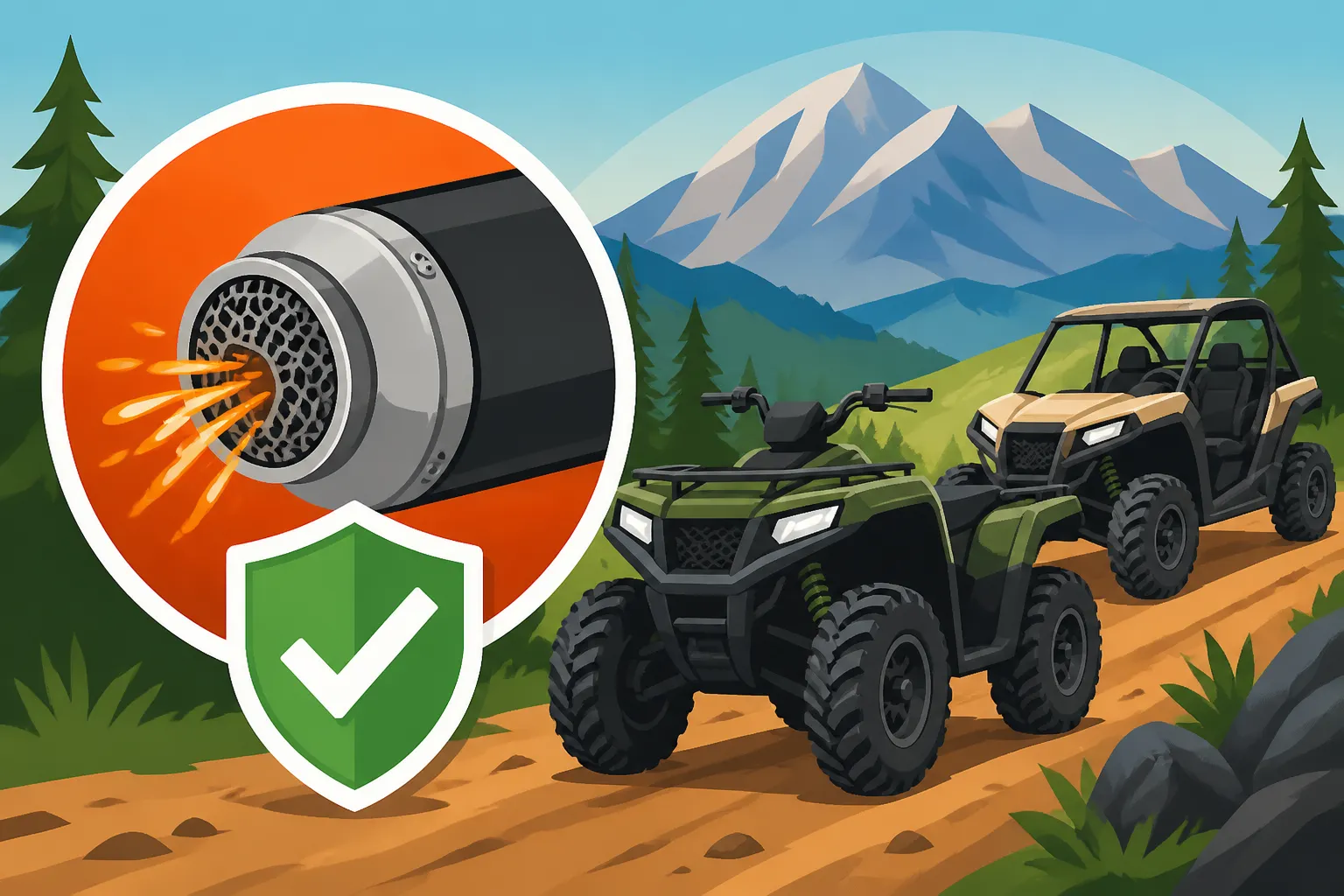
A spark arrester is a mechanical device designed to prevent the emission of incandescent particles (sparks) from the exhaust system of internal combustion engines. In simpler terms, it stops tiny, glowing bits of carbon from shooting out of your exhaust pipe and landing on dry grass, pine needles, or brush. Imagine riding through a field of dry cheatgrass in August, and a tiny ember from your exhaust ignites it. That small spark, which you might not even notice, can quickly become a devastating wildfire, destroying thousands of acres, threatening homes, and putting lives at risk. Montana knows fire seasons, and we know how quickly things can escalate. The rules are in place to protect our cherished landscapes, our communities, and the very trails we love to ride.
This federal mandate applies across the country, enforced by agencies like the U.S. Forest Service, Bureau of Land Management (BLM), and even Montana Fish, Wildlife & Parks (FWP) wardens. They have every right to stop you, inspect your machine, and if you're found without a proper spark arrester, you could be facing fines, being turned around from the trail, or even more severe penalties if your machine is deemed a fire hazard. It's a frustration many riders share – sometimes you just want to hit the trail without a checklist of worries – but this particular item is about community safety and preserving access for everyone. Remember, these trails are a privilege, and ensuring your machine is compliant is a small but critical part of being a responsible user. If you're planning a trip to some of Montana's incredible trail systems, like those found in the [Montana's National Forest Trail Systems] or on [BLM Permit Rules in Montana], make sure your machine is ready.
What Makes a Spark Arrester "Legal" in Montana?
So, you know you need one, but what exactly does a "legal" spark arrester look like? It's not just any old screen thrown into your exhaust pipe. A compliant spark arrester must meet specific design standards set by the U.S. Forest Service. These standards ensure that the device is effective at trapping sparks larger than 0.023 inches in diameter and can withstand the operating conditions of an off-highway vehicle.
The easiest way to identify a compliant spark arrester is to look for the USDA Forest Service Approved stamp or certification mark. This stamp is typically found directly on the muffler or on the spark arrester itself. It's usually a small, embossed series of letters and numbers. If your machine came from the factory with an exhaust system, it's highly probable that it already has an integrated, certified spark arrester. Most reputable ATV and UTV manufacturers design their machines to be compliant right off the showroom floor.
However, things can get tricky if you've bought a used machine or installed an aftermarket exhaust. Sometimes, a previous owner might have removed the spark arrester or replaced the entire muffler with a "race" exhaust that doesn't include one. That's a huge red flag for public land use. When buying a used side-by-side, always check the exhaust system, as part of your overall [Buying a Used Side-by-Side in Montana: The Paperwork]. If you've got an aftermarket exhaust, especially one that's designed to be louder or increase performance, double-check for that Forest Service stamp. If it's missing, you'll need to address it. Many aftermarket companies like SuperATV offer exhaust systems or bolt-on spark arrester inserts that are designed to be compliant with federal regulations. They understand the need for performance and legality.
Here’s a quick guide to what wardens typically look for and what you should ensure:
| Feature | Description | Why it Matters |
|---|---|---|
| USDA Forest Service Stamp | An embossed or stamped marking on the muffler or arrester, clearly stating "USDA Forest Service Approved" or similar. | This is the definitive proof of compliance. Without it, you're at risk. |
| Physical Condition | The screen or trapping mechanism should be intact, free of holes, excessive carbon buildup, or damage that would allow sparks to escape. | A damaged arrester is a non-functional arrester. Carbon buildup can also reduce its effectiveness and even become a fire hazard itself. |
| Proper Installation | The spark arrester should be securely installed as per manufacturer specifications, with no gaps or leaks around it. | An improperly installed arrester might bypass the exhaust gases around the screen, rendering it useless. |
| Manufacturer's Specs | Refer to your machine's owner's manual. It will often specify if your stock exhaust includes a compliant spark arrester and how to maintain or inspect it. | Your manual is a primary source of information for your specific make and model. |
It's common for riders to install [Aftermarket Exhaust and Montana Trail Access] for various reasons, but always ensure they maintain or incorporate a compliant spark arrester. If you're unsure, it's always better to consult your dealer or a trusted mechanic.
The Consequences of Riding Without a Compliant Spark Arrester
The risks of riding without a compliant spark arrester go far beyond just a minor inconvenience. In Montana, where wildfire season can be long and severe, the enforcement of these rules is taken very seriously.
First and foremost, you're looking at fines. A warden, sheriff, or Forest Service ranger can issue a citation, and these aren't just a slap on the wrist. Fines can vary depending on the specific jurisdiction and severity, but they can easily run into the hundreds of dollars. Beyond the monetary penalty, an officer has the authority to turn you around, preventing you from continuing your ride. Imagine hauling your machine hours to a remote trailhead, only to be sent home because of a missing or non-compliant spark arrester. That's a huge waste of time, effort, and fuel. When a Montana warden or deputy stops you, this is one of the first things they'll look for, right alongside your registration and safety equipment. Understanding [What a Montana Warden Asks a Rider For] can save you a lot of hassle.
But the real, devastating consequence is the potential for starting a wildfire. Montana's forests and rangelands are incredibly dry for much of the year, and it takes just one tiny spark to ignite a blaze that can rage out of control. If your machine causes a fire, even accidentally, you could face severe legal liability. This isn't just about fines; it can involve criminal charges, civil lawsuits for damages, and being held responsible for the massive costs of fighting the fire, which can easily climb into the millions of dollars. Imagine losing your home, your savings, and your reputation over something as preventable as a spark arrester. The state can pursue [Montana Resource Damage Citations] with vigor, and the public sentiment against anyone causing a wildfire is understandably fierce.
Beyond legal trouble, there's the broader impact. Wildfires destroy wildlife habitat, pollute our air with smoke for weeks or months, close trails and entire recreation areas, and can take years, even decades, for the landscape to recover. Every time a motorized vehicle starts a fire, it puts further pressure on land managers to restrict access or close areas to OHVs altogether. By ensuring your machine is compliant, you're not just protecting yourself; you're protecting the environment and helping to preserve future access for all riders. It's part of being a good steward of our public lands, and it shows respect for the land and for your fellow Montanans.
Maintaining Your Spark Arrester and What to Do If You Don't Have One
So, you've got a compliant spark arrester, or you're planning to get one. Great! But the job isn't done after installation. Spark arresters need regular maintenance to ensure they remain effective and safe.
The primary maintenance task is cleaning. Over time, exhaust gases deposit carbon and soot onto the spark arrester screen. If this buildup becomes too thick, it can restrict exhaust flow, reduce engine performance, and even make the arrester less effective at trapping sparks. Check your owner's manual for specific cleaning intervals, but generally, it's a good idea to inspect and clean your spark arrester every 20-50 hours of riding, or at least once a season, especially before fire season ramps up. Cleaning usually involves removing the arrester (which might mean unbolting your muffler end cap), scraping off carbon deposits with a wire brush, and then washing it with soap and water. Make sure it's completely dry before reinstallation.
You also need to inspect for damage. A screen can get holes, cracks, or become warped over time, especially if it's subjected to impacts or extreme heat cycles. If you find any damage, the spark arrester needs to be replaced. Don't try to patch it up with makeshift repairs; an improperly repaired arrester won't meet Forest Service standards and could still pose a fire risk. Many manufacturers, and even aftermarket parts providers like SuperATV, offer replacement spark arrester screens or inserts for various exhaust systems. Having one of these or the necessary tools for a quick field cleaning could be a valuable addition to [What to Carry on a Remote Montana Ride].
What if your machine genuinely doesn't have one, or you've installed an aftermarket exhaust that lacks the crucial certification?
- Identify the Exhaust: First, determine if your current exhaust is the stock unit or an aftermarket one.
- Check for an Integrated Arrester: If it's stock, check your manual and look carefully for the Forest Service stamp. It might be hidden or less obvious. If it is there, but clogged, clean it. If damaged, seek a replacement part for your stock muffler.
- Aftermarket Solutions: If your aftermarket exhaust doesn't have one, you have a few options:
- Add-on Spark Arrester: Some exhaust systems are designed to accept a bolt-on spark arrester insert. These are often easy to install.
- Aftermarket Compliant Exhaust: If an add-on isn't an option, you might need to replace your exhaust system with a compliant aftermarket one. Companies like SuperATV offer exhaust options that are designed to meet Forest Service regulations while still providing performance. This is crucial if you want to legally enjoy public lands.
- Stock Exhaust Replacement: If all else fails, you may need to purchase a new, stock exhaust system from your machine's manufacturer, which will almost certainly come with an integrated, certified spark arrester.
Don't wait until you're stopped by a warden or until you hear about a wildfire caused by an OHV in your area to address this. Be proactive. A small investment of time and money in ensuring your spark arrester is compliant and well-maintained is a tiny price to pay for the peace of mind, the continued access to our trails, and the protection of Montana's breathtaking wilderness.
Disclaimer
This article is for general informational purposes only and does not constitute professional advice. Laws, prices and regulations vary by location and change over time. Consult a qualified professional for guidance on your specific situation.