States That Chase Montana-Plated Vehicles
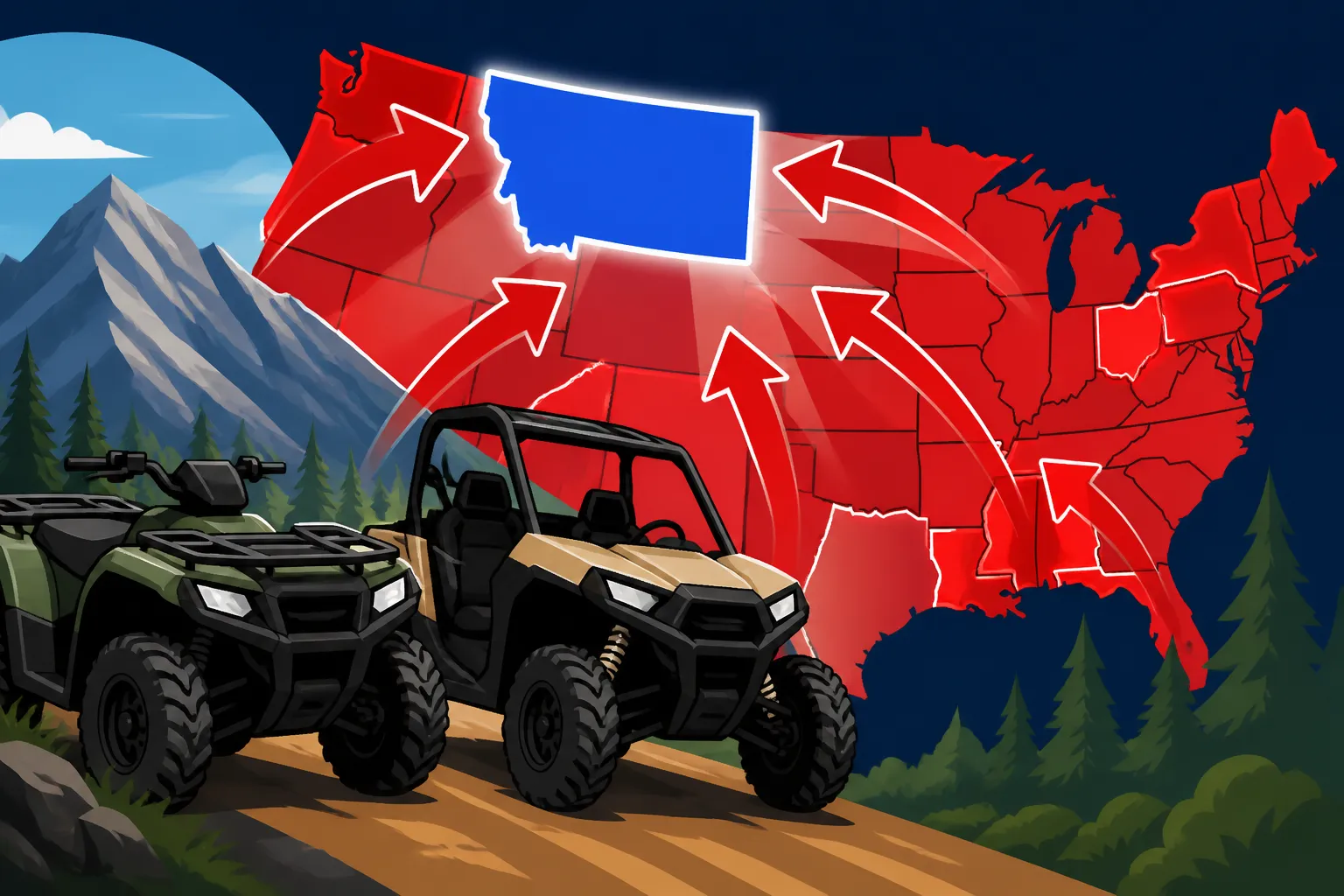
Many off-highway vehicle (OHV) enthusiasts, drawn by Montana's lack of sales tax and straightforward permanent registration options, often contemplate registering their machines here, even if their primary residence is in another state. While the allure of seemingly bypassing taxes and fees is strong, this strategy frequently leads to unwanted scrutiny and potential legal headaches from their home state's Department of Motor Vehicles (DMV) or equivalent agencies. It’s a common misconception that a Montana plate acts as an invisible shield, but in reality, other states are increasingly vigilant. This guide will meticulously unpack why Montana-plated vehicles catch the eye of out-of-state authorities, how they go about identifying improper registrations, and the very real financial and legal consequences you could face for trying to navigate this complex terrain incorrectly.
The Appeal of Montana: Why Riders Look Here First
Let's be honest: the idea of saving money on a big purchase like an ATV or UTV is incredibly tempting. For many years, Montana has held a unique appeal for out-of-state buyers, creating a perception that it's a loophole for vehicle registration. It's not hard to see why this belief took root, especially when you're looking at the bottom line for a new side-by-side that can easily cost as much as a small car. The thought of avoiding substantial sales tax or navigating complex annual registration hurdles elsewhere makes Montana seem like a financial haven.
No Sales Tax: A Tempting Proposition
One of the biggest draws, without a doubt, is Montana's lack of a general sales tax. When you're buying a machine that might set you back $15,000, $20,000, or even more, a 6% or 8% sales tax in your home state can add hundreds or even thousands of dollars to the final price. This isn't pocket change; it's a significant sum that could go towards accessories, a new trailer, or more fuel for the trails. Naturally, anyone looking to stretch their budget would seek ways to minimize this cost.
The promise of a purchase price free from sales tax sounds like a dream come true. Many buyers envision driving their new machine directly home, having saved a hefty chunk of change. However, this dream often overlooks a crucial detail: use tax. While Montana doesn't charge sales tax, most other states impose a use tax on items purchased out-of-state and then brought back for use within their borders. This means that while you might not pay sales tax in Montana, your home state will very likely expect you to report and pay an equivalent tax once the machine is physically located there. For more on this, you might find our article [No Sales Tax on a Montana Machine Purchase] helpful.
Permanent Registration: Set It and Forget It?
Another significant draw for OHV owners is the option for permanent registration in Montana. For a single fee, you can register your ATV or UTV and never have to worry about renewing it again, at least for as long as you own the machine. Imagine the convenience: no annual forms, no recurring fees, no sticker shock each year. This is particularly appealing for those who might own multiple machines or simply want to avoid the administrative burden that comes with annual renewals in other states.
This permanent registration seems like the ultimate hands-off solution, especially when compared to states that might have annual fees, tiered registration based on engine size, or even emissions tests for OHVs. The allure of a "set it and forget it" system is incredibly strong. However, this permanent registration, much like the sales tax benefit, is fundamentally tied to the machine being permanently located and primarily used in Montana by a bona fide resident. The state is essentially providing this convenience for its own citizens and legitimate businesses operating within its borders, not necessarily as a blanket benefit for out-of-state enthusiasts. To understand the specifics, read [What Permanent Registration Actually Buys You].
Defining Residency: The Crux of the Issue
At the heart of why other states "chase" Montana-plated vehicles lies the concept of residency. It's not just a casual term; it's a legal definition that varies from state to state and dictates where you're expected to register your vehicles, pay taxes, and fulfill other civic duties. This isn't about where you like to ride your machine; it's about where you legally live and establish your domicile.
What Constitutes Residency in Montana (and elsewhere)
For Montana's purposes, establishing residency for vehicle registration often means demonstrating a true intent to reside here. This isn't just owning property or having a mailbox. It typically involves living in the state for a certain period, having a Montana driver's license, registering to vote, filing taxes as a Montana resident, and generally severing ties with your previous state of residence. These are all indicators that you've made Montana your primary home.
Conversely, your home state has its own definitions of residency. These definitions often hinge on similar factors: where you primarily live, work, and sleep; where your other vehicles are registered; where your children attend school; and even where you maintain your strongest social and economic ties. If your life is clearly centered in, say, California, but your side-by-side wears a Montana plate, that raises a red flag. Simply owning an OHV here or having a friend's address isn't enough to meet the legal standard of residency for vehicle registration purposes, especially if you intend to primarily use that machine elsewhere.
The "30-Day Rule" and Other State Statutes
Many states have specific laws that mandate how quickly a new resident (or a person bringing a vehicle into the state) must register their vehicle. A common guideline is the "30-day rule," which means if you move to a new state or bring a vehicle purchased elsewhere into your home state, you typically have around 30 days to register it with the local authorities. This rule isn't just for cars; it often applies to OHVs, boats, and other recreational vehicles.
If you purchase an OHV in Montana and then immediately transport it back to your home state, the clock often starts ticking on that 30-day window. Failing to register the machine within that timeframe can result in penalties, fines, and the expectation to pay any back taxes or registration fees. It's crucial to remember that these rules are designed to ensure fair taxation and proper identification of vehicles operating within state lines, regardless of where they were originally purchased. For a deeper dive into this, check out [How the 30-Day Rule Works in Your Home State] and [Why Thirty Days Matters in Your Home State]. Every state wants its share of the revenue, and they have mechanisms to ensure they get it.
How Other States Flag Montana-Plated OHVs
So, if you're not a true Montana resident, and you've got an OHV registered here, how exactly do other states find out? It's not always a dramatic stakeout. More often, it's a combination of observant citizens, diligent law enforcement, and increasingly, sophisticated data analysis. States aren't blind to the "Montana loophole" phenomenon, and they've developed strategies to identify vehicles that might be improperly registered.
Neighborhood Watch: Tips from Concerned Citizens
Believe it or not, one of the most common ways states find out about improperly registered vehicles is through tips from ordinary citizens. Neighbors, former friends, or even just observant members of the community can notice a pattern: a vehicle with Montana plates that is always parked in a driveway in, say, Colorado, year after year. People might become suspicious if they see a high-value ATV or UTV with a Montana plate that never seems to leave their local area, while the owner clearly lives and works in their home state.
These tips often go directly to the local DMV or law enforcement. While a single anonymous call might not trigger an immediate investigation, a pattern of complaints or multiple reports can certainly draw official attention. It's a low-tech but highly effective method that leverages the community's awareness, especially in areas where such practices are known to occur. People tend to notice when something seems out of place, and they’re often willing to report it.
Law Enforcement Spotting Out-of-State Plates
This is perhaps the most direct way for out-of-state registrations to be flagged. Local police, county sheriffs, state troopers, and even game wardens are trained to look for discrepancies. When an officer sees a machine with Montana OHV plates operating consistently in another state, especially if it's for an extended period, it's an immediate red flag. They might notice this during a routine traffic stop for a minor infraction, or even just while patrolling local areas where OHVs are commonly used or transported.
An officer might run the plate, check the owner's driver's license, and if the license is from a different state than the registration, it can initiate further questions. They might simply issue a warning, but they are also likely to report the discrepancy to their state's DMV for follow-up. In some cases, if the evidence of non-residency is clear and the vehicle has been present for a long time, they might even issue a citation on the spot for improper registration, which can lead to significant fines. Our article [Why Montana Plates Draw Attention Elsewhere] delves into this in more detail.
Data Sharing Among State DMV Agencies
In the digital age, states are not operating in isolation. There is increasing cooperation and data sharing between DMVs across the country. State agencies can cross-reference vehicle registration databases with driver's license records, property tax records, and even voter registration lists. If your primary residence, as indicated by your driver's license and other official documents, is in Oregon, but your OHV is registered in Montana, these data points can eventually connect.
This data matching can highlight patterns of apparent non-residency and trigger an inquiry. It's a much more proactive approach than relying solely on citizen tips or traffic stops. As technology advances, these data analysis capabilities are only becoming more sophisticated, making it harder for individuals to maintain a false residency for vehicle registration purposes without detection. States are, quite frankly, getting better at finding these situations, making the risk of being caught higher than it once was.
The Repercussions: What Happens When You Get Caught
The consequences of improper out-of-state registration are far from trivial. What might seem like a clever way to save a few bucks upfront can quickly spiral into a much larger and more expensive problem. States are serious about collecting their due revenue, and they have various enforcement mechanisms at their disposal, ranging from financial penalties to severe legal action. It’s important to understand that these aren't just minor inconveniences.
Unpaid Sales Tax and Penalties
The most common repercussion is being assessed the sales tax (or equivalent use tax) that your home state believes you should have paid in the first place. This isn't just the original amount; states often add significant penalties and interest charges, which can quickly inflate the total bill. If you saved $1,000 on sales tax by registering in Montana, you could easily end up paying $1,500 or more after penalties and interest are tacked on. This completely negates any perceived savings and leaves you in a worse financial position than if you had simply paid the tax initially.
These assessments often come with a deadline for payment, and failure to comply can lead to further penalties, collection actions, and even liens on your property. It’s a very direct way for states to reclaim what they consider lost revenue, and they are usually quite aggressive in pursuing it. For instance, [Use Tax Your Home State Still Wants] provides a comprehensive overview of this specific issue.
Back Registration Fees and Fines
In addition to sales tax, your home state will also demand payment for all back registration fees that would have been due had the vehicle been properly registered there from the start. If you've been using your Montana-plated machine in your home state for three years, they'll expect three years of registration fees, often with added late penalties. These can also accumulate quickly, especially if your state has higher annual OHV registration costs.
On top of the fees, you'll likely face fines for operating an improperly registered vehicle. These fines can vary widely but are often substantial enough to serve as a deterrent. Imagine a situation where you're assessed hundreds or even thousands in back registration fees and then slapped with an additional fine for non-compliance. It’s a double whammy that can seriously impact your finances.
Potential Legal Action and Felony Charges
While less common for a simple sales tax evasion on an OHV, more severe cases, especially those involving the deliberate misuse of a Montana LLC to evade taxes on multiple high-value vehicles, can escalate to legal action. Some states have pursued charges for tax fraud, which can range from misdemeanors to felonies, depending on the amount of tax owed and the perceived intent to defraud. If you've ever wondered about the serious implications, our article [Felony Charges Over a Montana LLC Registration] offers a stark look at the risks.
A conviction for tax fraud, even if a misdemeanor, can have long-lasting consequences, affecting your credit, employment opportunities, and overall legal standing. Furthermore, the state might confiscate the vehicle or place a lien on it until all taxes, penalties, and fines are paid. It's a harsh reality that some individuals have faced, demonstrating that what starts as an attempt to save a few dollars can lead to severe legal entanglements. It’s a risk that most riders would certainly want to avoid, emphasizing the importance of understanding your state’s laws.
The Montana LLC Myth vs. Reality
For many years, the Montana LLC (Limited Liability Company) has been perceived by out-of-state residents as the ultimate workaround for avoiding sales tax and simplifying registration. The idea is that an LLC, being a legal entity domiciled in Montana, can legitimately own vehicles that are then registered in Montana, even if the individual who owns the LLC lives elsewhere. While there's a kernel of truth to the legality of LLCs, the application for personal vehicle registration is often fraught with peril for non-residents.
When an LLC Can Be a Legitimate Tool
A Montana LLC can indeed be a legitimate tool for vehicle registration if it meets specific criteria. For businesses that genuinely operate in Montana, or for individuals who maintain a genuine business presence in the state, registering vehicles under a Montana LLC is perfectly acceptable. For instance, a tour operator based in West Yellowstone who uses a fleet of UTVs for guided trips would legitimately register those machines under their Montana-based LLC. Similarly, a rancher operating a business in Montana would register their work OHVs this way.
The key here is "legitimate business purpose" and "nexus." If the LLC has a real presence, conducts actual business, and the vehicles are used in conjunction with that business in Montana, then it’s above board. [The Montana LLC and Why Out-of-State Buyers Use It] offers more insight into the intended purpose and how it can be used legitimately. The structure is sound for its intended purpose; the problem arises when it's misused. If you are considering registering an OHV under a Montana business, you might also be interested in [Registering an OHV Under an LLC in Montana].
The Fine Line Between Avoidance and Evasion
This is where things get tricky. Tax avoidance involves using legal means to reduce your tax burden, such as deductions or credits. Tax evasion, however, involves illegally misrepresenting facts or concealing income to avoid paying taxes. When an out-of-state resident creates a Montana LLC solely to register a personal OHV and avoid their home state's sales tax and registration fees, without any genuine business purpose in Montana, they are likely stepping over the line from avoidance into evasion.
States view such shell LLCs with extreme skepticism. They argue that the individual, not the LLC, is the true owner and primary user of the vehicle, and that the LLC is merely a thinly veiled attempt to circumvent local laws. This distinction is critical because it determines whether you’re seen as savvy or as potentially breaking the law. [When a Montana LLC Becomes Tax Evasion] explores the nuances of this boundary. It’s not just about setting up the LLC; it’s about how it operates and whether it truly reflects your residency and the vehicle’s primary use location.
Montana LLC Risks for an Out-of-State Owner
The risks for out-of-state owners who use a Montana LLC for personal vehicle registration are considerable. As discussed, your home state can levy back taxes, penalties, and fines. But beyond that, an LLC that is deemed a sham can lose its limited liability protection, exposing the individual owner to personal financial responsibility. This means that if the LLC incurs debt or is sued, your personal assets could be at risk.
Furthermore, being caught in this situation can trigger intense scrutiny from your home state's tax authorities, potentially leading to audits of other aspects of your finances. Some states have even begun pursuing felony charges for those engaged in what they perceive as deliberate, large-scale tax fraud involving multiple vehicles registered through Montana LLCs. The potential financial and legal fallout can far outweigh any initial savings. Our article [Montana LLC Risks for an Out-of-State Owner] provides a deeper look at these potential pitfalls. It's a strategy that looks good on paper to some, but often crumbles under scrutiny.
Protecting Yourself: Legitimate Practices and Due Diligence
Given the risks involved, it's essential to approach vehicle registration with a clear understanding of the rules and to act with due diligence. If your goal is truly to embrace the Montana lifestyle, there are legitimate ways to do so. If not, then understanding and complying with your home state's laws is the safest and most responsible path. Trying to game the system rarely ends well.
Establishing Bona Fide Montana Residency
If you genuinely intend to move to Montana and make it your primary home, then registering your OHV here becomes perfectly legitimate. Establishing bona fide residency means more than just a P.O. Box. It involves demonstrating a clear intent to live in Montana. This includes:
- Obtaining a Montana driver's license.
- Registering to vote in Montana.
- Establishing a physical residence in Montana (renting or owning property).
- Transferring utility accounts to your Montana address.
- Filing your income taxes as a Montana resident.
- Working in Montana, or demonstrating your primary economic activity is based here.
- Changing all vehicle registrations (cars, trucks, OHVs, boats) to Montana.
By taking these steps, you build a strong case for true residency, making your Montana vehicle registrations entirely above board. It's about a complete lifestyle shift, not just a document shuffle.
Understanding Your Home State's Laws
For most people, the simplest and safest approach is to understand and comply with the registration and tax laws of their actual home state. Before you purchase an OHV, research your state's sales tax, use tax, and registration requirements. Know the "30-day rule" or whatever equivalent statute applies to bringing an out-of-state purchased vehicle into your state.
Don't assume that just because a transaction occurs in Montana, your home state won't have a claim. Most states are very clear that if a vehicle is primarily garaged, stored, and used within their borders, it must be registered there and all applicable taxes paid. Being proactive and informed can save you a world of trouble down the road. If you're unsure, a quick call to your state's DMV or Department of Revenue can provide clarity.
Seeking Professional Guidance
When dealing with complex legal and financial matters like multi-state residency, tax implications, or LLC formation, it's always best to consult with professionals. A tax advisor or attorney specializing in residency and vehicle laws can provide personalized guidance based on your specific situation. They can help you understand the nuances of the law, identify potential risks, and ensure you're making informed decisions.
For individuals considering an LLC for legitimate business purposes, legal document creation services can be invaluable. For example, a platform like LawDepot can assist with drafting an LLC Operating Agreement, a Bill of Sale for a vehicle, or other crucial legal documents that ensure your business is properly structured and your transactions are legally sound. Remember, tools like LawDepot are for creating legal documents, but they don't replace legal advice specific to your unique tax or residency situation. Always ensure that any documents you create accurately reflect your true intentions and legal standing. Using a resource like LawDepot for generating the proper forms can give you a solid foundation, but always cross-reference with professional advice where residency and complex tax implications are concerned. If you're buying or selling, a good [What a Montana Bill of Sale Should Say] is a must.
| Factor | True Montana Resident (Proper Registration) | Out-of-State Resident (Improper Montana Registration) |
|---|---|---|
| Sales/Use Tax | No sales tax paid in Montana, no use tax due in Montana. | No sales tax paid in Montana; potentially large use tax, penalties, and interest due in home state. |
| Registration Fees | Montana permanent OHV registration paid once. | Montana permanent OHV registration paid; likely back registration fees and penalties due in home state. |
| Legal Standing | Fully compliant with all state laws. | Risk of fines, liens, potential legal action (including felony charges in severe cases). |
| Primary Use Location | OHV primarily used and garaged in Montana. | OHV primarily used and garaged in home state, despite Montana plates. |
| DMV Scrutiny | Minimal to none. | High risk of scrutiny from home state DMV and law enforcement. |
| Financial Impact | Predictable, one-time Montana fees. | Unpredictable, potentially exorbitant fines, back taxes, and legal fees. |
| Peace of Mind | High, knowing you're fully compliant. | Low, with constant worry about being caught and severe repercussions. |
Disclaimer
This article is for general informational purposes only and does not constitute professional advice. Laws, prices and regulations vary by location and change over time. Consult a qualified professional for guidance on your specific situation.