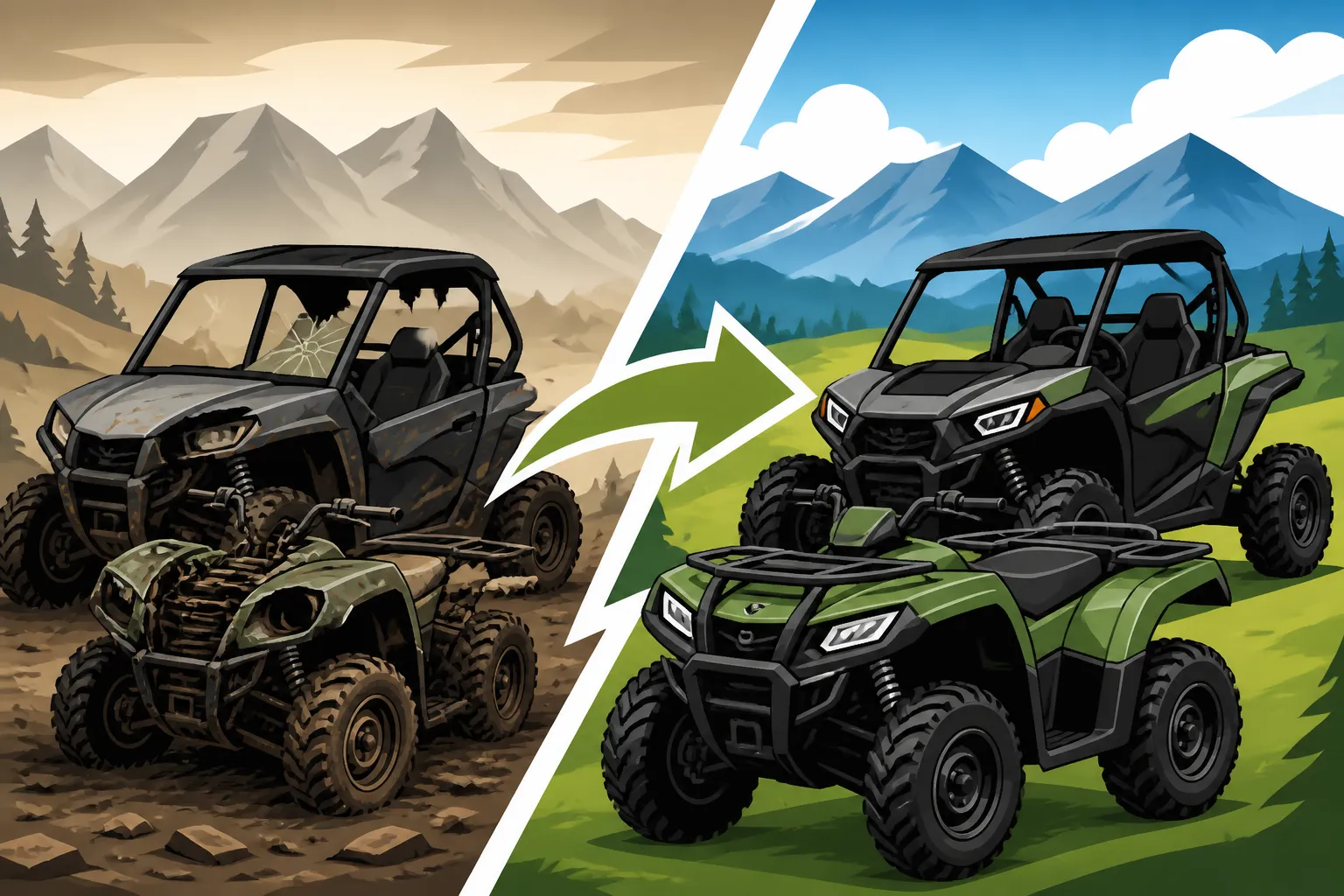
Salvage and Rebuilt Machines in Montana
Many Montanans eye a killer deal on an ATV or UTV, only to find the machine carries a "salvage" or "rebuilt" title. This can feel like a red flag, leaving you wondering if you're getting a steal or signing up for a headache, especially when you're dreaming of hitting those incredible Montana trails. This guide will meticulously break down what salvage and rebuilt titles mean for off-highway vehicles in Montana, what to expect if you encounter one, and how to navigate the process whether you're buying, rebuilding, or simply trying to understand the implications for your next adventure.
What "Salvage" Really Means for Your Machine in Montana
When an ATV or UTV is involved in a significant incident, its future can take a turn that leads to a "salvage" designation. This isn't just about superficial damage; it's a legal and financial declaration that forever marks the machine's history. Understanding this initial status is crucial before you even consider bringing such a machine home.
Defining a Total Loss in the Big Sky Country
In Montana, as in most places, an off-highway vehicle (OHV) receives a "salvage" title when an insurance company declares it a "total loss." This doesn't necessarily mean the machine is utterly destroyed and beyond repair. Instead, it's an economic decision. If the estimated cost to repair the damage, plus the salvage value of the wrecked machine, exceeds a certain percentage of its fair market value before the damage, the insurer will declare it a total loss. Imagine a side-by-side that rolled on a rocky trail in the Bitterroot Mountains. It might have a bent frame, shattered plastics, and a damaged suspension. While these items can be replaced, the cumulative cost of parts and labor can quickly surpass the machine's pre-accident value, especially for an older model.
Once an OHV is declared a total loss, the insurance company typically pays out the owner for the vehicle's value. The original title is then surrendered to the state, and a new "salvage" certificate or title is issued. This document legally brands the machine, indicating its history of significant damage. It's a permanent mark that warns future owners about its past, setting the stage for everything that comes next.
Common Reasons for a Montana OHV to Get a Salvage Title
Several scenarios can lead a perfectly capable-looking ATV or UTV to end up with a salvage title. The most obvious, of course, is accident damage. A severe rollover, a head-on collision with a tree, or even a hard impact with a rock on a challenging trail can cause enough structural or mechanical damage to warrant a total loss declaration. Picture a high-performance quad that missed a turn on the [Wild Bill OHV Trails] and ended up in a ditch, crunching its front end. The repair bill for frame work, A-arms, and steering components can easily total it out.
Beyond accidents, theft recovery is another common culprit. A machine might be stolen, and even if it's eventually recovered, it could be missing vital components, vandalized, or sustained damage during the theft. The cost to replace an engine, electrical harness, or even just all the body panels can add up quickly, leading an insurer to deem it a total loss rather than fund extensive repairs. While less frequent for OHVs than cars, flood or fire damage can also lead to a salvage title. Imagine a UTV caught in a shed fire in central Montana or submerged during an unexpected flash flood—the water damage to electronics, engine, and drivetrain can be catastrophic and financially unfeasible to repair.
Understanding the Legal Implications
The moment an OHV receives a "salvage" title in Montana, its legal status changes dramatically. Most importantly, a machine holding a salvage title cannot be legally registered, insured for operation, or operated on public lands, trails, or roads in Montana. It is essentially considered unroadworthy for public use. It's meant for parts, or for someone to undertake a complete rebuilding process. If you were to purchase an ATV with a salvage title, understand that you cannot simply take it to the county treasurer's office and apply for [Registering an OHV in Montana] or get [Montana County Treasurer OHV Registration]. It must first go through a rigorous repair and inspection process to earn a "rebuilt" designation.
The salvage brand on the title is permanent. This means that even if the machine is expertly repaired and eventually granted a "rebuilt" title, its history will always be visible. This has significant implications for its future value, resale potential, and even the ease of getting [Insuring an ATV in Montana]. Anyone buying a machine with a salvage history, even if it's now rebuilt, is taking on a vehicle that carries a distinct warning about its past.
The Path from Salvage to Rebuilt Status in Montana
For those who see potential in a salvage-titled ATV or UTV, the journey to making it roadworthy again is specific and regulated. It's not just about fixing the obvious damage; it's about proving to the state that the machine is once again safe and legitimate for public use.
The Reconstruction Process: What it Entails
Taking a salvage OHV and transforming it into a rebuilt one is a detailed undertaking that requires careful planning and execution. The reconstruction process goes far beyond basic cosmetic fixes. It involves addressing all the underlying damage that led to the salvage declaration in the first place. This could mean frame straightening, replacing major engine components, overhauling the suspension system, or completely rewiring the electrical system after fire or water damage. Every repair must be performed to a standard that ensures the machine is structurally sound and functionally safe.
Crucially, every part purchased and every labor hour spent needs meticulous documentation. You'll need receipts for all new and used parts, even small ones like brake lines or light bulbs. If you hire a mechanic, keep detailed invoices. If you do the work yourself, you'll still need receipts for all materials. This paper trail is not merely for your records; it's a mandatory requirement for the state inspection that follows. Montana wants to ensure that the machine is legitimately repaired and that no stolen parts have been used in its reconstruction. Using a detailed record-keeping system, perhaps even a basic agreement template from a service like LawDepot for any parts acquired from private parties, can help keep everything organized for the eventual inspection.
Montana's Inspection Requirements for Rebuilt Machines
Once all repairs are completed, the rebuilt OHV must undergo a thorough inspection by an authorized agent in Montana. This inspection is a critical step in transitioning from a salvage title to a rebuilt one. In Montana, these inspections are typically conducted by law enforcement officers—either from the Montana Highway Patrol, a County Sheriff's Office, or a City Police Department. Some specific agents might also be authorized. The purpose of this inspection is multi-faceted. First and foremost, the inspector will verify the Vehicle Identification Number (VIN) to ensure it matches the salvage title and hasn't been tampered with. This also involves checking for any signs that stolen parts were integrated into the machine, which might involve cross-referencing VINs from major components like the engine and frame. If you're wondering [Where a Side-by-Side Hides Its VIN], it's good to know for this process.
Beyond identity verification, the inspection focuses on safety. The officer will meticulously check that all safety-critical components are functional and meet minimum standards. This includes confirming that the brakes are working correctly, headlights and taillights illuminate, turn signals (if applicable) function, and the steering system is tight and responsive. They're not necessarily doing a full mechanical tear-down to assess the quality of every weld, but they are ensuring the machine is safe for operation on public lands and that no illegal components have been used. If the machine fails the inspection, the inspector will provide a list of deficiencies that need to be corrected, and you'll have to arrange for a re-inspection once the issues are addressed.
Receiving the Rebuilt Title Document
Successfully passing the state inspection is a huge milestone, but it's not the final step. The last piece of the puzzle is obtaining the actual "rebuilt" title document from the state. With your inspection certificate in hand, along with the original salvage title and proof of ownership (like your bill of sale and all those repair receipts), you'll head to your local county treasurer's office. This is the same place you'd go for [Titling an OHV in Montana] in any other circumstance.
At the treasurer's office, you'll present all your documentation. They will process the paperwork, officially change the machine's status in the state's records, and issue you a new title certificate. This new title will clearly state "REBUILT" on it, permanently marking the machine's history. While it's no longer a "salvage" vehicle and can now be legally registered and operated, that "rebuilt" brand will remain. It’s a transparent indicator for all future owners, ensuring everyone is aware of the machine's past. Once you have this rebuilt title, you can proceed with getting your [Montana OHV Decals and Rear Placement] and hitting the trails.
Buying and Selling a Salvage or Rebuilt OHV in Montana
Navigating the market for salvage or rebuilt OHVs in Montana presents a unique set of challenges and opportunities. Whether you're looking for a budget-friendly project or trying to offload a repaired machine, knowing the intricacies of the transaction is key to a smooth and legally compliant process.
What to Look For When Buying a Rebuilt Machine
Purchasing an ATV or UTV with a rebuilt title can save you a significant amount of money upfront, but it requires an extra layer of diligence. The most crucial step is to get a thorough pre-purchase inspection by a trusted, independent mechanic who specializes in OHVs. Do not just take the seller's word for it, no matter how convincing they might sound. This mechanic should meticulously check the frame for any signs of residual damage, misalignment, or shoddy repairs. They should also inspect the suspension components, engine integrity, transmission, and the entire electrical system. Look for any evidence of patched-up work, mismatched parts, or corrosion that might indicate past flood damage.
Beyond the mechanical inspection, ask the seller for all available repair records. This includes receipts for parts, invoices for labor, and especially photos taken before and during the repair process. The official state inspection certificate that allowed the machine to get its rebuilt title is also paramount. A transparent seller will have these documents readily available. If they can't provide them, consider that a major red flag. Always run a comprehensive VIN check to verify the machine's history, looking for accident reports, theft recoveries (which you can do before buying, similar to [Checking a Used Quad for a Theft Report]), and any inconsistencies with the title status. Finally, a thorough test ride on varied terrain, if possible, is essential. Listen for unusual noises, feel for vibrations, and evaluate the steering and braking responsiveness.
The Paperwork Trail: Ensuring a Smooth Transaction
When dealing with a rebuilt or salvage OHV, the paperwork becomes even more critical than with a clean-title machine. For a rebuilt machine, the bill of sale must explicitly state its "REBUILT" status. This isn't just a nicety; it's a critical disclosure that protects both buyer and seller. You might consider using a professional bill of sale template, perhaps from a service like LawDepot, to ensure all necessary disclosures and transaction details are thoroughly documented. This aligns with advice found in [What a Montana Bill of Sale Should Say]. The seller must provide you with the actual rebuilt title, which you will then use to transfer ownership into your name at the county treasurer's office.
If you are buying a machine that still carries a "salvage" title, understand that this is purely for parts or for you to undertake the rebuilding process yourself. You cannot operate it on public land, and you cannot get standard registration or insurance until it goes through the full repair and rebuilt inspection process. The bill of sale for a salvage machine should also clearly indicate its status and that it's being sold "as is." Never assume you can skip steps with a salvage title; Montana's rules are clear on the path to making it legally operable.
Disclosing the Status When You Sell
If you're selling an ATV or UTV that carries a "rebuilt" title in Montana, you have a legal and ethical obligation to disclose this status to any potential buyer. Attempting to hide this information can lead to serious legal repercussions, including accusations of fraud. Transparency is always the best policy. Be upfront about the machine's history: explain what kind of damage led to the salvage title, what repairs were performed, and provide all the documentation you collected during the rebuilding process, including the state inspection certificate and repair receipts.
While being transparent might mean the machine takes longer to sell or commands a lower price compared to a similar model with a clean title, it builds trust and protects you from future liabilities. Buyers are often wary of rebuilt titles, so setting realistic expectations about the machine's value and being honest about its past is crucial. Even if the repairs were done professionally and the machine runs flawlessly, the "rebuilt" brand will always influence its market perception and likely result in a reduced resale value.
Living with a Rebuilt Title: Long-Term Considerations in Montana
Owning a rebuilt ATV or UTV is a bit like adopting a rescue animal with a mysterious past – you might get a loyal companion, but you need to be prepared for potential quirks or health issues down the line. While a rebuilt machine can offer years of enjoyment on Montana's diverse terrains, it comes with specific long-term considerations that are important to acknowledge.
Maintenance and Longevity Expectations
The longevity and reliability of a rebuilt OHV depend almost entirely on the quality of the initial repairs. If the reconstruction was done haphazardly, with cheap parts or inexperienced labor, you might face a cascade of recurring issues. This could manifest as persistent electrical glitches, premature wear on suspension components, or even structural fatigue that becomes evident after repeated stress from aggressive riding. For example, if the frame was bent and improperly straightened, hidden stresses could eventually lead to cracks in critical areas, especially when tackling steep climbs or technical descents in the [Custer Gallatin Trails Near Bozeman].
Conversely, a machine rebuilt by a skilled professional using quality parts might be just as reliable as a clean-title machine. The key is ongoing vigilance. Even with excellent repairs, it’s wise to conduct more frequent personal inspections of critical components like frame welds, suspension mounts, steering linkages, and brake lines. Look for any signs of stress, corrosion, or loosening fasteners. Keep meticulous records of all post-purchase maintenance and any further repairs you undertake. This not only helps you track the machine's health but also provides valuable documentation if you ever decide to sell it.
Potential Resale Value Challenges
One of the most significant long-term impacts of a rebuilt title is on the machine's resale value. No matter how perfectly repaired your ATV or UTV might be, the "rebuilt" brand on its title will almost certainly lead to significant depreciation compared to a similar model with a clean title. Many potential buyers are inherently wary of rebuilt vehicles, fearing hidden damage, safety concerns, or future difficulties with insurance. They often assume that the initial "deal" you got when purchasing it will translate into a lower selling price for them down the road.
This means that while you might have saved money on the initial purchase, some of that savings will likely be "lost" when it's time to sell. The market for rebuilt OHVs is often smaller and more niche, attracting buyers primarily focused on price or those looking for a project. Don't be surprised if your rebuilt UTV, even after years of trouble-free riding, fetches 20-40% less than a comparable machine without a branded title. This is simply the market's perception of risk and the permanent mark on the vehicle's history. Understanding this upfront can help you set realistic expectations for your investment.
Safety Concerns and Due Diligence
The paramount concern with any rebuilt OHV should always be safety. While the state inspection ensures minimum safety standards are met to get the rebuilt title, it's not a guarantee against all future issues or a stamp of approval on the quality of every repair. If you didn't personally oversee or perform the repairs, you are inherently trusting the work of others. This trust should be tempered with continuous personal due diligence.
Regularly inspect critical safety components. Check brake pads and rotors frequently, ensure all lights are working before every ride, and pay close attention to the feel of the steering and suspension. Any unusual noises, vibrations, or changes in handling should be investigated immediately. Consider getting an annual professional inspection, especially if you plan to tackle challenging terrain. Always err on the side of caution. If something feels off, or if you suspect an underlying issue, don't risk it on the trails. Prioritizing safety not only protects you and your passengers but also ensures you get to keep enjoying Montana's amazing outdoor opportunities.
Navigating Insurance and Financing for Rebuilt OHVs
Even after a salvage ATV or UTV has been expertly rebuilt and legally titled, its branded status continues to influence critical aspects of ownership: insurance and financing. These areas often present the most significant hurdles for owners of rebuilt machines in Montana.
Insuring a Machine with a Rebuilt Title
Getting insurance for an OHV with a rebuilt title can be more complex than for a clean-title machine. While some insurance providers in Montana will offer coverage, many are hesitant to provide comprehensive or collision coverage due to the perceived higher risk and the difficulty in accurately assessing the machine's post-repair value. You might find that some insurers will only offer basic liability coverage, which protects others in case you're at fault in an accident, but won't cover damage to your own machine. This is a crucial consideration, as [Insuring an ATV in Montana] for potential damage is often a key reason owners seek full coverage.
Even if you find a company willing to offer full coverage, expect potentially higher premiums. Furthermore, the payout in the event of a future total loss can be significantly impacted. Insurers typically base payouts on "actual cash value" (ACV), and a rebuilt title almost always depreciates the ACV. This means that if your rebuilt machine is totaled again, the payout might be substantially less than what you would receive for a clean-title equivalent, reflecting the permanent value reduction associated with its history. It's vital to be completely transparent with your insurer about the rebuilt status and to shop around, comparing quotes and coverage limitations from multiple providers.
Challenges with Financing a Rebuilt OHV
For many buyers, securing financing for an ATV or UTV with a rebuilt title is a significant hurdle, and often, it's simply not possible. Most traditional lenders view these machines as higher risk collateral. The branded title often leads to a lower market value, making it difficult for the lender to recover their investment if the borrower defaults. The machine simply doesn't hold its value as well as a clean-titled counterpart, which is a major concern for financial institutions.
If you do manage to find a lender willing to finance a rebuilt OHV, expect stricter terms. This might include higher interest rates to offset the increased risk, shorter loan terms, or a requirement for a much larger down payment. Many savvy buyers of rebuilt machines opt to pay cash outright to avoid these financing challenges. If you're considering setting up a business entity like an LLC for ownership (though perhaps less common for a single rebuilt OHV), understanding [What a Montana LLC Costs to Set Up] and its implications for asset financing might be relevant, though generally, lenders are wary regardless of the ownership structure for a branded title.
Montana's Perspective on Value Depreciation
Montana is well-known for certain financial benefits, such as [No Sales Tax on a Montana Machine Purchase]. However, these benefits don't negate the very real and permanent impact of a rebuilt title on an OHV's financial value. The depreciation associated with a rebuilt title is a significant factor in the long-term cost of ownership, regardless of any initial sales tax savings. While you might save money upfront on the purchase price, that initial discount often needs to be weighed against the challenges of insurance, the difficulty of financing, and the almost certain reduction in resale value down the line.
The market in Montana, like elsewhere, applies a discount to rebuilt vehicles because of the perceived risk and the permanent mark on the title. It's not just a fleeting perception; it's a financial reality that affects everything from insurance appraisals to potential trade-in values at dealerships. Therefore, when considering a rebuilt ATV or UTV, it's crucial to look beyond the attractive initial price tag and factor in the entire financial picture over the machine's lifespan.
| Feature | Salvage Title | Rebuilt Title |
|---|---|---|
| Status | Declared a "total loss" by insurer | Machine has been repaired and inspected after previously being salvage |
| Legality of Use | Cannot be legally registered or operated | Can be legally registered, insured, and operated on public land/roads |
| Primary Purpose | For parts or reconstruction | For active use, with a permanent brand on its history |
| Value Implication | Very low market value, significant depreciation | Still depreciated compared to clean title, but higher than salvage |
| Required Action | Repairs and state inspection needed to become rebuilt | Ready for registration and use, but still carries a historical flag |
| Insurance | Uninsurable for operation, only storage/liability | Potentially insurable, but may have higher premiums or limited coverage options |
| Financing | Virtually impossible to finance | Difficult to finance, often requires cash purchase |
Disclaimer
This article is for general informational purposes only and does not constitute professional advice. Laws, prices and regulations vary by location and change over time. Consult a qualified professional for guidance on your specific situation.