Where a Side-by-Side Hides Its VIN
Let's face it, trying to track down the Vehicle Identification Number (VIN) on your side-by-side can feel like a scavenger hunt, especially when you're under pressure to get your paperwork sorted for a Montana adventure. Whether you're a new owner trying to register your machine, a seller preparing for a private party sale, or just needing to confirm details for an insurance quote, that 17-character code is absolutely essential. This guide is here to take the mystery out of it, walking you through the most common and even some of the sneakier spots manufacturers hide the VIN on your UTV.
Why Finding Your VIN is So Crucial in Montana
That string of numbers and letters isn't just a random code; it's the unique DNA of your side-by-side, holding vital information about its origins, features, and history. In a state like Montana, where off-highway vehicle (OHV) culture is strong, a clear and accurate VIN is non-negotiable for a smooth ownership experience. Ignoring its importance can lead to significant headaches, delays, and even legal complications down the road.
Registration and Titling Requirements
One of the first and most critical reasons you'll need your VIN is for official state processes, specifically when you're getting your machine ready to hit Montana's incredible trails. When you head to your local county treasurer's office to [Registering an OHV in Montana] or [Titling an OHV in Montana], the VIN is the cornerstone of all that paperwork. The clerk will need to verify this number, often requiring you to physically present the machine or provide a clear photo of the stamped VIN for inspection.
Imagine the frustration: You've taken time off work, driven to the county seat, waited in line, only to be told you can't complete the registration because the VIN is obscured or you can't find it. This scenario is unfortunately common, and it's easily avoided with a little preparation. An unreadable or incorrect VIN can halt the entire process, sending you home empty-handed and needing to reschedule. It’s more than just a bureaucratic hurdle; it’s about establishing legal ownership and ensuring your machine is properly documented for public land use.
The Importance for Buying and Selling
When you're involved in a transaction, whether buying a used side-by-side or selling your current one, the VIN becomes your primary tool for security and transparency. As a buyer, verifying the VIN is paramount to protecting yourself from fraud. You absolutely must match the VIN on the machine to the VIN listed on the title and any other sales documents, like a [Montana Bill of Sale]. This simple step confirms you're buying the exact machine the seller claims to own and that the paperwork is legitimate. It also allows you to perform a background check, which is crucial for tasks like [Checking a Used Quad for a Theft Report] to ensure you're not unknowingly purchasing stolen property.
For sellers, providing a clear and correct VIN on all sales paperwork, particularly for [Proof of Ownership for a Montana Title], protects you from future disputes and ensures a clean transfer of ownership. Using reputable forms, such as those that can be generated through services like LawDepot, can help ensure all the necessary details, including the critical VIN, are accurately captured for both parties' protection. An error in the VIN on the bill of sale or title can lead to serious headaches for the new owner when they try to register it, potentially delaying their ability to enjoy their new rig on Montana's vast trail system.
Insurance and Legalities
Beyond registration and sales, the VIN plays a pivotal role in the ongoing legal and financial aspects of owning a UTV. When you go to [Insuring an ATV in Montana], your insurance provider will use the VIN to identify your specific machine, its year, make, and model. This information is critical for accurately assessing risk, determining policy coverage, and calculating your premiums. Without a correct VIN, getting comprehensive insurance coverage can be difficult, leaving you exposed in the event of an accident or theft.
Furthermore, in the unfortunate circumstance of theft, the VIN is the single most important identifier for law enforcement to track and potentially recover your machine. When you report a theft, providing the VIN is the first thing authorities will ask for, as it's logged into national databases. For efforts like [Recovering a Stolen Machine in Montana], the VIN acts as an undeniable fingerprint, proving that the recovered machine is indeed yours. It's the unique identifier that gives your machine a legal identity, differentiating it from every other side-by-side out there.
Common Places to Look for Your UTV's VIN
Most side-by-side manufacturers follow some general guidelines when it comes to VIN placement, aiming for spots that are relatively easy to access and less prone to damage. However, even within these common areas, there can be variations. It often requires a bit of kneeling, peering, and sometimes even removing a panel or two. Don't be shy about getting a little dirty; finding that VIN is worth the effort!
The Frame Rail: Driver's Side Front or Rear
One of the most traditional and enduring locations for a VIN is stamped directly into the machine's main frame rail. This is usually found on the driver's side of the vehicle. You'll want to get down on your hands and knees and visually inspect the frame, starting from near the front left wheel and working your way back. On many models, it might be located a few inches behind the front tire, on the horizontal or vertical section of the frame. Other times, it's situated closer to the rear, perhaps above or near the rear wheel well.
Because the VIN is stamped into the metal, it's designed to be permanent and resilient to wear. However, it can often become obscured by mud, dirt, rust, or even layers of paint. If you suspect it's in this area but can't quite make it out, grab a wire brush, some degreaser, and a rag. Gently clean the area thoroughly. Sometimes, just brushing away a thick layer of grime is all it takes to reveal those crucial characters. Don't be afraid to give it a good scrub to ensure every digit is legible.
Steering Column and Dash Area
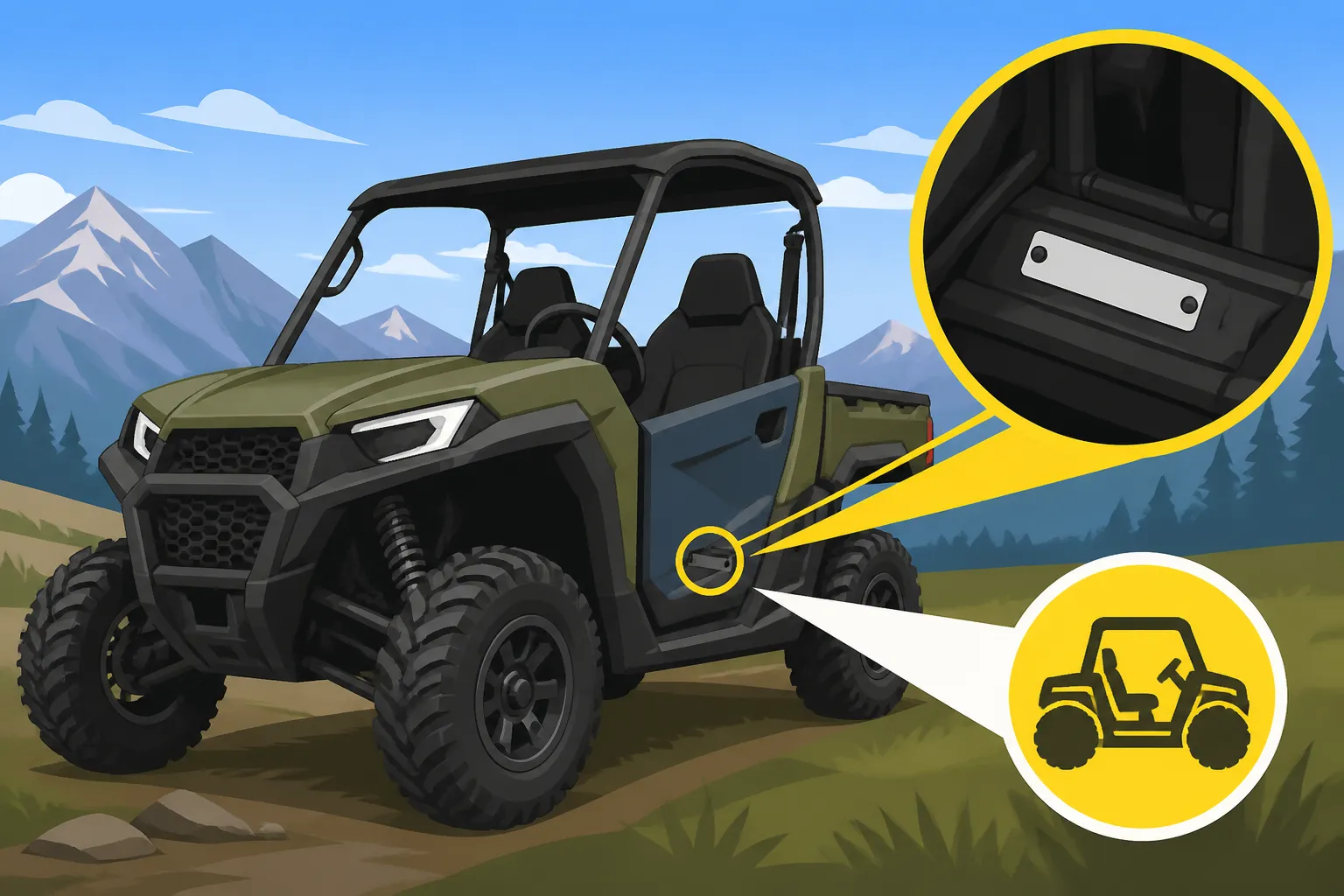
For many modern UTVs, especially those designed with more automotive-like interiors, the VIN can often be found in a more accessible spot: near the steering column or on the dashboard. This is a particularly convenient location, as it often allows you to see the VIN without having to crawl under the machine. Look for a small metal plate or a sticker affixed to the frame or a panel.
Check the base of the steering column, where it meets the floorboard or firewall. Sometimes it's right there, boldly printed. Another common spot is on the left side of the dashboard, often visible through the windshield if your UTV has one. If not on the dash itself, look inside the glove box, or if your machine has a small storage compartment near the driver's knees, check there too. These locations are often chosen for ease of access during inspections or when quickly needing to reference the number. Just remember that stickers can sometimes fade or peel over time, so if it's a sticker, ensure it's still fully intact and readable.
Under the Seat or in the Engine Bay
If the front frame or dash areas don't yield results, it's time to explore the heart of the machine: under the seat or within the engine bay. Many UTVs have a hinged or removable seat section, often on the driver's side or across the entire bench. Lifting this section can reveal a host of hidden gems, including the VIN. Look directly at the frame members underneath where the seat cushion rests. It might be stamped into a cross-member, a mounting bracket, or a structural support beam.
Similarly, the engine bay is another key area. Even if the engine itself takes up most of the space, manufacturers will often stamp the VIN into a sturdy frame component within the bay. This could be on a radiator support bracket, a main frame rail running alongside the engine, or even a firewall panel. This area might be cramped, requiring you to use a strong flashlight and even a small mirror to peer into tight spots. Be cautious around hot engine components or moving parts if the machine has been recently run. The goal is to carefully examine any solid, non-removable metal parts you can access.
Less Obvious and Manufacturer-Specific Locations
While there are common spots, some manufacturers have their own preferences, or they might place secondary VINs in less visible areas. If you've scoured the usual suspects and still come up empty-handed, don't despair. It's time to get a little more thorough and think like the engineers who designed the machine. This is where patience truly becomes a virtue, and a good light source is your best friend.
Passenger Side Frame and Control Arms
While the driver's side is a more prevalent spot for the VIN, it's not unheard of for a manufacturer to stamp it on the passenger side frame rail. This could be anywhere from the front wheel well to the rear. So, if your initial search on the driver's side was fruitless, simply switch sides and repeat your detailed inspection. Follow the main frame tube from front to back, looking for any raised or stamped characters.
Beyond the main frame, some manufacturers opt to place the VIN on a major suspension component. For instance, you might find it stamped into a front or rear lower control arm, particularly where it connects to the main frame. These are robust parts, and stamping the VIN there ensures it's unlikely to be accidentally removed or destroyed. It's a less common spot, but if you're truly stumped, inspecting these heavy-duty components is a wise next step. Remember, the VIN is always on a non-removable, structural part of the vehicle.
Shock Towers and Radiator Support
As you continue your deep dive, expand your search to other structural elements that are integral to the UTV's chassis. The shock towers – the robust structures where your suspension's shocks mount to the frame – are prime candidates. These are sturdy, fixed points, and a manufacturer might choose to stamp the VIN into the metal of these towers, either in the front or the rear. You might need to look on the inside or outside faces of these towers, so a mirror can be very helpful here.
Another area to consider is the radiator support. This is the framework that holds the radiator in place, usually at the very front of the machine, behind the grille. It's a significant structural component, making it a viable spot for a VIN stamping. You might need to remove a grille cover or a plastic panel to get a clear view, but these are often designed for relatively easy access for maintenance. Always ensure the engine is cool before working near the radiator.
Inside the Fender Wells or Under the Dump Bed
Finally, for those truly elusive VINs, you might have to delve into less conventional areas. Take a moment to thoroughly inspect the inside of the fender wells. These areas often expose segments of the frame that are otherwise hidden. Get a bright light and look along the top, side, and rear sections of the frame as it passes through the wheel well. Mud flaps or inner fender liners might need to be temporarily pushed aside or even removed if they're obstructing your view.
For utility-focused UTVs with a dump bed, lifting or tilting the dump bed can reveal a wealth of hidden frame components. Many manufacturers will stamp the VIN on a cross-member or a main frame rail directly underneath the bed. This spot is often protected from direct impacts and road grime, making the VIN potentially clearer. Be sure to engage any safety supports to hold the bed in the upright position securely before crawling underneath. Sometimes, the most inconvenient locations end up being the right ones.
Tips for Locating and Reading a Difficult VIN
Finding a VIN that's obscured by years of Montana trail dust, mud, or even a thick coat of paint can be a real test of patience. Sometimes, even once you've found it, reading the faint or partially damaged stamping can be a challenge in itself. But with a few tricks and the right tools, you can usually decipher that all-important code.
Cleaning and Lighting Techniques
When you're dealing with a VIN that's stubbornly hidden under grime, your first line of attack is thorough cleaning. For caked-on mud or dirt, a stiff bristle brush or a wire brush (used gently, you don't want to damage the stamping itself!) can work wonders. Follow this with a strong degreaser or all-purpose cleaner and a good scrub with a rag. For rust or old paint, you might try a very fine-grit sandpaper or steel wool with extreme caution, just enough to reveal the characters without abrading them away. Remember, the goal is to make the existing stamping legible, not to alter it.
Lighting is equally crucial. A weak phone flashlight often won't cut it. Invest in a powerful LED flashlight or, even better, a headlamp that leaves your hands free. Direct the light at different angles. Sometimes, glancing light will make the stamped characters stand out more clearly than direct illumination. If the area is particularly tight or hard to see directly, a small mirror (like an inspection mirror or even a dentist's mirror) can be invaluable for peering around corners or into recesses. Don't hesitate to take multiple photos with your phone from different angles and zoom in on the pictures; digital magnification can often reveal characters your naked eye struggles with.
Understanding VIN Formats and Decoding
Once you've found a legible VIN, it's helpful to understand its structure. Since 1981, all vehicles, including side-by-sides, use a standardized 17-character VIN. This code isn't random; it's a carefully organized sequence that tells a story about your machine. The first three characters form the World Manufacturer Identifier (WMI), which tells you who made the vehicle and where. For example, "1HF" might be for a Honda ATV made in the US. The next six characters (positions 4-9) make up the Vehicle Descriptor Section (VDS), describing the vehicle's attributes like model, body style, and engine type. This is where you might find information like [Finding the Model Year in Your UTV's VIN].
The final eight characters (positions 10-17) are the Vehicle Identifier Section (VIS). Position 10 indicates the model year, and position 11 is the manufacturing plant code. The last six characters are the unique serial number, which differentiates your specific machine from all others of the same make and model. If you're creating important documents like a bill of sale, services like LawDepot can provide templates that guide you in including all necessary details, and ensuring the VIN is accurately transcribed into these documents is paramount. Taking the time to correctly record the VIN on your [What a Montana Bill of Sale Should Say] will save you untold grief later. If you're looking for the VIN on specific models, like a Polaris Ranger, you might find specific guidance on [Where to Find the VIN on a Polaris Ranger].
When to Seek Professional Help
There are times when, despite your best efforts, the VIN remains elusive, or worse, appears damaged or tampered with. If you've scoured every possible location and still can't find it, your next step should be to contact a dealer for your specific UTV brand. They often have detailed diagrams or manufacturer-specific knowledge about VIN locations that aren't publicly available. A quick call to your local Polaris, Can-Am, or Honda dealer in Montana might save you hours of fruitless searching.
However, if the VIN is completely missing, unreadable, or doesn't match the paperwork you have (for example, if you just purchased the machine and the title VIN is different), this is a red flag. A missing or altered VIN could indicate a stolen vehicle or a machine with a problematic history, such as a salvaged title ([Buying a Salvage Machine in Montana]) where the VIN may have been damaged or re-stamped. In such cases, it's wise to proceed with extreme caution. You might need to involve the Montana Motor Vehicle Division or a trusted mechanic who can perform a more thorough inspection and help you understand the next steps, potentially even assisting with [Fixing a Wrong VIN on a Montana Title] if an error was made on existing documents. It's always better to address these issues upfront than face serious legal or financial repercussions later.
Here's a quick reference for common VIN challenges:
| Challenge | Description | Solution |
|---|---|---|
| Obscured by Dirt/Grime | The VIN is present but covered by caked-on mud, dust, or grease, making characters illegible. | Use a wire brush, degreaser, and rag to thoroughly clean the suspected area. Take photos from different angles for better visibility. |
| Faint or Rusted Stamping | Over time, stamped VINs can fade or rust, making them difficult to read clearly. | Gently use fine-grit sandpaper or steel wool to lightly clean the surface rust. Use a strong flashlight or headlamp, directing light at various angles to highlight the impressions. Try rubbing chalk or a pencil over the area to make characters stand out. |
| Hard-to-Reach Location | The VIN is in a tight spot, under components, or requires an awkward angle to view. | Utilize an inspection mirror, a flexible camera scope (borescope), or your phone's camera (with zoom) to reach and photograph the area. Consider temporarily removing non-structural panels for better access. |
| Misleading Information | A sticker or plate that looks like a VIN is present but is not the official stamped chassis VIN (e.g., engine serial number). | Always look for the 17-character VIN stamped directly into the frame or a major structural component, not just a label. Cross-reference with your title or manufacturer's guidelines. Remember [What a Montana Bill of Sale Should Say] about matching the frame VIN. |
| No VIN Found After Extensive Search | You've checked all common and less common areas, but the 17-character VIN appears to be entirely absent or severely damaged/removed. | Contact your UTV dealer for model-specific VIN location diagrams. If still unsuccessful or if the VIN appears tampered with, consult the Montana Motor Vehicle Division or law enforcement, as this could indicate a significant issue with the machine's history. |
| VIN on Paperwork Doesn't Match | The VIN on your title or bill of sale is different from the VIN you found on the machine. | Do NOT proceed with the purchase or registration until this discrepancy is resolved. This is a major red flag. Contact the seller immediately to clarify, and if necessary, involve legal counsel or the authorities to investigate the discrepancy. See [Fixing a Wrong VIN on a Montana Title]. |
Disclaimer
This article is for general informational purposes only and does not constitute professional advice. Laws, prices and regulations vary by location and change over time. Consult a qualified professional for guidance on your specific situation.