Penalties for an Unregistered OHV in Montana
There's nothing quite like hitting a Montana trail or forest road on your ATV or UTV, the engine humming as you take in those big sky views. But that feeling can vanish in an instant if you're stopped by a warden or sheriff and your machine isn't properly registered. It's a common oversight or perhaps a calculated risk some folks take, but the consequences of operating an unregistered off-highway vehicle (OHV) in Big Sky Country can quickly turn your fun into a significant headache, costing you far more than the simple registration fees. This guide is here to walk you through exactly what those penalties look like, why they exist, and how to avoid them, so you can ride with confidence and stay on the right side of Montana law.
The Core Requirement: Why Registration Matters in Montana
You might think of your ATV or UTV as just a recreational toy, but in the eyes of Montana law, it's a vehicle that requires proper identification and a way to fund the trails and services you enjoy. Skipping registration isn't just a minor infraction; it undermines the system that keeps our riding areas open and maintained.
Montana's Stance on Off-Highway Vehicle Use
Montana prides itself on its vast public lands and the incredible access they offer for outdoor recreation, including OHV riding. However, with that access comes responsibility. The state's registration system for ATVs and UTVs serves several vital purposes. First, it helps track ownership, which is crucial for law enforcement in cases of theft or accidents. Second, and perhaps most importantly for riders, the fees collected from registration directly contribute to the Montana Department of Fish, Wildlife & Parks (FWP) OHV Program. This program is responsible for developing, maintaining, and managing OHV recreation facilities and trails across the state.
When you register your machine, you're not just getting a sticker; you're investing in the future of Montana's riding opportunities. Without registration, you're essentially using these public resources without contributing your fair share, which can lead to friction with land managers and other user groups. The legal framework is designed to ensure sustainable access, and non-compliance can threaten that access for everyone. Remember, even if you’re primarily riding on private land, you often need to cross public roads or trails to get there, bringing you under state jurisdiction.
What Constitutes an "Unregistered" OHV?
An "unregistered" OHV in Montana isn't just a machine that's never been registered. It also includes machines with expired registrations, or those that have been sold and the new owner hasn't completed the necessary transfer paperwork. In Montana, most OHVs are subject to a [Montana's One-Time Permanent OHV Registration], meaning once you register it, it's generally good for the life of the machine under your ownership. However, this doesn't mean you can forget about it entirely.
You also need a visible OHV decal on the rear of your machine, clearly showing proof of registration. [Montana OHV Decals and Rear Placement] are not just decorative stickers; they are the most obvious sign to a warden that your machine is compliant. If you don't have the decal, or if it's placed incorrectly or obscured, you could still face questions and potential penalties, even if your registration is technically current. Furthermore, you're expected to carry proof of registration with you while riding, typically in the form of a registration card. Without this documentation, proving your machine is registered becomes difficult on the spot, potentially leading to delays or even a citation until the issue can be verified.
Immediate Consequences of Being Caught
Imagine this: you're enjoying a beautiful ride through the Lolo National Forest, perhaps near Missoula, when suddenly you see a law enforcement vehicle ahead. Your heart might sink if you know your registration is not current. The immediate aftermath of being stopped for an unregistered OHV can range from a stern warning to a significantly disrupted day, impacting your wallet and your riding plans.
Fines and Citations: The Monetary Hit
The most direct and common penalty for operating an unregistered OHV in Montana is a fine. These aren't typically minor slap-on-the-wrist tickets; they can be substantial and certainly more expensive than the actual registration fee you bypassed. The exact amount can vary depending on the jurisdiction (state FWP, county sheriff, or even local police in some areas) and the discretion of the issuing officer. What might start as a modest base fine can quickly escalate with additional court fees and surcharges.
Beyond the initial financial sting, receiving a citation can be a frustrating and time-consuming experience. You might need to appear in court, which means taking time off work or other activities, traveling, and potentially explaining your situation to a judge. This process alone can be more burdensome than the fine itself. It's not just about the money you pay; it's about the hours lost and the stress of dealing with the legal system, all for something that could have been easily avoided. The impact of these fines can be felt acutely, especially if you're on a family vacation where every dollar counts.
The Impoundment Risk: Losing Your Machine
While not every stop for an unregistered OHV results in impoundment, it is absolutely a possibility, especially for repeat offenders or if there are other contributing factors like reckless operation or no proof of ownership. Picture this scenario: you're miles from your truck or camp, and suddenly your side-by-side is being loaded onto a tow truck. This isn't just inconvenient; it's a full-blown logistical nightmare. Your riding trip is immediately over, and you're left stranded.
The cost of recovering an impounded OHV can be exorbitant. You'll likely face towing fees, storage fees that accrue daily, and potentially additional administrative fees from the impounding agency. These costs can quickly dwarf the initial registration fee and even the citation fine, adding up to hundreds or even thousands of dollars. Plus, you'll need to arrange transportation back to wherever you were coming from and then figure out how to get your machine out of impound. It's a stressful, expensive, and deeply frustrating experience that underscores the importance of simple compliance.
On-Site Enforcement and the "No More Riding" Scenario
Even if your machine isn't impounded, being caught without proper registration almost always means your riding day is over. A warden or sheriff isn't likely to let you continue on your way if your OHV is found to be non-compliant. You'll be instructed to load your machine onto your trailer or otherwise remove it from public lands or roads. This means cutting your adventure short, potentially leaving your riding partners to continue without you, or forcing everyone to pack up and head home.
The disappointment can be palpable, especially if you've traveled a long distance to reach a popular riding area like the Shepherd Mountain Trails near Billings or the Custer Gallatin trails around Bozeman. All the planning, the gas, the time off work—all of it can be wasted because of a missing or expired registration. This immediate cessation of riding is a powerful deterrent and a very real consequence that many riders unfortunately learn the hard way. It’s a moment that makes you wish you'd taken five minutes to check your paperwork before heading out the door.
Beyond the Initial Stop: Ongoing Problems
The immediate penalties for an unregistered OHV in Montana are certainly impactful, but the consequences don't always end when the citation is written or the machine is recovered. There can be ripple effects that extend far beyond that initial uncomfortable encounter with law enforcement, potentially causing future issues with your insurance, the sale of your machine, and even repeat encounters with authorities.
Increased Scrutiny and Repeat Offenses
Once you've been cited for an unregistered OHV, you might find yourself on a radar, so to speak. Law enforcement agencies maintain records, and a previous infraction could lead to increased scrutiny if you're stopped again. Repeat offenses often carry escalating penalties, meaning the fines could be higher, and the likelihood of impoundment increases significantly. What was a warning or a smaller fine the first time could easily become a much more severe consequence upon a second or third stop.
Furthermore, if you're caught repeatedly, it signals a disregard for state laws and regulations, which can affect how an officer perceives your intentions. This isn't just about the financial hit; it's about building a record that could lead to more serious legal entanglements down the line. It's far better to address the issue promptly after a first offense rather than hoping you won't get caught again, a gamble that rarely pays off in the long run.
Issues with Insurance Coverage and Liability
This is one of the most concerning, yet often overlooked, consequences of operating an unregistered OHV. Many insurance policies for ATVs and UTVs have clauses that can void coverage if the machine is not legally registered and operated according to state laws. Imagine being involved in an accident, whether it's a minor fender bender or something more serious, and finding out your insurance company won't cover the damages or liability because your machine wasn't registered.
Suddenly, you could be personally responsible for thousands of dollars in repairs to your own machine, damage to another person's property, or even medical bills if someone is injured. This is a terrifying prospect, especially in an accident involving other vehicles or individuals. [Insuring an ATV in Montana] is a critical step for responsible ownership, but that insurance may become meaningless if you haven't fulfilled the basic legal requirement of registration. The peace of mind that insurance provides evaporates, leaving you exposed to significant financial risk.
Difficulty Selling an Unregistered Machine
When the time comes to sell your ATV or UTV, having it properly registered and titled is paramount for a smooth transaction. Potential buyers in Montana are often wary of machines without proper paperwork, as they know it will be a hassle, if not impossible, for them to legally [Titling an OHV in Montana] and register it themselves. An unregistered machine often indicates a lack of clear ownership history or a previous owner who skirted legal requirements, raising red flags for a buyer.
Even if you find a buyer willing to take on the risk, you'll almost certainly have to significantly lower your asking price. The perceived value of your machine diminishes dramatically without proper registration and a clean title. You might also encounter problems with transferring ownership if you don't have the necessary documentation. Without a clear chain of title and proof that all registration requirements were met, completing a legal sale can be a frustrating, drawn-out process. This applies especially if you're trying to sell a machine that was never titled or registered, making it nearly impossible for the new owner to get the required documents. In some cases, resources like LawDepot can help you draft a comprehensive bill of sale, which, while helpful, doesn't negate the need for proper registration history. [Selling a Machine With No Title] is a prime example of a situation where lack of initial paperwork creates major issues down the road.
The Cost-Benefit Analysis: Registering vs. Risking Penalties
When you look at the big picture, the decision to register your OHV in Montana is really a no-brainer. The minimal costs and effort involved in legal registration pale in comparison to the potential financial, legal, and emotional fallout of being caught with an unregistered machine. It's about making a responsible choice that benefits both you and the greater riding community.
The Actual Cost of Montana OHV Registration
Let's be realistic: no one loves paying fees. But the cost to [Registering an OHV in Montana] is surprisingly affordable, especially considering it's a one-time permanent registration for most machines. While specific figures can change, you're generally looking at a nominal fee when you first register your machine at your local county treasurer's office. This small investment covers the administrative costs and contributes directly to the state's OHV program.
When you weigh this small, one-time payment against the potential costs of a citation, impoundment fees, and possible legal expenses, the registration fee becomes an undeniable bargain. It's a small barrier to entry that unlocks years of worry-free riding on Montana's incredible trail systems. Think of it as purchasing an insurance policy against future headaches – one that pays for itself many times over. [Montana OHV Registration Cost at the Treasurer] is a small price to pay for compliance and peace of mind.
The Peace of Mind and Legal Compliance
There's an undeniable feeling of freedom that comes with knowing you're fully compliant with all state laws. When a warden waves you down to check your registration or trail pass, you can confidently present your documents, knowing your adventure won't be cut short. This peace of mind allows you to truly focus on the ride itself, the beautiful scenery, and the company of your friends and family, rather than constantly looking over your shoulder.
Being legally registered also means you're contributing to the greater good of the Montana OHV community. Your registration fees help maintain the trails, facilities, and access points that everyone enjoys. You become a part of the solution, not a potential problem. This sense of responsible participation enhances the overall riding experience, knowing that you're doing your part to keep these beloved recreational opportunities available for generations to come. [What Permanent Registration Actually Buys You] is more than just a sticker; it's an investment in a sustainable future for Montana riding.
How to Get Your OHV Registered in Montana
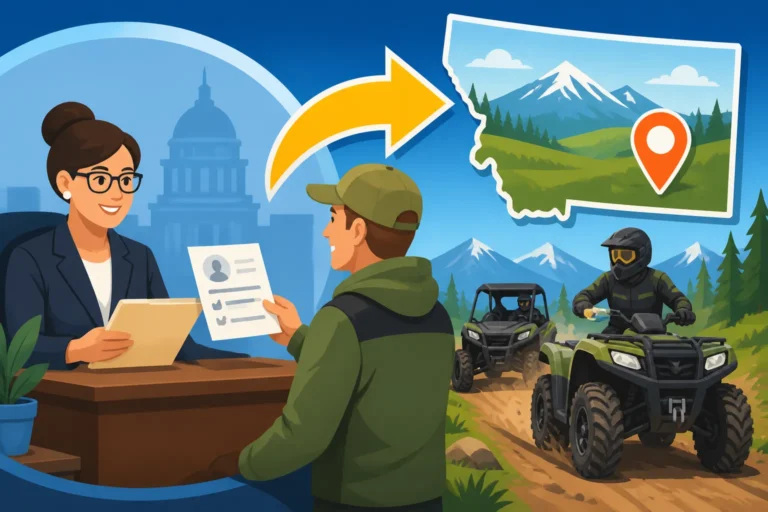
The process of registering your OHV in Montana is straightforward. Typically, you'll visit your local county treasurer's office with your proof of ownership (like a manufacturer's statement of origin or a title from a previous owner), a bill of sale, and your identification. They'll guide you through the paperwork, collect the fees, and issue your registration and decal. It’s usually a quick and efficient process.
It's a good idea to gather all your documents beforehand to ensure a smooth visit. If you're buying a used machine, ensure the seller provides all necessary paperwork, including a properly signed-off title or a comprehensive bill of sale. For creating thorough documents, a service like LawDepot can be helpful for drafting clear, legally sound agreements like a bill of sale when you're purchasing or selling. Once registered, make sure to affix your decal in the correct location and always carry your registration card with you. [Keeping Registration Papers on the Machine] is not just good practice, it's often a legal requirement.
Common Misconceptions and Special Cases
Even experienced riders can sometimes get confused about Montana's OHV laws, especially when it comes to specific situations like riding on private land or for out-of-state visitors. Dispelling these myths and clarifying special circumstances is key to avoiding penalties.
"Just Riding on Private Land" – The Montana Reality
A common misconception is that if you're "just riding on private land," registration isn't necessary. While you don't typically need state registration to ride exclusively on your own private property or private land for which you have explicit permission, the reality in Montana is rarely that simple. Many private parcels are landlocked, requiring you to cross public roads, easements, or even a sliver of state or federal land to reach them. The moment your tires touch public ground, even for a short distance, your OHV must be registered.
Furthermore, if you ever need to transport your OHV on a public road or highway, even on a trailer, having it registered (and titled, if required) can simplify matters, especially if you're stopped for any reason. While the law might allow for some narrow exceptions for agricultural use on private land, for the vast majority of recreational riders, assuming "private land only" exempts you from registration is a risky bet that could lead to penalties. If you intend to take your machine anywhere off your private property, registration is the safest and most compliant route. [Montana Rules for Work Machines] may have specific exemptions, but recreational machines rarely qualify.
Out-of-State Riders and Montana's Rules
Montana is a premier destination for OHV enthusiasts, attracting riders from all over the country. Many visitors assume that if their machine is registered in their home state, they're automatically good to go in Montana. Unfortunately, that's not always the case. Montana requires non-resident OHV operators to purchase a [Montana's Non-Resident Temporary Use Permit] if they plan to ride on designated trails or public lands. This permit is separate from your home state's registration and directly contributes to Montana's trail maintenance.
Being caught without this non-resident permit can lead to similar penalties as operating an unregistered resident machine. Ignorance of the law is generally not a valid defense. It’s crucial for out-of-state visitors to research Montana's specific requirements before hitting the trails. This means securing your non-resident permit well in advance, and knowing [What a Montana Warden Asks a Rider For] if you're stopped. It's a small extra step that ensures your vacation isn't ruined by an unexpected fine.
Borrowed Machines and Lending Your OHV
Lending your ATV or UTV to a friend or family member is a generous gesture, but it comes with responsibilities. If you lend your machine, it's still your responsibility to ensure it's properly registered. If your friend gets stopped on an unregistered OHV, you, as the owner, could face consequences. The penalties for an unregistered machine don't magically transfer solely to the operator; the owner typically bears the ultimate legal responsibility.
Conversely, if you borrow a machine, it's prudent to confirm with the owner that it is properly registered and that you have all necessary documentation, including the registration card. You should also have proof of permission to operate the machine. Some riders even go so far as to use a simple lending agreement, which can be easily drafted using online legal form services like LawDepot, to ensure clarity on responsibilities and permissions. This helps protect both the owner and the borrower in case of an incident or an encounter with law enforcement. Don't let a friendly favor turn into a legal headache for either party.
Avoiding Penalties: Proactive Steps
The best way to deal with penalties for an unregistered OHV is to avoid them entirely. A little bit of proactive effort goes a long way in ensuring your riding adventures in Montana are always enjoyable and stress-free. Compliance is simple, affordable, and protects you from unforeseen complications.
Checking Your Registration Status
First and foremost, make it a habit to regularly check the registration status of all your OHVs. While Montana's permanent registration means you don't have annual renewals for most machines, it doesn't mean you should forget about it entirely. Decals can fade, peel, or become damaged over time. Ensure your physical decal is always present and clearly visible. If you're ever in doubt, a quick call or visit to your local county treasurer's office can confirm your machine's registration status.
This is especially critical if you've recently purchased a used machine. Never assume the previous owner completed all the necessary steps, or that the registration will automatically transfer. Always verify the registration and titling status yourself before you hit the trails. An hour spent confirming paperwork can save you hundreds, if not thousands, of dollars and immense frustration down the line.
Keeping Documents Accessible
When you're out riding, your registration card should be on your person or securely stored on your OHV. Many riders use a waterproof bag or a small compartment on their machine to keep these essential documents safe from the elements and readily available. [Keeping Registration Papers on the Machine] is not just good practice, it's crucial if you're stopped by law enforcement. Being able to produce your registration immediately can prevent unnecessary delays or even a citation if the officer can't quickly verify your compliance.
Beyond registration, also ensure you have proof of insurance, especially if you plan to ride on any public roads where it might be required. For younger riders, also carry their [Montana OHV Safety Education Requirements] certificate. Having everything in order signals to law enforcement that you're a responsible operator, which can often lead to a more amicable interaction.
Educating Yourself on Montana OHV Laws
Montana's OHV laws can be complex and are subject to change, especially concerning road access, local ordinances, and specific land management rules. Taking the time to educate yourself on these regulations is perhaps the most important proactive step you can take. Read the FWP OHV regulations, consult Motor Vehicle Use Maps (MVUMs) for federal lands, and check with local county or town offices if you plan to ride near populated areas.
Understanding where you can and cannot ride, what equipment is required for road use (if permitted), and the rules for different types of land will dramatically reduce your risk of unintentional violations. Websites from the Montana FWP and local OHV clubs are excellent resources. Staying informed is your best defense against inadvertently breaking the law and incurring penalties. You can also learn about various fines and specific violations, such as [Penalties for a Missing Decal] or [Fines for Illegal Road Riding], by understanding the regulations.
| Feature | Proper OHV Registration | Operating Unregistered OHV |
|---|---|---|
| Cost | Nominal one-time fee | Significant fines, towing, storage fees, potential legal costs |
| Legality | Fully compliant with state law | Illegal, subject to citation and penalties |
| Peace of Mind | High: Ride without worry, confident in compliance | Low: Constant concern of being stopped and consequences |
| Insurance Impact | Valid insurance coverage for accidents, liability | Risk of voided insurance, personal financial liability |
| Machine Status | Easy to prove ownership, smooth resale value | Difficult to prove ownership, reduced resale value |
| Riding Time | Uninterrupted enjoyment of trails | Immediate cessation of riding if caught, impoundment |
| Community Impact | Contributes to trail maintenance & access for all | Harms OHV program funding, creates negative perception |
Disclaimer
This article is for general informational purposes only and does not constitute professional advice. Laws, prices and regulations vary by location and change over time. Consult a qualified professional for guidance on your specific situation.