Why Montana Has No General Sales Tax
It’s a common moment for anyone new to Montana, or even long-time residents just getting used to it: you’re at the checkout counter, calculator in hand, ready to figure out the sales tax on that new set of tires for your ATV or the UTV you’ve been eyeing. And then… nothing. The price on the tag is the price you pay. For many, this is a delightful surprise, while for others from high-tax states, it sparks confusion. This guide dives deep into why Montana proudly stands apart with no general sales tax, and what that truly means for your wallet, especially when it comes to buying big-ticket items like off-highway vehicles.
The Historical Roots of Montana's Sales Tax Policy
Montana's status as one of the few states without a general sales tax isn't a recent development or a fleeting political whim; it's deeply ingrained in the state's history and economic philosophy. Unlike many other states that adopted sales taxes during the Great Depression or in post-war economic booms, Montana consistently chose a different path for generating revenue. This decision was a reflection of the state's pioneering spirit, a desire to keep the burden off individual transactions, and a belief that other forms of taxation were more equitable or manageable for its unique economy.
A Legacy of No Broad Consumption Tax
Montana's legislative history shows a clear and consistent pattern of rejecting proposals for a statewide general sales tax. This wasn't for lack of trying by some factions, but rather a persistent voter and legislative opposition. The reasons are multifaceted. Historically, Montana's economy was heavily reliant on natural resources like mining, agriculture, and timber. Early lawmakers felt that taxing consumption broadly would disproportionately affect these industries and the hardworking individuals who powered them, many of whom were already facing fluctuating commodity prices and economic uncertainty. There was a strong sentiment that taxes should target income or property, which were seen as more stable indicators of wealth and ability to pay.
This long-standing policy has had a profound impact on Montana's economic landscape and the mindset of its residents. It fostered a culture where the sticker price truly is the final price, creating a sense of transparency and predictability in transactions. For small businesses, it meant simpler accounting without the added complexity of collecting, reporting, and remitting sales tax. For consumers, it often translated to a slightly lower cost of living on goods, even if other taxes picked up some of the slack. This legacy continues to inform debates about state fiscal policy, with many Montanans fiercely protective of their sales-tax-free status, viewing it as a core part of their state identity.
Different Approaches to State Revenue
So, if Montana doesn't collect a general sales tax, how does it fund its roads, schools, public services, and everything else a state needs? The answer lies in its reliance on other significant revenue streams. Montana primarily funds its government through individual income taxes, property taxes, and a variety of specific excise taxes. Individual income tax is a major contributor, collected from wages and other income sources, much like the federal income tax. Property taxes, levied on real estate, are another cornerstone, funding local governments and school districts across the state, from Missoula to Billings.
Beyond these two main pillars, Montana also employs a range of targeted excise taxes. These are specific taxes on certain goods or services, such as fuel taxes, tobacco taxes, alcohol taxes, and even a lodging tax on hotel stays. For example, visitors staying in a resort town like Whitefish might notice a lodging tax added to their bill, but this isn't a general sales tax; it's a specific tax designed to capture revenue from tourism to support local services. These taxes are often earmarked for specific purposes, like fuel taxes going directly to road maintenance and construction. This mosaic of taxes creates a very different fiscal environment than states heavily reliant on a broad sales tax, shifting the burden from consumption to income and property ownership, alongside specific activities or purchases.
Understanding What "No General Sales Tax" Really Means for Residents and Visitors
The absence of a general sales tax in Montana is a significant characteristic that impacts almost every financial transaction within the state. It's not just a technicality; it’s a tangible benefit that residents experience daily and that often surprises visitors. Understanding its implications is key to appreciating Montana's unique economic environment.
The Immediate Savings on Goods and Services
For Montanans, the lack of a general sales tax means that when you see a price tag on an item, whether it's a gallon of milk, a new pair of boots, or a piece of furniture, that's the price you pay at the register. There's no extra percentage tacked on, no complicated calculations, and no sudden jump in the total cost. This directness brings a refreshing simplicity to everyday shopping. Imagine buying groceries for your family in Bozeman; the total you anticipate is the total you get, dollar for dollar. This isn't just a psychological win; it means more of your hard-earned money stays in your pocket with every purchase.
This benefit extends to larger purchases as well. If you’re furnishing a home in Great Falls or buying new appliances, the savings can be substantial compared to states with sales taxes often ranging from 5% to over 10%. When you consider how much sales tax can add up over a year on all your various purchases, it's clear that Montana's policy translates into genuine, ongoing financial relief for its residents. For consumers weary of hidden fees and ever-increasing costs, [No Sales Tax in Montana and What That Means] is a welcome relief.
Specific Taxes Still Apply
While Montana prides itself on not having a general sales tax, it’s crucial to understand that this doesn't mean the state is entirely tax-free on every single transaction. There are still specific taxes that apply to certain goods and services, often referred to as excise taxes. These are targeted taxes, usually levied on specific items like gasoline, tobacco, alcohol, and lodging. For instance, if you book a cabin for a weekend getaway in Big Sky, you'll likely see a lodging tax added to your bill. Similarly, renting a car at Glacier Park International Airport will include a rental vehicle tax.
These specific taxes are designed to generate revenue from particular sectors or activities, often with a clear purpose in mind. Fuel taxes, for example, typically go directly towards funding road construction and maintenance. Alcohol and tobacco taxes might fund public health initiatives or be part of broader general revenue. The key distinction is that these are not a percentage applied to nearly every good and service, as a general sales tax would be. They are narrowly focused. So, while you won't pay a general sales tax on your new winter jacket in Helena, you will pay a specific tax on the beer you buy to celebrate wearing it.
Implications for Buying Big-Ticket Items Like OHVs
This is where the rubber meets the trail for our community. The absence of a general sales tax makes Montana a particularly attractive place to purchase big-ticket items like ATVs, UTVs, motorcycles, and snowmobiles. Imagine walking into a dealership in Kalispell, picking out that brand new Polaris RZR or a trusty Can-Am Defender you've been dreaming of, and knowing that the price listed on the window is essentially the final price you'll pay, aside from licensing and registration fees. There’s no additional 6%, 7%, or even 10% sales tax adding thousands of dollars to the total cost. [No Sales Tax on a Montana Machine Purchase] means substantial upfront savings, a huge benefit whether you're buying a new machine or a used one.
For local residents, this directly impacts purchasing power. That money saved on sales tax can go towards essential accessories like helmets, winches, plows, or even put a dent in the cost of [Insuring an ATV in Montana]. It simplifies budgeting immensely, as you don't have to factor in that extra percentage. This benefit is a major draw for individuals and families looking to equip themselves for Montana's vast recreational opportunities, from exploring the Custer Gallatin National Forest to working on a ranch in eastern Montana. It’s one of the primary reasons why local dealerships can often offer highly competitive pricing compared to their counterparts in neighboring states.
The Broader Economic Philosophy Behind Montana's Tax Structure
Montana's decision to forgo a general sales tax is not merely a historical quirk; it's a deliberate part of its economic philosophy, shaping everything from business investment to population growth. This approach influences how the state positions itself within the regional and national economy.
Attracting Business and Residents
One of the most frequently cited benefits of Montana's sales-tax-free environment is its perceived ability to attract new businesses and residents. For entrepreneurs looking to set up shop, particularly in retail or service industries, the absence of sales tax collection simplifies operations and can make the state more competitive. Businesses don't have to deal with the administrative burden of calculating, collecting, and remitting sales taxes, which can be complex, especially for small businesses. This reduction in overhead can be a significant draw.
Furthermore, the lack of sales tax is often used as a selling point to encourage individuals to relocate to Montana. The argument is that while property or income taxes might exist, the overall cost of living, particularly for those who consume a lot of goods, can be lower. This policy aims to keep more money in the hands of consumers, theoretically encouraging them to spend it locally, thereby stimulating the state's economy. Whether it's buying local produce at a farmers' market in Missoula or patronizing a small gear shop in Bozeman, the money you save on sales tax might be spent right back in the community.
Debates and Challenges to the Current System
Despite the deeply ingrained nature of Montana's no-sales-tax policy, it's not without its challenges and ongoing debates. Periodically, especially during times of tight state budgets or when significant infrastructure needs arise, the question of implementing a sales tax resurfaces in legislative discussions. Proponents argue that a sales tax could provide a more stable and diverse revenue stream, capturing income from the millions of tourists who visit Montana each year without necessarily increasing the burden on residents. They might also point to the potential for a sales tax to fund specific public services, such as education or healthcare, which are always in need of additional resources.
However, these proposals invariably face strong opposition. Critics argue that a sales tax would be regressive, disproportionately affecting lower-income households who spend a larger percentage of their income on essential goods. They also raise concerns about the administrative costs for businesses, the potential negative impact on local economies if consumers change their spending habits, and the fundamental shift it would represent in Montana's identity. Changing such a long-standing policy is not just an economic decision; it's a political and cultural battle, deeply rooted in the state's independent spirit. The debate often centers on balancing the need for public services with the desire to maintain a tax structure that many Montanans feel is fair and beneficial.
What Out-of-State Buyers Need to Know: The Use Tax Reality
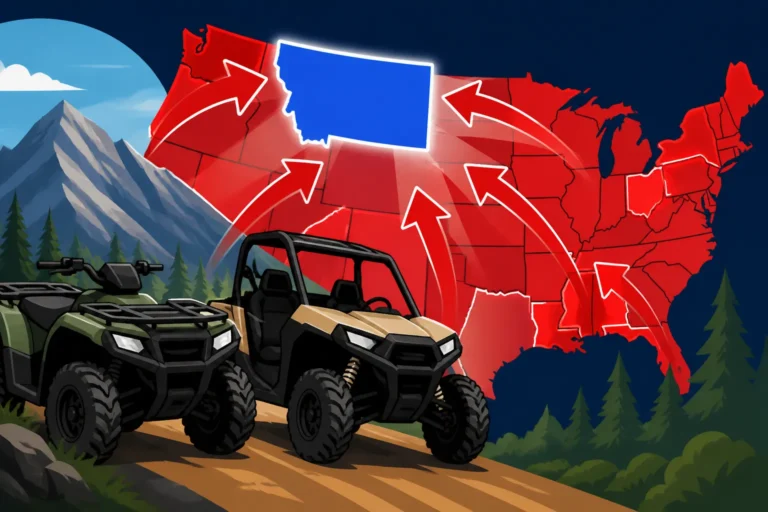
This is where the allure of "no sales tax" gets a dose of reality for our out-of-state friends. While Montana doesn't charge you sales tax at the point of purchase, your home state very likely has something called a "use tax." This is a crucial distinction and a frequent source of frustration and confusion for buyers.
The Home State Use Tax Obligation
It’s a scenario played out countless times: a buyer from a neighboring state drives to Montana, thrilled at the prospect of saving thousands on a new ATV or UTV because there's no sales tax. They complete the purchase, often with a simple bill of sale, like one you might generate using resources similar to those found on LawDepot, and head home, feeling like they've beaten the system. However, what many don't realize is that virtually every state with a sales tax also has a "use tax." This tax is essentially a sales tax by another name, applied to items purchased outside the state but intended for use within the state. The idea is to level the playing field, ensuring that residents can't simply cross state lines to avoid paying sales tax on significant purchases.
Think of it this way: if you live in Washington, which has a sales tax, and buy an ATV from a dealer in Spokane, you pay sales tax. If you buy that same ATV from a dealer in Missoula, Montana, and bring it home to Washington, your state of Washington still expects you to pay the equivalent sales tax, which they call a use tax. This applies to vehicles, including off-highway vehicles, which are typically subject to sales tax in most states. When you go to [Registering an Out-of-State Machine in Montana] (if you were planning to use an LLC) or register the machine in your home state, that's often when your home state's Department of Motor Vehicles or revenue agency will ask about the sales tax you paid. If none was paid, they will then assess the use tax. This is why [Use Tax Your Home State Still Wants] is such an important topic for out-of-state buyers.
How States Track Out-of-State Purchases
You might be wondering, "How would my state even know I bought an ATV in Montana?" The answer is, they have several ways, and they are getting increasingly sophisticated. One of the most common methods is through vehicle registration. When you bring your newly purchased ATV or UTV to your home state to get a title and license plate (or OHV registration), the Department of Motor Vehicles or equivalent agency will ask for proof of purchase and usually inquire about sales tax paid. If the paperwork shows a Montana purchase with no sales tax collected, it raises an immediate flag.
Many states also have agreements to share registration data, allowing them to cross-reference purchases. For larger dealerships, some states require them to report out-of-state sales, though this varies. Furthermore, for highly expensive items or vehicles, simply observing a new machine with Montana plates in a non-Montana resident's driveway can sometimes trigger an inquiry, especially in states bordering Montana. The "30-day rule" is also a common mechanism: many states require you to register a newly acquired vehicle within a certain timeframe, typically 30 days, and that's when the use tax becomes due. Understanding [How the 30-Day Rule Works in Your Home State] is critical for avoiding penalties. It's often not a matter of if your state finds out, but when.
The Risks of Attempting to Evade Use Tax
Attempting to avoid your home state's use tax by purchasing a machine in Montana and not reporting it can lead to significant headaches and financial penalties. This is not a trivial matter, as states are increasingly aggressive in recovering these lost revenues. The most immediate consequence is typically being assessed the full amount of the use tax, along with substantial interest charges and penalties. These penalties can sometimes be as much as 100% or more of the original tax due, effectively doubling your financial obligation. For a $20,000 UTV, a 6% sales tax would be $1,200, but with penalties and interest, you could easily be looking at $2,400 or more. [Back Taxes and Penalties After an Audit] can be a harsh reality.
In more egregious cases, or for very high-value items, some states might even pursue felony charges for tax evasion, especially if there's a pattern of deliberate concealment or misrepresentation. While the temptation to save money is strong, the potential legal and financial repercussions far outweigh any short-term gain. It’s always advisable to comply with your home state’s tax laws. If you're considering setting up a Montana LLC to hold your vehicle, be absolutely sure you understand the nuances and legal requirements, as this route has specific rules and risks that can lead to [Montana LLC Risks for an Out-of-State Owner] if not handled correctly. Consulting a tax professional or reviewing general legal guides on platforms like LawDepot can provide valuable insights into tax obligations and necessary documentation, but always remember that state tax laws are complex and personal advice from a qualified expert is paramount. The best course of action is always to understand and pay [Paying Your Own State After a Montana Purchase] when you bring your machine home.
Here's a quick look at how Montana's tax approach differs:
| Feature | Montana (No General Sales Tax) | Most Other States (With Sales Tax) |
|---|---|---|
| Transaction Tax | No general tax on goods/services. | Percentage of purchase price added to nearly all goods/services. |
| Primary Revenue | Individual Income Tax, Property Tax, Excise Taxes (e.g., fuel, lodging, alcohol, tobacco). | Sales Tax, Income Tax (in many cases), Property Tax, Excise Taxes. |
| Cost of OHV Purchase | Sticker price is largely the final price (plus registration/title fees). | Sticker price + Sales Tax (adds hundreds or thousands to total). |
| Out-of-State Buyers | No sales tax paid in Montana, but home state Use Tax almost always applies. | Sales tax paid at point of purchase if buying in-state. If out-of-state, home state Use Tax applies. |
| Economic Philosophy | Stimulate spending, reduce administrative burden for businesses, attract residents. | Broad-based revenue collection, often seen as stable. |
Disclaimer
This article is for general informational purposes only and does not constitute professional advice. Laws, prices and regulations vary by location and change over time. Consult a qualified professional for guidance on your specific situation.