Titling an ATV at a Montana County Treasurer
Navigating the paperwork for your ATV or UTV in Montana can feel like tackling a muddy, unmarked trail after a spring thaw – confusing, a little daunting, and you just want to get to the clear path. Many riders find themselves scratching their heads when it comes to getting that official title for their off-highway vehicle (OHV), especially when they're dealing with a private sale or moving from out of state. This comprehensive guide is here to demystify the process of titling your ATV or UTV at a Montana County Treasurer's office, ensuring you have all your ducks in a row and a smooth ride through the administrative hurdles.
Understanding the Montana Titling Process for ATVs and UTVs
When you first bring home that shiny new (or new-to-you) ATV or UTV, the excitement of hitting the trails is palpable. But before you can truly enjoy those Big Sky Country adventures, there's a crucial step that often gets overlooked or misunderstood: titling your machine. In Montana, the titling process is fundamental to establishing legal ownership, and it’s handled right in your local county treasurer's office, the same place you might register your car or boat.
Why Titling Matters in Montana Even for Off-Highway Vehicles
You might think, "It's an off-road machine, why does it need a title like a car?" It's a fair question, and one many new OHV owners ponder. The simple truth is, a title is your ultimate proof of ownership. It's a legal document that establishes you as the rightful owner of that specific vehicle, identified by its unique Vehicle Identification Number (VIN). Without it, proving that the quad or side-by-side truly belongs to you can be incredibly difficult, opening you up to all sorts of potential headaches down the line.
Consider a scenario where your beloved UTV is unfortunately stolen. Without a title in your name, law enforcement might struggle to verify your ownership, complicating its recovery. Or perhaps you decide to sell your machine in a few years; a clean title is absolutely essential for a smooth and legitimate sale, providing peace of mind to both you and the buyer. It also becomes critical if you ever need to secure a loan against the vehicle or if there's any dispute over its ownership. The title is the bedrock of your legal claim.
Beyond these practical reasons, Montana law dictates that most motorized vehicles, including ATVs and UTVs, must have a title. This ensures a consistent system for tracking ownership, managing vehicle transactions, and ultimately, keeping accurate records across the state. While registration allows you to legally operate the machine on designated public lands and roads, the title confirms who owns it. Think of registration as permission to use, and the title as proof of possession.
The Role of the County Treasurer's Office
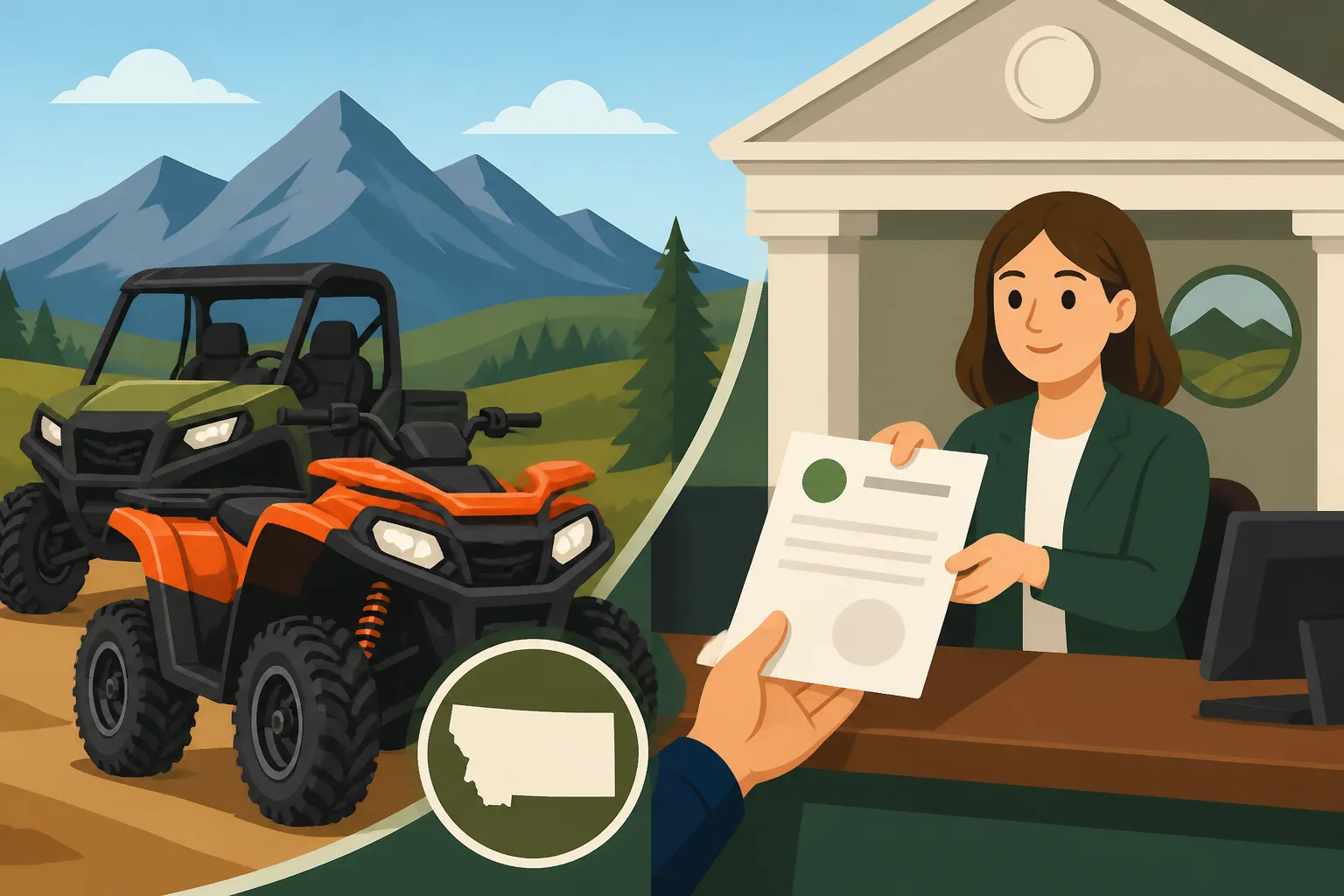
In Montana, your local County Treasurer's office is the hub for vehicle titling and registration. Unlike some states where these processes might be split between different agencies, here, it's typically a one-stop shop. This centralization aims to make things a bit easier for residents, allowing you to handle multiple vehicle-related tasks in one place. Whether you live in Flathead, Gallatin, or Yellowstone County, the procedure for [Titling an OHV in Montana] generally follows the same statewide guidelines.
The County Treasurer's staff are the folks who will review your ownership documents, verify your identity, process the fees, and ultimately submit the application for your new title to the state. They act as the front line, ensuring that all the necessary information and forms are correctly completed before your application moves forward. Their role is to ensure compliance with Montana motor vehicle laws and to maintain accurate records for the county. They are the gatekeepers to getting that official piece of paper.
When you walk into the treasurer's office, you're interacting with the part of the state government designed to facilitate these transactions. They are equipped to handle everything from first-time titles for brand new machines to transferring titles for used ones, and even guiding you through more complex situations like lost titles or special ownership circumstances. While they can't offer legal advice, they are the go-to resource for understanding the procedural requirements and ensuring your application is complete and correct.
Essential Documents You'll Need to Title Your ATV/UTV
Alright, let's talk paperwork. This is often where people start to feel overwhelmed, but with a little preparation, it's totally manageable. Having all your documents in order before you even leave your driveway will save you a lot of time and a potential second trip to the County Treasurer's office. Think of it like packing for a long ride: you don't want to forget anything crucial.
Proof of Ownership: Bills of Sale and Manufacturer's Certificates
The cornerstone of your titling application is undeniable proof that you own the ATV or UTV. For a brand-new machine purchased from a dealer, this will almost always be the Manufacturer's Certificate of Origin (MCO), sometimes called a Manufacturer's Statement of Origin (MSO). This document is like the birth certificate for your vehicle, establishing its first owner directly from the factory. The dealer will typically sign it over to you and provide it at the time of purchase. Make sure it's original, not a copy, and that all fields are accurately filled out.
If you're buying a used machine, the primary document you'll need is the previous owner's properly assigned Montana title. This means the seller must sign off on the back of their title, transferring ownership to you. Without this, you cannot title the vehicle. Alongside the assigned title, a clear and comprehensive bill of sale is critical. This document confirms the transaction, lists the buyer and seller, the date of sale, the purchase price, and most importantly, the VIN of the machine. A good bill of sale from resources like LawDepot can prevent disputes later and serves as crucial backup for your title application. It’s always smart to have a detailed bill of sale, even when an assigned title is present. For more details, check out [What a Montana Bill of Sale Should Say].
What if the previous owner never titled it, or they've lost the title? This is where things get a bit trickier, but it's not insurmountable. Montana does have procedures for dealing with [Titling a Machine the Seller Vanished On] or for older machines that may never have had a title in the first place. You might need to provide additional documentation, such as past registration receipts, a notarized statement of facts, or in some cases, even apply for a bonded title. The key is to gather as much evidence of prior ownership and continuous chain of custody as possible.
Identification and Residency Requirements
When you visit the County Treasurer's office, you're essentially proving who you are and where you live. You'll need to bring valid, government-issued photo identification. A current Montana driver's license or state ID card is usually the easiest and most accepted form. If you're a new resident, you might need additional documents to establish your Montana residency, such as a utility bill, a lease agreement, or property tax statement in your name. This ensures that you're applying for the title in the correct county and that the state can maintain accurate records.
For out-of-state buyers who intend to title their machine in Montana, the process is slightly different. If you're establishing residency, you'll go through the standard new resident process. However, if you're an out-of-state resident looking to take advantage of Montana's lack of sales tax, you might be considering a Montana LLC. While [No Sales Tax on a Montana Machine Purchase] is a significant draw, understanding the full implications, including residency, is key. Your County Treasurer will process the title based on your declared residency or the registered agent of your LLC.
The Treasurer's office also needs to verify that the person present to apply for the title is indeed the legal entity (individual or business) seeking ownership. This prevents fraudulent transactions and ensures titles are issued only to rightful owners. If multiple owners are listed, ideally all should be present, or those not present should provide a notarized power of attorney to the individual handling the transaction. This level of detail ensures the integrity of the titling system and protects everyone involved.
Dealing with Liens and Previous Owners
If the ATV or UTV you're titling was financed by the previous owner, there might be a lien recorded on the title. A lien is a legal claim against the vehicle until the debt is paid off. When you purchase a used machine, it's absolutely crucial to ensure that any existing liens have been satisfied and properly released. The previous owner should provide you with a lien release document from their lender, or the lender may send it directly to the County Treasurer or the state after the loan is paid off. Without a lien release, the title cannot be transferred cleanly into your name, and you could potentially become responsible for the previous owner's debt. This is an essential part of [Proof of Ownership for a Montana Title].
It's always a good practice to inquire about any liens when buying a used machine. You can often check the title itself, as lienholders are typically listed on the front. If you have any doubts, consider requesting a lien search through the County Treasurer's office or even a vehicle history report using the VIN. This due diligence can save you from significant financial headaches down the road. If you're the one who previously had a lien on your Montana OHV, ensure you have the proper documentation to show it has been satisfied before attempting to sell or transfer ownership.
Another common scenario involves machines that have been inherited. When an owner passes away, transferring the title requires specific legal processes, often involving probate documents or small estate affidavits. The exact requirements depend on the value of the estate and whether there's a will. Similarly, if you're attempting to title a machine with an incorrect VIN on previous paperwork, you'll need to go through the process of [Fixing a Wrong VIN on a Montana Title], which can involve inspections and affidavits. These situations underscore the importance of clear, accurate documentation and, sometimes, the need for legal guidance to ensure a valid title transfer.
Step-by-Step: The Titling Appointment at the County Treasurer
You've gathered all your documents, mentally prepared for the visit, and now it's time to head to the County Treasurer's office. While every county office has its own rhythm, knowing what to expect can make the process much smoother and less stressful. Let's walk through it.
Before You Go: Preparing for Your Visit
First things first, check your county's specific requirements and hours of operation. Many county offices now offer online appointment scheduling, which can be a huge time-saver compared to waiting in line. Look up your local County Treasurer's website for their specific instructions, forms you can print out and fill beforehand, and any special notes regarding OHV titling. Some counties might have dedicated windows or staff for motor vehicle services.
Create a checklist of all the documents you need to bring:
- Proof of Ownership: MCO (new) or properly assigned previous title + bill of sale (used).
- Lien Release (if applicable): If the vehicle had a lien.
- Identification: Valid Montana driver's license or state ID.
- Proof of Residency (if new to Montana): Utility bill, lease, etc.
- Payment: Be prepared for the fees. Most offices accept cash, checks, and debit/credit cards (though card transactions might incur a small processing fee).
- Any supporting documents: Notarized affidavits, power of attorney, probate documents, etc., for special circumstances.
It's often a good idea to make copies of all your original documents before you go. While the treasurer's office will keep some originals (like the MCO or previous title), having copies for your own records is always a smart move. Think about filling out any available forms like the Montana Title Application (MV1) in advance, but don't sign anything that needs to be notarized or witnessed until you're in the office, unless explicitly instructed otherwise.
What to Expect When You Arrive
Upon arrival, you'll likely check in or take a number, depending on the office's system. When your turn comes, you'll present your documents to a clerk. They will carefully review everything to ensure it's complete, legible, and meets state requirements. This is their chance to catch any missing signatures, incorrect VINs, or other discrepancies that would prevent the title from being issued. Don't be surprised if they ask you a few clarifying questions about the purchase or previous ownership.
The clerk will input the vehicle information and your details into their system. They will calculate the appropriate fees, which typically include a title fee, and potentially a sales tax equivalent if you're registering from out-of-state without a prior Montana registration (though Montana itself has no general sales tax). For specific information on [Montana OHV Title Fee], you can usually find this on your county's website or by calling ahead. Once all documents are approved and fees are paid, they will provide you with a temporary registration permit and receipt. This receipt is important proof that you've applied for the title and allows you to proceed with getting your OHV registered.
The actual title document isn't usually printed on the spot. Instead, your application is sent to the state motor vehicle division, which processes the official title and mails it to you. The wait time can vary, but generally, you can expect your new title to arrive in the mail within a few weeks. For more on this, check out [How Long a Title Takes to Arrive]. While you wait, keep that temporary receipt and any copies of your documents in a safe place.
Understanding the Fees Involved
While Montana famously doesn't have a statewide sales tax, there are still fees associated with titling and registering your OHV. It's crucial to budget for these. The primary fee you'll encounter at the County Treasurer's office is the title fee itself. This is a relatively modest, one-time charge for processing the legal transfer of ownership and issuing the new title document.
Beyond the title fee, you'll also pay for your OHV registration at the same time. Montana offers a [Montana's One-Time Permanent OHV Registration], which is a fantastic benefit. This means you pay a flat fee once, and that registration is valid for the lifetime of the machine in your ownership, eliminating annual renewals. There might also be an OHV trail pass fee, which helps fund trail maintenance and development. These fees can add up, so it's always best to know the current amounts before your visit. While I can't provide current figures, your local County Treasurer's office or the Montana Department of Justice website will have the most up-to-date schedule.
It's also worth noting that if you're using a debit or credit card for payment, many county offices add a small convenience fee. This isn't a state or county charge but rather a third-party processing fee. Bringing cash or a check can sometimes help you avoid this small extra cost. Understanding these various components ensures you aren't caught off guard and can complete your transaction without a hitch. The overall cost for titling and permanent registration in Montana is often considered very reasonable, especially compared to states with recurring annual registration and sales tax.
Common Titling Challenges and How to Overcome Them
Let's face it, life isn't always a smooth, paved highway, and neither is paperwork. Sometimes you hit a bump in the road when trying to title your ATV or UTV. But don't despair! Many common challenges have established solutions, and knowing what they are can save you a lot of stress.
Missing or Incomplete Paperwork
This is arguably the most frequent hurdle. You buy a used machine, and the seller hands you a title that's missing a signature, or a bill of sale that's incomplete, or perhaps they've lost a crucial document like a lien release. The County Treasurer's office needs a complete paper trail to process your title. If the previous title isn't properly assigned, or the bill of sale lacks essential details like the VIN or purchase date, they simply can't move forward.
The best defense against this is proactive communication with the seller. Before finalizing the purchase, meticulously inspect all documents. Ensure the seller signs the title in the correct spot, that the names and VINs match perfectly, and that your bill of sale includes everything required by Montana law. Using a standardized bill of sale form, perhaps sourced from LawDepot, can help ensure all necessary fields are included. If you discover missing information after the purchase, you'll likely need to contact the seller to get the necessary signatures or information. If the seller is unresponsive or untraceable, this leads to a more complex situation, potentially requiring a bonded title application.
In cases where a title is genuinely lost by the seller, they should apply for a [Replacing a Lost Montana Title] before selling it to you. You cannot apply for a replacement title for a machine you don't yet legally own. Sometimes, a sworn affidavit from the seller detailing the sale and loss of the title, along with a robust bill of sale, can help, but this is at the discretion of the county and often requires additional review.
Machines Without a Traditional Title Older Models, Homemade
What about that vintage three-wheeler from the 80s or a custom-built buggy? Not all OHVs have a traditional manufacturer's title history. Older machines, especially those manufactured before titling laws were as stringent, might never have had a formal title issued. Similarly, homemade OHVs, often built for specific ranch work or recreation, won't have an MCO. These scenarios present unique challenges but are not impossible to navigate.
For older machines without a title, you'll typically need to prove a continuous chain of ownership using other documents. This might include old registration cards, insurance policies, or a series of bills of sale. The County Treasurer might require a visual inspection of the VIN (if one exists) and potentially a notarized affidavit stating the history of the machine and why no title exists. In some cases, if you cannot definitively prove prior ownership, you might need to apply for a bonded title. This involves purchasing a surety bond to protect against claims from any unknown previous owners, essentially providing a financial guarantee to the state that you are the rightful owner.
Homemade machines often require a different process altogether. You'll likely need to submit a detailed application outlining the components used, along with receipts for major parts if available. The vehicle may need to undergo an inspection by a designated authority to verify its safety and assign a new VIN. This process ensures that even custom-built machines can be legally titled and registered, allowing them to be operated on designated trails and roads where permitted. It’s a bit more involved, but it ensures everyone is accountable.
Out-of-State Purchases and Their Unique Hurdles
Buying an ATV or UTV from a private seller or dealer in another state and bringing it to Montana introduces its own set of considerations. The most common issue is the difference in titling and registration laws between states. For example, some states may not title OHVs at all, treating them more like recreational equipment. If you purchase a machine from a state that doesn't issue titles for ATVs or UTVs, you'll need to provide equivalent proof of ownership. This usually means a robust bill of sale and possibly a previous registration card from that state.
Another factor is sales tax. While Montana doesn't have a sales tax, your home state might. If you're an out-of-state buyer using a Montana LLC to purchase the machine, it’s crucial to understand the rules around [The Montana LLC and Why Out-of-State Buyers Use It] and the potential for your home state to pursue use tax. The County Treasurer will process the Montana title based on the information provided, but they won't typically advise you on your home state's tax obligations.
When bringing a machine from another state, always ensure the VIN on the documentation matches the physical VIN on the machine. An out-of-state VIN inspection might be required to verify the vehicle's identity and ensure it hasn't been stolen. This is a common requirement to prevent illegal transfers across state lines. Be prepared to present all documentation from the selling state, even if it seems redundant, as the County Treasurer's office needs a complete history to issue a clean Montana title.
Beyond Titling: What Comes Next for Your Montana OHV
Getting your ATV or UTV titled is a monumental first step, but it's often just one part of the equation when it comes to legally operating your machine in Big Sky Country. Once the titling application is complete and approved, there are a few more details to keep in mind to ensure you're fully compliant and ready for your adventures.
The Connection Between Titling and Registration
In Montana, titling and registration for OHVs are almost always handled concurrently at the County Treasurer's office. You can't truly register a machine that isn't titled in your name, because registration is tied to the legal owner. Think of it this way: the title establishes who owns the machine, and the registration grants permission for that owner to operate it on designated public lands and roads. When you go to the treasurer's office, you'll typically complete both applications at the same time. This is why many of the required documents for titling, like your proof of ownership and identification, are also essential for registration.
Once your title application is processed and the registration fees are paid, you'll receive your official Montana OHV decals. These decals are critical for legal operation, as they signify that your machine is properly registered. You'll need to affix these decals in a visible location on your ATV or UTV, typically on the rear and sometimes on the front. Failing to properly display your decals can result in penalties. For details on placement, consult [Where a Montana OHV Decal Goes] or [Montana OHV Decals and Rear Placement]. The permanent registration, which is tied to the machine for as long as you own it, is a huge convenience, meaning you won't have to deal with annual renewal stickers.
It's a common misconception that simply having a title is enough to ride. While the title is essential for ownership, the registration and displayed decals are what law enforcement or land managers will look for to ensure legal operation on public lands. So, while titling is foundational, completing the registration process right after is equally important. [Montana County Treasurer OHV Registration] goes hand-in-hand with titling.
Receiving Your Official Montana Title
After your visit to the County Treasurer's office, you'll walk out with your receipts and temporary registration, but not the actual title document itself. As mentioned, the application is sent to the state motor vehicle division for final processing. They will print the official certificate of title and mail it to the address you provided. This usually takes a few weeks, though during peak seasons or holidays, it could take a bit longer. It's a waiting game, but a very important one.
Once your title arrives, inspect it immediately. Verify that all the information is correct: your name (or the name of your LLC), the VIN, the make, model, and year of your ATV or UTV, and that there are no errors. If you find any discrepancies, contact your County Treasurer's office as soon as possible to rectify them. Correcting errors can be a simpler process if caught early. The title is a secure, official document, often printed on special paper with security features to prevent counterfeiting.
Keep your official title in a safe and secure location. Many people keep it with other important documents like deeds, birth certificates, or financial records. Do NOT keep the title in your ATV or UTV itself. If the machine were to be stolen, you'd be handing over the proof of ownership to the thief, making recovery much harder. The title is a document of record, not something you need to carry with you when you ride.
Storing and Protecting Your Important Documents
Beyond the physical title, it's wise to maintain an organized file for all your OHV-related documents. This includes your bill of sale, the temporary registration receipt, copies of the MCO or previous title, lien releases, and any correspondence with the County Treasurer's office. Think of it as your machine's complete biography in paper form.
Having these documents readily accessible is incredibly helpful for several reasons. If you ever need to replace a lost title, having copies of the original paperwork will significantly expedite the process. When you eventually sell the machine, a well-organized folder of records demonstrates transparency and professionalism to the buyer. It can also be invaluable if you ever face an insurance claim, legal dispute, or need to prove the machine's history.
Consider storing these important papers in a fireproof safe, a secure filing cabinet, or a safe deposit box. For critical documents like your title, it's also a good idea to have a digital scan saved to a secure cloud service or external hard drive, separate from the physical originals. This redundancy ensures that even in the event of a physical disaster, you still have a record of your important vehicle information. A little bit of organization now can prevent a lot of headaches later.
Special Scenarios: Titling Under an LLC, After Death, or Gifting
While the general titling process covers most situations, life often presents unique circumstances. Montana's flexible business environment and clear ownership laws also account for specific situations like titling under a business entity, transferring ownership after someone passes away, or simply gifting a machine to a family member.
Titling an OHV Under a Business Entity
Montana is well-known for its accommodating laws regarding business entities, particularly Limited Liability Companies (LLCs), which can be attractive for out-of-state buyers looking to purchase high-value vehicles, including some luxury UTVs. While [The Montana LLC and Why Out-of-State Buyers Use It] often refers to cars or RVs, the principle can extend to expensive OHVs as well. If you choose to form an LLC in Montana to hold your ATV or UTV, the titling process will be very similar, but with the LLC as the legal owner.
When titling under an LLC, the bill of sale or MCO must list the Montana LLC as the buyer. You will need to provide documentation to the County Treasurer's office proving the existence and good standing of your LLC. This typically includes the articles of organization and an operating agreement, which designate who has the authority to act on behalf of the LLC. The person physically present at the treasurer's office must be an authorized representative of the LLC, usually an owner or registered agent, and will need to show their personal identification along with the LLC documentation. This ensures that the title is legally assigned to the business entity.
The benefit of titling under an LLC, particularly for out-of-state residents, can sometimes be related to avoiding sales tax in their home state, though this is a complex area with potential legal risks. It's crucial to understand that simply having a Montana LLC doesn't automatically exempt you from your home state's use tax laws. While a Montana treasurer will process the title for the LLC, always consult with legal and tax professionals regarding the implications in your state of residence. For Montana residents who use their OHVs for business purposes, such as ranching or guiding, titling under a business or LLC can offer liability protections and simplify accounting.
Transferring Title After an Owner Passes Away
This is a sensitive situation that requires specific legal steps to ensure a smooth transfer of ownership. When an ATV or UTV owner passes away, their machine becomes part of their estate. The process for transferring the title depends on whether the deceased had a will, the value of their total estate, and whether the OHV was owned solely or jointly.
If the machine was jointly owned with rights of survivorship (e.g., "John Doe OR Jane Doe"), the surviving owner can usually transfer the title by presenting the death certificate and the existing title to the County Treasurer. The "OR" indicates that either owner has full rights to the property. If the title lists "AND," or only the deceased owner's name, it typically falls into the estate.
For machines solely owned by the deceased, the transfer generally requires probate court involvement. This might involve an executor or administrator presenting Letters Testamentary or Letters of Administration, which are court orders authorizing them to act on behalf of the estate. For smaller estates, Montana offers a "Small Estate Affidavit" process, which can simplify the transfer of assets like vehicles without full probate. The specific forms and requirements will vary, so consulting with an attorney or the clerk of court in the county where the estate is being administered is highly recommended. The County Treasurer's office will require certified copies of these legal documents along with the original title and a death certificate to complete the transfer. [Transferring a Montana OHV After an Owner Dies] is a detailed process that must be followed carefully.
Gifting an ATV or UTV Within the Family
Gifting an ATV or UTV to a family member is a wonderful gesture, but it still requires a legal change of ownership to be properly titled. While no money changes hands, the process at the County Treasurer's office is similar to a sale, just without a purchase price. The donor (the giver) must properly assign the existing title to the recipient (the receiver).
On the back of the Montana title, there's usually a section for transferring ownership. The donor will sign this section, indicating the transfer to the recipient. While a formal bill of sale isn't strictly necessary for a gift, it can still be a good idea to create a simple document, sometimes available from LawDepot, stating that the machine is being gifted, listing the donor and recipient, the date, and the machine's VIN. This provides clear documentation of the intent to gift and zero financial transaction, which can be useful for tax purposes or future questions. For more specific guidance on this, see [Gifting a Quad Inside the Family].
The recipient will then take the assigned title (and optional gift bill of sale), their identification, and proof of Montana residency to the County Treasurer's office. They will complete the title application, pay the title fee, and register the machine in their name. The absence of a monetary transaction typically means there's no sales tax (which Montana doesn't have anyway) or use tax to declare for the gift, but it's important to accurately report it as a gift on the title application. This ensures a clean transfer of legal ownership without any confusion or future complications.
| Document Type | New Machine (Dealer Purchase) | Used Machine (Private Sale) | Gift (Family Transfer) |
|---|---|---|---|
| Primary Proof of Ownership | Manufacturer's Certificate of Origin (MCO) | Properly Assigned Previous Montana Title | Properly Assigned Previous Montana Title |
| Secondary Proof | Dealer Invoice/Purchase Agreement | Detailed Bill of Sale | Optional Gift Bill of Sale |
| Identification | Valid Photo ID (Buyer) | Valid Photo ID (Buyer) | Valid Photo ID (Recipient) |
| Residency Proof | If new to Montana | If new to Montana | If new to Montana |
| Lien Release | N/A (unless financed) | If previous owner had a loan | If previous owner had a loan |
| Business Docs | If titling under LLC | If titling under LLC | If titling under LLC |
| Estate Docs | N/A | N/A | If original owner deceased |
| Payment | For title & registration fees | For title & registration fees | For title & registration fees |
Avoiding Pitfalls and Ensuring a Smooth Titling Experience
Even with all the right documents, there are still a few common traps that riders can fall into when titling their ATVs or UTVs. A little extra diligence can save you from big headaches down the line. It's about being thorough and not cutting corners.
Verifying VINs and Checking for Theft Reports
Before you even commit to buying a used ATV or UTV, one of the most crucial steps is to verify the Vehicle Identification Number (VIN). The VIN is the machine's unique fingerprint. It should be clearly stamped on the frame, usually in a visible location like the front frame rail, under the seat, or near the engine. Compare this physical VIN directly against the VIN listed on the title and bill of sale. If they don't match exactly, walk away from the deal. A discrepancy is a huge red flag that could indicate a stolen vehicle, a tampered VIN, or simply incorrect paperwork that will make titling impossible. For specific locations, you might check [Where a Side-by-Side Hides Its VIN].
Beyond matching the VIN, it's highly recommended to run a VIN check for theft reports. You can often do this through services like NICB (National Insurance Crime Bureau) or by contacting your local law enforcement agency. This simple step can prevent you from inadvertently purchasing a stolen machine, which would lead to its confiscation and the loss of your money. Unfortunately, even innocent buyers can lose a stolen vehicle if the original owner is found. So, before you hand over any cash, make sure that VIN is clean and clear.
Finally, while checking the VIN, take a moment to look for any signs of tampering. Are the numbers clear and evenly spaced? Is there any evidence of grinding, re-stamping, or welding around the VIN plate? These are further indicators that something might be amiss. A legitimate seller will have no problem allowing you to inspect the VIN thoroughly.
The Importance of Accurate Information
This might seem obvious, but mistakes on paperwork are a leading cause of delays and complications. A misspelled name, an incorrect address, or a transposed number in the VIN can derail your titling process. When you're filling out forms, or when the seller is signing over their title, take your time and double-check every single detail. It’s far easier to catch an error before it's submitted than to correct it afterward.
Ensure that all names on the bill of sale and title match the identification you'll be presenting at the County Treasurer's office. If there's a maiden name change or a business name is slightly off, it could cause issues. Likewise, verify the purchase date, purchase price, and contact information for both buyer and seller. The County Treasurer's office is reliant on the accuracy of the information you provide; any inconsistencies can trigger additional scrutiny or require you to obtain corrected documents.
The impact of inaccurate information isn't just a delay; it can sometimes lead to more serious problems. For instance, if you accidentally record the wrong VIN on a bill of sale, it might suggest you don't truly own the machine you're trying to title. Always prioritize precision when dealing with legal documents like titles and bills of sale. Review everything one last time before you present it to the County Treasurer.
When to Seek Professional Guidance
While this guide aims to be comprehensive, there are always unique situations that might require professional help. If you're dealing with complex legal issues like inheriting a machine from a complicated estate, facing difficulties with a seller who won't cooperate, or navigating the intricacies of a bonded title, it might be time to consult with an attorney. A legal professional can offer specific advice tailored to your unique circumstances and help you navigate the legal framework.
Similarly, if you're an out-of-state resident considering using a Montana LLC for titling purposes, especially for a high-value OHV, it's absolutely critical to consult with a tax advisor and attorney in both Montana and your home state. While a resource like LawDepot can help with LLC formation documents, understanding the legal and financial implications is paramount to avoid potential issues with your home state's tax authorities. What seems like a simple way to save money can become a significant legal problem if not handled correctly.
Finally, if you're unsure about any aspect of the titling or registration process, don't hesitate to reach out to your local Montana County Treasurer's office directly. Their staff are the experts in local procedures and state regulations. While they can't offer legal advice, they can clarify document requirements, explain specific forms, and guide you through the administrative steps. It's always better to ask questions upfront than to face rejections or complications later because of a misunderstanding.
Disclaimer
This article is for general informational purposes only and does not constitute professional advice. Laws, prices and regulations vary by location and change over time. Consult a qualified professional for guidance on your specific situation.