Going Over a Machine Before You Buy
Buying a used ATV or UTV in Montana is an exciting prospect, especially with our incredible backcountry trails calling your name. But let's be honest, the thrill can quickly turn into a nightmare if you unknowingly bring home a lemon, leaving you with unexpected repair bills instead of epic adventures. This comprehensive guide will walk you through a detailed pre-purchase inspection, helping you uncover potential hidden issues and ensure your next machine is a reliable trail partner.
Why a Thorough Pre-Purchase Inspection is Absolutely Non-Negotiable
When you're looking at a used machine, whether it's a nimble ATV for tackling single track or a beefy UTV for hauling gear to a remote campsite, the initial excitement can sometimes blind you to potential problems. It’s easy to get caught up in the idea of endless Montana adventures, but before you hand over your hard-earned cash, stopping to do a meticulous inspection is the smartest move you can make. This isn’t just about being nitpicky; it’s about safeguarding your investment and your future enjoyment.
Avoiding Buyer's Remorse and Costly Surprises
Think about it: you spend a significant amount of money on a machine, bring it home, and then a week later, you find out the transmission is slipping, the suspension is shot, or there’s an electrical gremlin that keeps killing the battery. That sinking feeling in your stomach? That’s buyer’s remorse, and it's accompanied by the dread of costly, unforeseen repairs. Many sellers are honest, but sometimes they genuinely don't know the full extent of a machine's issues, or they might be trying to offload problems. What looks good on the surface—a shiny coat of wax, new tires—can often hide major mechanical flaws, deferred maintenance, or even safety hazards that could put you or your passengers at risk on a steep mountain trail. A thorough check empowers you to make an informed decision, negotiate a fair price, or, if necessary, walk away from a bad deal altogether.
Protecting Your Investment in Montana's Backcountry
Montana isn't known for easy riding. Our trails can be rugged, rocky, dusty, muddy, and sometimes all of the above in one day. A machine that isn't mechanically sound simply won't hold up to these conditions. Imagine being deep in the Lolo National Forest or halfway to the Garnet Ghost Town, and your newly acquired UTV breaks down due to an issue you could have spotted during an inspection. Not only does it ruin your trip, but it can also put you in a dangerous situation, potentially miles from cell service or help. A well-inspected machine is more likely to perform reliably, keeping you safe and ensuring you actually get to enjoy the incredible vistas and challenging terrain that Montana offers. This inspection isn't just about saving money on repairs; it's about preserving the quality of your outdoor experiences and the safety of your riding party for years to come.
The Essential Visual and Mechanical Walk-Around Checklist
Before you even think about a test ride, a detailed walk-around is your first line of defense. This is where you become a detective, looking for clues about the machine's past life, how it was ridden, and how well it was cared for. Take your time, bring a flashlight, and don't be afraid to get a little dirty.
Body, Frame, and Suspension: More Than Just Cosmetics
When you first approach the machine, you're naturally going to notice the bodywork. But beyond superficial scratches, there's a lot more to uncover.
- Bodywork: Look for cracks, especially around mounting points or stress areas. Are there missing fenders or panels? Heavy scuffs and deep scratches might just be cosmetic, but they could also indicate hard riding, rollovers, or frequent collisions with trees and rocks. This isn't necessarily a deal-breaker, but it gives you a sense of how the machine was used.
- Frame: This is absolutely critical. Inspect every accessible part of the frame for bends, cracks, or re-welded sections. Pay particular attention to areas around suspension mounting points, the engine cradle, and any part that looks like it might have taken a hit. A bent or cracked frame is a major structural integrity issue and often a deal-breaker. If a seller tried to hide a frame repair with fresh paint, you might see uneven paint texture or grinding marks.
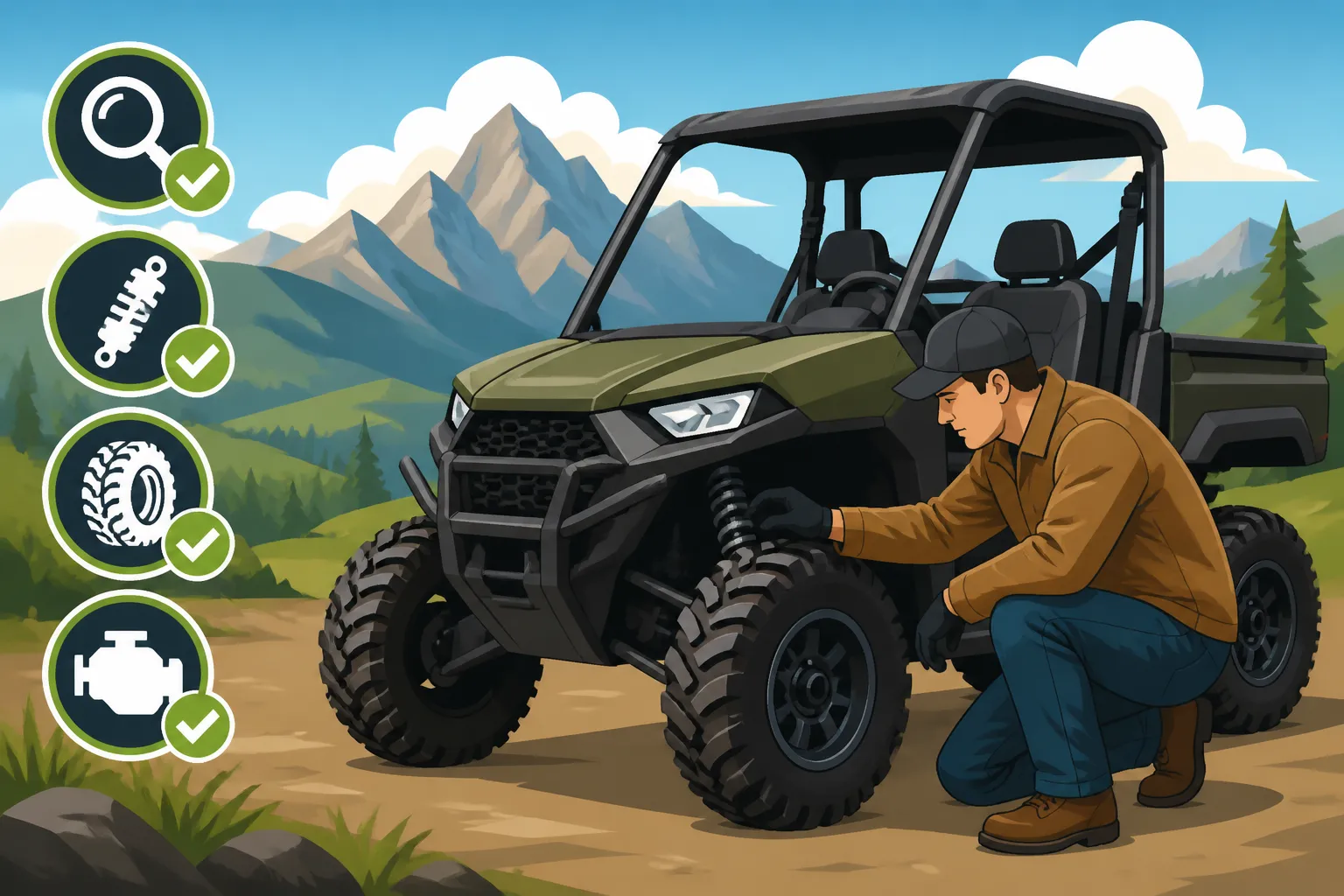
- Suspension Components: Wiggle the wheels from side to side and top to bottom. Any excessive play could indicate worn wheel bearings, tie rod ends, or ball joints. Look at the A-arms and trailing arms for bends or cracks. Check the shocks for leaks (oily residue on the shock body) or bent shafts. Bounce each corner of the machine; it should rebound smoothly without excessive bouncing. Bushings, which are often overlooked, can wear out and cause slop in the suspension; look for cracks or missing pieces.
- Tires and Wheels: Inspect the tires for even wear. Cupping or uneven wear could point to suspension issues, improper alignment, or just low tire pressure. Check for cuts, cracks, or dry rot on the sidewalls. Are the wheels bent, cracked, or missing chunks? Aluminum wheels are more prone to bending from rock impacts. Also, ensure the tire pressure is appropriate; very low pressure can mask a rough ride.
Powertrain, Fluids, and Electrical: The Heartbeat of Your Machine
Now, let's dive into the core of the machine – what makes it go and stop. This section can reveal the most expensive problems.
- Engine and Transmission: Start by looking for leaks. Oil, coolant, or transmission fluid drips are major red flags. Check around the engine cases, cylinder head, and transmission seals. If the machine is cold, listen carefully when the seller starts it. Does it start easily? Are there any strange noises like knocking, ticking, or excessive rattling? Blue smoke from the exhaust usually indicates burning oil, white smoke can mean burning coolant, and black smoke suggests a rich fuel mixture. After it’s run for a bit, look for any new leaks that appear once the engine is warm and under pressure.
- Fluids: While you're there, check the fluid levels. Low engine oil, coolant, or brake fluid could indicate a leak or simply neglect. The condition of the fluids matters too: clean oil suggests regular changes, while dark, sludgy oil points to skipped maintenance. Check the coolant reservoir for proper level and color. If it looks muddy or has an oily sheen, it could signal a major engine problem. Don't forget the brake fluid reservoir; if it's low or discolored, the brake system might need attention.
- Drive System: For belt-driven UTVs, ask about the last belt change. Look at the CVT cover for signs of belt explosion (chunks of belt escaping). For shaft-driven machines, check the CV boots (the rubber covers on the drive axles) for tears. Tears allow dirt and water in, leading to expensive CV joint failure. Grab the drive shaft and try to twist it; excessive play here could mean worn U-joints. For a chain-driven ATV, check the chain tension and sprocket wear.
- Brakes: Spin each wheel by hand (if possible) and listen for any grinding. Inspect the brake pads for wear – are they thin? Look at the rotors for deep grooves or excessive rust. Check the brake lines for cracks or leaks. Squeeze the brake levers (front and rear) or press the pedal; they should feel firm, not spongy.
- Electrical System: Turn on the key and check all lights: headlights, taillights, brake lights, and any dash indicators. Do they all work? Is the battery terminal clean and free of corrosion? If it has a winch, test its operation. Many electrical issues can be frustrating and difficult to diagnose, so ensure everything functions as expected. Also, be sure to ask the seller if they have had to use a specific service like LawDepot to draft any legal documents related to past liens on the machine; if so, this can be a good sign of an organized seller.
Steering, Controls, and Ergonomics: Your Connection to the Ride
These elements are crucial for both safety and comfort, especially on long rides through the Bitterroot National Forest or exploring near West Yellowstone.
- Steering: With the machine off and on level ground, grab the handlebars or steering wheel and gently try to turn it back and forth without moving the wheels. Is there excessive play or looseness? This could indicate worn steering components like tie rod ends or a loose steering column bearing. The steering should feel tight and responsive.
- Throttle and Brakes: Operate the throttle lever or pedal; it should move smoothly and return crisply when released. Any sticking or stiffness is a safety hazard. Do the same for the brake levers/pedal.
- Shifter: Engage all gears, including reverse, while the machine is off. Does the shifter move smoothly and positively into each gear? Does it feel loose or sloppy? A sloppy shifter might just be a worn linkage, but it could also hint at internal transmission issues.
- Seats and Ergonomics: Check the seat for tears, cracks, or missing foam. Are all the plastics securely attached? Test the function of any mirrors, handguards, or other accessories. Are there any aftermarket additions that might compromise safety or function?
The Test Ride: Where the Rubber Meets the Trail (or the Driveway)
The visual inspection gives you a good idea of the machine’s history, but the test ride is where you truly experience its current condition. It's not just about seeing if it moves; it's about listening, feeling, and pushing it a bit to expose any hidden issues.
Listening, Feeling, and Testing Under Load
This is your chance to really put the machine through its paces. Don't just ride it around the block once. Try to replicate typical riding conditions as much as possible, always with the seller's permission and in a safe area.
- Cold Start: Insist on starting the machine when it’s completely cold. This is when problems like hard starting, rough idling, or excessive smoke are most apparent. A seller who insists on warming it up before you arrive is a red flag.
- Acceleration and Deceleration: Accelerate smoothly and then aggressively. Does the machine pull strong and consistently? Listen for any hesitation, misfires, or unusual noises from the engine or transmission. When you let off the throttle, does it decelerate smoothly or does it lurch or make strange noises?
- Braking Performance: Test both front and rear brakes independently and together. Does the machine stop straight and quickly without excessive effort? Does it pull to one side? Listen for grinding or squealing that might indicate worn pads or damaged rotors.
- Steering and Handling: Pay attention to how the machine steers. Does it track straight, or does it constantly try to wander? Does it respond predictably to your inputs, or does it feel loose or vague? Try making some tight turns at a low speed to feel for any binding or odd noises.
- Suspension Under Load: Ride over some uneven terrain, if safe and permitted. Does the suspension absorb bumps effectively without bottoming out or feeling excessively bouncy? Listen for squeaks, clunks, or groans that could indicate worn bushings or shocks.
- Engage 4×4 (if applicable): If it's a 4WD machine, engage and disengage 4×4 (and differential lock if equipped) multiple times. Does it engage smoothly without grinding or hesitation? Does it disengage fully? Ride a bit in 4WD to ensure all wheels are pulling.
What to Observe During the Ride
Beyond the mechanical feedback, keep an eye out for other subtle cues during your ride.
- Dashboard Lights: Are any warning lights illuminated? Check engine, oil pressure, battery, or temperature lights could signal serious problems.
- Exhaust Smoke: Watch the exhaust, especially under hard acceleration or deceleration. Any smoke (blue, white, or black) indicates an engine issue that needs further investigation.
- Unusual Smells: Pay attention to your nose. A burning oil smell, hot plastic, or even a strong fuel smell could all be signs of trouble.
- Vibrations and Noises: Are there any abnormal vibrations through the handlebars, seat, or floorboards? Listen for grinding, whining, or clunking noises that weren't present during the initial visual inspection. These often point to drivetrain, bearing, or transmission issues.
- Seller's Demeanor: How does the seller react during your test ride? Are they comfortable letting you ride it thoroughly, or do they seem anxious to cut it short? A seller who tries to rush you or restricts the test ride significantly might be trying to hide something. A great resource to ensure you have all your bases covered before the sale is [Questions Montana Buyers Forget to Ask].
The Paperwork Trail: Beyond the Machine Itself
A perfect machine with questionable paperwork is just as big a headache as a broken machine. In Montana, especially, understanding the documentation is vital for a smooth transfer of ownership and to avoid future legal hassles.
Proving Ownership and Lien Status
The documents are the legal proof that the machine belongs to the seller and that you will legally own it after the sale. Don't skip these critical steps.
- The Title: This is arguably the most important document. Ensure the Vehicle Identification Number (VIN) on the title matches the VIN stamped on the machine itself (often on the frame, under the seat, or near the front suspension—refer to [Where a Side-by-Side Hides Its VIN] for common locations). Verify that the seller's name on the title matches their ID, and that the title is clear, meaning no "salvage," "junk," or "rebuilt" brands (though a rebuilt title isn't always a deal-breaker, it's a major warning sign—see [What a Rebuilt Title Warns a Buyer About]). Ensure there's a space for the seller to sign and release ownership. For more on this, check out [Titling an ATV at a Montana County Treasurer].
- Bill of Sale: Even if you have a title, a comprehensive bill of sale is crucial for any private party sale in Montana. It serves as your record of the transaction. This document should clearly state the buyer and seller's names and addresses, the date of sale, the purchase price, and the machine's VIN, make, model, and year. It's also wise to include a statement that the machine is sold "as-is, where-is" to protect both parties. Resources like LawDepot offer templates for creating a robust bill of sale, ensuring all necessary information is included. This helps prevent misunderstandings later. For a detailed guide, see [What a Montana Bill of Sale Should Say].
- Lien Check: Before buying, always confirm there are no outstanding liens on the machine. A lien means someone else (usually a bank or financial institution) still has a legal claim to the vehicle because the seller hasn't paid off a loan. If you buy a machine with a lien, you could become responsible for that debt. You can usually perform a lien check through your county treasurer's office or by reviewing the title itself, which often lists active liens. If a lien is present, insist that the seller provide a lien release from the lender. For more information, consult [Liens on a Montana OHV Title]. It's always a good practice to ensure the seller can demonstrate clear ownership and that they are not just "borrowing" the machine for the sale. You can also run the serial number first as an additional check on ownership history and potential theft, a good step to remember to read [Running the Serial Number First] or [Checking a Used Quad for a Theft Report].
Service History and Maintenance Records
While not as critical as the title, service records can tell you a lot about how diligently the previous owner cared for the machine.
- Receipts and Logs: Ask the seller if they have any maintenance records, receipts for parts, or even a logbook of oil changes and repairs. Consistent records indicate a responsible owner who likely took good care of their machine.
- What a Lack of Records Means: A complete lack of records isn't necessarily a deal-breaker, especially for older or less expensive machines. However, it means you have to rely more heavily on your physical inspection and test ride. It also gives you less leverage if you discover issues later.
Understanding Montana's No Sales Tax Advantage (and Your Home State's Use Tax)
One of the big draws for out-of-state buyers in Montana is the lack of a general sales tax. This can feel like a huge saving, but there's a catch for non-residents.
- No Sales Tax in Montana: That's right, when you buy a machine within Montana, you won't pay any sales tax to the state. This is a significant benefit for both residents and visitors, and it's something many people are excited about. You can read more about it here: [Montana Charges No Sales Tax on a Machine].
- Your Home State's Use Tax: However, if you're buying from out-of-state and plan to register the machine in your home state, you will almost certainly owe "use tax" to your home state. Most states have a use tax designed to capture revenue on purchases made out-of-state that would have been subject to sales tax if bought locally. This means those savings you thought you made on sales tax in Montana will likely be collected by your own state's DMV or revenue department when you go to register the machine. It's a common point of confusion and can lead to an unexpected bill. Always check your home state's regulations before assuming you're completely off the hook for taxes. For more details on this, see [Use Tax Your Home State Still Wants]. When drafting a bill of sale, make sure to document the sale price accurately, and you can even use a professional document service like LawDepot to ensure all financial terms are clear and legally sound, helping to prepare you for any questions your home state might have.
Red Flags and When to Walk Away
Sometimes, the machine itself might seem okay, but the circumstances surrounding the sale raise immediate alarms. Knowing these red flags can save you from a world of trouble.
The "Too Good to Be True" Scenario
Your gut feeling is often right. If something seems too good to be true, it probably is.
- Unrealistically Low Price: A machine priced significantly below market value for its age, make, and model should immediately trigger suspicion. It could be stolen, have major undisclosed mechanical issues, or the seller might be trying to dump a problem quickly.
- Seller Rushing the Sale: If the seller is overly pushy, trying to get you to commit quickly, or seems desperate to offload the machine, take a step back. Legitimate sellers understand that buyers need time to inspect and decide.
- Pressure Tactics: Any sales pressure, like "someone else is coming to look at it tomorrow," or "this price is only good for today," should be met with caution. Don't let someone rush you into a bad decision.
Warning Signs During the Inspection and Conversation
Beyond the price, pay close attention to the seller's behavior and specific details about the machine.
- Seller Avoids Questions: If the seller is vague about the machine's history, avoids specific questions about maintenance, or gets defensive, that's a major red flag. An honest seller will usually be transparent and happy to answer your queries.
- VIN Issues: If the VIN on the machine doesn't match the title, or if any part of the VIN appears tampered with, scratched off, or obscured, walk away immediately. This is a strong indicator that the machine might be stolen or that the title is fraudulent. This can lead to serious legal problems.
- Fresh Paint/Plastics: While new plastics can make a machine look sharp, if they're suspiciously new and the rest of the machine shows heavy wear, it could be a sign that the seller is trying to hide damage from a rollover or major crash. Look closely underneath the new parts for older, deeper damage.
- Machine Warmed Up on Arrival: As mentioned earlier, if the engine is already warm when you get there, the seller might be trying to hide cold-start issues like smoking, hard starting, or strange noises. Always insist on seeing a cold start.
- No Test Ride Allowed: If the seller flat-out refuses a test ride, or only allows you to ride it for a very short distance or at very low speed, politely decline the purchase. A legitimate seller should be confident enough in their machine to let you experience it.
- Missing or Improper Paperwork: This is a huge one. If the seller doesn't have the title, or if the title is not in their name, or if there's any discrepancy, do not proceed. You can't legally register a machine you don't have proper documentation for. For more info, read [Selling a Machine With No Title]. If you need to draft a specific agreement detailing what paperwork the seller needs to provide, using a service like LawDepot can ensure you have a legally binding document. [Wording a Montana Sale Agreement] can also provide useful guidance.
Bringing a Mechanic or a Savvy Friend
Even if you’re pretty handy with tools, there’s immense value in getting a second, unbiased opinion. When you're excited about a potential purchase, it's easy to overlook things.
The Value of a Second Pair of Experienced Eyes
Think of it as an insurance policy for your purchase. An experienced mechanic or a friend who truly knows ATVs and UTVs brings a different perspective.
- Unbiased Assessment: They don't have the emotional attachment you might develop for a machine. They're looking purely at the mechanical facts and potential issues. They can spot subtle clues you might miss, such as a loose bearing that makes a specific sound, or a specific wear pattern that indicates a common problem for that model.
- Specialized Knowledge: A professional mechanic knows what to look for on specific brands and models. They're familiar with common failure points, recall issues, and the tell-tale signs of serious underlying problems. They might have access to diagnostic tools that can read error codes or check engine performance more deeply.
- Negotiation Leverage: If they find minor issues, their assessment gives you solid ground to negotiate a lower price. If they find major issues, they can confirm your suspicions and give you the confidence to walk away.
What a Pre-Purchase Inspection Might Cost (and Why It's Worth It)
Hiring a mechanic for a pre-purchase inspection will involve a fee, but it's typically a fraction of what you could spend on unexpected repairs.
- The Shape of the Cost: Most shops will charge a flat fee or an hourly rate for this service, usually equivalent to a couple of hours of labor. It’s not an all-day diagnostic, but rather a focused inspection of key components. Call around to local powersports dealers or independent mechanics in areas like Bozeman, Kalispell, or Missoula to get an estimate.
- The Return on Investment: Consider the alternative: buying a machine for several thousand dollars, only to discover it needs a new engine or transmission for another few thousand. That upfront fee for an inspection suddenly looks like a bargain. It provides immense peace of mind and can save you from a financially disastrous purchase, keeping your hard-earned money available for actual riding expenses, like a [Montana's Resident OHV Trail Pass].
Disclaimer
This article is for general informational purposes only and does not constitute professional advice. Laws, prices and regulations vary by location and change over time. Consult a qualified professional for guidance on your specific situation.