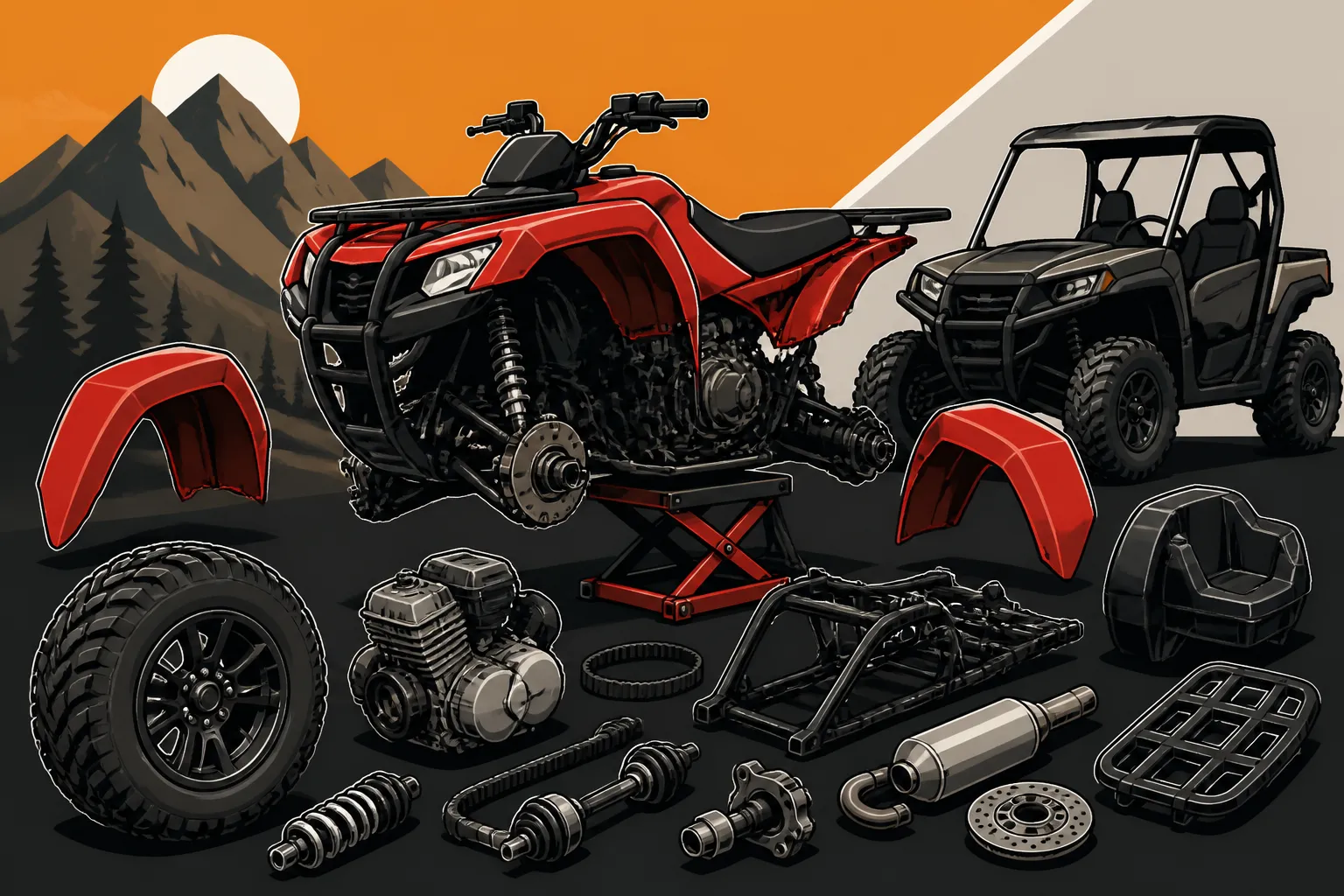
Breaking a Quad Down for Parts
It’s a sight many of us know all too well: that old ATV or UTV, maybe a faithful companion for years, now sits silent in the corner of the garage or out by the barn, stubbornly refusing to spark to life. You've tried everything, or maybe you just know its time has passed, but it feels like a waste to just haul it off to the scrapyard. This guide is all about breaking down that old quad or side-by-side for parts here in Montana, helping you understand how to reclaim value from your retired machine, clear out some space, and avoid the headache of whole-vehicle disposal.
Why Part Out Your Montana ATV or UTV?
When your beloved off-highway vehicle (OHV) finally gives up the ghost, or perhaps suffers catastrophic damage that makes repair financially impractical, you're faced with a tough decision. Do you try to sell it as-is for a pittance? Do you pay to have it hauled away? Or is there a better way to maximize its remaining value? For many Montanans, parting out a machine is often the smartest choice, offering both financial and practical advantages that a complete disposal simply can't match.
More Value Than a Whole Machine
It might sound counterintuitive, but often, the sum of a machine's parts can be worth significantly more than the non-running whole. Think about it: when someone is looking for a specific component – maybe a good engine case, a set of undamaged A-arms, or even just a functional headlight assembly – they're often willing to pay a premium for that individual piece, especially if it's for an older or less common model where new parts are hard to find. A mechanic might be looking for a replacement transmission for a customer's broken quad, or a hobbyist could need a good set of plastics to restore their own machine. These buyers aren't interested in the non-running hulk; they just need one or two key pieces.
When you try to sell a non-running ATV or UTV as a complete unit, you're generally targeting someone who either wants a project machine or a parts donor for their project. These buyers are looking for a bargain, and they'll factor in all the work and potential unknowns of taking on a non-functional vehicle. By breaking it down yourself, you're doing that work, identifying the good components, and selling them directly to the person who needs them most. This allows you to tap into a much larger market of specific part seekers, rather than just the niche market of project buyers, ultimately leading to a better return on your investment of time.
Avoiding Disposal Headaches
Let's be honest, getting rid of a full-size, non-running ATV or UTV can be a real pain here in Montana. You need a trailer, a capable tow vehicle, and a destination that's willing to take it. Scrap yards might charge you for disposal, especially if the machine isn't completely stripped of fluids and tires. Many municipal transfer stations or landfills have strict rules about accepting whole vehicles due to environmental concerns over hazardous materials like oil, gasoline, coolant, and battery acid. Hauling something like that, particularly if it's been sitting for a while and might have flat tires or seized wheels, is no one's idea of a fun afternoon.
By breaking the machine down into smaller, manageable pieces, you eliminate much of this logistical nightmare. You can drain the fluids properly (we’ll talk more about that later) and then transport components like plastics, metal frames, and engines separately. The amount of material you'll need to "dispose" of in the traditional sense is significantly reduced, often leaving you with just a bare frame and some worn-out tires to take to the appropriate recycling or disposal facility. This approach saves you not only potential hauling fees but also the frustration of dealing with a large, awkward, and potentially messy vehicle. It frees up valuable space in your yard or garage far more efficiently than waiting for that elusive project buyer.
Essential Steps Before You Start Disassembly
Before you even think about grabbing a wrench, there are some really crucial preparatory steps you need to take. Skipping these could lead to legal headaches, wasted time, or missed opportunities to maximize your profit. Think of it like mapping out your route before heading into the Montana backcountry – you wouldn't just drive off without a plan, would you?
Securing Your Ownership Documents
This is perhaps the single most important step. Even if your ATV or UTV is a rusty shell, you absolutely must have clear proof of ownership. For most machines in Montana, this means a valid title in your name. While you're selling "parts" and not a whole vehicle, major components like the engine and especially the frame often retain their identity linked to the original vehicle's VIN (Vehicle Identification Number). If you sell a frame, for example, you're technically selling the core of the vehicle, and the buyer will need that VIN to title a rebuild if they ever go that route.
Imagine selling an engine or a frame, and the buyer later discovers it was from a stolen machine. Even if you acted in good faith, you could be implicated. Having your title prevents this. It proves the machine was legally yours to begin with. If you've lost your title, you need to go through the process of replacing it before you start selling off major parts. This is a critical step, especially if the machine has any monetary value, or if you plan to sell components with VINs or serial numbers. Don't let your eagerness to get started overshadow this fundamental legal protection for both yourself and your future buyers. You can learn more about securing these vital papers in [Proof of Ownership for a Montana Title].
Identifying Valuable Parts and Market Research
Not all parts are created equal, and some models have more demand for used components than others. Before you start ripping things apart, take some time to research what specific parts from your machine are actually worth selling. Start by identifying the make, model, and year of your ATV or UTV. Then, head to online marketplaces like eBay, Craigslist, or Facebook Marketplace, and even specialized ATV/UTV forums. Search for parts from your specific model. What's selling? What are people asking for? What's actually selling (look at completed listings)?
Commonly sought-after parts include:
- Engine components: Cylinder heads, crankshafts, carburetors/throttle bodies (if in good shape), complete engine blocks.
- Transmission parts: Gearboxes, shift mechanisms.
- Suspension: A-arms, shocks, spindles, hubs.
- Braking system: Calipers, master cylinders, brake lines.
- Electrical components: ECUs, wiring harnesses (intact ones are valuable!), stators, rectifiers, ignition coils.
- Body panels/plastics: Undamaged fenders, hoods, grilles.
- Wheels and tires: If they're in decent condition.
- Seats: Especially if not ripped or cracked.
- Miscellaneous: Headlights, taillights, gas tanks, steering columns, drive shafts.
Focus on parts that are relatively easy to remove and less likely to be damaged. Don't expect to get rich selling rusty bolts, but even small, seemingly insignificant parts can be valuable to someone trying to fix a specific issue. This research will help you prioritize your disassembly and give you a realistic idea of the potential return.
Documenting the Machine's Condition
Before you touch a single bolt, grab your phone or camera and document the entire machine. Take photos and even a video from all angles. Zoom in on areas where there's damage, but also highlight parts that are in good condition. If the engine does still turn over, or if some lights still work, record that! This documentation serves several important purposes.
First, it provides a baseline for your sales listings. When you list a part for sale, you can reference the original condition of the machine it came from. For example, if you're selling a set of A-arms, you can show a picture of them still on the quad before disassembly, proving they were not bent or otherwise damaged prior to removal. Second, it protects you as the seller. If a buyer claims a part was damaged when they received it, your pre-disassembly photos can prove its condition beforehand.
Third, and practically speaking, it helps you remember how things went together! You’d be surprised how quickly you forget which bolt went where once you start tearing into things. Use your photos and videos as a reference guide throughout the disassembly process. A quick photo of an assembly before you take it apart can save you hours of head-scratching later. This initial photographic survey also helps you identify what parts truly are good and sellable, versus those that are too far gone.
The Disassembly Process and Selling Your Parts
Now that you've got your ducks in a row with documentation and market research, it's time to get your hands dirty. Disassembling an ATV or UTV for parts requires a methodical approach, a focus on safety, and a good strategy for selling what you salvage. It’s not just about taking things apart, but doing it in a way that preserves value and makes future sales easy.
Safe and Organized Disassembly
Safety first, always! You're dealing with heavy metal, sharp edges, and potentially harmful fluids. Wear appropriate personal protective equipment (PPE), including gloves, safety glasses, and sturdy footwear. A well-lit, clear workspace is also essential. Trying to wrench on something in a cluttered, dark corner is an invitation for accidents.
Start by systematically draining all fluids: gasoline, engine oil, transmission fluid, coolant, and brake fluid. Use proper containers and dispose of these hazardous materials at a local recycling center or auto parts store that accepts them. Do not simply pour them onto the ground or down a drain; that's not only illegal but terrible for Montana’s environment.
When you start taking parts off, work logically. Often, starting from the outside in (plastics, wheels, exterior accessories) makes sense. As you remove components, clean them as best you can. Label everything clearly – zip-top bags with Sharpie markers are your friend for bolts, washers, and small electrical connectors. Take photos of each stage of disassembly. For example, take a picture of the wiring harness before you unplug every connector. This detailed approach will save you immense frustration later when you're trying to figure out if a certain bracket came from the left or right side, or if a particular sensor wire goes to the engine or the dash.
| Component Category | Potential Value | Disassembly Tips |
|---|---|---|
| Engine & Transmission | High | Drain fluids, label all wires/hoses, note bolt lengths. |
| Frame | Moderate (if titled) | Remove all components; if scrapping, cut VIN plate. |
| Suspension | Moderate | Compress springs if removing shocks, label left/right. |
| Plastics & Body | Moderate | Carefully remove clips/bolts to prevent cracking. |
| Electrical | Variable | Label every connector, take photos of routing. |
| Wheels & Tires | Low-Moderate | Inspect for damage, separate if selling tires only. |
| Fuel System | Moderate | Drain completely, label hoses, inspect for rust. |
| Brakes | Moderate | Drain fluid, inspect calipers for seizing. |
Marketing and Selling Your Individual Parts
Once you have your treasure trove of salvaged parts, it’s time to find them new homes. The key to successful selling is good marketing and transparent communication. As mentioned, online platforms are your best bet. Websites like eBay, which has a massive reach, are great for smaller, easily shippable items. For larger components like engines or frames, local classifieds like Craigslist or Facebook Marketplace might be more appropriate, as they cater to buyers who can pick up in person. Specialized ATV/UTV forums or even brand-specific Facebook groups can also be excellent places to find buyers looking for exact parts.
Here’s a tip for listing:
- Clear Title: Make it specific. "Yamaha Grizzly 660 Right Front A-Arm, 2005-2008" is much better than "Grizzly part."
- Detailed Description: List the make, model, year range, and condition. Be honest about any wear or minor imperfections.
- Excellent Photos: Use the photos you took during documentation. Take new, well-lit photos of the individual part from multiple angles. Highlight both the good and the bad.
- Pricing: Base your price on your market research. Be realistic. You can choose to be firm or "OBO" (or best offer).
- Shipping: For smaller items, calculate shipping costs accurately. Offer local pickup for larger items.
- Payment: Use secure payment methods like PayPal for shipped items. For local pickups, cash is often king.
Remember that clear communication with potential buyers is crucial. Answer questions promptly and honestly. If you're selling larger parts, you might need to create a simple bill of sale, even for components, especially if they are expensive. This protects both you and the buyer. [What a Montana Bill of Sale Should Say] provides more details on what to include. You might find resources on sites like LawDepot for customizable bill of sale templates that can clarify you're selling parts and not a whole machine.
Dealing with Remaining Components and the Frame
After you've sold off the most valuable parts, you'll inevitably be left with a collection of less desirable items: the bare frame, some mangled plastics, worn-out tires, rusty bolts, and other scrap. Don't just toss these in the dumpster. The bare metal frame, for example, is usually recyclable as scrap metal. Look for local scrap metal yards in your area. They might even pay you a small amount for the weight.
If your machine had a VIN on the frame (most do), and you're truly scrapping it, you might want to consider cutting the VIN plate or stamping it with "SCRAP" to ensure it cannot be fraudulently used. This is especially important if you had a title for the machine; you want to ensure that VIN is officially out of circulation if the machine is truly dismantled and gone. Check with your local Department of Motor Vehicles or a county treasurer's office to understand the exact process for notifying them of a permanently scrapped vehicle if you wish to formally cancel its title and VIN. This helps prevent any future headaches. You can delve deeper into what happens when a machine is truly beyond repair in [Scrapping a Machine Past Repair]. Plastics can often be taken to a recycling center if they accept that type of material, or disposed of with general waste if not. Tires often require special disposal due to their composition, sometimes incurring a small fee at transfer stations or tire shops.
Legal and Practical Considerations in Montana
Even when you're just parting out a machine, there are specific legal and practical aspects unique to Montana that you need to keep in mind. Navigating these correctly ensures you avoid fines, environmental damage, and legal entanglements down the road.
VIN Numbers and the Law
In Montana, the VIN is intrinsically linked to the identity of your off-highway vehicle, much like a car. The VIN is typically stamped directly onto the frame of the ATV or UTV, and it's what's used for titling and registration. When you start breaking down a machine, especially if you plan to sell the frame or major components like the engine that also have serial numbers, you need to understand the implications. If you sell the frame, you are essentially selling the "vehicle" in the eyes of the law, even if it's just a bare metal skeleton. The buyer of a frame might intend to build a new machine around it, which would require them to title it.
This is why having a clear title in your name before you start is so critical. If you sell a frame without a valid title, the buyer could face significant difficulties registering or titling their new creation. Conversely, if you scrap a frame that had a title, you may want to formally notify the county treasurer or DMV that the vehicle associated with that VIN has been permanently dismantled. This removes the VIN from the state's records, preventing any potential future misuse or confusion. Always ensure you've done your due diligence regarding the VIN, especially for the frame itself. Understanding [Titling an OHV in Montana] can give you more context on how VINs are handled here. For finding the VIN on different machines, check out [Where to Find the VIN on a Polaris Ranger] for common locations.
Environmental Responsibility
Living in a state as beautiful as Montana means we all share a responsibility to protect its natural resources. Disassembling an ATV or UTV involves hazardous materials that must be handled properly. Engine oil, gasoline, coolant, brake fluid, and battery acid are toxic and can severely harm soil, water, and wildlife if improperly disposed of.
Here’s what you need to do:
- Drain all fluids: Use separate, clearly labeled containers for each type of fluid.
- Contain spills: Place drip pans under the machine during the draining process to catch any drips or spills.
- Proper disposal: Take all drained fluids to an approved recycling facility. Many auto parts stores (like O'Reilly Auto Parts or AutoZone) and county transfer stations in Montana accept used oil, antifreeze, and sometimes other automotive fluids free of charge. Check with your local facility for their specific policies.
- Batteries: Vehicle batteries contain lead and sulfuric acid. Recycle them at an auto parts store or battery recycling facility.
- Tires: Tires are often difficult to dispose of and are generally not accepted in regular landfills. Many tire shops will accept old tires for a small fee, or your county waste facility might have specific days for tire drop-offs.
Taking the time to dispose of these materials correctly is not just about avoiding fines; it's about being a good steward of Montana's incredible environment.
Bills of Sale for Major Components
While you typically don't need a bill of sale for every single nut and bolt you sell, it's highly advisable for larger, more expensive, or identifiable components. This includes items like engines, transmissions, major frame sections, or even complete wheel/tire sets. A simple bill of sale, signed by both you and the buyer, provides a clear record of the transaction. This document should include:
- Your name and contact information.
- The buyer's name and contact information.
- A detailed description of the part(s) being sold (e.g., "Used 2007 Polaris Ranger 700 EFI Engine Assembly, Serial #1234567").
- The sale price.
- The date of the sale.
- A statement that the item is sold "as-is, where-is" with no warranty (this is important for used parts).
- Signatures of both parties.
Using a bill of sale, even for parts, adds a layer of protection against future disputes. It clarifies what was sold, for how much, and that the transaction was legitimate. You can find generic templates online, and services like LawDepot offer customizable forms that you can tailor to your specific needs, ensuring all the necessary details are covered for a legal transaction here in Montana. This ensures you have a paper trail, which can be invaluable, especially if there's ever a question about the origins of a part or the terms of the sale. It's also good practice for any significant private party sale, as covered in [Buying a Used Side-by-Side in Montana: The Paperwork].
Here's a quick comparison of keeping a non-running machine versus parting it out:
| Feature | Keeping Non-Running Machine | Parting Out Machine |
|---|---|---|
| Space Occupied | Full machine footprint | Reduced to smaller parts/scrap |
| Potential Value | Low, as-is price | Higher, individual part sales |
| Disposal Effort | Difficult, full vehicle haul | Easier, smaller components |
| Environmental Impact | Risk if fluids leak | Minimized with proper disposal |
| Legal Documentation | Title for sale of whole | Title for frame, bills of sale for major parts |
| Time Investment | Low (waiting for buyer) | High (disassembly, listing, shipping) |
| Tools Required | Minimal | Full set of mechanic's tools |
Breaking down your old ATV or UTV for parts can seem like a daunting task, but with careful planning, proper documentation, and a commitment to responsible practices, it’s a rewarding way to recover value, clear clutter, and ensure your machine's useful life continues, one component at a time, for another Montana rider.
Disclaimer
This article is for general informational purposes only and does not constitute professional advice. Laws, prices and regulations vary by location and change over time. Consult a qualified professional for guidance on your specific situation.