Use Tax When You Take a Machine Home
It’s a tale as old as time for many out-of-state buyers flocking to Montana for an ATV or UTV purchase: the joyous thought of "no sales tax!" You find the perfect machine, shake hands on a great deal, and drive away feeling like you’ve outsmarted the system. But then, reality hits when you try to register that shiny new quad back home. Suddenly, you're faced with an unexpected bill – the dreaded use tax. This guide is here to walk you through exactly what use tax is, why your home state demands it, and how to navigate this often-confusing aspect of buying an off-highway vehicle in Big Sky Country.
The Montana "No Sales Tax" Advantage – And Its Catch
Let's be honest, the "no sales tax" banner flying over Montana is a huge draw, especially for big-ticket items like a new side-by-side or a rugged ATV. It sounds like a dream come true, a significant saving that can make that dream machine feel a little more within reach. But, like many things that seem too good to be true, there's often a nuance, a catch, just waiting to surprise the unsuspecting buyer.
What "No Sales Tax" Truly Means in Montana
When we talk about Montana having [No Sales Tax in Montana and What That Means], it's absolutely true. The state itself doesn't impose a general sales tax on purchases made within its borders. This means when you walk into a dealership in Missoula or buy a used machine from a private seller in Helena, the price you negotiate is the price you pay, without an additional percentage tacked on for state sales tax. It’s a wonderful perk for Montana residents and a huge incentive for those traveling from out of state. You sign the paperwork, hand over the money, and that Polaris Ranger or Can-Am Defender is yours, free from that immediate sales tax hit. For many, this is the end of the story in their minds, but for out-of-state buyers, it's really just the beginning of the tax conversation.
The feeling of saving thousands on a new machine is exhilarating, and it's easy to get caught up in that excitement. You might be envisioning all the accessories you can now afford or the extra gas money for exploring Montana's vast trail systems. However, that excitement can quickly turn to frustration if you haven't budgeted for what comes next. [Why Montana Has No General Sales Tax] is rooted in the state's historical tax structure, designed to collect revenue through other means like property taxes, income taxes, and specific excise taxes, but not a broad-based sales tax.
The Concept of Use Tax: Your Home State's Revenue Stream
This is where the plot thickens. While Montana doesn't charge sales tax, your home state most likely does. To prevent residents from simply driving across state lines to avoid sales tax on large purchases, nearly all states that have a sales tax also have something called a "use tax." This tax is essentially a sales tax on goods purchased outside your home state but "used, stored, or consumed" within it. It's designed to level the playing field, ensuring that whether you buy a machine from a dealership down the street or from a private party a thousand miles away, your state still collects its due revenue.
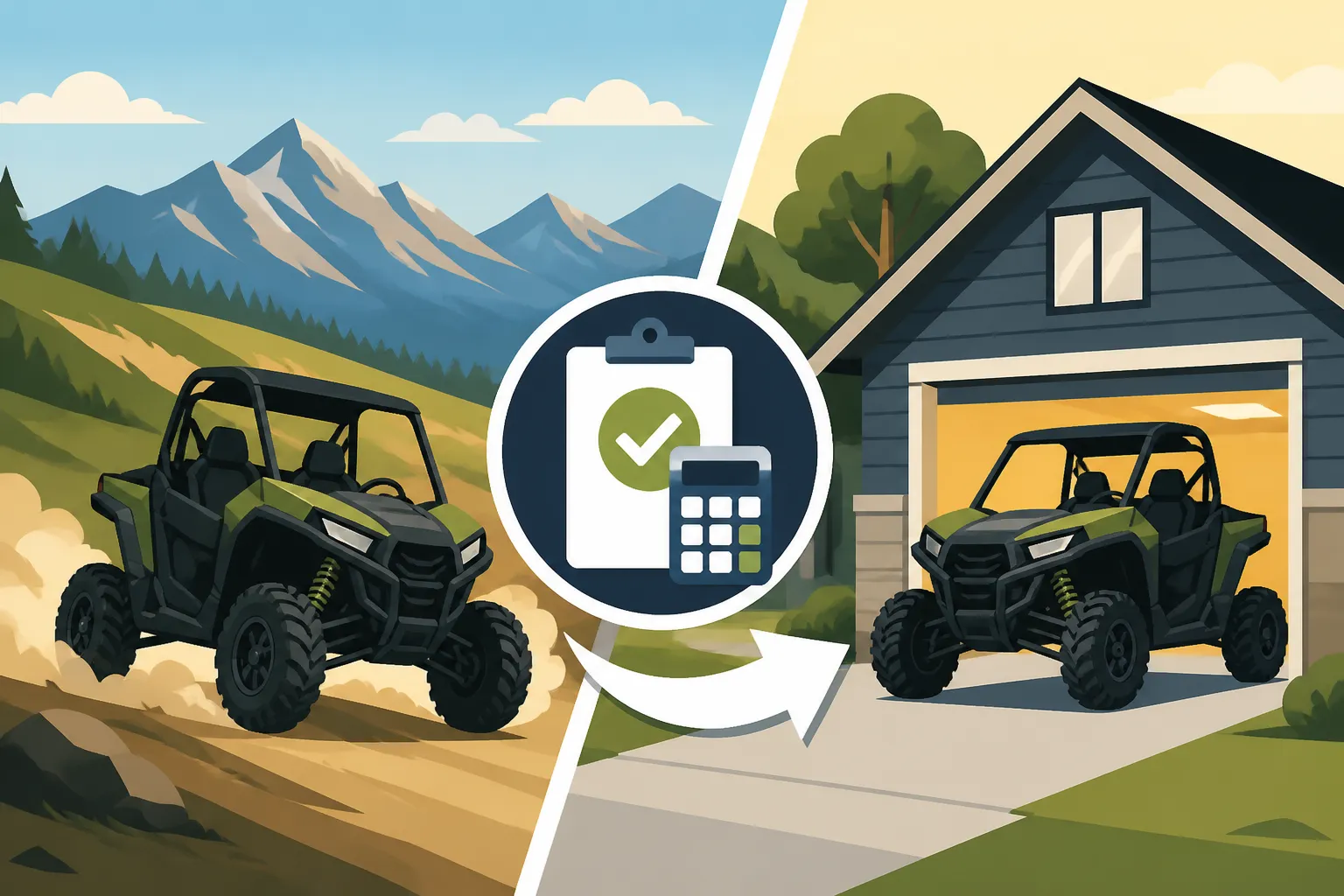
It feels like they're trying to get you twice, doesn't it? You buy in Montana, pay no sales tax, and then your home state says, "Hold on a minute, we want our share!" This isn't a punitive measure against Montana; it's a standard practice across the country to protect local economies and tax bases. When you eventually bring your new-to-you ATV or UTV home and go to register it, that's typically when your state’s Department of Motor Vehicles (DMV), county treasurer, or equivalent agency will ask about the purchase. They'll want to know where you bought it, how much you paid, and they'll apply their local sales tax rate as a use tax. This is a crucial step often overlooked by excited buyers.
How Your Home State Calculates and Collects Use Tax
Understanding how your home state determines and collects use tax can save you a lot of grief and unexpected financial strain. It’s not just a flat fee; it’s calculated based on specific factors and collected through a particular process.
Determining the Taxable Value and Rate
The good news (if there is any good news about paying taxes) is that the use tax rate is almost always the same as your home state's general sales tax rate. So, if your state has a 6% sales tax, your use tax will also be 6%. The taxable value is usually straightforward: it's the purchase price you paid for the machine, as documented on your bill of sale. Sometimes, if the sale price seems unusually low, or if there's no clear bill of sale, the state might try to determine a "fair market value" for the machine, but typically, they go by what you declare. This is why having accurate and complete paperwork, such as [What a Montana Bill of Sale Should Say], is absolutely critical.
For instance, if you purchase a UTV for $15,000 in Montana and your home state has a 7% sales tax, you'll likely owe $1,050 in use tax when you go to register it. That's a significant amount of money that many buyers simply don't factor into their budget when they're reveling in the "no sales tax" benefit of buying in Montana. This is part of [Paying Your Own State After a Montana Purchase], and it's something you need to be prepared for. Some buyers even try to avoid this by claiming a lower purchase price, but states are increasingly savvy to these tactics and can flag suspicious transactions.
The Declaration Process: When and How You Report It
For most states, the declaration process for use tax happens automatically when you go to register your machine. You simply can't get a title and registration for your new-to-you ATV or UTV without addressing the tax component. When you arrive at your local county treasurer's office or DMV equivalent to process your [Titling an ATV at a Montana County Treasurer] (or rather, your home state's titling process for a machine bought in Montana), you'll be asked about the purchase price and where you bought the vehicle. This is where you hand over your Montana title and bill of sale.
Many states have a line item on their registration forms specifically for out-of-state purchases, where you report the price paid. They will then calculate the use tax on the spot and require payment before issuing your title and registration. This is the moment where the sticker shock often hits. You've just spent a good chunk of change on the machine itself, and now there’s an additional, sometimes substantial, tax payment due. It's not optional; it's a requirement to legally operate your OHV in your home state. Always ensure you have all your purchase documents ready, including a notarized bill of sale if your state requires it. LawDepot can be a helpful resource for generic bill of sale templates that ensure all necessary information fields are present, although they don't provide state-specific tax forms.
Avoiding Pitfalls and Planning Ahead
Understanding the rules is half the battle; the other half is proactively planning to avoid unpleasant surprises. Nobody wants to deal with unexpected costs or, worse, legal trouble down the road.
Common Misconceptions and Costly Surprises
One of the biggest misconceptions out-of-state buyers have is thinking they can simply register their machine in Montana and keep it out of their home state's tax purview. While [The Montana LLC and Why Out-of-State Buyers Use It] is a legitimate strategy for certain situations, primarily for high-value vehicles and specific circumstances, it is absolutely not a loophole for the average ATV or UTV buyer looking to avoid use tax on a personal machine they plan to keep and ride predominantly in their home state. Attempting to do so can quickly lead to severe consequences.
Many states actively [States That Chase Montana-Plated Vehicles], especially high-value items like side-by-sides. They have sophisticated systems for identifying vehicles registered out-of-state but garaged or primarily used by residents. If caught, you could face not only the back taxes you owe but also significant penalties, interest, and even criminal charges in some jurisdictions for tax evasion. Imagine getting pulled over on a trail in your home state, and a quick database check reveals your Montana plates, prompting questions about your residency and where the machine is actually stored. Nobody likes surprises, especially when they come with a hefty bill and the threat of legal action. Ignoring the use tax obligation can lead to [Back Taxes and Penalties After an Audit] and even [Felony Charges Over a Montana LLC Registration] if deliberate fraud is suspected.
Smart Strategies for Out-of-State Buyers
The smartest strategy is to be informed and to plan ahead. Before you even start looking at machines in Montana, research your home state's sales and use tax laws for out-of-state vehicle purchases. Know exactly what percentage you'll owe and factor that into your overall budget. This way, there are no surprises when you head to the DMV. You might still save money on the overall purchase if Montana prices are lower, but you won't be blindsided by a tax bill.
Consider this: if you’re a seasonal resident, perhaps you keep your machine at a cabin in Montana for a significant portion of the year. In such cases, the rules can get a bit more complex, and sometimes a genuine Montana registration makes sense. However, for most people who buy in Montana and immediately haul the machine back to their primary residence, the use tax is an unavoidable part of the process. For those exploring the [The Montana LLC Route, Step by Step] for legitimate business or asset protection reasons, understanding the nuances and potential [Montana LLC Risks for an Out-of-State Owner] is paramount, and it’s best to consult with legal and tax professionals specializing in that area.
A good practice is to prepare all your documentation meticulously. Use a reputable bill of sale, perhaps even a template from a service like LawDepot, to clearly record the purchase price, seller and buyer information, and the machine's VIN. This clear record will be invaluable when demonstrating the value of your purchase to your home state's tax authorities.
The Nitty-Gritty: What Documents You'll Need and Where to Go
Once you've made your Montana purchase, you'll need to gather the right documents and know where to present them in your home state. This process is key to getting your ATV or UTV legally registered and hitting the trails.
Essential Paperwork for Your Home State
When you head to your home state's vehicle registration office, you'll need more than just the machine itself. The primary document you'll need is the Montana title, properly signed over to you by the seller. This proves ownership and the transfer of the vehicle. If the machine was new, you'd likely have a Manufacturer's Statement of Origin (MSO) which would also need to be properly assigned.
Equally important is a comprehensive bill of sale. This document serves as proof of the purchase price, which is critical for calculating your use tax. Ensure the bill of sale includes:
- The date of sale.
- The full names and addresses of both buyer and seller.
- The make, model, year, and Vehicle Identification Number (VIN) of the OHV.
- The agreed-upon purchase price.
- Signatures of both parties.
While Montana doesn't require a notarized bill of sale for private party transactions, your home state might. It's always a good idea to check their specific requirements beforehand. Services like LawDepot can provide customizable bill of sale templates that ensure you cover all the standard legal bases, though remember they are generic and not specific tax advice.
Other documents that might be useful include proof of residency in your home state (like a driver's license or utility bill) and any receipts for transportation costs if your state allows them to be deducted or factored into the tax calculation (which is rare for use tax). Having all your ducks in a row for [Documents to Bring to a County Treasurer] in your home state will make the process much smoother and prevent delays.
| Document Type | Purpose for Home State Registration | Why It's Important |
|---|---|---|
| Montana Title | Proves legal ownership transfer from seller to buyer. | Required for your state to issue a new title in your name. |
| Bill of Sale | Establishes purchase price for use tax calculation. | Essential for accurate tax assessment and proof of transaction. |
| Photo ID | Confirms your identity and residency. | Standard requirement for any vehicle registration. |
| Proof of Residency | Confirms you are a resident of the state where you're registering. | Ensures you meet residency requirements for state registration. |
Where to Settle Up: Your Local DMV or County Office
The place where you officially "settle up" with your home state for the use tax is typically the same place you go to register and title any vehicle – your local Department of Motor Vehicles (DMV), Department of Revenue, or County Treasurer's Office. This is often the case for [Registering an Out-of-State Machine in Montana] (if you were moving to Montana) or, more relevant here, [Registering a Machine You Just Bought] when bringing it from Montana to your home state.
When you present your Montana title and bill of sale, the clerk will process your application for a new title and registration in your home state. During this process, they will calculate the use tax based on the purchase price listed on your bill of sale and your state's prevailing sales tax rate. You'll pay this amount, along with any registration fees, title fees, and plate fees, at that time. It's usually a one-stop shop, integrated into the overall registration process. Just be prepared for a busy Monday morning at the local county clerk's office, as you might be spending a bit of time ensuring all the paperwork is correctly filed and the payment is made. Don't forget, if you're a new resident to Montana, the process for [Montana Registration for a New Resident] is different, but for most, this use tax discussion applies to those leaving Montana with their new machine.
Disclaimer
This article is for general informational purposes only and does not constitute professional advice. Laws, prices and regulations vary by location and change over time. Consult a qualified professional for guidance on your specific situation.