Farm and Ranch Exemptions in Montana
Navigating the rules and regulations for ATVs and UTVs in Montana can feel like trying to rope a wild mustang – just when you think you've got it, something else bucks up. For folks living and working on Montana's farms and ranches, there's often a particular head-scratcher: do those machines used for checking fences, hauling feed, or moving cattle actually need to be registered and titled like a pleasure riding machine? This guide is here to untangle the specifics of Montana's farm and ranch exemptions, helping you understand when your workhorse quad or side-by-side might catch a break from the usual paperwork.
Understanding Montana's OHV Registration Basics for Ranchers
Let's start by clarifying what "registration" usually means for off-highway vehicles (OHVs) in Montana, and why it's a valid question for ranchers to ponder. Most people are familiar with the standard process: you buy a machine, you get a title, and then you register it, usually for a one-time permanent fee. This registration gives you a decal, which allows you to legally operate the machine on designated public trails, state lands, and for crossing roads under specific conditions.
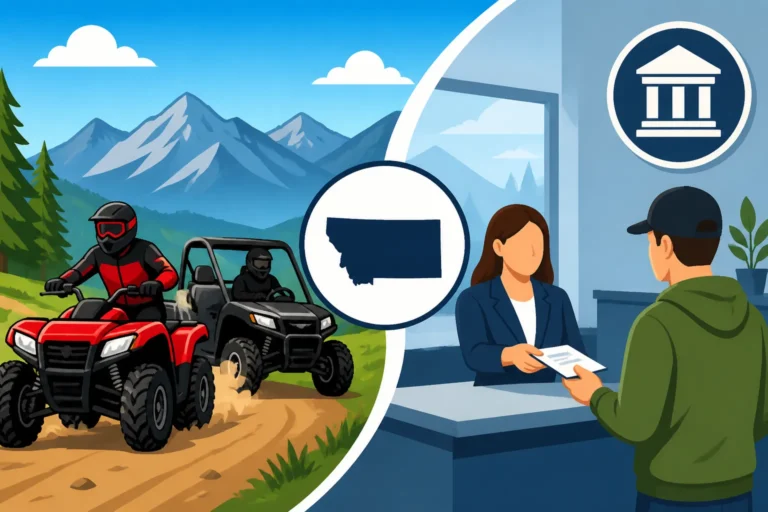
For a lot of us, an ATV or UTV is synonymous with weekend recreation, ripping around forest roads or hitting some gnarly trails. In those scenarios, getting your machine properly registered is non-negotiable if you want to avoid fines and stay on the right side of the law. You'll head down to your local county treasurer's office, present your proof of ownership, pay the fees, and walk out with your decal. It's a fairly straightforward process for recreational users. [Montana County Treasurer OHV Registration] outlines this process in detail.
The General Rules of OHV Registration
Typically, if you're planning to ride your ATV or UTV anywhere beyond your private property in Montana – especially on public lands like those managed by the Forest Service or BLM, or if you even just want to cross a public road – that machine needs to be registered. This usually involves proving ownership, paying a fee, and displaying a decal. The idea is that these fees go back into maintaining trails and supporting OHV programs across the state. Without that decal, you're looking at potential fines from game wardens or sheriff's deputies. The state sees it as a user fee for access.
This applies whether you're riding a nimble ATV or a robust side-by-side. The key distinction is "off-highway" versus a street-legal vehicle. Most ATVs and UTVs aren't designed or equipped for regular road travel, so they fall under OHV rules. The registration is specifically for off-highway use, though it does allow for controlled road crossings.
Common Reasons for Registration and Why They Might Not Apply to Ranch Work
So, why do most people register? The biggest reason is trail access. If you're heading out to explore the [Montana's National Forest Trail Systems] or cruising along BLM routes, your machine needs to be registered and display that current decal. Another common scenario is when you need to [Riding an OHV on the Road in Montana] to get from one trail section to another, or even just to get fuel in a small trail town. These situations demand proper registration.
However, for a rancher, the daily use of an OHV often looks very different. You might be staying entirely on your private land, or only briefly crossing a county road that bisects your property. Your machine isn't really a "recreational vehicle" in the traditional sense; it's a tool, an extension of your farm or ranch operation. This fundamental difference in use is precisely why Montana has carved out specific exemptions for agricultural machines. It acknowledges that the primary purpose isn't recreation, but rather an essential part of making a living on the land.
The Heart of the Matter: Montana's Farm and Ranch OHV Exemptions
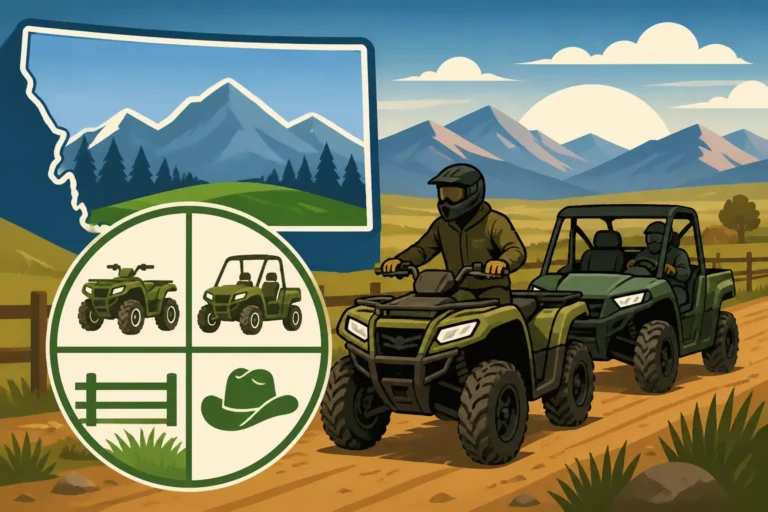
Now, let's get to the good stuff – the exemptions that can save you time and money. Montana law recognizes that many ATVs and UTVs are not used for recreation but as vital tools in agricultural operations. Because of this, certain machines used "incidentally to the operation of a farm or ranch" are exempt from the standard OHV registration requirements. This means no trip to the county treasurer for a registration decal, and no annual fees for those specific uses. This can be a huge relief for farmers and ranchers who rely on these machines daily.
The key phrase here is "incidentally to the operation of a farm or ranch." It's not a blanket exemption for any OHV owned by a rancher, but specifically for those machines and activities directly tied to the agricultural enterprise. It's about the use of the machine, not just who owns it. The spirit of the law is to ease the burden on producers who are using these vehicles as essential equipment, similar to a tractor or a pickup, rather than for leisurely trail rides. We even have a dedicated article, [Montana OHV Rules for Ranch Machines], that delves deeper into this topic.
What Constitutes "Incidental to Farm or Ranch Operation"?
Defining "incidental" is where many questions arise. In practice, this generally means tasks that are directly related to the production of crops, livestock, or other agricultural products. Think of it this way: if you would normally use a pickup, a tractor, or even a horse to do a specific job on the ranch, and you're now using an ATV or UTV for that same job, it's likely to fall under the exemption.
Here are some clear examples:
- Checking Livestock: Riding your UTV through pastures to check on cattle, sheep, or horses.
- Fence Repair and Maintenance: Hauling tools, fencing materials, or pulling a small trailer to fix a broken fence line.
- Hauling Feed and Water: Transporting hay, pellets, or water to animals in remote pastures.
- Crop Monitoring: Driving through fields to inspect crops, check irrigation systems, or scout for pests.
- Equipment Transport: Moving small pieces of equipment or parts from one barn to another, or out to a field for repairs.
- Accessing Remote Areas: Getting to parts of your property that are difficult to reach with a full-size truck, such as steep terrain or muddy tracks.
Even if you're briefly crossing a county road that cuts through your property to get from one field to another, as long as that travel is directly related to an ongoing ranch operation, it generally falls under the incidental use. The intent is critical here: are you using the machine as a tool for work, or for recreation? If you have ranch hands or employees using these machines, it's wise to have clear guidelines in place regarding their use. Simple agreements drafted with tools from services like LawDepot can ensure everyone understands what constitutes legitimate ranch use versus recreational activities, protecting both you and your employees.
Limitations and Gray Areas of the Exemption
While the exemption is incredibly helpful, it's not a free pass for all OHV use by ranchers. The crucial caveat is that the exemption applies only when the machine is used for farm or ranch operations. If you decide to take that same UTV out for a weekend joyride on a public trail system, or even if you're just riding it recreationally on a portion of your own ranch that isn't actively part of an agricultural operation, it would technically need to be registered.
Here are some common situations where the exemption might not apply:
- Recreational Riding on Private Land: If your kids are zipping around the back forty on their quad for fun, and it's not directly tied to a specific farm or ranch task, that machine could theoretically be subject to registration if it were to leave your property.
- Public Road Travel for Non-Ranch Purposes: Using your UTV to drive into town for groceries, even if it's a short trip on a county road, would typically require the machine to be registered and potentially even require it to meet street-legal equipment standards, which most OHVs do not. This is a big one to watch out for, as wardens and deputies are keenly aware of the distinction between crossing and traveling.
- Accessing Public Lands for Hunting/Fishing: If you use your ranch UTV to get to a public hunting access point adjacent to your property, and then proceed onto public land for hunting, that machine would need to be registered for public land access. The "incidental to ranching" aspect disappears once you transition to recreational use on public ground.
- Using the Machine for Non-Agricultural Business: If you also run a contracting business and occasionally use your UTV for those tasks off the ranch, it might not qualify for the exemption during those specific operations.
It's a delicate balance. The exemption is designed to support agriculture, not to provide a loophole for avoiding registration fees for general use. When in doubt, it's always safer to err on the side of caution or seek clarity. For instance, if you're leasing out a portion of your land, and the lessee uses their own machine, their use might not fall under your ranch exemption. Having clear lease agreements, which can be easily drafted using resources like LawDepot, can help delineate responsibilities regarding equipment use and compliance.
Navigating Public Roads and Shared Spaces with an Exempt Machine
One of the most common and confusing situations for ranchers is when their work machine needs to interact with public roads. Whether it's crossing a county road that splits their property or traveling a short distance on a gravel lane to reach a different pasture, knowing the rules is vital. While a machine used for farm and ranch work might be exempt from registration, that doesn't mean it's exempt from all road rules. [Hauling Hay by UTV on a County Road] touches on similar scenarios for farm equipment.
The core principle here is safety and recognizing that public roads are shared spaces. Even if your OHV is being used for legitimate farm work, when it enters a public roadway, it becomes subject to certain traffic laws designed to protect all users. Local jurisdictions, particularly county commissioners, have a significant say in how OHVs can be used on their roads. [County Commissioners and Montana County Roads] are often the ones setting these specific ordinances.
Crossing Public Roadways: Specific Requirements
Montana law generally allows for the crossing of public roadways by OHVs, even unregistered ones, provided it's done safely and directly. The key is "crossing," not "traveling." A quick dash across a two-lane county road to access another field is usually acceptable, but driving down that road for a mile to get to the next gate often is not without proper registration and equipment.
When crossing, you must:
- Yield to All Traffic: Just like any other vehicle, you must give way to all oncoming traffic on the public road.
- Cross at a Right Angle: The crossing should be as direct and perpendicular to the roadway as possible, minimizing the time spent on the pavement.
- Equipped for Visibility: While not explicitly mandated for exempt machines crossing, it's always wise to ensure your machine has working headlights and taillights, especially at dawn or dusk. You want to be seen.
- Safe Operation: No reckless driving, speeding, or operating under the influence. These basic safety tenets apply universally, regardless of registration status.
Think of it like moving livestock across a road – you get them across efficiently and safely, minimizing disruption to traffic. The same applies to your OHV as a ranch tool.
Potential Scenarios and "What Ifs"
Let's consider a few scenarios that often cause confusion:
- Scenario 1: Driving a mile down a county road to get to the next pasture. If this is a public county road, and your machine is solely used for ranch work, it might still technically require registration if you're traveling on it, rather than just crossing. The "incidental use" exemption is strong for use on the ranch, but its application to extended public road travel can be tricky. Some counties might have specific ordinances allowing this for agricultural vehicles, but it's not a statewide blanket rule. It's best to check with your local county sheriff's office or highway patrol.
- Scenario 2: Driving the UTV into the nearest small town for supplies. This is almost certainly not covered by the farm and ranch exemption. Running errands in town falls outside the scope of "incidental to the operation of a farm or ranch." For this, your machine would need to be fully registered, and potentially meet other street-legal requirements, which are often extensive for OHVs.
- Scenario 3: Using the machine on a Forest Service road that borders your property to access a remote part of your private land. If that Forest Service road is a public road, even if it's gravel and remote, you are on public land. For this use, your OHV would typically require standard Montana OHV registration. The exemption applies most strongly to your private property.
The crucial difference lies in the public versus private land distinction and the nature of the activity. When in doubt, assume public road travel and public land use require registration unless you have explicit local or state guidance to the contrary. When managing your ranch, it’s a good idea to have clear policies for anyone operating your machines, especially if they might venture near or onto public roads. LawDepot can provide templates for internal company policies or liability waivers that could be useful in these situations.
Best Practices for Montana Ranchers Operating OHVs
Even with the benefit of farm and ranch exemptions, responsible operation of your OHVs is paramount. These machines are powerful tools, and treating them with respect, both for safety and legal compliance, ensures smooth operations and avoids potential headaches. It's not just about avoiding tickets; it's about protecting your property, your employees, and yourself.
Documenting Ownership and Use
While your farm machine might not need registration, keeping clear records of its ownership is still a smart move. A detailed [What a Montana Bill of Sale Should Say] is your primary proof of ownership. This document helps establish that the machine belongs to you or your ranching operation. Without a title or registration, the bill of sale becomes even more critical for proving ownership, especially if the machine is ever stolen or involved in an incident.
It's also a good practice to maintain simple records of the machine's primary use. This doesn't have to be a daily log, but just a general understanding and perhaps some internal documentation that confirms the machine is primarily (or exclusively) used for agricultural purposes. If ever questioned by an enforcement officer, being able to articulate and demonstrate that the machine's role is work-related strengthens your position. If you have multiple machines, you might even designate certain ones for "ranch use only" versus "recreational use," and keep them clearly distinct. For employees, a simple agreement outlining the authorized use of ranch machines can be a helpful document, and online resources like LawDepot offer customizable templates for such agreements.
Safety and Responsibility Beyond Registration
Just because a machine is exempt from registration doesn't mean it's exempt from common sense safety. In fact, given the demanding environments of ranch work, safety should be a top priority.
- Helmets and Protective Gear: Encourage or mandate the use of helmets, especially for younger riders or employees, regardless of whether state law requires it for adults on private land. Eye protection, gloves, and sturdy footwear are also wise.
- Spark Arresters: Ensure all your OHVs have properly functioning spark arresters. This is critical in Montana, particularly during dry seasons, to prevent wildfires. Even on private land, a fire started by your machine could have devastating consequences.
- Regular Maintenance: Keep your machines in good working order. Regular checks of brakes, tires, lights, and fluid levels prevent breakdowns in remote locations and ensure safe operation.
- Operator Training: For employees, provide basic safety training. Ensure they understand how to operate the machine safely, particularly on varied terrain, and what to do in case of an emergency. This can also be part of a larger ranch safety policy document.
- No Impaired Operation: Never allow anyone to operate an OHV while under the influence of alcohol or drugs. This is illegal and incredibly dangerous, leading to severe penalties and potential harm.
- Insurance: While not required for an unregistered ranch machine, carrying adequate [Insuring an ATV in Montana] for liability is a very smart move. Accidents happen, and if your machine causes injury or damage to someone else or their property, liability insurance can save you from a significant financial hit. Many ranch insurance policies can be extended to cover OHVs used for farm operations.
Ultimately, whether registered or exempt, your OHV is a piece of equipment that requires respect and responsible handling. Being prepared, informed, and safety-conscious will ensure your ranch operations run smoothly and your team stays safe. [What a Montana Warden Asks a Rider For] often includes proof of ownership and a clear explanation of use, so having your ducks in a row is always beneficial.
Here's a quick summary table of common OHV uses on a Montana ranch:
| Use Case | Typically Exempt from Registration? | Additional Considerations |
|---|---|---|
| Checking livestock on private land | Yes | Focuses on actual ranch work, not recreational riding. |
| Hauling feed/water on private land | Yes | Ensure safety, especially with heavy loads on uneven terrain. |
| Fence repair across a county road | Yes, for direct crossing | Must yield to traffic, cross directly. Extended travel likely needs registration. |
| Joyriding on ranch land (recreational) | No (if it leaves property) | Though on private land, if it ventures onto public land, it needs registration. |
| Accessing public lands for hunting/fishing | No | Requires standard Montana OHV registration and possibly a trail pass. |
| Driving into town for supplies | No | Requires registration and potentially street-legal equipment for public road travel. |
| Moving equipment between fields | Yes, if incidental to farm/ranch | Crossing public roads must be direct and safe. |
| Employees using machines for work | Yes, if incidental to farm/ranch | Provide safety training and clear guidelines on authorized use (e.g., via LawDepot). |
Disclaimer
This article is for general informational purposes only and does not constitute professional advice. Laws, prices and regulations vary by location and change over time. Consult a qualified professional for guidance on your specific situation.