Riding a Family Ranch Without Registration
Living on or working a family ranch in Montana, it's easy to assume that because the land is private, the rules you see posted at trailheads simply don't apply. You're out there using your ATV or UTV for daily chores, checking fences, or just enjoying the wide-open spaces, and the last thing you want to worry about is bureaucratic red tape. But understanding exactly when a machine needs to be registered, even on private property, can save you a heap of confusion and potential headaches down the line. This guide will help clarify the nuances of riding your off-highway vehicle (OHV) on family ranch land in Big Sky Country without needing a formal registration.
Understanding Montana's OHV Registration Basics for Private Land
It's a common misconception that if you own the land, or if it's family land, you're exempt from all rules. And while there's certainly a grain of truth to that, the devil is always in the details, especially when it comes to state regulations. For most everyday ranch use, your trusty quad or side-by-side probably doesn't need to be registered with the state of Montana, and that's a huge relief for many of us.
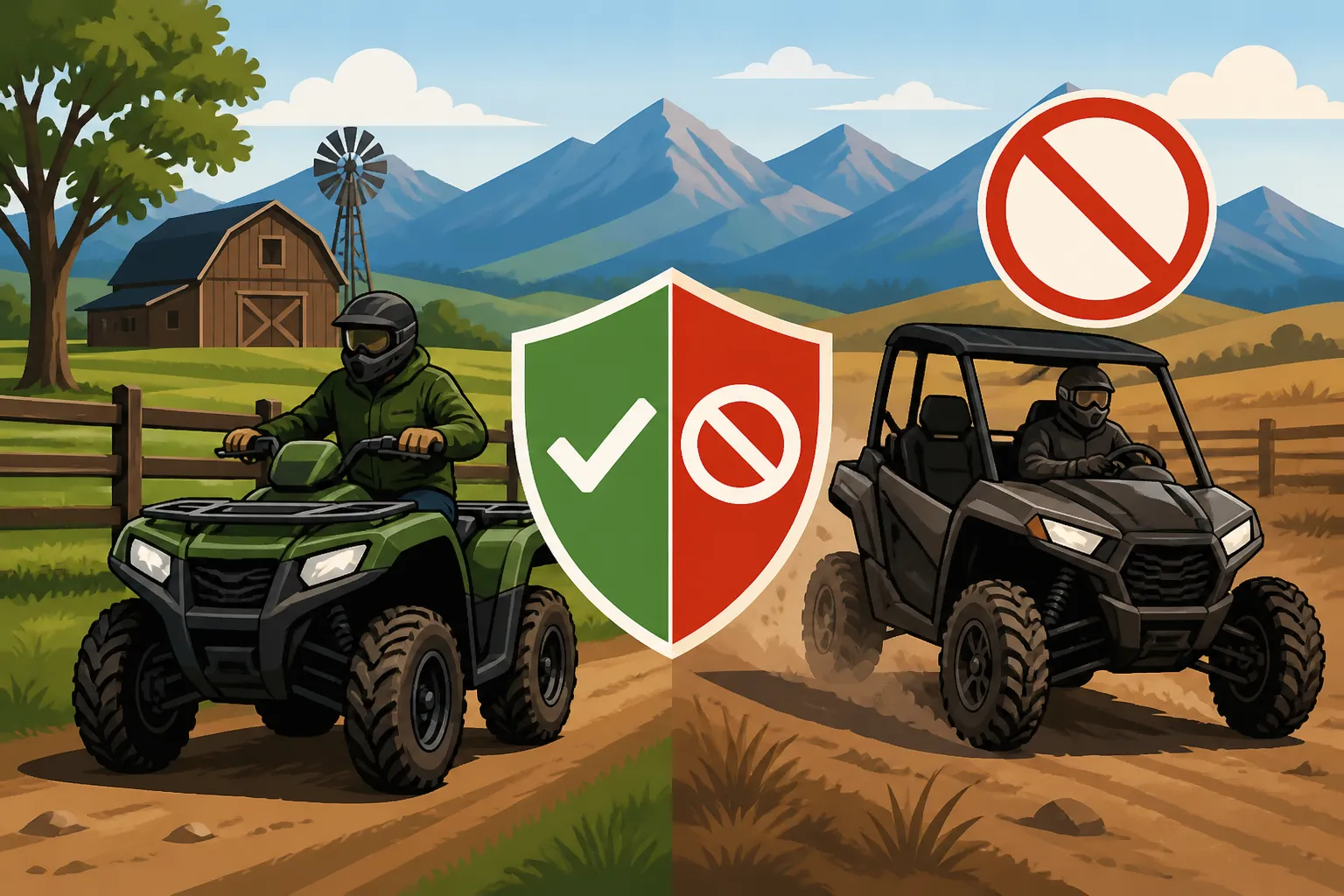
Montana's OHV registration laws are primarily designed for machines that are going to be used on public lands or public roads. This means if your UTV lives its entire life within the fence lines of your family's sprawling cattle ranch out near Miles City, hauling feed, mending fences, or checking on the herd, then generally, you're in the clear. The state isn't looking to track every single piece of equipment used exclusively on private agricultural land. This makes a lot of sense when you think about the practicalities of ranch life. It's not a recreational vehicle in that context; it's a tool, an essential part of the operation. So, for bona fide ranch work carried out solely on your own family's deeded ground, you typically don't need to head to the county treasurer. This aligns with [Do You Need Registration on Your Own Land?], which delves deeper into this specific exemption.
When Registration Becomes Necessary Public Access, Road Use
Now, here's where things can get a little tricky, and where a lot of ranchers and rural residents sometimes get caught off guard. The moment your OHV leaves the strictly private confines of the ranch and touches public ground, the rules change. This could be something as simple as crossing a county road to get to another pasture, or even just driving along the shoulder of a public road for a short distance to access a different section of your property. If you're going to use your machine to ride into the nearest small town for supplies, even if it's just down Main Street, it absolutely needs to be registered.
Additionally, if your family ranch has agreements or easements that allow public access, even if those are primarily for hiking or hunting, and you plan to ride your OHV on those publicly accessible routes, registration will be required. This is because those routes, by virtue of public access, are treated differently than your private hayfields. Think about designated public access points for fishing along a river that runs through your property; if you ride your OHV down to that access point, it's often considered public use. Even if you're not riding into a national forest, any interaction with public roads or public access points brings you under the umbrella of state registration requirements. You might also want to consult [Montana Rules for Work Machines] for a broader perspective on agricultural exemptions.
The Concept of "Deeded Ground" and Exemptions
The key phrase here is "deeded ground." This refers to land that is legally owned by your family or the family's entity (like a ranching LLC) and where no public right-of-way or easement exists for OHV use. On this land, for all intents and purposes, your OHV is considered private property being used on private property. Montana offers specific [Farm and Ranch Exemptions in Montana] which generally ensure that if your ATV or UTV is being used for legitimate agricultural purposes exclusively on your deeded land, you're not subject to the same registration requirements as someone planning a weekend ride in the Lolo National Forest.
However, it's crucial to understand that "deeded ground" doesn't automatically mean "no rules at all." While registration might be waived, other considerations still apply, such as proper maintenance, responsible operation, and safety standards. Even on your own land, if you have guests, employees, or family members riding, you're still responsible for their safety and for ensuring the machine is operated appropriately. The exemption specifically applies to the act of registration for public use, not necessarily to every single rule of the road or trail, especially those concerning safe operation and environmental impact, even if those are generally self-policed on private land.
Navigating Shared Access and Property Lines
Montana is a big state, and many ranches, especially older ones, might have intricate property lines, shared access roads, or historical easements that aren't always immediately obvious. This is where riding your OHV, even on what you think is exclusively family land, can get complex. It's one thing to ride from the barn to the north pasture, but what if that north pasture is only accessible by crossing a county line, or a strip of Forest Service land, or even a neighbor's property that your family has always had an informal agreement to cross?
The line between private and public, or private and other private, can be surprisingly blurry in rural Montana. Many long-standing family traditions of cutting across a corner of public land or sharing a track with a neighbor might seem harmless, but they can trigger registration requirements for your OHV. It's not just about what you own, but also about the legal status of the ground directly under your tires at any given moment. This is a common pain point for ranchers, where practical necessity often bumps up against legal definitions of access.
What Happens When a Ranch Abuts Public Land or Easements
Picture your family's ranch nestled against the Custer Gallatin National Forest. You might have a gate that opens directly onto a Forest Service road that you use all the time to access the far reaches of your property, or perhaps to simply enjoy some scenic views. The moment your wheels roll past that gate and onto Forest Service land, even if it's just a few feet, your OHV is now on public property. At this point, it absolutely needs to be registered with the state, and you'll need the appropriate OHV decals displayed. The same goes for BLM land, state land, or even utility easements that might run through or adjacent to your property and are technically accessible to the public.
Many long-standing ranches also have access roads that, while they feel private, might actually be historical public rights-of-way or have easements for other landowners. It's vital to know the legal status of all access points and roads that your OHV might use. Checking property surveys and county records can reveal these details. If you frequently cross federal, state, or even county-maintained roads to get from one part of your ranch to another, your OHV will need to meet all registration and safety requirements for road-legal OHV use, which is a different beast entirely. You'd be surprised how often a casual crossing leads to a conversation with a game warden or sheriff.
Informal Agreements vs. Written Permissions and Why It Matters
In rural Montana, a handshake agreement with a neighbor has long been the backbone of community. Your family might have always had a verbal understanding with the folks next door that you can cross their corner lot to get to your irrigation ditch, or they can use a section of your property to move cattle. While these informal agreements are often upheld by good neighborly relations, they don't change the legal status of the land. If you're riding your OHV on a neighbor's property, even with their permission, you need to clarify whether they consider that private access or if that route is open to other forms of public or semi-public use.
For your own protection, and to avoid any misunderstandings, especially if a new neighbor moves in, it's always wise to formalize any such agreements. A simple written permission, even a basic one, can save a lot of grief. For example, using a template from a service like LawDepot for a land use agreement or a permission to cross private property can provide clarity and legal standing. This also ties into situations where you might be riding on "posted ground," where clear demarcation of private property is essential. [Riding Posted Ground in Montana] provides excellent insight into managing these boundaries. While informal arrangements work for many, putting things down on paper eliminates ambiguity about who can do what, where, and with what equipment.
The Importance of Written Agreements Even Within Family
Even within a family ranch operation, where everyone knows everyone and trust runs deep, getting things in writing for major assets like ATVs and UTVs can be incredibly beneficial. It might feel a bit formal or even unnecessary to draw up paperwork for machines that "belong to the ranch," but clear documentation protects everyone involved, especially when it comes to ownership, usage, and eventual transfer. This is particularly true for expensive side-by-sides or specialty ATVs that represent a significant investment for the family.
Think about the long-term: What happens if the machine is passed down to a younger generation? Or if the family ranch changes hands? Or, heaven forbid, if there's an accident and insurance companies get involved? Having a clear paper trail, even for assets primarily used on private land, can prevent disputes and simplify processes that might otherwise become complicated and emotionally draining.
Why a Bill of Sale or Usage Agreement Is Still a Good Idea
Even if you're not registering your OHV because it's staying on the ranch, a proper bill of sale or a written usage agreement within the family is a smart move. A bill of sale formally documents the transfer of ownership from one person or entity to another. This is critical for tax purposes, insurance claims, and proving ownership if the machine is ever stolen. If your family ranch is set up as an LLC, for instance, a bill of sale can transfer the machine from a family member's name to the LLC, which can have implications for business expenses and liability. You can find robust templates for these kinds of documents through services like LawDepot, making the process much easier than starting from scratch.
A usage agreement, on the other hand, might outline who can use the machine, for what purposes, and under what conditions. This is especially helpful if multiple family members or even employees use the OHV. For example, it could specify that only experienced riders are allowed to use the larger UTV for heavy towing, or that all riders must complete a safety course. This helps set expectations and promote responsible use, even in a relaxed family setting. Considering [What a Montana Bill of Sale Should Say] is a great starting point for understanding these documents.
Protecting Your Machine and Relationships Scenario-based
Let's imagine a scenario: Your nephew, visiting for the summer, takes the family side-by-side out to check fences on the back forty. He hits a washout, rolls the machine, and it's totaled. Who is responsible for the damage? Whose insurance policy (if any) is going to cover it? Without clear documentation of ownership and usage, this could quickly turn into a family squabble. If the machine was formally transferred to the ranch LLC, the LLC's insurance (assuming it has coverage for OHVs) would likely be involved. If it was still in your personal name, your personal policy might need to step up.
Another scenario: Years down the line, the ranch passes from your parents to you and your siblings. There are three ATVs on the property. Which one belongs to whom? If there was no formal record of who bought what, or if they were all "ranch machines," dividing these assets can become contentious. A simple internal document, perhaps created using resources from LawDepot, detailing the serial numbers, purchase dates, and intended ownership or usage, can save future headaches. These proactive steps, while they might feel overly formal, are about protecting both valuable assets and, more importantly, family relationships. It's like putting a clear label on a can of preserves – everyone knows what it is, when it was made, and who it's for. [Wording a Montana Sale Agreement] can also provide useful context for creating clear terms even for informal family transfers.
| Scenario for OHV Use on Family Ranch | Montana OHV Registration Required? | Key Considerations |
|---|---|---|
| Hauling feed on deeded ranch land | No | Primarily for agricultural work, exclusively on private, owned land. No public access. |
| Checking fences across county road | Yes | Any use on a public road, even briefly, requires registration. Obey road rules. |
| Riding designated public trail | Yes | Even if accessed from private land, public trails require registration and decals. |
| Riding across neighbor's land | No (but verify access) | If truly private access with permission, registration usually not needed. Written permission highly recommended. |
| Transporting machine by trailer | No (for the OHV itself) | The trailer needs registration, but the OHV does not if it won't be ridden on public land/roads at the destination. |
| Pleasure riding on deeded land only | No | Recreational riding strictly within private property boundaries. |
Beyond Registration: Other Considerations for Ranch Riding
While avoiding state registration for machines used exclusively on your family's deeded ranch land is a great benefit, it doesn't mean you can throw caution to the wind. There are still many important factors to consider to ensure safety, protect your investment, and maintain good standing in the community. Montana's wide-open spaces demand respect, whether you're on public trails or private ground.
Ranch work often involves challenging terrain, heavy loads, and sometimes even dangerous conditions. Ensuring your OHV is in good working order, that riders are properly trained, and that you're prepared for emergencies is paramount. These considerations go beyond the letter of the law and touch on responsible land stewardship and personal safety, which are core values in Montana's ranching communities.
Insurance, Safety, and Local Ordinances
Even without state registration, insurance for your OHV is a wise investment. Your homeowner's policy might offer limited coverage for machines used on your property, but it's often minimal, and liability coverage might not extend to every scenario. A dedicated ATV/UTV insurance policy can cover damage to your machine, medical expenses in case of an accident, and crucial liability coverage if someone else is injured or property is damaged, even on private land. Imagine an unexpected fire sparked by a faulty exhaust, or a visiting family member getting hurt. [Insuring an ATV in Montana] provides more detail on various coverage options, including liability.
Safety, of course, is non-negotiable. Even on private land, encourage or mandate the use of helmets, eye protection, and appropriate riding gear. Proper training, especially for new or young riders, is vital. While Montana has specific safety education requirements for public land use, adopting similar standards on your ranch can prevent serious injuries. This is especially true for young riders, where [Youth Machine Size Rules Montana Parents Ask About] are important guidelines to follow, regardless of where they are riding.
Finally, while statewide registration might not apply, remember that county or municipal ordinances could still have a say, especially if your ranch is near a town or within an area with specific noise or environmental regulations. These are less common for remote ranches but are worth being aware of.
Youth Riders and Supervising Kids on the Ranch
Montana is a state where kids often learn to ride a quad as soon as their feet can reach the pegs. For many ranch families, OHVs are an integral part of growing up, learning responsibility, and helping with chores. However, allowing youth to operate ATVs and UTVs on private ranch land still comes with significant responsibilities.
While the state's safety education requirements primarily apply to public land use, it's highly recommended that any young rider on your ranch, regardless of where they are riding, completes an approved OHV safety course. Many of these courses, including online options, teach essential skills, hazard awareness, and responsible riding practices. Even if a certificate isn't legally required for private land, the knowledge gained is invaluable. You can explore [Montana Safety Education Requirements] for approved course providers.
Adult supervision is also crucial. Even if a child is experienced, unexpected situations can arise on a ranch—livestock, changing terrain, or equipment malfunctions. Setting clear rules for youth riders, such as "no riding alone," "always wear a helmet," and "stick to designated areas," will help foster safe habits. The power and speed of modern OHVs mean that even on familiar private ground, accidents can happen quickly, so diligent supervision and proper training for young riders are essential for their well-being and for peace of mind.
Disclaimer
This article is for general informational purposes only and does not constitute professional advice. Laws, prices and regulations vary by location and change over time. Consult a qualified professional for guidance on your specific situation.