Reflective Tape Before a Dusk Ride
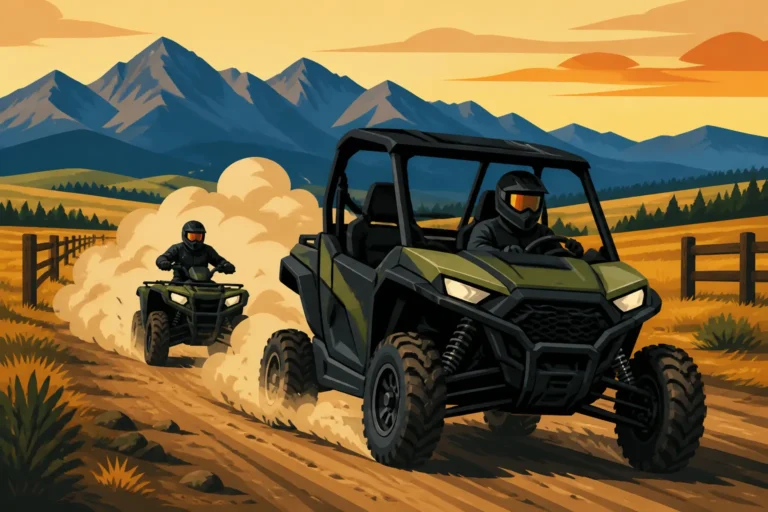
Riding your ATV or UTV through the stunning Montana landscape as the sun dips below the rugged peaks is an experience like no other. But that breathtaking sunset also brings a significant challenge: rapidly diminishing visibility. It's easy to get caught out, especially when a quick jaunt turns into a longer adventure, and suddenly, you realize you're far less visible to other drivers than you thought. This guide isn't just about meeting minimum requirements; it's about making sure you and your machine stand out, loud and clear, to avoid those heart-stopping moments when a vehicle doesn't see you until the last second.
Why Visibility is Non-Negotiable on Montana Roads, Especially at Dusk
Montana's big skies and expansive landscapes are incredible, but they also mean that daylight can vanish surprisingly fast, especially when you're tucked into a canyon or rolling through dense timber. What started as a sunny afternoon ride can quickly become a low-light navigation challenge, and that's where the real dangers begin to multiply.
The Silent Dangers of Fading Light
The transition from golden hour to twilight in Montana isn't a slow, gentle fade; it can feel like someone just flicked a switch. One minute you're bathed in the warm glow of late afternoon, the next, deep shadows stretch across county roads and forest service tracks. This rapid change significantly impacts how well you, and more importantly, how well other drivers, can perceive your off-highway vehicle (OHV). Your machine, often dark in color, can blend seamlessly into the darkening background, especially against a tree line or a shadowed hillside.
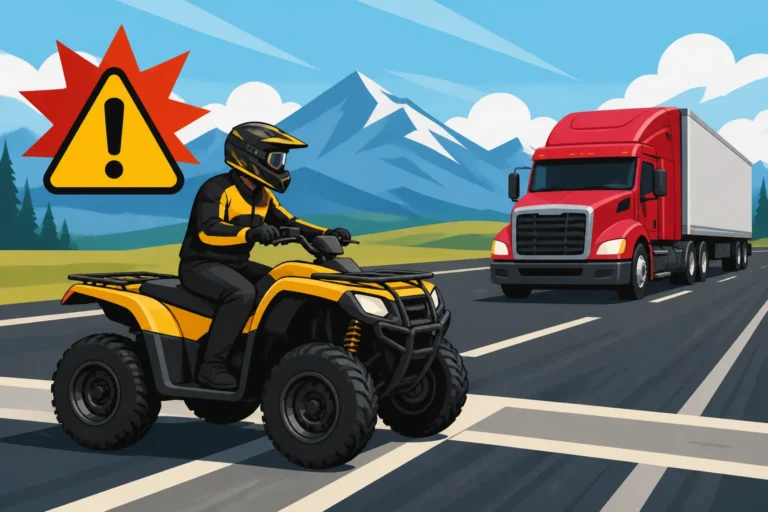
Think about the experience from the perspective of someone in a truck or car. They're scanning the road for larger vehicles, deer, or perhaps nothing at all, not necessarily looking for a smaller, often camouflaged OHV. When the light is fading, their eyes are struggling to adjust, and the contrast between your machine and its surroundings dramatically decreases. That slight delay in recognition can be the difference between a safe pass and a dangerous encounter, particularly on winding gravel roads or when you're making a turn from a less-trafficked side road onto a main route. It's a silent danger, one that often goes unnoticed until it's almost too late.
This isn't just about car-versus-OHV either. Other OHV riders in your group might struggle to see you if you fall behind or separate, especially if you're not kicking up dust. Pedestrians, cyclists, or even equestrians out for an evening stroll near the shoulder of a county road might also be caught unaware. Imagine a rancher, after a long day checking fences on their UTV, heading back towards the homestead as the sun dips below the horizon. They know this road like the back of their hand, but a vehicle cresting a hill might not see them until they're uncomfortably close, simply because the machine, with its natural colors, has become almost invisible against the gathering dusk. It's a scenario that plays out far too often, not because of malice or recklessness, but purely due to physics and light conditions.
Legal Requirements vs. Real-World Safety
Montana does have specific rules for operating OHVs on public roads, and these include basic lighting requirements. Generally, if you're going to be riding on a designated county road or street, you'll need at least one white headlight visible from 500 feet and one red taillight visible from 500 feet. If your machine is wider than 50 inches, you'll often need two headlights and two taillights, along with a rear license plate light. You can delve into more specifics about these requirements in guides like [Montana Headlight Rules After Dark] and [Brake Requirements for a Montana Road Ride]. These are the bare minimums, the legal baseline that allows you to operate your machine.
However, anyone who has spent time riding Montana's diverse terrain knows that meeting the minimum legal requirement doesn't always equate to maximum real-world safety. A single headlight might technically be visible from 500 feet, but it doesn't give a driver the same visual information as a broader, brighter light source or multiple points of light. From the side, even with your headlights and taillights blazing, your OHV can appear as little more than a dark silhouette against a rapidly darkening field or forest backdrop. Drivers often perceive depth and distance by discerning shapes and outlines, which become incredibly difficult in low light.
This is precisely where reflective tape steps in as a game-changer. It's an enhancement that goes far beyond basic compliance. While your lights project outward, reflective tape harnesses ambient light – from oncoming headlights, streetlights, or even the faint glow of a distant homestead – and bounces it directly back to the source. It’s a passive but incredibly effective way to make your machine "pop" into visibility from all angles, not just the front and back. Think about a scenario where a rider pulls out of a private driveway onto a county road just as the last vestiges of daylight disappear. Their headlights are on, but from the side, they are a dark shape. Reflective tape on the side fenders or roll cage could provide the crucial glint that catches an approaching driver's eye, offering precious extra seconds for reaction.
Choosing and Applying Reflective Tape for Optimal Visibility
Deciding to add reflective tape is a smart first step, but not all tapes are created equal, and where you put it matters just as much as what kind you choose. This isn't just about slapping on a strip; it's about strategic enhancement.
Types of Reflective Tape and What Works Best
When you start looking for reflective tape, you'll quickly realize there's a huge variety out there. You might see terms like "standard reflective," "engineer grade," or "DOT-C2 conspicuity tape." For optimal visibility on an OHV, especially one that might see some road time in low light, you really want to aim for the higher-quality options. Standard reflective tape offers a basic level of reflectivity, often good for things like marking mailboxes, but it typically doesn't hold up well to the rigors of off-road life and offers less intense reflection.
"Engineer grade" tape is a step up, offering better durability and reflectivity. It's often used for traffic signs and general vehicle marking. However, for maximum impact, especially in those challenging Montana dusk conditions, DOT-C2 (Department of Transportation type C2) conspicuity tape is the gold standard. This is the same highly reflective tape mandated for the sides and rears of commercial trucks and trailers. It's designed for extreme visibility, even at wide angles, and is incredibly durable, standing up to weather, mud, and washes. While you might be looking at aftermarket upgrades like light bars or beefy bumpers from brands like SuperATV for your machine, never underestimate the simple, cost-effective power of high-quality reflective tape to complete your safety setup. It’s a small investment that pays huge dividends in peace of mind and actual safety.
Here’s a quick comparison to help you choose:
| Tape Type | Reflectivity Level | Durability | Best Use Case for OHVs | Notes |
|---|---|---|---|---|
| Standard Reflective | Good | Low | Basic warning, temporary markings | Less durable, fades quickly, lower light return |
| Engineer Grade | Better | Moderate | General vehicle marking, less exposed areas | Decent, but might not be enough for critical safety |
| High-Intensity Prismatic | Excellent | High | General vehicle marking, signs | Very bright, good durability, a solid choice |
| DOT-C2 Conspicuity Tape | Superior | Very High | Ideal for all-around OHV visibility, especially roads | Extremely bright, visible from wide angles, durable |
For color, white, red, and amber are the most common and effective. White is excellent for general visibility, red for the rear (like taillights), and amber for sides or front (like turn signals). Applying a combination of these strategically will maximize your machine's presence. Just remember, the goal is to make your machine as impossible to miss as possible.
Strategic Placement for Maximum Impact
Once you have your high-quality reflective tape, the next step is crucial: where do you put it? The aim is 360-degree visibility. You need to be seen from the front, the rear, and most importantly, the sides. Many riders focus only on front and back, assuming their lights cover those angles, but the sides are often the most vulnerable, especially at intersections or when pulling onto a road.
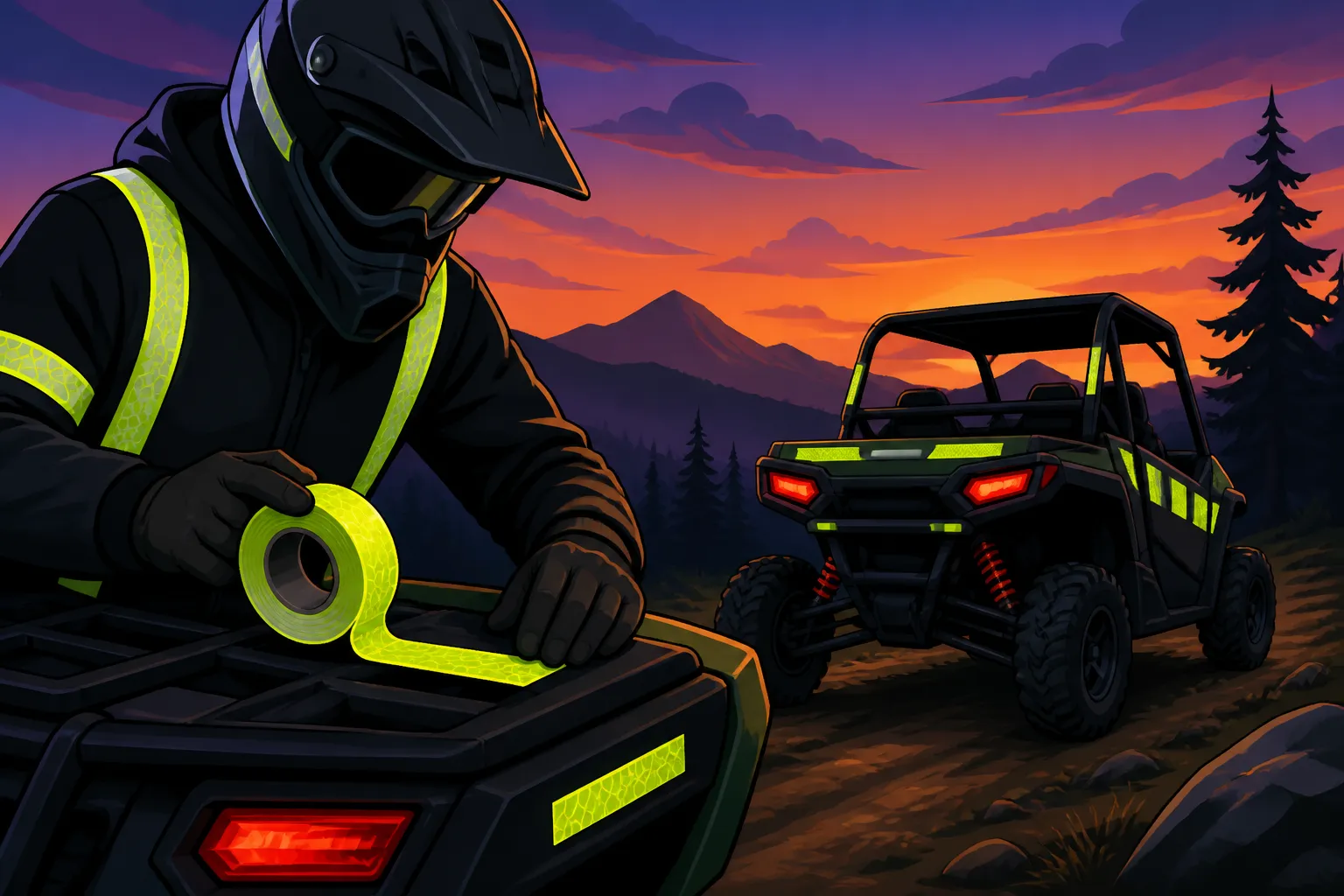
Start with the rear of your machine. Place strips on your rear bumper, fender flares, and even the back of your storage box or spare tire carrier. These areas are usually flat and offer good surface area. Next, move to the front: the front bumper, grille guards, and the leading edges of your fender flares are prime spots. Remember, the more surface area covered, the better the light return. But don't just put it on the flat surfaces. The roll cage on a UTV offers excellent opportunities for vertical strips of tape, making your machine appear taller and more substantial from a distance. Consider wrapping portions of the vertical bars or adding strips to the roofline.
For the sides, think about any flat panels on your bodywork, the edges of your doors (if a UTV), the swing arms on an ATV, and certainly your fender flares. These are critical for catching the eye of cross-traffic. Don't forget your helmet! A strip of reflective tape on the back or sides of your helmet can make your head, the highest point, visible even if the rest of your machine is obscured. Finally, if you wear a backpack or have specific riding gear, adding reflective strips there can further enhance your personal visibility. When applying, ensure the surface is clean, dry, and free of dirt or grease for proper adhesion. Take your time, press firmly, and smooth out any air bubbles for durability and maximum reflection. Imagine pulling out of a side road where the tape on your side fenders catches the light of an oncoming car – that split second of recognition could be priceless.
Beyond Tape: A Holistic Approach to Dusk Riding Safety
While reflective tape is an incredibly effective and affordable layer of safety, it's just one piece of the puzzle. A truly safe dusk ride in Montana requires a holistic approach that combines additional lighting, appropriate gear, and vigilant riding habits.
Complementary Lighting and Gear Upgrades
Reflective tape works by bouncing back light that's already there. But what about adding more light to the equation? This is where complementary lighting upgrades become essential. Beyond your factory headlights and taillights, consider installing additional LED light bars on the front of your UTV or ATV. These not only illuminate your path better, improving your own visibility of the terrain, but they also make your machine a much more prominent light source for oncoming traffic. Amber auxiliary lights, mounted lower on the machine, can also enhance visibility, especially in dusty conditions or when there's a light fog, as amber light tends to cut through better than white. You can find robust options for these kinds of upgrades from aftermarket providers like SuperATV, which specializes in enhancing off-road machines for both performance and safety.
Another highly effective addition, especially if you plan to be on any kind of designated trail or road after dark, is a lighted whip flag. These tall, flexible poles with integrated LED lights can make your machine visible over hills, through tall grass, or even from behind other vehicles in a group. They add a vertical element of light that catches the eye from a considerable distance. Beyond your machine, your personal gear plays a significant role too. Investing in a riding jacket, vest, or even gloves that incorporate reflective materials into their design can greatly increase your own visibility. Remember to check out resources like [Montana Helmet Rules for Riders Under 18] to ensure your gear choices comply with state law, especially for younger riders. The idea here is layered visibility: your machine has its lights, your machine has reflective tape, and you, the rider, also have reflective elements.
Riding Habits and Awareness at Dusk
Even with all the reflective tape and auxiliary lighting in the world, your riding habits are the ultimate safety tool, especially as daylight fades. Defensive riding becomes paramount. Assume that no one sees you, even if you're lit up like a Christmas tree. This means slowing down, especially on blind curves, at intersections, or when approaching crests in the road. You can never be too cautious. Actively scan the road ahead and behind, and be prepared to take evasive action if another vehicle appears to not be yielding or slowing down.
Clear communication is also vital, especially if you're riding in a group. Use hand signals clearly and deliberately if you're making turns or slowing down, even if your machine has turn signals. In Montana, especially in rural areas, you're often sharing county roads with ranchers, loggers, and other recreational users. Not everyone is accustomed to seeing OHVs on these routes, so being predictable and visible is key. Always be aware of your surroundings, listen for approaching vehicles, and be mindful of local ordinances that might restrict OHV use on certain roads after dark. Resources like [Montana City Streets and Municipal Ordinances] can help you understand specific local rules. When the light fades, your senses need to sharpen, and your riding strategy needs to become more conservative.
Maintenance and Longevity of Your Visibility Enhancements
Applying reflective tape and other visibility upgrades is a fantastic start, but they aren't a "set it and forget it" solution. Montana's environment, with its extreme weather and rugged terrain, demands that you regularly inspect and maintain all your safety features, especially those that rely on reflectivity.
Keeping Reflective Tape Effective
The effectiveness of reflective tape is directly tied to its condition. A strip of tape caked in mud, scratched by branches, or peeling at the edges won't reflect light efficiently, if at all. Regular cleaning is absolutely essential. After every dusty trail ride or muddy creek crossing, take the time to clean your machine, paying particular attention to the reflective surfaces. A simple wash with soap and water is usually sufficient to remove dirt and grime that would otherwise obscure the reflective properties.
Beyond cleaning, you need to regularly inspect the tape for signs of wear and tear. Montana's harsh sun can fade colors and degrade adhesives over time, causing the tape to lose its vibrancy and peel away. Freezing temperatures and snow can also take their toll, leading to cracking or loss of adhesion. If you notice any peeling, tears, or significant fading, it's time to replace those sections. Think of it like a tire tread: once it wears down, it loses its effectiveness. Replacing a few strips of tape is inexpensive and quick, ensuring your machine remains highly visible. Imagine a situation where, after a particularly muddy spring ride, a rider neglects to clean their UTV. Weeks later, heading out at dusk, the reflective tape, still caked in dried mud, is virtually useless, leaving them dangerously exposed without realizing it.
The Cost-Benefit of Prioritizing Visibility
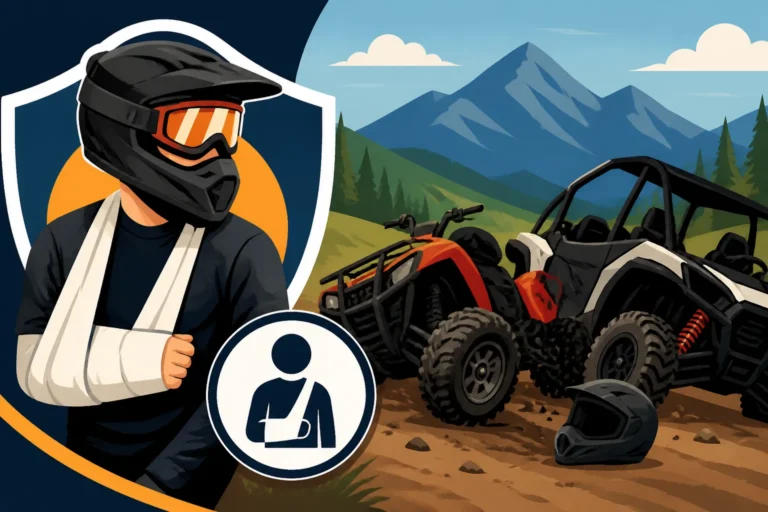
When you consider the potential consequences of an accident involving an OHV, especially on a public road in low light, the cost of reflective tape or even additional lighting upgrades pales in comparison. A roll of high-quality reflective tape is an incredibly inexpensive item, yet it can offer a disproportionately high return on investment in terms of safety. The cost of a medical bill, vehicle repairs, or legal fees stemming from a collision can quickly climb into the thousands, or even tens of thousands, of dollars.
Beyond the financial aspect, there's the invaluable peace of mind that comes from knowing you've done everything reasonably possible to make yourself and your machine visible to others. It’s not just about avoiding a ticket for insufficient lighting, which itself can be a costly fine, as explored in [Montana Fines for Illegal Road Riding]. It’s about preventing injuries, protecting your investment, and ensuring you can continue to enjoy the incredible riding opportunities Montana offers. Making safety a priority, starting with something as simple as reflective tape, is truly a no-brainer for any responsible OHV owner. It's a small investment that could, quite literally, save your life or prevent a serious accident that would drastically change your riding future. For more on what happens after a crash, you might find [Montana OHV Accident Reporting Rules] and [Who Pays After a Montana OHV Collision] to be relevant resources.
Disclaimer
This article is for general informational purposes only and does not constitute professional advice. Laws, prices and regulations vary by location and change over time. Consult a qualified professional for guidance on your specific situation.