Montana Winter Road Riding Rules
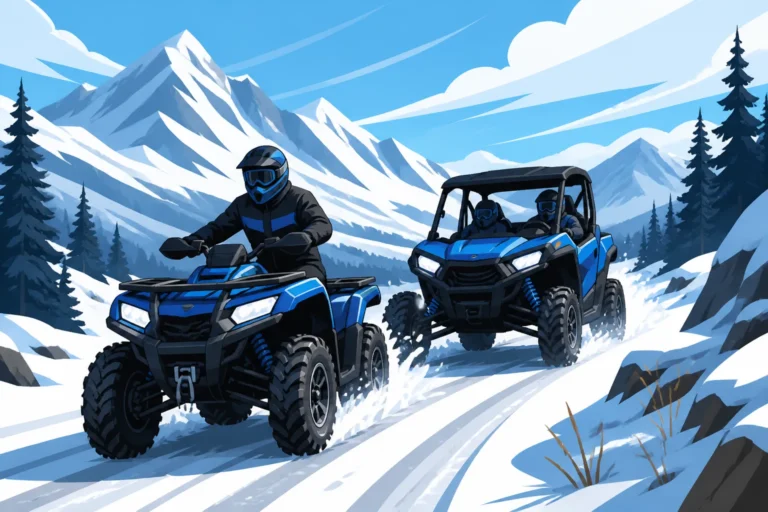
Riding your ATV or UTV through Montana’s winter wonderland can sound like an exhilarating adventure, but the reality of snow and ice on public roads brings a whole new set of challenges and safety concerns. It's not just about bundling up; you need to understand the unique rules and risks that come with operating your machine when the mercury drops. This guide is here to walk you through the essential Montana winter road riding rules, ensuring you stay legal, safe, and truly prepared for whatever the season throws at you.
Navigating Montana's Roads When Snow Flies
When the first flakes start to fall, many of us dream of crisp, cold rides through a quiet, snow-covered landscape. But before you fire up your rig and hit the pavement, it's crucial to understand that winter conditions add significant layers of complexity to Montana's existing OHV road riding rules. It's not just about adhering to the law; it's about staying safe for yourself and everyone else on the road. The beauty of a Montana winter ride can quickly turn treacherous if you're not prepared.
The Basics of OHV Road Access in Winter
The fundamental rules governing where and how you can ride your ATV or UTV on public roads in Montana generally don't change just because it's winter. You still need to ensure your machine is properly registered and equipped for road use, meeting requirements like headlights, taillights, mirrors, and a horn. However, the application of these rules in a winter context demands extra vigilance. Roads that are perfectly fine for OHV use in July might become impassable or officially closed in January. It's always a good idea to check local ordinances for any specific winter restrictions that might apply. For a deeper dive into the general rules, take a look at our guide on [Riding an OHV on the Road in Montana]. Remember, while county roads might often allow OHV access, state highways almost never do, and this distinction becomes even more critical when icy conditions are present.
Beyond the baseline legalities, the practical reality is that snow and ice can obscure road markings, reduce visibility, and make navigating even familiar routes a challenge. What was a clear shoulder for riding might now be a snowdrift. You still need to carry your registration papers and proof of insurance, as wardens and deputies are still out there, even in the cold. A good rule of thumb is that if a road looks unsafe or impassable for a standard vehicle, it's probably even more so for an OHV with reduced traction and less protection from the elements.
Increased Risks and Considerations on Snowy Pavement
Let’s be real, winter riding on roads is inherently riskier than summer riding. The biggest challenge? Traction. Even with specialized tires, snow and especially ice dramatically reduce your machine's ability to grip the road, leading to longer stopping distances and a higher risk of skidding or losing control. Imagine hitting a patch of black ice on a sharp curve – it's a terrifying scenario that can happen in an instant. Reduced visibility is another major hurdle. Blowing snow can create whiteout conditions, and shorter daylight hours mean you'll likely be riding in dusk or darkness more often. This not only makes it harder for you to see but also makes it incredibly difficult for other drivers to see you.
Then there's the issue of other road users. Plows, sanders, and other winter maintenance vehicles are often large, noisy, and their operators are focused on clearing the road, not necessarily looking for a smaller OHV. They might be throwing up snow and ice, further reducing your visibility. Trucks and cars, even if they have four-wheel drive, are still battling the same slick conditions, and their reactions can be unpredictable. You need to assume that every other driver might not see you and plan your movements accordingly. The comfort and safety of an enclosed cab in a truck or car provides a false sense of security for many drivers, making them less aware of vulnerabilities outside their vehicle.
Essential Gear and Machine Prep for Winter Road Riding
Montana winters are no joke, and attempting to ride your ATV or UTV on public roads without proper preparation is simply asking for trouble. It's not just about staying warm; it's about maintaining control, being visible, and having the right tools to tackle unexpected situations. Just like you wouldn't head out into a blizzard in a t-shirt, your machine needs to be dressed for the occasion too.
Equipping Your Machine for Cold and Traction
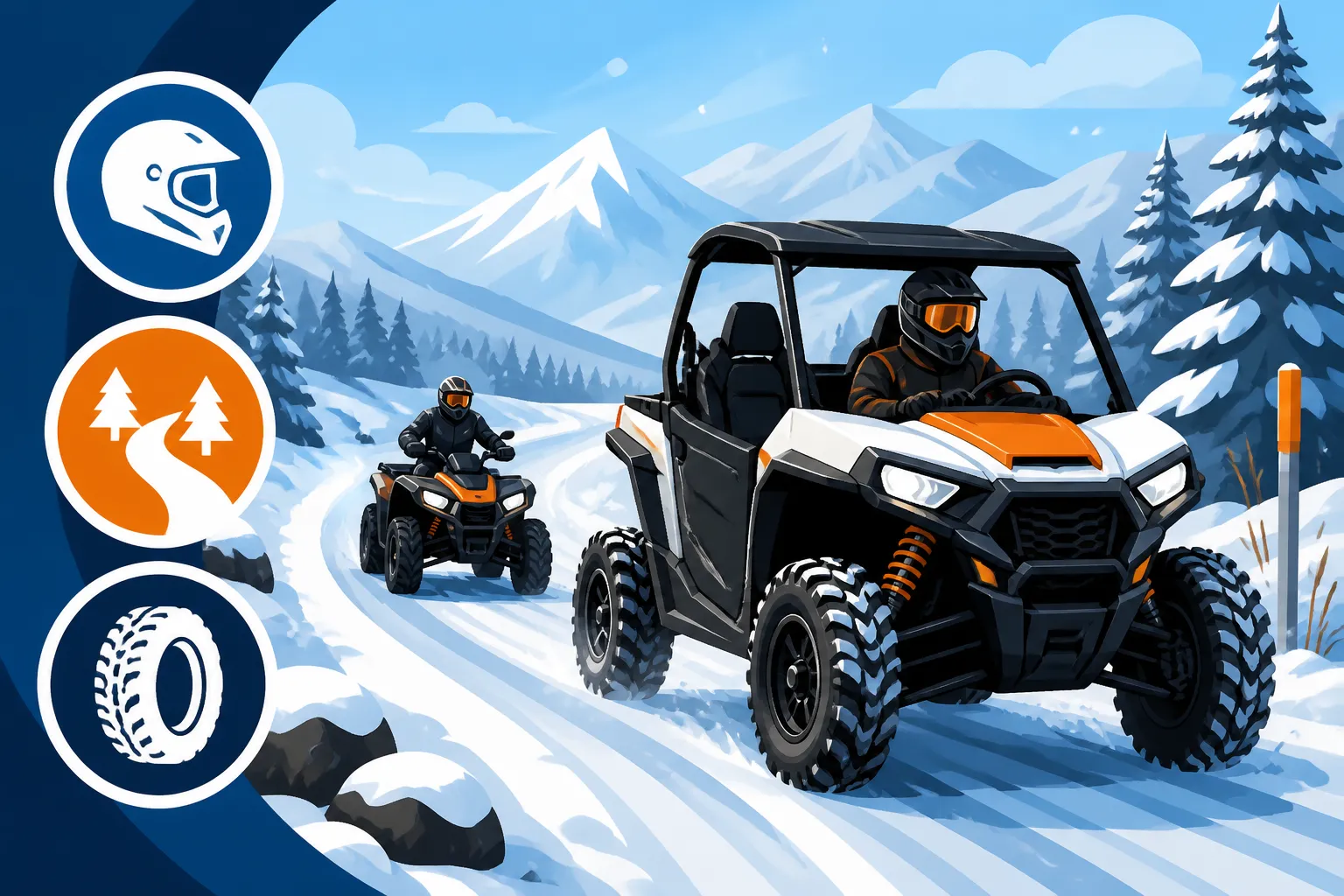
First and foremost, let's talk about traction. This is your lifeline on snowy and icy roads. While all-terrain tires are great for dirt, they often don't cut it when the temperature drops. This is where studded tires really shine. In Montana, studded tires are generally allowed on vehicles, including OHVs, from October 1 to May 31, which perfectly covers the typical winter riding season. These studs bite into ice and packed snow, providing significantly better grip than standard tires. Investing in a good set of studded tires can be the single most important safety upgrade for winter road riding. Make sure they are in good condition and properly inflated for the best performance. Our article on [Studded Tires on Frozen Montana Two-Track] dives deeper into this essential winter upgrade.
Beyond tires, consider upgrading your machine with winter-specific accessories that enhance comfort and functionality. Heated grips and seats can make a monumental difference on a long, cold ride, keeping your core and extremities from freezing. A full windshield or even a complete cab enclosure offers crucial protection from biting winds, blowing snow, and road spray. For example, a robust full cab enclosure from a brand like SuperATV can transform a chilly ride into a far more comfortable journey, making longer distances on county roads feasible. Another indispensable item for winter road riding is a winch. While primarily thought of for trail recovery, a good winch, perhaps from SuperATV, can be a lifesaver if you slide off an icy shoulder or get stuck in a deep snowdrift on a less-traveled road. It's about preparedness, not just for trails, but for the unexpected challenges of winter roads.
Dressing for the Montana Winter Ride
Just as your machine needs to be equipped, so do you. Dressing in layers is the golden rule for Montana winters. Start with moisture-wicking base layers, add insulating mid-layers like fleece or wool, and top it off with waterproof and windproof outerwear. Your outer shell should be designed to repel snow and ice while trapping warmth. Good quality insulated, waterproof gloves or mitts are non-negotiable – frostbitten fingers are not only painful but can impair your ability to operate controls safely. A balaclava or neck gaiter will protect your face and neck from the relentless cold, which can quickly lead to painful windburn or even frostbite.
Your helmet choice is also critical. While open-face helmets might be fine in summer, a full-face helmet offers superior protection from the cold and elements, and many come with breath boxes or anti-fog inserts to keep your visor clear. Speaking of visibility, proper eye protection is paramount. Goggles or a helmet visor that resists fogging is essential, as clear vision is your most important tool in blowing snow or low light. Even if you're an adult and not legally required to wear a helmet on certain roads, choosing to wear one in winter conditions is a smart safety decision. For younger riders, Montana has specific [Montana Helmet Rules for Riders Under 18] that apply year-round, and these rules are even more vital to follow in winter.
Specific Winter-Related Regulations and Their Nuances
While many of Montana's OHV road rules remain constant year-round, the unique challenges of winter add particular nuances to how these regulations are enforced and how you should interpret them for safe operation. What might be a minor oversight in July could become a significant hazard or a legal issue in December. Understanding these specific winter-related aspects is key to a responsible and enjoyable ride.
Lighting and Visibility in Reduced Daylight
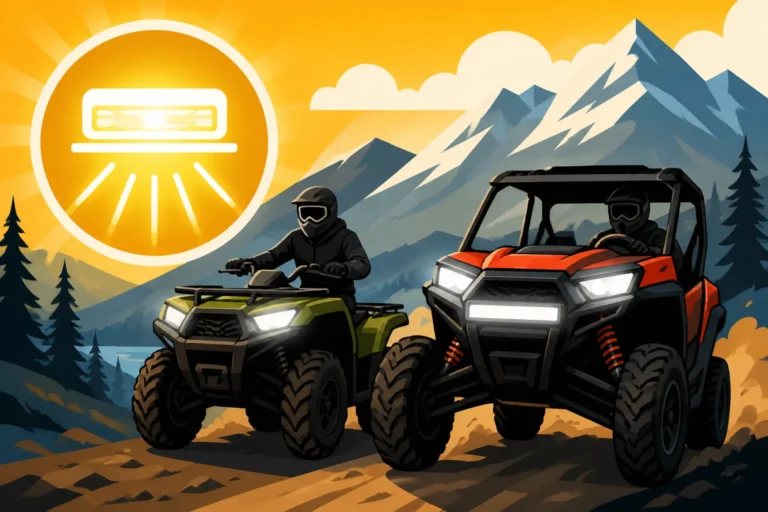
In Montana, any OHV operated on a public road must have at least one headlight and one taillight that are illuminated whenever the machine is in operation. This isn't just a suggestion; it's a legal requirement, as covered in detail in our article on [Headlight and Taillight Rules in Montana]. During winter, with its shorter daylight hours and often overcast, snowy conditions, these lights become absolutely crucial. Not only do you need them to see, but perhaps more importantly, you need them to be seen by others. Blowing snow can significantly reduce visibility for all drivers, making it harder for them to spot a smaller OHV. Ensure your headlights are clean and properly aimed, and that your taillights are bright and free of snow or mud buildup.
Beyond your machine's lights, consider adding additional reflective tape to your OHV and wearing highly visible outerwear, especially if you plan to ride during dawn, dusk, or nighttime. Bright colors, like neon yellow or orange, stand out against a snowy backdrop much better than camouflage or dark tones. The goal is to maximize your presence on the road, leaving no doubt in other drivers' minds that you are there. This becomes even more important on less-traveled county roads where you might encounter larger vehicles like snowplows, which operate with a specific focus on clearing the road.
Speed Limits and Safe Operation on Icy Surfaces
Montana's posted speed limits apply to OHVs on public roads, but during winter, adhering strictly to the speed limit might still be too fast for conditions. Ice, packed snow, and even slush dramatically increase stopping distances and reduce your ability to steer or react quickly. The law always requires you to operate your vehicle at a speed that is safe for the current conditions, regardless of the posted limit. This means slowing down considerably, especially on curves, at intersections, and when visibility is poor. You need to leave significantly more following distance between your OHV and any vehicles in front of you.
Maintaining your machine's brakes is also paramount. Our guide on [Brakes a Montana Road Ride Requires] outlines the general necessities, but in winter, well-maintained brakes are literally a lifesaver. Test your brakes frequently in safe, clear areas to get a feel for how your machine handles on slick surfaces. Avoid sudden braking or acceleration, as this can easily lead to a loss of traction and control. Smooth, deliberate inputs are your best friend on icy roads. The goal is not just to comply with the speed limit, but to ensure you are operating within your machine's and your own capabilities given the treacherous conditions.
Local Ordinances and Seasonal Closures
While Montana has statewide OHV road riding rules, counties and municipalities often have their own specific ordinances that can impact where and when you can ride. This is particularly true for city streets and certain county roads. What's open in summer might be closed in winter, or might have specific restrictions. It’s imperative to check with local county commissioners or city offices before planning a winter road ride, especially if you’re venturing into a new area. Our article on [County Commissioners and Montana County Roads] highlights their authority in setting these rules. Some local jurisdictions might close unpaved roads seasonally to prevent damage from freeze-thaw cycles or simply because they are not maintained in winter.
It's also worth noting that many forest service roads and higher elevation areas are subject to seasonal closures due to snow. While these might not always be "roads" in the sense of paved county routes, they can connect communities or provide access to trailheads. Always consult a local Motor Vehicle Use Map (MVUM) or contact the local Forest Service or BLM office to confirm road status before you head out. These closures are for your safety and to protect the land, as riding on frozen but still fragile ground can cause lasting damage, even if it feels solid under snow. What might be passable one day can become completely impassable or illegally closed the next with fresh snow.
Safety and Etiquette on Snowy Montana Roads
Riding your ATV or UTV on Montana's roads in winter is an experience that demands an elevated level of caution, respect, and preparedness. It's not just about staying within the letter of the law; it's about making smart decisions that protect you, your machine, and everyone else who shares the roads. The majesty of a snow-covered landscape can be breathtaking, but it also magnifies the consequences of even small mistakes.
Sharing the Road with Winter Traffic
One of the most crucial aspects of winter road riding is recognizing and respecting other types of traffic. Snowplows are massive, loud, and often have limited visibility; always give them a wide berth. If you see a plow, slow down, move as far to the right as safely possible, and let them do their work. Never try to pass a plow on the right. Similarly, commercial trucks and other passenger vehicles face their own challenges on snowy and icy roads. They need significantly more room to stop and maneuver. Always assume they don't see you, especially because the blowing snow and glare can obscure smaller vehicles. Make eye contact if possible, and use hand signals or turn signals well in advance of any turns.
Remember, the general rules for road riding still apply, including operating single file on narrow roads and being mindful of other users. For example, if you're riding with a group, ensure everyone understands the increased risks and maintains safe distances. Being predictable in your movements, signaling clearly, and avoiding sudden changes in speed or direction will go a long way in preventing accidents. It's not just about legal compliance; it's about being a courteous and safe road user in challenging conditions.
Emergency Preparedness for Cold Conditions
Breaking down or getting stuck on a remote Montana road in winter can quickly turn into a life-threatening situation. Your emergency kit for winter road riding needs to be far more robust than what you'd carry in summer. Always carry extra layers of warm clothing, waterproof matches or a lighter, fire starter, a small shovel, non-perishable food, and plenty of water (ensure it won't freeze). A first-aid kit, a headlamp, and a fully charged cell phone are standard, but in many parts of Montana, cell service is spotty at best. Consider investing in a satellite messenger or a two-way radio for true backcountry communication. [Cell Service in the Montana Backcountry] is often nonexistent, even on some public roads.
Beyond supplies, having a plan is essential. Always tell someone your intended route and your estimated return time. If you’re riding alone, these precautions are even more vital. Know the signs of hypothermia and frostbite, both for yourself and any riding companions. Staying hydrated and well-fed throughout your ride helps your body generate heat, but even then, exposure to Montana's harsh winter elements can quickly lead to dangerous situations. Mechanical issues are also more common in cold weather, so carrying basic tools for on-the-spot repairs, like a tire repair kit or spare belt, is a smart move.
Environmental Impact and Responsible Riding
Even though the ground might be frozen solid and covered in snow, responsible riding practices are just as important in winter as they are in summer. Stick to designated roads and trails that are open to OHVs. While it might seem harmless to cut across a snowy field, you could be trespassing or causing damage to underlying vegetation or private property. [Montana Trespass Rules Along Roads] are always in effect, even if the fences are hidden by snowdrifts. Any off-road excursions should only occur on private land with explicit permission.
Noise can also be an issue, especially in quiet, residential areas or when passing through small towns. Even with standard mufflers, OHVs can be noisy, and sound travels further in cold, still air. Be mindful of your speed and throttle input when near homes or sensitive wildlife areas. Our article on [Mufflers and Spark Arresters in Montana] discusses requirements that help mitigate noise and spark hazards. Adhering to these regulations is important year-round, but demonstrating courtesy in winter conditions can help maintain a positive image for the OHV community. Always leave no trace, packing out any trash and respecting the pristine beauty of Montana’s winter landscape.
Here's a quick look at some essential gear for safe winter road riding:
| Gear Item | Why It's Crucial for Winter Road Riding |
|---|---|
| Studded Tires | Dramatically increases traction on ice and packed snow; legal during winter months. |
| Full Cab/Windshield | Provides critical protection from wind chill, blowing snow, and road spray. |
| Heated Grips/Seats | Essential for maintaining core body temperature and manual dexterity. |
| Layered Clothing | Allows for temperature regulation; wicking, insulating, waterproof layers. |
| Waterproof Insulated Gloves | Prevents frostbite, maintains grip and control over machine. |
| Full-Face Helmet | Offers superior warmth and protection from cold and impacts; often includes anti-fog features. |
| High-Visibility Outerwear | Makes you easily seen by other drivers in low light and snowy conditions. |
| Winch | Useful for self-recovery if sliding off an icy road or getting stuck in snow. |
| Emergency Kit | Contains survival essentials like food, water, fire starter, shovel, and blankets. |
| Satellite Messenger | Provides critical communication in areas without cell service in case of emergency. |
Disclaimer
This article is for general informational purposes only and does not constitute professional advice. Laws, prices and regulations vary by location and change over time. Consult a qualified professional for guidance on your specific situation.