Riding a Gravel Road Into Town
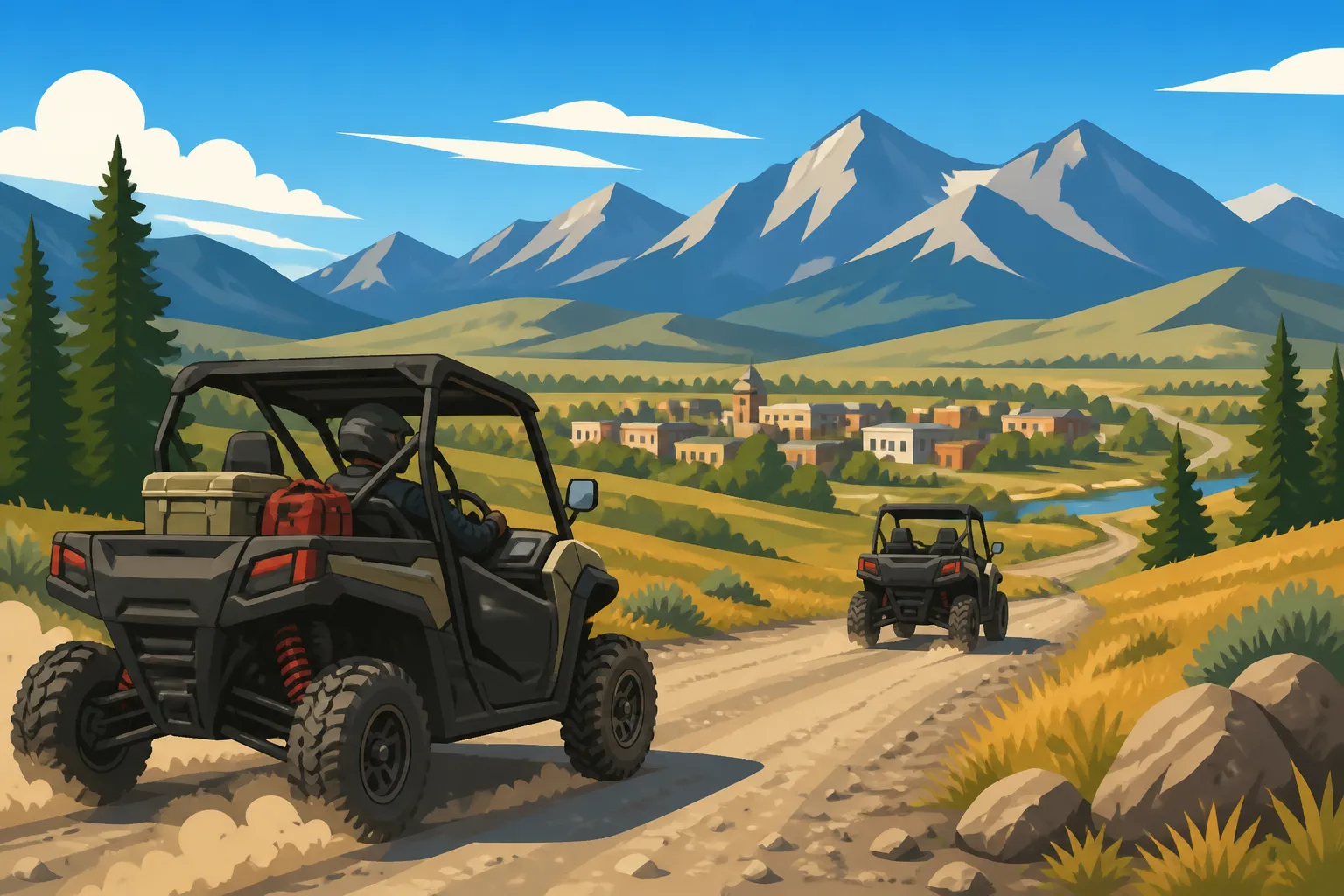
There's nothing quite like the freedom of exploring Montana's vast backcountry on your ATV or UTV. But eventually, even the most seasoned rider needs to refuel, grab a bite, or resupply. The challenge often comes when that remote trail or forest service road ends, and a gravel county road appears, leading straight into a charming Montana town. Many riders wrestle with the confusion of whether it's even legal to take their machine from the dirt to the gravel, and then onto town streets. This guide is here to clear up that confusion, breaking down Montana's rules for riding your off-highway vehicle on gravel roads and right into town.
Understanding Montana's Road Access Laws for OHVs
Riding your ATV or UTV in Montana offers incredible freedom, but that freedom comes with a patchwork of regulations when it comes to hitting public roads. It's not as simple as "street legal" or "not street legal" like it might be for a car. When you start eyeing that gravel road that leads to the nearest town, you need to understand the nuances of Montana's approach to OHV road access.
The Core Rule: County Commissioners and Municipal Ordinances
One of the biggest frustrations for riders in Montana is the lack of a uniform, statewide law for OHV access on public roads. Unlike some states that might have a blanket allowance or prohibition, Montana delegates this authority to the local level. This means that whether you can ride your ATV or UTV on a particular gravel road, or indeed any road, largely depends on two groups: the county commissioners for county roads and city or town councils for municipal streets.
This local control means that the rules can change dramatically from one county line to the next, or even as you transition from unincorporated county land into a small town. Imagine you've been riding all morning on a fantastic trail system in, say, the Lolo National Forest. You come down a steep section and find yourself on a well-maintained gravel road. Your GPS shows the nearest town, Darby, is just a few miles down this road. Can you take it? Well, that depends entirely on whether Ravalli County Commissioners have passed an ordinance allowing OHV use on that specific county road. And then, once you hit the town limits of Darby, it depends on whether the Darby Town Council has an ordinance permitting OHV travel on their streets. This creates a highly localized landscape of access that requires riders to do their homework.
The beauty of this system, for some, is that it allows communities to tailor regulations to their specific needs, concerns, and local culture. For others, it's a constant headache, leading to uncertainty and the fear of inadvertently breaking a local law. Many local riding groups and advocacy organizations spend significant time working with their county commissioners and town councils to get roads opened for OHV use, often citing economic benefits from increased tourism and rider spending. These groups can be a great resource for understanding specific local access. You can often find information on specific county registration processes and rules by checking with the local Department of Motor Vehicles or even looking at resources like [Montana County Treasurer OHV Registration]. It's crucial to remember that just because you see another OHV on a road doesn't mean it's legal for you; they might be a resident with special permission, or they might be operating illegally. Always confirm for yourself.
The Definition of a "Gravel Road" in Montana
When we talk about "gravel roads" in Montana, it's easy to assume they're all the same, but the truth is, the designation and ownership of that road significantly impact whether you can ride your ATV or UTV on it. The type of jurisdiction determines the rules.
First, let's distinguish between different types of gravel roads. Many of the gravel roads you encounter in Montana's backcountry are actually Forest Service roads or Bureau of Land Management (BLM) roads. These federal lands generally have more permissive rules for OHV use, as long as you stay on designated routes and abide by Motor Vehicle Use Maps (MVUMs). Often, if you're on a federal land gravel road, your OHV is allowed, provided it's registered and has the proper equipment for the specific route (e.g., spark arresters). The challenges usually arise when these federal roads transition into county-maintained roads or enter private land. For specific details on federal land rules, you might want to read [Montana Rules on Forest Service Roads].
Then there are county roads, which are perhaps the most common type of gravel road you'll encounter when heading toward a town. These are maintained by the county, and as we discussed, their accessibility to OHVs is determined by the local county commissioners. A gravel county road is still a "road" in the eyes of the law, not just an extension of a trail. This means if the county has not specifically opened that road for OHV use, or if they have restricted it, you cannot legally ride your ATV or UTV on it, even if it feels like just another dirt track. It's not uncommon for these roads to be clearly marked at county lines or town limits with signs indicating OHV restrictions or allowances.
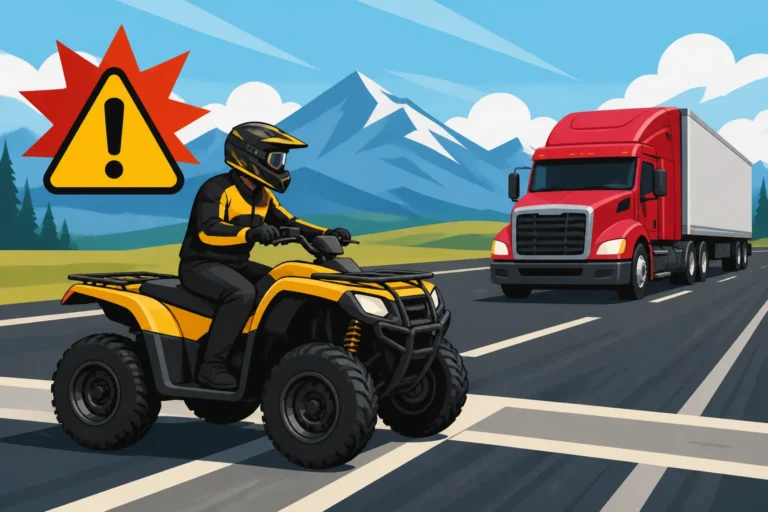
Finally, there are state highways and interstates, which, regardless of whether they have a gravel shoulder or a paved surface, are almost universally off-limits to ATVs and UTVs. While you might occasionally need to cross a paved state highway to connect two sections of trail or get into a town, riding on these highways is generally prohibited and extremely dangerous. Always look for designated crossings or alternative routes. The "gravel road" into town you're considering is almost certainly a county road or a municipal street once it enters town limits, and those are the jurisdictions whose rules you need to be concerned with.
| Road Type | Governing Authority | Typical OHV Access | Key Considerations |
|---|---|---|---|
| Forest Service Rd | USDA Forest Service | Often Permitted | Check MVUMs, Stay on Designated Routes |
| BLM Road | Bureau of Land Management | Often Permitted | Check Local Field Office Rules, Stay on Routes |
| County Road | County Commissioners | Varies by County | Local Ordinances are Key, Can Change Rapidly |
| Municipal Street | City/Town Council | Varies by Town | Specific Ordinances for Entry, Parking, Routes |
| State Highway | Montana DOT | Generally Prohibited | Only Designated Crossings, No Riding on Highway |
Essential Equipment and Rider Requirements for Road Riding
So, you've done your homework, and you've confirmed that the county and the town you want to visit allow OHVs on their gravel roads and streets. That's fantastic! But before you hit the throttle, your machine and you as the rider need to meet certain requirements to be legal and safe for road use. This isn't just about avoiding a ticket; it's about making sure you can be seen and can react appropriately among other traffic, which often includes larger, faster vehicles.
What Your Machine Needs to Be "Road Ready"
Converting an ATV or UTV from a pure trail machine to something that's legal on a public road, even a gravel one, involves more than just throwing on a license plate. Montana law, where OHV road use is permitted, outlines specific equipment requirements to ensure visibility and safe operation. If you're planning to ride on any public road, you'll need to make sure your machine has:
- Headlights: Your OHV must be equipped with at least one headlight, and it must be turned on at all times when operating on a public road, regardless of daylight conditions. This is a critical safety measure for visibility to other drivers.
- Taillights: At least one taillight is required, also to be on at all times. This ensures vehicles approaching from behind can see you.
- Brake Lights: These are essential for signaling your deceleration to other drivers. Many ATVs come with basic taillights, but ensure yours illuminates brighter when the brakes are applied.
- Mirrors: You typically need at least one rearview mirror, usually mounted on the left side, to give you a clear view of traffic approaching from behind. Some riders choose to add a right mirror for even better visibility. Brands like SuperATV offer a range of robust mirrors designed to withstand off-road use while providing excellent rear visibility for road sections.
- Horn: A functioning horn is a non-negotiable safety item, allowing you to alert other drivers or pedestrians to your presence.
- Muffler and Spark Arrester: While essential for trail riding to prevent wildfires, a proper muffler also helps keep noise levels down, which is crucial for being a good neighbor in town. Your machine must have a U.S. Forest Service approved spark arrester if you're on public lands.
- Brakes: Your OHV needs functional braking systems on all wheels.
- License Plate/Registration Decal Display: Your Montana OHV registration decal must be properly displayed. For ATVs, it's typically on the rear fender or a visible part of the machine. For UTVs, it's often on the rear of the machine. If you're a non-resident, your temporary use permit or home state registration proof needs to be readily available. [Where a Montana OHV Decal Goes] provides more specifics on placement.
It's worth noting that some of these items, like turn signals, aren't universally mandated for OHVs on Montana roads unless a specific local ordinance requires them, or if you've added them yourself for enhanced safety. However, adding turn signals (again, SuperATV has some great kits for this) and even reflective tape can significantly improve your visibility and safety when sharing the road with cars. For more detailed information on lighting, you can check out [Headlight and Taillight Rules in Montana]. Always confirm your machine meets all local requirements for the specific roads you plan to travel.
Rider Qualifications and Safety Gear
Beyond the machine itself, the person operating it also has specific requirements when venturing onto public roads. These rules are in place for your safety and the safety of everyone else on the road.
- Driver's License: If you're operating an OHV on a public road in Montana, you must possess a valid driver's license. This means anyone under the age of 16 who only has an OHV safety certificate cannot legally ride on public roads, even gravel county roads. The only exception might be in very specific, designated areas or for agricultural purposes, but for general riding into town, a driver's license is required. For more on this, see [Driver's License Rules for Montana Road Riding].
- Age Restrictions for Youth Riders: Montana has specific age rules for operating OHVs. Riders aged 12 to 15 can operate an OHV if they have successfully completed an approved OHV safety education course and are under the direct supervision of an adult (18 or older). However, this generally applies to off-road trails and private property. As mentioned, for public road use, a valid driver's license is the standard. Children under 12 are typically not allowed to operate OHVs on public lands or roads, though exceptions exist for smaller machines on private land.
- Helmets: For riders under the age of 18, wearing a DOT-compliant helmet is mandatory when operating an OHV on public lands, including roads where permitted. While adults over 18 are not legally required to wear a helmet, it is strongly, strongly recommended. A helmet is your best defense against serious head injury in an accident, which can happen just as easily on a gravel road as on a rough trail. You can find more details in [Montana Helmet Rules for Riders Under 18].
- Eye Protection: All riders and passengers on OHVs are required to wear eye protection (goggles or a face shield) when operating on public roads or trails where dust and debris are common. This is not just a comfort issue; it's a safety issue to prevent impacts that could impair your vision while riding.
- Safety Certificate: While a safety certificate doesn't replace a driver's license for road use, it is required for riders aged 12-15 to operate OHVs. It's also an excellent course for all riders to take, covering safe operating procedures and environmental responsibility. More information can be found in [Montana's Safety Education Requirement].
By ensuring both your machine and your riding practices comply with these regulations, you're not only staying within the law but also significantly enhancing your safety and the safety of others as you transition from the wild backcountry to the more structured environment of public roads and town streets.
Navigating the Transition: From Trail to Town
The moment of truth arrives when your backcountry adventure route connects with a gravel road that signals the approach to civilization. Successfully navigating this transition requires more than just meeting equipment requirements; it demands careful planning, awareness of local rules, and a commitment to safe, courteous riding.
Planning Your Route and Knowing Local Rules
You've spent the morning enjoying breathtaking views and challenging terrain. Now, your fuel gauge is dipping, and the thought of a burger and a cold drink is mighty appealing. Before you simply point your machine down that gravel road and head for the nearest town, you need to engage in a bit of urban planning, Montana style.
The absolute first step is to check local ordinances before you even start your ride. This can't be stressed enough. Relying on what you think the rules are, or what you saw another rider do last year, is a recipe for a citation or, worse, an accident. Remember, OHV access on county roads and city streets is determined at the local level. What's legal in one county or town might be strictly prohibited just across the border.
So, how do you find this crucial information?
- County Commissioner Websites: Most Montana counties have websites where their meeting minutes and codified ordinances are published. Look for sections pertaining to "motorized recreation" or "off-highway vehicles."
- City or Town Clerk: A quick phone call to the clerk's office for the specific town you plan to enter can yield direct answers. They can tell you if OHVs are allowed, what streets are permissible, and any specific equipment or time-of-day restrictions.
- Local Sheriff's Office or FWP (Fish, Wildlife & Parks) Office: These agencies are responsible for enforcement and often have handouts or information readily available about local OHV rules. They are an invaluable resource.
- Local OHV Clubs: These organizations are typically deeply involved in advocating for and understanding local access. Their websites or social media groups can be a treasure trove of current information.
- Mapping Apps and MVUMs: Digital mapping tools like onX Offroad often incorporate user-reported information and official MVUM (Motor Vehicle Use Map) data which clearly delineates where motorized travel is permitted on federal lands. While MVUMs focus on federal lands, they can often show where those roads connect with county roads, prompting you to investigate further. For a deeper dive into finding these ordinances, check out [Finding a Montana Town's OHV Ordinance].
Once you confirm access is permitted, you need to plan your route into and out of town. Are there specific entry points or designated OHV routes? Some towns have marked routes that allow you to travel from the edge of town directly to a gas station or restaurant, but then require you to exit town immediately, prohibiting general cruising on main streets. Where can you legally park your machine once you arrive? Some towns have designated OHV parking areas, while others expect you to use regular parking spots, provided you don't block traffic or sidewalks. Knowing this in advance prevents last-minute confusion and potential issues.
Best Practices for Safe and Courteous Road Riding
Okay, you've confirmed the rules, and you've got a plan. Now it's time to put rubber (or knobby tires) to gravel. Remember, even though it's still dirt under your wheels, you're now sharing the space with cars, trucks, and potentially pedestrians. Your riding style needs to shift from aggressive trail riding to defensive and courteous road navigation.
- Slow Speeds: This is paramount, especially on gravel. Not only are most county roads and town streets going to have lower speed limits than open trails, but excessive speed on gravel can throw up immense dust clouds, obscuring vision for other drivers and coating homes. It also increases your stopping distance and the risk of losing control. Stick to posted speed limits, and often ride even slower than that, especially when passing homes or other vehicles. [Speed on a Montana County Road] elaborates on these limits.
- Yield to Other Vehicles: Always assume larger vehicles have the right-of-way. They are faster, heavier, and less maneuverable than your OHV. Give them ample space. If you're on a narrow gravel road and a car approaches, pull over safely to the side and let them pass. This is not just good manners; it's a critical safety measure.
- Single File in a Group: If you're riding with friends, travel in a single file line when on public roads. Spreading out makes you seem wider and more intimidating to oncoming traffic, and it's less safe.
- Be Mindful of Noise: Your OHV, especially if it has an aftermarket exhaust, can be loud. When riding through residential areas, be extra conscious of your noise output. Excessive revving or rapid acceleration can be disruptive and lead to complaints, potentially jeopardizing future OHV access in that area.
- Proper Parking: Once you reach town, park your machine responsibly. Don't block storefronts, driveways, or pedestrian paths. If there are designated OHV parking areas, use them. Otherwise, park as you would a small car, taking up only one space and being respectful of other businesses and residents. [Fueling an OHV in a Montana Trail Town] offers practical tips for navigating stops in town.
- Stay Alert and Visible: Continue to ride with your headlights and taillights on, even in bright daylight. Use hand signals if you don't have turn signals. Be aware of your surroundings: pedestrians, children, pets, and distracted drivers in cars.
By adhering to these best practices, you're not just ensuring a smooth trip into town; you're also acting as an ambassador for the entire OHV community. Positive interactions with locals and other road users are key to maintaining and even expanding riding access in Montana.
Common Frustrations and Practical Tips
Riding an ATV or UTV in Montana is an amazing experience, but it comes with its own set of unique challenges, especially when you're trying to figure out how to navigate public roads. Let's talk about some of the common frustrations riders face and offer practical advice to make your experience smoother.
The "Why Isn't It Simple?" Frustration
"Why can't there just be one rule for the whole state?" This is a question many OHV riders in Montana have asked, often with a sigh of exasperation. The patchwork of rules, where one county says yes and another says no, or one town opens its streets but its neighbor keeps them closed, can be incredibly confusing and frankly, frustrating. You might be riding legally on a county road, only to find yourself suddenly in violation as you cross an invisible line into an adjacent jurisdiction.
The main reason for this complexity is Montana's strong tradition of local control. County commissioners and city councils are closest to their constituents and are believed to be best suited to make decisions that reflect local values, safety concerns, and the economic impact of OHV tourism versus potential noise or environmental issues. While this democratic approach has its merits, it certainly doesn't make things easy for the rider planning a multi-county trip or simply trying to get gas in the next town. You can learn more about the role of local government in these decisions by reading [County Commissioners and Montana County Roads].
So, what can you do?
- Anticipate the Complexity: Don't expect a simple answer. Always assume the rules will vary and be prepared to do your research for each specific area you plan to ride.
- Use Specific Resources: As mentioned earlier, county and city websites, local sheriff's departments, and FWP offices are your best friends. Don't hesitate to make a phone call or send an email.
- Connect with Local Riders: Join Montana OHV clubs or online forums. Local riders often have the most up-to-date and practical knowledge about specific routes and any recent changes in ordinances.
- Advocate Respectfully: If you want to see more consistent or expanded access, get involved. Attend county commissioner or city council meetings. Present well-researched arguments about economic benefits and responsible riding practices. Remember, a polite and well-informed request is much more effective than an angry complaint.
Hypothetical Scenario: The Gas Station Run
Let's walk through a common scenario to bring all these rules and tips together: You're at your remote camp in the mountains, enjoying some incredible trails. Your UTV is almost out of gas, and you're craving a hot meal. The nearest small town, about 10 miles away, is accessible via a gravel county road.
-
Before You Leave Camp:
- Check the Rules: Pull out your phone (if you have service!) or a map with notes. Did you confirm that this particular county allows OHVs on its gravel roads? And crucially, does the town you're heading to allow OHVs on its streets, at least to get to the gas station? If not, you'll need to trailer your machine, or find an alternative.
- Machine Check: Do you have functioning headlights, taillights, brake lights, a horn, and at least one mirror? Is your OHV decal clearly displayed? If any of these are missing, you're not road-ready. Aftermarket parts like a durable full windshield or a turn signal kit from SuperATV can make your machine safer and more comfortable for these road sections.
- Rider Check: Do you have your valid driver's license? (And if you're under 18, a helmet and eye protection?). Have your registration and proof of insurance readily accessible.
-
Riding the Gravel County Road:
- Speed: Stick to 35 mph or less, depending on the road and conditions. If passing homes, slow right down to minimize dust and noise.
- Visibility: Keep your headlights on. Be aware of dust clouds you create and slow down if you lose visibility of other traffic.
- Other Traffic: If a pickup truck approaches quickly from behind, find a safe spot to pull over and let them pass. If you meet a vehicle head-on, move to your side of the road, reduce speed, and give them plenty of space.
- Signage: Pay attention to any signs indicating changes in speed limits, OHV restrictions, or upcoming town limits.
-
Entering Town and the Gas Station Stop:
- Town Limits: As you approach the town limits, be extra vigilant for signs. Some towns will clearly mark specific routes for OHVs.
- Street Rules: Once in town, obey all traffic laws: stop signs, speed limits, right-of-way rules. Maintain a low speed.
- Finding Fuel: Head directly to the gas station. Park responsibly, taking up only one spot. Be courteous to other patrons. For tips on gas stops, check [Fueling an OHV in a Montana Trail Town].
- Grabbing a Bite: If the town ordinance allows it, you might be able to ride to a local cafe. Again, park respectfully. If the ordinance only allows transit, you'll need to get your food to go or skip it until you're back on OHV-approved routes.
-
Returning to Camp:
- Reversing Course: Once fueled and refreshed, follow the permitted route out of town and back onto the gravel county road. Reapply the same safe riding practices.
- What if you get pulled over? Stay calm. Keep your hands visible. Provide your driver's license, registration, and proof of insurance when asked. Politely explain your route and your understanding of the local ordinances. An officer might inform you of a different rule, and it's best to comply rather than argue.
By being prepared, informed, and courteous, your gravel road journey into a Montana town can be a seamless and enjoyable part of your overall OHV adventure, allowing you to experience more of what Big Sky Country has to offer.
Disclaimer
This article is for general informational purposes only and does not constitute professional advice. Laws, prices and regulations vary by location and change over time. Consult a qualified professional for guidance on your specific situation.