Montana Alcohol Limits for OHV Operators
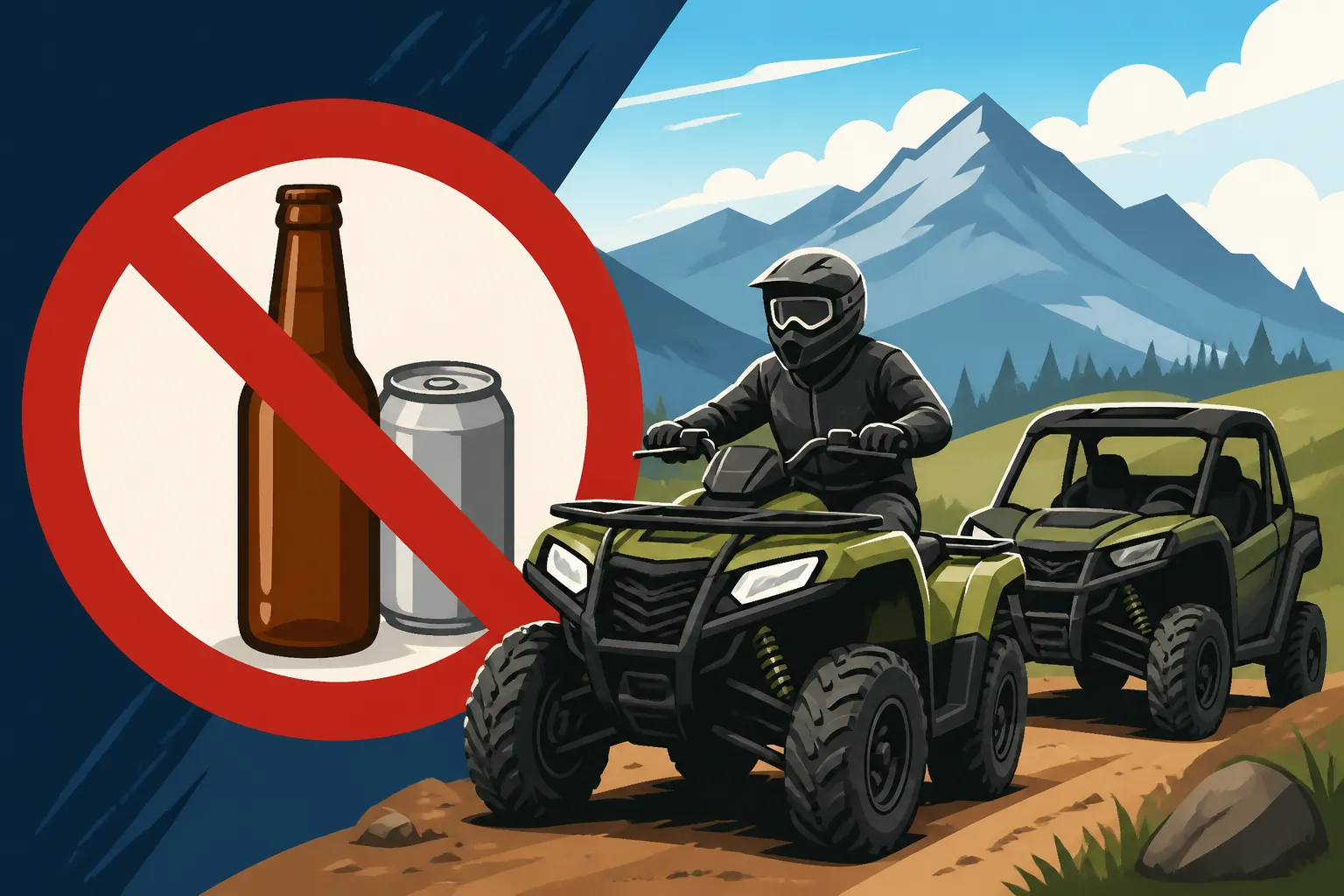
It's incredibly tempting to kick back with a cold one after a long day of ripping up the trails on your ATV or UTV, or maybe even to enjoy a couple of beers while you're out there soaking in the Big Sky country. But here in Montana, just like on the paved roads, operating an off-highway vehicle while under the influence of alcohol or drugs carries serious consequences. This guide is here to lay out Montana's specific alcohol limits for OHV operators, explain what those limits mean for you, and detail the real-world penalties you could face if you don't stay sober behind the handlebars or wheel.
Understanding Montana's Operating Under the Influence Laws for OHVs
When we talk about operating an off-highway vehicle (OHV) in Montana, it's not just about what you can do on dedicated trails; it extends to anywhere you might be riding, whether that's a remote forest service road, a designated county route, or even private land accessible to the public. Montana takes impaired driving seriously, and that includes those of us who prefer the dirt to the asphalt. The laws are designed to keep everyone safe, and trust me, getting caught in a bind out in the backcountry is something you definitely want to avoid.
The most common mistake folks make is thinking that a "few beers" while out riding is somehow less risky or less illegal than doing the same in a car. That's simply not true. The state's statutes regarding operating under the influence apply broadly, and they don't differentiate much between a Ford F-150 and a Polaris RZR or a Can-Am Maverick. Your judgment and reaction time are critical when navigating varied terrain, dodging obstacles, and sharing trails, and alcohol significantly compromises those abilities. This isn't just about avoiding a ticket; it's about making it home safely and keeping others safe on the trails around you.
What Constitutes an Off-Highway Vehicle
First, let's get clear on what Montana considers an off-highway vehicle in this context. We're generally talking about ATVs (All-Terrain Vehicles), UTVs (Utility Terrain Vehicles, often called side-by-sides), dirt bikes, and even certain snowmobiles, though our focus here is on the warmer weather machines. These are typically designed for off-road use, but as many of us know, Montana has a growing number of [Montana Towns That Allow OHVs on Their Streets] and county roads where these machines are also permitted. The moment you start the engine and engage the drive, you're considered "operating" the vehicle. This means if you're merely sitting on your quad with the engine running, a few sips into your beer, you could already be in violation.
It's crucial to understand that even if your side-by-side has been modified with street-legal accessories like turn signals, a horn, and mirrors (maybe some cool SuperATV aftermarket parts!), it's still primarily an OHV in the eyes of the law regarding alcohol limits. These modifications make it compliant for road use, but they don't exempt you from the fundamental rules about operating any vehicle while impaired. The same legal standard applies to a fully-equipped UTV navigating a gravel county road as it does to a dirt bike on a backcountry single track. The law sees the operator, not just the machine, as the focus of enforcement when it comes to alcohol or drug impairment.
Where BUI Laws Apply
Montana's BUI (Boating Under the Influence, but in this context, it effectively covers OHVs) laws are surprisingly extensive in their reach. They don't just apply to public trails or county roads. If you're operating an OHV on any land that is "open to public use," whether that's publicly or privately owned, you are subject to these regulations. This can be a huge surprise to people who think they're safe because they're on a remote logging road or a vast tract of land where they rarely see another soul. "Open to public use" is a broad definition.
This means if you're camping on Forest Service land, riding on a Bureau of Land Management (BLM) track, or even using a private road that is commonly used by the public for access (such as for hunting or fishing), the BUI laws are in effect. The only true exception might be operating exclusively on your own private, completely enclosed property where there is absolutely no public access or possibility of public interaction. However, even then, many people find themselves in a situation where they traverse a short section of public easement or road to get to their private acreage, instantly falling under the purview of state law. So, when you're planning your ride, always assume the laws apply, especially if you're going to be on any land where others might be present, or where the public traditionally has access.
The "Under the Influence" Standard in Montana
Understanding what "under the influence" actually means in Montana is critical for any OHV operator. It's not just about feeling impaired; it's about specific legal thresholds and how law enforcement determines if you've crossed them. This is where scientific measurement meets legal definition, and the consequences can be life-altering.
The .08% BAC Limit
In Montana, the legal limit for blood alcohol concentration (BAC) when operating a motor vehicle, which includes your ATV or UTV, is 0.08%. This is the magic number that law enforcement uses. If your BAC measures 0.08% or higher, you are presumed to be under the influence, regardless of whether you feel impaired or believe you are still capable of operating your machine safely. For commercial operators, the limit is even lower at 0.04%. For those under 21, Montana has a "zero tolerance" policy, meaning a BAC of 0.02% or higher can lead to a charge.
It's important to remember that alcohol affects everyone differently based on factors like body weight, metabolism, food intake, and even gender. What might be "two beers" for one person to stay under the limit could be far too much for another. The tricky part is that even if you're under 0.08% BAC, you can still be charged with operating under the influence if your ability to safely operate the OHV is "actually impaired" by alcohol or drugs. This means an officer can observe your riding behavior, your speech, your coordination, or your performance on field sobriety tests and still make an arrest even if your breathalyzer test registers below the legal limit. This often happens in situations where someone has consumed alcohol but also used other impairing substances, or if they just have a very low tolerance.
Implied Consent and Testing
Like many states, Montana has an "implied consent" law. What this means for you, the OHV operator, is that by the very act of operating an OHV on Montana roads or lands open to public use, you are deemed to have given your consent to a chemical test (such as blood, breath, or urine) if an officer has probable cause to believe you are operating under the influence. This is a big deal, and it's a point where many people make crucial mistakes.
If you are lawfully arrested for operating an OHV under the influence and refuse to submit to a chemical test, there are immediate and significant consequences. Your regular driver's license (yes, your car license!) can be immediately seized and suspended for a lengthy period, often six months or more for a first refusal, even if you are ultimately found not guilty of the BUI itself. The refusal to test can also be used against you in court as evidence that you believed you were impaired. Many riders are shocked to learn that an OHV incident can directly impact their ability to drive their car to work or pick up groceries. It's a tough lesson to learn, but the state sees operating any vehicle as a privilege that requires compliance with these safety measures.
Penalties for Operating Under the Influence
The penalties for operating an OHV under the influence in Montana are not trivial. They are designed to be a significant deterrent, and they can impact your life in many ways beyond just paying a fine. It's easy to dismiss a "minor" OHV infraction, but when alcohol is involved, the state gets serious.
First Offense Consequences
Even a first offense for operating an OHV under the influence can lead to a host of unpleasant and expensive consequences. You could face jail time, typically a minimum of 24 hours, but potentially much longer depending on the circumstances, such as if there was an accident or injury. Fines can range from hundreds to over a thousand dollars, not including court fees and other surcharges. You'll likely be required to complete an alcohol and drug assessment and follow through with any recommended treatment or education programs. These programs can be time-consuming and costly.
Beyond the immediate legal repercussions, a BUI conviction on your record can cause long-term problems. It can affect your employment, especially if your job requires driving or a clean background check. It can increase your insurance rates significantly – again, not just for your OHV, but for all your vehicles. And perhaps most importantly, your OHV operating privileges will likely be suspended or revoked for a period, meaning you won't be able to enjoy those Montana trails legally for quite some time. Imagine finally having a free weekend to hit the mountains, only to realize you can't even legally start your machine. That's a frustration you definitely want to avoid.
Repeat Offender Escalations
Montana law includes increasingly harsh penalties for repeat offenders. If you are convicted of a second OHV BUI within a certain timeframe (often within 10 years, but specific look-back periods can vary), the stakes go up dramatically. You could face mandatory minimum jail sentences that are far longer, potentially 30 days or more, with maximums extending to a year. Fines will be substantially higher, easily running into several thousand dollars. The alcohol and drug treatment requirements become more intense and prolonged.
A third or subsequent offense can be classified as a felony, which is a life-altering event. Felony convictions come with years of prison time, massive fines, and a permanent criminal record that will impact everything from voting rights to housing and employment opportunities. Your OHV operating privileges could be revoked for multiple years or even permanently. The message from the state is clear: repeated impaired operation of any vehicle, including an OHV, will not be tolerated. This is why it's so important to understand the gravity of even a single incident and to make responsible choices every time you throw a leg over your quad or buckle into your side-by-side.
Financial Burdens
The financial burden of an OHV BUI goes far beyond the initial fine. Consider the costs: attorney fees can run into thousands of dollars, depending on the complexity of your case. Court costs, mandatory assessment fees, and any required treatment or education programs add hundreds, if not thousands, more. If your machine is impounded, you'll pay towing and storage fees. Then there's the increase in your vehicle insurance premiums – potentially for years to come. Many people don't factor in the lost wages from time off work for court appearances, classes, or even jail time.
When you add it all up, a single OHV BUI can easily cost you well over $10,000, and that's often a conservative estimate. What could you do with that money instead? A new set of SuperATV tires, a significant upgrade to your suspension, or perhaps a fantastic week-long riding trip across the state. The financial impact alone should be a powerful motivator to always ride sober. It's a stark reminder that a momentary lapse in judgment can lead to a long-lasting and incredibly expensive financial hole.
Beyond the BAC: Other Factors and Consequences
While the Blood Alcohol Concentration (BAC) is a critical number, operating under the influence has ripple effects that extend far beyond a simple test result. There are other legal and practical consequences that many riders overlook, thinking only about the immediate interaction with law enforcement. These factors can significantly compound the difficulties you face.
Driving Privileges and Your Regular License
One of the most surprising and impactful consequences for many OHV operators is how a BUI conviction can affect their standard driver's license for cars and trucks. As mentioned earlier, refusing a chemical test can lead to an automatic suspension of your regular driver's license. Furthermore, a conviction for operating an OHV under the influence is often treated similarly to a DUI conviction for a car. This means your regular state-issued driver's license can be suspended or revoked, even if you were nowhere near a paved highway or even a public road at the time of your incident.
Imagine the frustration of having your vehicle impounded and then realizing you can't even legally drive your truck to pick it up or get to work. This isn't just about your recreational riding; it impacts your daily life, your job, and your ability to care for your family. The state's position is that if you're deemed unsafe to operate an OHV due to impairment, you're unsafe to operate any motor vehicle. This linkage is a powerful tool for enforcement and often catches people off guard. You might be focused on [Losing Montana Riding Privileges After a Ticket], but your street driving privileges are very much on the line too.
Insurance Impacts and Liability
A BUI conviction, whether from a car or an OHV, is a red flag for insurance companies. Your auto insurance premiums are almost guaranteed to skyrocket, sometimes doubling or even tripling for several years. Some insurance carriers may even drop you, making it difficult and expensive to find new coverage. This applies not just to your OHV insurance, but typically to all vehicles under your policy. When you're looking into [Insuring an ATV in Montana], a BUI on your record will haunt those quotes.
Beyond increased premiums, consider the liability aspect. If you cause an accident while operating an OHV under the influence, you could be held personally liable for damages, injuries, and medical costs that far exceed what your insurance might cover (if it even covers incidents involving impaired operation, which is often not the case). A serious accident could lead to civil lawsuits that could cost you your home, your savings, and your future earnings. The potential for devastating financial ruin from a single, avoidable choice is very real. This is why proper safety gear and responsible behavior are paramount every time you head out.
Safety Gear and Machine Modifications
While safety gear like helmets, goggles, and protective clothing are crucial for all riders, they become even more critical when impairment is a factor. Unfortunately, alcohol dulls judgment, and impaired riders are less likely to wear the proper gear or make smart choices about their riding environment. This significantly increases the risk of serious injury or fatality in an accident. A responsible rider will always assess their machine, ensuring it's in top working order, and equipped with the right components. You might have invested in sturdy SuperATV skid plates or a roll cage for your UTV to protect against trail hazards, but no amount of aftermarket protection can counteract impaired judgment.
Similarly, modifications to your machine, especially those designed for performance, can become a liability if you're riding impaired. Faster machines, improved suspension, or enhanced power require a clear head and quick reflexes to operate safely. When your senses are dulled by alcohol, these enhancements can turn a minor miscalculation into a major incident. The best safety modification you can make is ensuring the operator is sober and alert.
Making Responsible Choices for Montana OHV Adventures
The beauty of Montana's vast landscapes and diverse trail systems is a huge draw for OHV enthusiasts. But to truly enjoy these adventures safely and legally, making responsible choices regarding alcohol and operating your machine is paramount. It’s not just about avoiding penalties; it’s about preserving the experience for yourself and others.
Designated Driver or Staging Area Strategies
One of the simplest and most effective strategies for enjoying a cold beverage after a ride, or for those who don't drink at all, is to appoint a designated driver for your group. This person commits to staying sober, handling all driving duties for both the OHV and the tow vehicle (if applicable), and ensuring everyone gets back safely. This takes the guesswork out of who will be responsible and removes the temptation for others to "just have one more." It’s a group effort that can make a huge difference.
Another excellent strategy involves planning your post-ride celebrations around your staging area or campsite. If you've trailered your machines to a trailhead, consider leaving the OHVs there once you're done riding for the day and transferring to your tow vehicle for any trips into town or back to camp for adult beverages. Better yet, set up camp and enjoy your drinks there, far from the controls of any vehicle. This creates a clear separation between riding time and relaxation time, minimizing any risk of mixing the two. Remember, even starting your machine on public land after consuming alcohol can put you at risk. For this reason, many riders also opt for [Montana Trailhead Parking and Staging] areas that offer clear boundaries or easy access to off-machine activities.
Alternative Transportation in Trail Towns
Montana has some fantastic trail towns that welcome OHV riders, offering everything from quaint cafes to lively pubs. If you plan to visit these establishments and want to enjoy alcoholic beverages, think ahead about how you'll get around. Relying on your OHV, even if it's street legal, after consuming alcohol is a recipe for disaster. Instead, explore local taxi services, ride-sharing options where available, or designated shuttle services that some outfitters or lodges might provide. Many smaller towns might not have extensive public transit, so planning is key.
Another option, if feasible, is simply walking. If your lodging or campsite is within walking distance of the establishments you plan to visit, that's often the safest and most enjoyable way to experience the town's offerings. It gives you a chance to stretch your legs after a long ride and soak in the atmosphere without worrying about your vehicle or your BAC. The goal is to separate your fun on the trails from your fun in town, ensuring that neither activity jeopardizes the other.
Protecting Your Riding Privileges and Future
A BUI conviction for an OHV is more than a temporary inconvenience; it can cast a long shadow over your life. Understanding these deeper impacts and taking proactive steps can help protect your freedom to ride and your overall quality of life in Big Sky Country.
Long-Term Impact on Your Record
A conviction for operating an OHV under the influence will become part of your permanent criminal record. This isn't something that just "goes away" after a few years. It can appear on background checks for employment, housing applications, and even certain volunteer opportunities. While specific jobs might be unaffected, anything requiring driving, operating heavy machinery, or handling sensitive information could be at risk. This can be particularly frustrating if your BUI was the result of a single, uncharacteristic mistake while enjoying a recreational activity.
Furthermore, if you're ever involved in another legal matter, even a seemingly minor traffic stop, a past BUI conviction can influence how you are perceived by law enforcement and the courts. It paints a picture, and it's not one you want associated with your name. This long-term impact on your reputation and opportunities is a powerful reason to always prioritize sober riding. It's about protecting your future, not just avoiding a single fine or jail sentence.
Navigating Legal Challenges
If you do find yourself facing an OHV BUI charge, navigating the legal system in Montana can be complex and intimidating. It's crucial to understand your rights and to seek professional legal advice as soon as possible. An attorney experienced in BUI/DUI cases can explain the charges against you, review the evidence (or lack thereof), and advise you on the best course of action. This might involve challenging the legality of the stop, the accuracy of the breathalyzer test, or the procedures followed by law enforcement.
Never try to "go it alone" in court, especially when facing charges with such significant consequences. The legal system is intricate, and even small procedural errors can be critical to your defense. While legal representation comes at a cost, it's an investment in protecting your future and minimizing the potential long-term damage of a conviction. Remember, the goal is not just to "get through it" but to achieve the best possible outcome for your specific situation. This includes understanding what [A DUI on an OHV in Montana] truly means and how it can affect all aspects of your life.
Table: Common BAC Levels and Their Potential Effects
Here's a general guide to how different BAC levels can affect you and the potential legal implications, keeping in mind that individual responses vary greatly.
| BAC Level (%) | Observed Impairment (General) | Driving Effects | Legal Implications (Montana OHV) |
|---|---|---|---|
| 0.02 – 0.04 | Subtle changes in mood, relaxation, slightly dulled judgment | Reduced visual function, altered judgment, decline in ability to multitask | Zero tolerance for under 21, can be charged if "actually impaired" for all ages. |
| 0.05 – 0.07 | Impaired judgment, reduced coordination, slower reaction time | Difficulty steering, reduced response to emergency driving situations, impaired information processing | Can be charged if "actually impaired," close to legal limit. |
| 0.08 | Clearly impaired judgment, poor muscle coordination, slurred speech | Reduced ability to control speed, impaired perception, significant decline in processing info and reasoning | Legal Limit for OHVs. Presumed to be under the influence, automatic BUI charge. |
| 0.10 – 0.15 | Obvious intoxication, significant loss of balance and coordination | Deteriorated vehicle control, reduced ability to maintain lane position, impaired braking | Severe BUI charges, higher penalties. |
| 0.16+ | Gross motor impairment, confusion, significant sensory issues | Extreme impairment of all driving skills, often unable to operate a vehicle safely | Felony BUI charges, greatly increased fines and jail time, long-term license revocation. |
It's clear that the safest choice is always to separate drinking from riding. Montana's trails offer incredible experiences, and you want to be fully present and capable to enjoy every moment responsibly.
Disclaimer
This article is for general informational purposes only and does not constitute professional advice. Laws, prices and regulations vary by location and change over time. Consult a qualified professional for guidance on your specific situation.