Montana Fines for Illegal Road Riding
There’s nothing quite like hitting the trails and backroads of Montana on your ATV or UTV, feeling the open air and soaking in those big sky views. But that freedom comes with responsibility, and a missed detail can quickly turn a glorious ride into a frustrating, wallet-lightening experience. This guide is here to walk you through the ins and outs of Montana's OHV road rules, helping you understand the common pitfalls that lead to fines for illegal road riding and how to avoid them so you can keep your adventures smooth and hassle-free.
Understanding Montana's OHV Road Rules
Montana offers incredible opportunities for off-highway vehicle (OHV) enthusiasts, from vast public lands to winding forest roads. However, the open nature of the state doesn't mean a free-for-all when it comes to riding your ATV or UTV on paved or maintained public roads. There's a distinct difference between legal trail access and legal road access, and understanding this distinction is crucial to avoid hefty fines and other headaches.
The Basics of On-Road OHV Use in Montana
First off, it's important to know that Montana generally permits OHVs on certain public roads, but it's not a blanket permission. Unlike some states where a "street legal" conversion kit can turn your UTV into a legitimate road vehicle on most roads, Montana's approach is more nuanced. The overarching principle is that OHVs are primarily designed for off-road use, and their access to public roads is granted under specific conditions, often at the discretion of local authorities. This means that while you might be able to ride a gravel county road to get from one trail system to another, you likely can't cruise down Main Street in a bustling town unless that town has passed a specific ordinance allowing it. It’s a patchwork system, which can be incredibly confusing for riders, especially those visiting from out of state or new to the sport. Many riders assume that if their machine has a [Montana registration for a new resident], they're automatically good to go on any road, but that's a common misconception.
Who Has the Authority to Regulate Roads?
The authority to regulate OHV use on roads in Montana is shared between various levels of government, which is precisely why it can feel so complicated. State law sets the broad framework, but individual counties and even incorporated cities and towns have the power to create their own ordinances. For example, county commissioners can designate [Montana County Treasurer OHV Registration] roads within their jurisdiction as open or closed to OHVs, often posting signs or publishing maps. Similarly, a town council might pass an ordinance specifically allowing OHVs on certain streets, perhaps to connect riders to local businesses or trailheads. This decentralized approach means that what's legal in one county or town might be strictly prohibited just a few miles down the road. It’s not uncommon to find yourself riding legally on a [Montana Rules on Forest Service Roads] only to discover that the county road you need to take for the next mile is off-limits. This makes pre-ride research absolutely essential, especially if you're exploring new areas.
What Constitutes "Illegal" Road Riding?
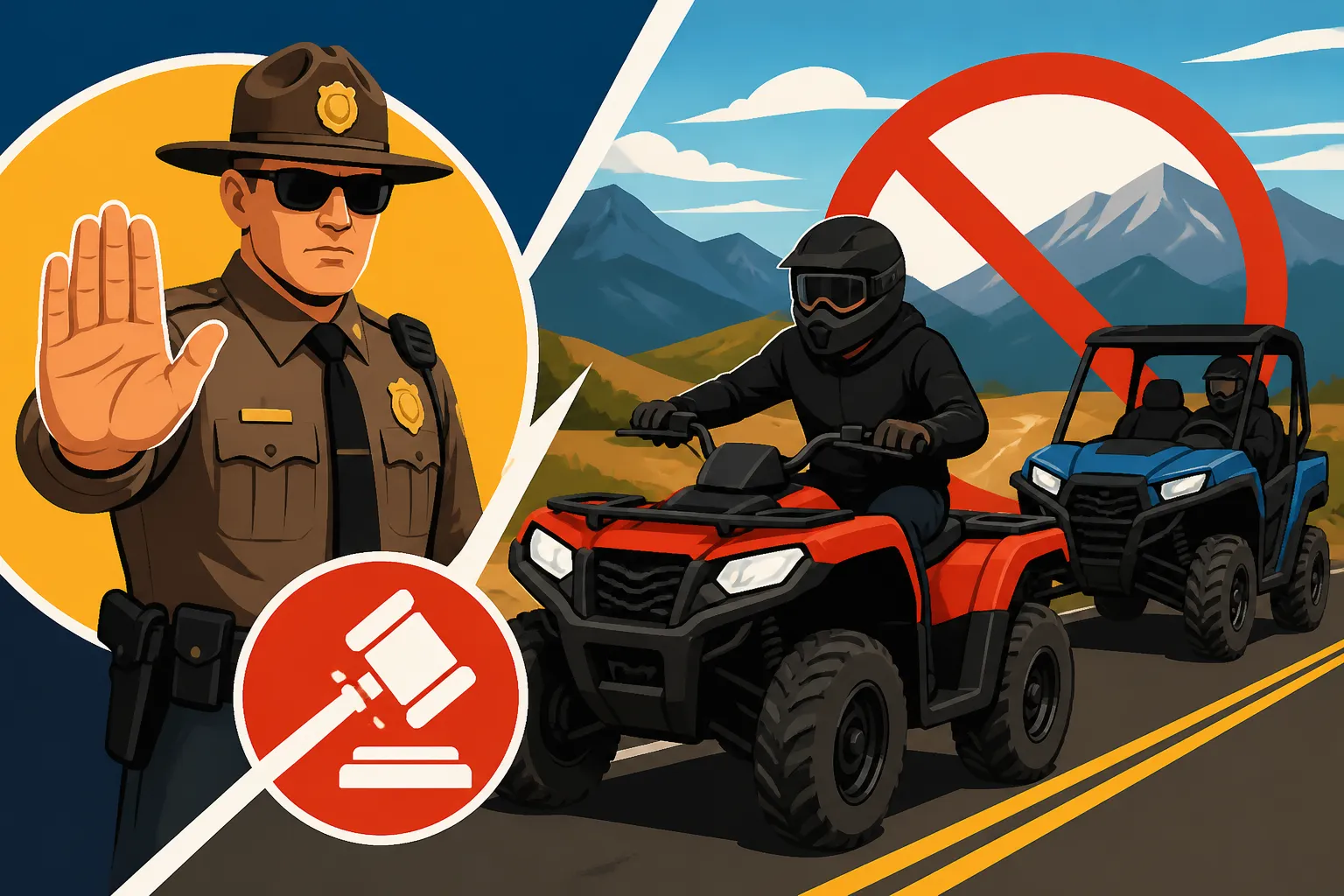
"Illegal road riding" isn't just about being on a paved highway. It encompasses a range of actions that violate state, county, or local regulations regarding OHV operation on public roads. This could mean riding on a road that is explicitly closed to OHVs by a county ordinance, or perhaps riding on a federal highway where OHVs are never permitted. Beyond simply being on the wrong road, illegal riding can also involve not having the proper equipment for road use (like headlights, taillights, or mirrors), operating an unregistered machine, or failing to meet age and license requirements. For instance, even if a road is open to OHVs, riding it without a valid driver's license (if required for that specific road) or allowing an underage, unsupervised child to operate the machine could lead to a citation. Essentially, any deviation from the specific rules governing OHV use on a particular stretch of road can be deemed illegal, and the consequences can range from minor fines to more severe penalties depending on the offense and how often you've been caught.
Common Violations Leading to Fines
When you're out enjoying the vast landscapes of Montana, the last thing you want is a run-in with law enforcement. Understanding the most common ways riders accidentally or intentionally violate OHV road rules can save you a lot of grief (and money). These aren't just obscure regulations; they're the bread and butter of what wardens and local deputies look for when patrolling popular riding areas and connecting routes.
Riding on Prohibited Roads or Highways
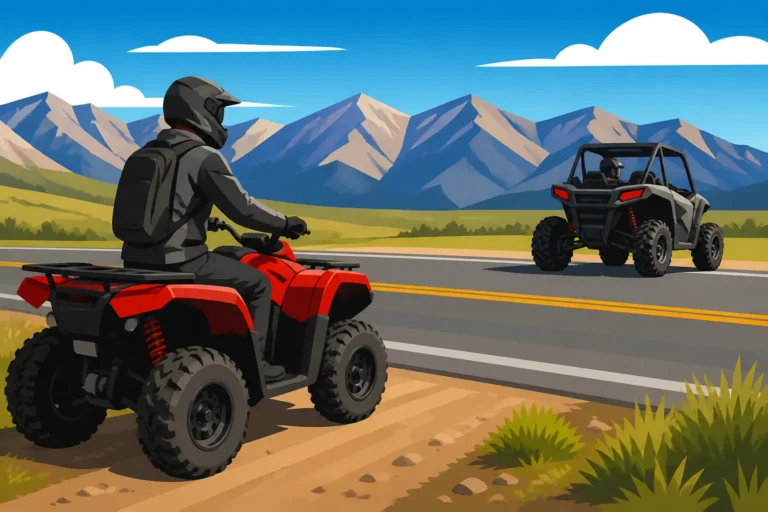
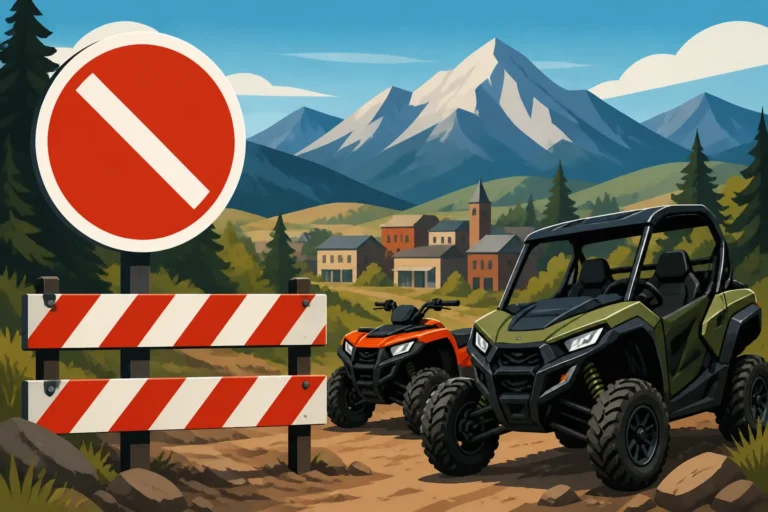
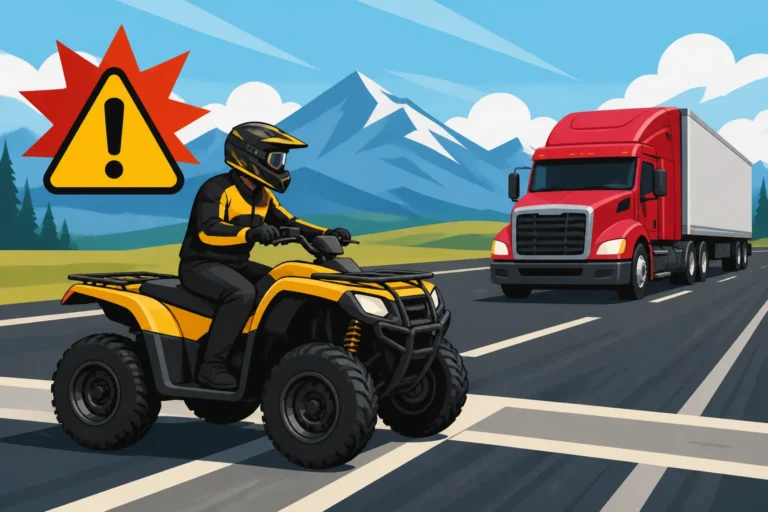
This is arguably the most common and easily identified violation. Many riders, especially those from states with more permissive "street legal" laws, assume they can ride their ATV or UTV anywhere a car can go in Montana. This is simply not true. Major state and federal highways, like US-93 or any interstate, are almost universally off-limits to OHVs, except for specific, clearly marked crossings. Trying to [Crossing a Montana Highway on an OHV] without following exact protocol, or worse, riding along the shoulder for miles, is a sure way to get pulled over. Similarly, many county commissioners have chosen to keep their paved county roads closed to OHVs, or have limited access to specific, designated sections. You need to know [Which Montana Roads Allow OHVs] before you even put tire to pavement. Always check local ordinances and maps, such as a county's Motor Vehicle Use Map (MVUM) or city websites, before venturing onto a road. Ignoring "No OHV Access" signs, even on a quiet backroad, can lead directly to a fine.
Missing Required Safety Gear or Equipment
Even on roads where OHV use is permitted, your machine must meet certain safety equipment standards to be considered legal. This isn't just for your protection; it's to ensure you're visible and can operate safely among other vehicles. Common requirements often include functional headlights and taillights, brake lights, mirrors (at least one rearview mirror), and a horn. Your machine might also need a spark arrester on its exhaust system to prevent wildfires, particularly when riding on or near public lands. Many aftermarket parts, like those offered by SuperATV, can help you equip your machine with these necessary items, ensuring you're compliant. Failing to have working [Headlight and Taillight Rules in Montana], proper [Montana Horn Requirements for Road Use], or even a muffler that meets noise regulations can lead to a ticket. It's a matter of safety and respecting the local environment, and law enforcement takes these requirements seriously.
Operating Without Proper Registration or Permits
Just like any other vehicle operating on public roads, your ATV or UTV needs to be properly registered in Montana, even if you're just crossing a short section of county road to reach a trail. This means you need your current [Registering an OHV in Montana], displaying your decals correctly, and carrying proof of registration. For out-of-state visitors, while some states have reciprocity agreements for vehicle registration, for OHVs specifically used on trails or designated roads, Montana often requires a [Montana's Non-Resident Temporary Use Permit]. Confusingly, your home state's street legal registration for your UTV may not be recognized for trail or designated road use in Montana. Furthermore, while not strictly "road" related, many public land trails require a [Montana's Resident OHV Trail Pass] or the non-resident equivalent. If you're using a road to access these trails, an officer might check for these permits as well. The state is quite strict about ensuring machines are properly accounted for and contribute to trail maintenance funding.
Underage or Unlicensed Operation
Montana has specific rules about who can operate an OHV on public roads and where. Generally, a rider needs to be at least 16 years old and possess a valid driver's license to operate an OHV on roads that are open to them. There are specific exceptions, such as [Montana Rules for a 12-Year-Old on a Road], but these are limited and often come with strict supervision requirements. Allowing a child under the legal age or without a driver's license to operate an OHV on a public road, even if it's a quiet gravel path, can result in a fine for both the minor and the supervising adult. Similarly, if you've had your driving privileges suspended for a regular vehicle, those suspensions often apply to OHV operation on public roads as well. These rules are in place for safety, both for the rider and for others who might be sharing the road, and they are enforced rigorously.
The Actual Costs: Fines and Penalties
When you get pulled over for illegal road riding in Montana, the immediate concern is usually the fine itself. While no one can give you an exact figure without knowing the specific county or the exact violation, it’s safe to say that these aren't just slap-on-the-wrist warnings. Montana takes its OHV regulations seriously, and the financial impact can quickly add up, turning an enjoyable day out into a significant financial burden.
Typical Fine Amounts for OHV Violations
The cost of a Montana OHV violation can vary widely depending on the nature of the offense, the county where it occurred, and whether it's a first-time or repeat infraction. For basic violations, such as riding on a prohibited road, lacking a required piece of equipment like mirrors, or failing to have current registration, you might be looking at fines that start around a couple of hundred dollars. For example, a "Failure to Register OHV" might come with one price tag, while "Operating an OHV on a Prohibited Highway" could be another. These aren't usually fixed state-wide penalties; counties and municipalities often have their own fine schedules. It’s not uncommon for individual fines to be in the $100-$300 range for relatively minor offenses. When you're dealing with multiple violations in a single stop – say, riding on a closed road and missing a taillight and an expired registration – those individual fines stack up quickly.
Escalating Penalties for Repeat Offenders
Montana's legal system, like most, doesn't look kindly on repeat offenders. If you've been cited for illegal OHV road riding before, and then you get caught again, the penalties can increase substantially. This might mean significantly higher base fines, potentially doubling or tripling for subsequent offenses. In some cases, repeated violations could lead to more serious legal consequences, moving beyond simple infractions to misdemeanor charges, especially if the illegal riding involved property damage, reckless operation, or endangerment of others. Law enforcement and the courts want to see that you're learning from your mistakes. If it becomes clear you're intentionally flouting the rules, the system will respond with increasingly stringent measures to deter future violations.
Court Costs and Surcharges
Beyond the base fine itself, don't forget the additional costs that often come with any citation. Many jurisdictions add court costs, administrative fees, or surcharges to the total amount due, even if you simply pay the ticket and don't appear in court. These can be fixed fees or a percentage of the fine. These seemingly small additions can often tack on an extra $50 to $100 (or more) to your bill. So, a $200 fine can quickly become a $275 or $300 bill after all the incidentals are added. These costs are often used to fund court operations, victim services, or specific state programs, and they are non-negotiable once the citation is issued. Always read the fine print on your ticket to understand the full financial commitment.
Beyond the Fine: Other Consequences
A fine is certainly a sting, but the repercussions of illegal road riding in Montana can extend far beyond a monetary penalty. Depending on the severity of the offense and the circumstances, you could face additional headaches that impact your machine, your driving record, and even your ability to get insurance or ride in the future. It’s important to understand these potential downstream effects so you can fully appreciate the importance of adhering to the rules.
Vehicle Impoundment and Towing Fees
One of the most immediate and inconvenient consequences of illegal OHV road riding, especially for serious or repeated offenses, is the risk of vehicle impoundment. If law enforcement determines that your machine is being operated illegally in a manner that poses a significant risk, or if you are a repeat offender, they have the authority to have your ATV or UTV towed and impounded. This means your day of riding is abruptly over, and you won't be getting your machine back without significant effort and expense. First, you'll have to pay the towing fee, which can easily run into hundreds of dollars, especially if you're in a remote area. Then, you'll face daily storage fees at the impound lot until you can retrieve your machine, which could take days depending on the situation and your ability to resolve the underlying citation. This entire process is not only costly but incredibly time-consuming and frustrating, making a simple fine seem almost preferable.
Impact on Driving Privileges
While OHV operation isn't always directly tied to your standard driver's license for trail riding, committing serious violations on public roads in Montana can absolutely affect your driving privileges. For instance, if you're cited for reckless operation, operating under the influence (DUI on an OHV), or if your illegal riding contributes to an accident, the court could suspend or revoke your standard driver's license. This isn't just about your OHV anymore; it impacts your ability to drive your car or truck. Even without a direct suspension, accumulating multiple citations, particularly for moving violations on roads, could lead to points on your driving record. This can have long-term effects, making it harder to maintain your license or even leading to its eventual suspension if enough points accumulate. Always remember that operating an OHV on a road puts you under the umbrella of broader traffic laws.
Increased Insurance Rates and Liability Risks
Getting cited for illegal road riding, especially for violations like reckless endangerment or operating without proper equipment, can have a direct impact on your insurance. Your insurance provider might view these infractions as indicators of high-risk behavior, leading to a significant increase in your premiums for both your OHV and potentially your other vehicles. In some cases, if the violations are severe enough or happen repeatedly, your insurer might even choose to drop your coverage entirely, making it difficult to find affordable insurance in the future. Furthermore, if your illegal road riding leads to an accident where property is damaged or someone is injured, your liability risks skyrocket. Without proper insurance or if your policy is voided due to illegal activity, you could be personally responsible for thousands or even hundreds of thousands of dollars in damages, medical bills, and legal fees. [Montana ATV Insurance Cost] is already a factor for many riders, and these incidents can make it prohibitively expensive. This is a severe consequence that many riders overlook, thinking only of the immediate fine.
Avoiding Fines: Staying Legal on Montana Roads
The best way to deal with fines for illegal road riding is, quite simply, to avoid getting them in the first place. This requires a proactive approach, a commitment to understanding the rules, and a bit of preparation before you hit the trails. While Montana's regulations can sometimes feel like a maze, a few key practices can help ensure your rides are always within the bounds of the law.
Researching Local Ordinances Before You Ride
This is perhaps the single most important step you can take. Before you even load your machine, or certainly before you venture into a new area, take the time to research the local OHV ordinances. This means checking with the county sheriff's office, the county commissioner's website, or the municipal offices of any towns you plan to ride through or near. Many counties publish maps or lists of designated OHV routes, and ignoring these is a primary reason for getting a ticket for Montana Fines for Illegal Road Riding. Don't rely solely on what you hear from other riders, as rules can change, and what's true for one area might not be for another. Look for resources like a county's Motor Vehicle Use Map (MVUM) for federal lands or specific city ordinances for town access. For example, if you plan on [Riding an OHV Into West Yellowstone], you'll want to check their specific rules beforehand. A quick phone call or website visit can save you hours of trouble and hundreds of dollars.
Equipping Your Machine for Road Legality
Even on roads where OHVs are permitted, your machine must meet minimum safety equipment requirements. This isn't optional; it's a legal necessity. Common requirements include:
- Headlights and Taillights: Must be functional and often required to be on at all times, even during daylight. [Montana Headlight Rules After Dark] are especially strict.
- Brake Lights: Essential for signaling your deceleration to other road users.
- Mirrors: At least one rearview mirror is typically required.
- Horn: A working horn is necessary to alert others.
- Muffler and Spark Arrester: Your exhaust system must meet noise regulations and typically needs a spark arrester, especially on or near public lands to prevent wildfires.
Many reputable aftermarket companies, like SuperATV, offer a wide range of parts and kits specifically designed to help make your ATV or UTV compliant with road regulations. Investing in these essential items is far cheaper than paying multiple fines or dealing with an accident due to insufficient equipment. Don't assume your stock machine is ready for road duty; verify it meets all the specific requirements for the roads you intend to ride.
Knowing Your Rider Requirements
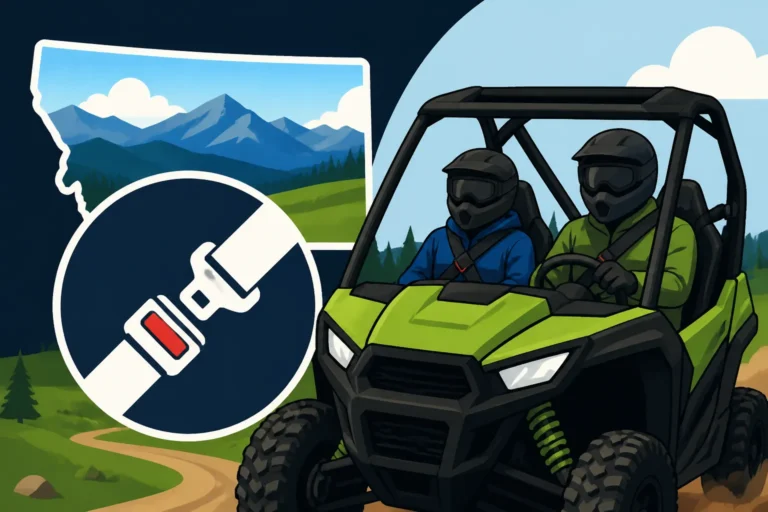
It's not just the machine that needs to be legal; the operator does too. This means ensuring you, or anyone operating your OHV on a road, meets the necessary age, licensing, and safety education requirements. In Montana, if you're riding an OHV on a public road, you generally need to be at least 16 years old and possess a valid driver's license. There are specific exceptions for younger riders under certain conditions, but these are often very limited and require strict adult supervision. Additionally, while not always required for road use specifically, [Montana's Safety Education Requirement] for riders under 16 is crucial for public land access and good practice for anyone. Always carry proof of your valid driver's license, your OHV registration, and any required permits (like a non-resident trail permit). An officer will certainly ask for [What a Montana Warden Asks a Rider For] during a stop, and having your paperwork in order makes the interaction much smoother.
What to Do If You Get a Ticket
Despite your best efforts to ride legally, sometimes things go wrong. Perhaps you misread a sign, or a local ordinance changed, or maybe you simply made a mistake. If you find yourself facing a citation for illegal OHV road riding in Montana, don't panic. Understanding your options and acting responsibly can help mitigate the consequences and ensure you handle the situation appropriately.
Understanding Your Options After a Citation
When a law enforcement officer hands you a ticket, it typically outlines the specific violation, the date, time, and location, and usually includes instructions on how to respond. Generally, you'll have a few options:
- Pay the Fine: For most minor infractions, you can simply pay the fine by the due date. This usually means admitting guilt to the violation. If you choose this route, ensure you pay the full amount, including any court costs or surcharges, and keep a record of your payment. This is often the simplest path if you believe the ticket is valid and you don't want to contest it.
- Plead Not Guilty and Request a Court Hearing: If you believe you were wrongly cited, or if there were extenuating circumstances, you have the right to challenge the ticket in court. This means entering a "not guilty" plea and requesting a hearing before a judge. You'll have the opportunity to present your side of the story, bring evidence, or call witnesses. Be prepared to explain why you believe the ticket is invalid. This can be a more time-consuming process but might be worth it if you genuinely believe the citation is unjust.
- Explore Deferred Prosecution or Diversion Programs: In some jurisdictions, for certain first-time or minor offenses, there might be options for deferred prosecution or diversion programs. These programs sometimes allow you to complete certain requirements (like a safety course or community service) in exchange for the ticket being dismissed or reduced. This is less common for simple OHV violations but worth inquiring about if applicable to your situation.
Always make sure you understand the deadline for responding to the ticket. Ignoring a citation can lead to much more severe penalties, including higher fines, license suspension, or even a warrant for your arrest.
Appealing a Montana OHV Citation
If you've decided to fight your ticket, the process typically begins by notifying the court of your "not guilty" plea. You'll then be scheduled for a court appearance. This is your opportunity for [Appealing a Montana OHV Citation]. Here are some tips for your court date:
- Gather Evidence: Collect any evidence that supports your case. This could include photos of the road (showing signage, or lack thereof), GPS data from your ride, copies of relevant ordinances, or even statements from witnesses. If your machine was cited for missing equipment, and you believe it was properly equipped, photos or maintenance records could be helpful.
- Know the Law: Familiarize yourself with the specific statute or ordinance you're accused of violating. Understanding the exact wording can help you argue your case more effectively.
- Be Respectful: Always be polite and respectful to the judge, prosecutor, and the ticketing officer, even if you disagree with the citation. Your demeanor can have an impact on how your case is perceived.
- Present Your Case Clearly: Explain your side of the story factually and concisely. Avoid emotional appeals and stick to the relevant details.
- Consider a Plea Bargain: Sometimes, the prosecutor might offer a plea bargain, especially if it's a minor offense. This could mean pleading guilty to a lesser charge or a reduced fine. Consider if this is a better outcome than going to trial.
Remember, the burden of proof is generally on the prosecution to show that you committed the violation. However, having a strong, well-prepared defense is always in your best interest.
The Importance of Professional Legal Advice
For more serious OHV violations, or if you're facing multiple tickets and potential impacts on your driving privileges, consulting with a legal professional is highly recommended. An attorney specializing in traffic or misdemeanor law in Montana can:
- Explain Your Rights: Clearly articulate your legal rights and the potential consequences of the citation.
- Navigate the Legal System: Help you understand court procedures, deadlines, and how to properly present your case.
- Identify Defenses: Review the facts of your case and identify any potential legal defenses you might have, such as errors in the citation, unclear signage, or misapplication of the law.
- Negotiate on Your Behalf: Potentially negotiate with the prosecutor for a reduced charge, lower fine, or alternative sentencing (like traffic school to keep points off your record).
- Represent You in Court: Appear in court on your behalf, which can be invaluable if you're unfamiliar with court proceedings or feel uncomfortable representing yourself.
While hiring an attorney adds to the cost, the potential long-term benefits – like avoiding license suspension, reducing fines, or preventing increased insurance premiums – can often outweigh the initial expense. Especially if you're concerned about [Losing Montana Riding Privileges After a Ticket], professional guidance is a wise investment.
Disclaimer
This article is for general informational purposes only and does not constitute professional advice. Laws, prices and regulations vary by location and change over time. Consult a qualified professional for guidance on your specific situation.