Sharing a Road With Cattle Trucks
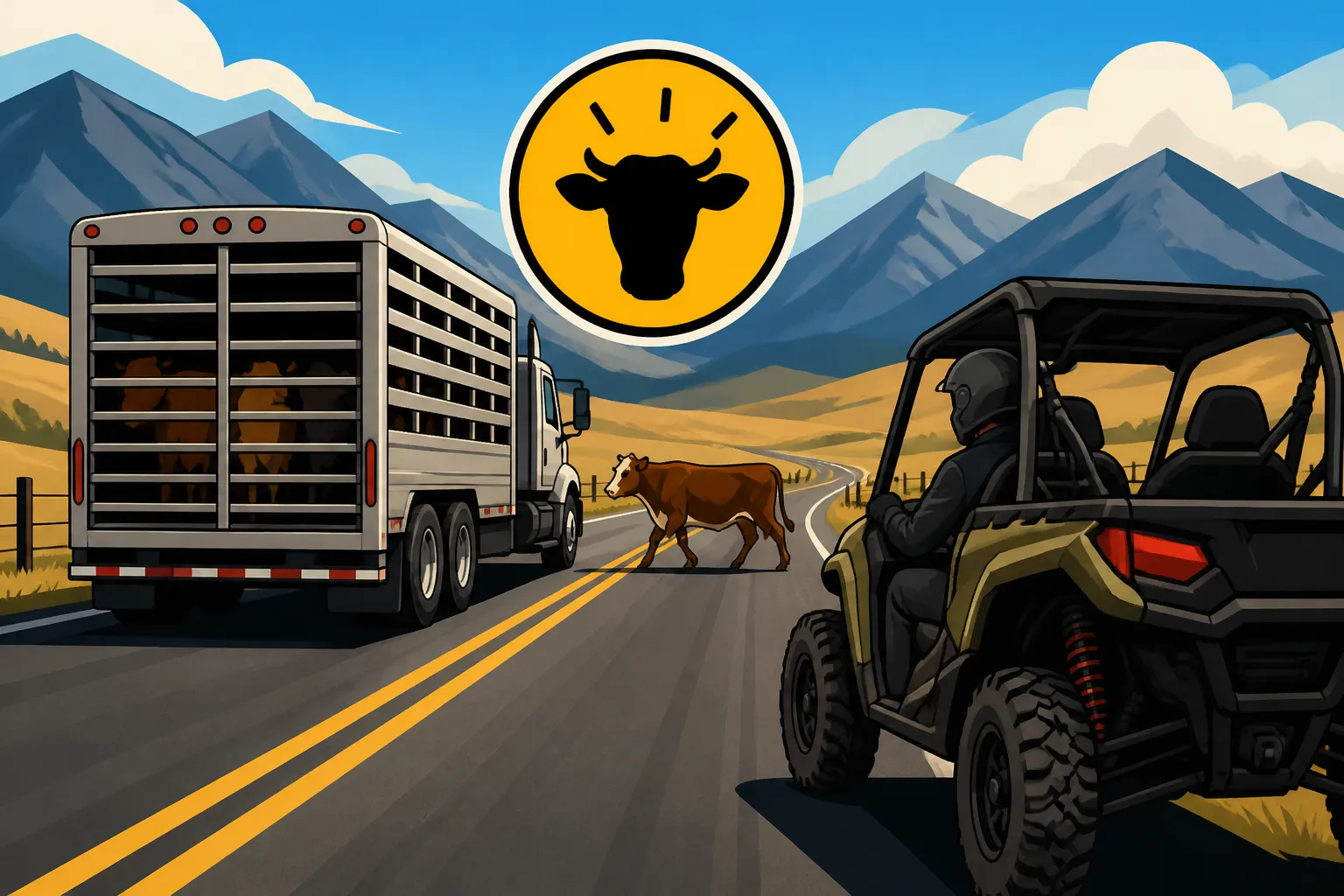
Riding your ATV or UTV across Montana's vast landscapes offers unparalleled freedom, but it also means sharing the road with some of the biggest vehicles out there: cattle trucks. It can be a little intimidating, to say the least, when you're on a smaller machine and one of these giants is heading your way on a narrow gravel road, kicking up dust. This guide is all about helping you understand how to safely and confidently navigate those encounters, ensuring your ride is as enjoyable as it is secure.
Understanding the Giants of the Road: Cattle Trucks
When you're out on a Montana backroad, whether it's paved or just a dusty two-track, encountering a cattle truck can feel like a sudden shift in scale. It's not just a big vehicle; it's a mobile, living piece of the agricultural economy that shapes so much of our state. Understanding why they're there and what they represent is the first step toward sharing the road respectfully and safely.
Why They're on Your Roads
Montana is ranch country, through and through. Our beef industry is huge, and getting cattle from pasture to market, or simply between different grazing lands, requires specialized transport. These trucks are constantly on the move, ferrying livestock across vast distances. Often, the most direct or even the only practical routes are the very same county roads, forest service roads, and even some town streets that we love to ride our ATVs and UTVs on. They can't always stick to the big interstate highways; sometimes, the ranch gate is miles down a gravel lane.
It's easy to feel like these trucks are intruding on your recreational space, but for ranchers and haulers, these roads are their workplace, vital for their livelihoods and for getting food to our tables. They often operate on tight schedules, and their loads are valuable and sensitive. Knowing this helps set a realistic expectation: you're going to see them, and they're going to be a significant presence. It's part of the authentic Montana experience, even if it adds an extra layer of caution to your ride.
The Sheer Size and Weight Difference
Let's not sugarcoat it: your ATV or UTV is tiny compared to a fully loaded cattle truck. We're talking about a vehicle that can stretch 70 to 80 feet long and weigh upwards of 80,000 pounds when loaded with livestock. To put that into perspective, your side-by-side might weigh 1,500 to 2,000 pounds. This isn't just a difference in size; it's a fundamental difference in physics that impacts everything from braking distance to air displacement.
A cattle truck cannot stop on a dime, especially on loose gravel or a wet surface. Its momentum is immense. It can't swerve quickly to avoid an obstacle, and its turning radius is massive, often requiring it to swing wide into other lanes at intersections. The sheer mass of air it pushes as it passes can easily buffet a lightweight ATV or UTV, potentially unsettling your machine or even pulling loose items from your cargo. Understanding this physical disparity isn't about fear; it's about respect and smart riding. It underscores why the responsibility for safety largely falls to the smaller, more agile vehicle in these encounters.
Defensive Riding Strategies Around Big Rigs
When you're the smaller kid on the playground, you learn to play smart. The same goes for riding your ATV or UTV around cattle trucks. Defensive riding isn't just about avoiding a collision; it's about creating a buffer of safety, anticipating potential hazards, and making yourself as predictable and visible as possible. It's a mindset that prioritizes caution and awareness above all else.
Visibility is Your First Line of Defense
You might feel like you're out in the open, highly visible on your colorful machine, but from the cab of a tall truck, you can disappear surprisingly easily. Making yourself impossible to miss is your absolute best strategy. Think bright. Wear high-visibility clothing – fluorescent yellows, oranges, or greens stand out against Montana's natural palette, especially at dawn, dusk, or on overcast days.
Consider adding reflective tape to your machine and helmet; it really pops when headlights hit it. Most importantly, keep your headlights and taillights on at all times, even in broad daylight. Many riders choose to upgrade their lighting with brighter LED options, like those from SuperATV, which offer improved light output and a broader beam pattern, making you more noticeable from a distance. If you're on a dusty forest road or in an area with limited sightlines, a tall whip flag can be a lifesaver, especially if your machine drops into a ditch or behind a small hill. [Reflective Tape Before a Dusk Ride] can be incredibly helpful for visibility.
Maintaining Safe Following and Passing Distances
This is non-negotiable. Whether you're behind a cattle truck or one is approaching from the opposite direction, distance is your friend. When following, remember that a truck's braking distance is many times greater than yours. If they have to slam on their brakes for any reason – an animal in the road, a sudden stop – you need enough space to react safely. Plus, trucks can kick up all sorts of debris, from small rocks to mud clods, that can damage your machine or injure you. Stay back far enough to avoid this projectile zone.
When a cattle truck is passing you, or you're meeting one head-on, slow down and move as far to the right side of the road as is safely possible. Sometimes this means almost coming to a stop and hugging the shoulder. The air turbulence created by a large truck at speed can be significant; slowing down gives you more control over your machine and minimizes the buffeting effect. Never, ever try to pass a cattle truck on a narrow two-lane road, especially on a blind curve or hill. The risk simply isn't worth it. Be patient, let them pass, and enjoy the rest of your ride without unnecessary drama.
Navigating Dust and Blind Spots
Montana's gravel roads are beautiful, but they can also be dust factories, especially in dry weather. Dust is a major hazard because it reduces visibility to near zero for everyone involved. If you see a plume of dust in the distance, assume a large vehicle is creating it. Slow down immediately, activate your lights, and prepare to pull over if necessary. If you're creating a dust cloud yourself, be mindful of riders or vehicles behind you. Pull over periodically to let the dust settle and allow others to pass safely.
Blind spots are another critical consideration. A cattle truck driver has massive blind spots along both sides of the trailer, directly behind it, and sometimes even directly in front of the cab, depending on the cab's design. Never assume a truck driver can see you. If you can't see their mirrors, they almost certainly can't see you. When riding alongside a truck, try to either stay well ahead of the cab or well behind the trailer. If you find yourself in a truck's blind spot, get out of it as quickly and safely as possible. A good rule of thumb is: if you can see the driver's eyes in their side mirror, they can probably see you.
Communication and Anticipation on Montana Roads
Riding safely around cattle trucks isn't just about physical distance; it's also about effective communication and sharp anticipation. Think of it as a silent conversation between you and the truck driver, where your actions speak volumes about your awareness and intentions.
Reading the Road Ahead
One of the most valuable skills you can develop for Montana backroads is the ability to "read" the road far ahead. This means constantly scanning for visual cues that indicate an approaching hazard, especially a large vehicle. Look for rising dust plumes on gravel roads, which almost always mean a vehicle is coming. Listen for the distinct rumble of a heavy diesel engine, which carries a long way in quiet country. Sometimes, you might catch a glint of sunlight off a windshield or a flash of color that signals a truck's presence around a bend.
By actively looking and listening, you can anticipate an encounter well before it becomes a surprise. This gives you precious seconds to slow down, assess the situation, and choose a safe spot to move over. Knowing the local area and typical truck routes also helps. Are you near a large ranch or a cattle auction? Expect more truck traffic. Proactive awareness is your best defense. For more on navigating various roads, check out [Montana Rules on Forest Service Roads] and [What Montana Requires on an OHV Road Ride].
Signalling Your Intentions Clearly
Truck drivers are often focused on maintaining control of their massive rigs, especially on challenging terrain. Clear, early signals from you can prevent misunderstandings and potential accidents. If your UTV has turn signals, use them well in advance of a turn or when you plan to pull over. If not, learn and use standard hand signals for turns and slowing down. Make eye contact with the driver if possible, especially at intersections or when pulling onto a road.
Your horn can also be a valuable communication tool, used judiciously. A quick, light tap can alert a driver that you're there if you're pulling out from a hidden driveway or feel like you might be unseen. Avoid aggressive or prolonged honking, which can be startling and counterproductive. Remember, the goal is to communicate, not to startle. Accessories from SuperATV often include upgrade options for horns and turn signal kits, enhancing your ability to communicate effectively on the road. [Montana Horn Requirements for Road Use] outlines what's needed.
Yielding and Giving Way Graciously
In almost every scenario involving an ATV/UTV and a cattle truck, the smaller vehicle should yield. It's simply a matter of physics and practicality. It's much easier and safer for you to slow down, move over, or even pull off the road for a moment than it is for a truck driver to maneuver their heavy, long rig. Trying to "stand your ground" or race a truck is a recipe for disaster.
Think about it from the truck driver's perspective: they have a schedule, a heavy load that shifts, and limited visibility. They are likely grateful for your cooperation. A simple wave of acknowledgment as they pass can go a long way in fostering good relations between recreational riders and the agricultural community. This act of gracious yielding isn't a sign of weakness; it's a sign of intelligence, respect, and a commitment to safety. [Montana Rules for Riding on the Road] offers general guidance for road sharing.
Specific Scenarios and Road Etiquette
Knowing general defensive strategies is great, but let's talk about some real-world situations you're likely to encounter on Montana's backroads. Each scenario calls for slightly different nuances in your approach, but the underlying principles of caution and respect remain constant.
Meeting a Truck on a Narrow Gravel Road
This is perhaps the most common and potentially anxiety-inducing scenario. You're cruising down a single-lane gravel track, perhaps with a ditch on one side and a fence on the other, when suddenly, a massive cattle truck appears around the bend. Your immediate reaction should be to slow down, significantly. Then, evaluate your options. If there's any wider section of the road, a pull-off, or even just a slightly flatter, firmer shoulder, aim for it.
Move as far to the right as safely possible. Sometimes, this means getting two wheels, or even all four, off the main track and onto the shoulder or into the grass if it's safe to do so. If the road is truly impassable side-by-side, consider pulling over completely and stopping, allowing the truck to pass. The vibrations, dust, and air pressure from the passing truck can be intense, so brace yourself and keep a firm grip on your handlebars. Make sure any loose gear is secured.
Dealing with Multiple Trucks in a Convoy
Occasionally, especially during cattle drives or larger operations, you might encounter not just one truck, but a convoy of two, three, or even more. The instinct might be to quickly duck in between them, but resist this urge. Their braking distances are immense, and they often travel closely together for efficiency. Trying to merge or pass through a convoy is incredibly dangerous and unpredictable.
Your best bet is patience. Find a safe spot to pull over completely and wait for the entire convoy to pass. This might take a few minutes, but it's far safer than rushing. You'll avoid multiple blasts of dust and air turbulence, and you'll give the drivers the space they need to operate safely. It's a small inconvenience for a huge boost in safety.
Approaching an Intersection or Driveway with Trucks
Intersections and driveways are common spots for collisions, and the risk increases exponentially when large trucks are involved. Truck drivers need a lot of space to make turns, especially right turns where they often "button hook" by swinging wide left before turning right. This can be incredibly confusing for a smaller vehicle, making it seem like the truck is turning left when it's actually preparing for a wide right.
When approaching an intersection, always assume a truck might be turning, even if their signal isn't immediately clear. Give them a wide berth. If a truck is waiting to pull out of a driveway or onto a main road, give them space and courtesy. Their acceleration is slow, and they need time to get up to speed. Never try to squeeze past a truck that's turning or waiting to turn, as you could easily end up in a blind spot or be caught in their turning radius. [Montana OHV Accident Reporting Rules] provides important information if an incident occurs.
Preparing Your Machine for Montana Backroads
Beyond your riding skills and awareness, the condition of your ATV or UTV plays a huge role in your safety when sharing roads with larger vehicles. A well-maintained machine isn't just more fun to ride; it's also a safer machine, especially when unexpected situations arise.
Essential Safety Gear and Accessories
Your personal safety starts with what you wear. A DOT-approved helmet is non-negotiable, offering critical protection for your head. Pair that with good eye protection – goggles or a face shield – to keep dust, debris, and glare out of your eyes, ensuring you maintain clear vision. Sturdy boots, gloves, and long-sleeved clothing also provide protection from scrapes and impacts. [Montana Helmet Rules for Riders Under 18] outlines specific requirements for younger riders.
For your machine, consider upgrades that enhance visibility and control. Bright LED headlights and taillights, perhaps from a brand like SuperATV, are a significant improvement over stock lighting, helping you see and be seen better. Good rearview mirrors are crucial for knowing what's coming up behind you, especially if you need to pull over quickly. A working horn, as discussed earlier, is vital for communication. If you plan on doing any road riding, ensuring your machine meets [Montana Headlight and Taillight Rules] and [Mirrors Montana Road Riding Calls For] is key.
Regular Machine Maintenance
A broken-down machine is a vulnerable machine, especially if it happens on a busy road or around truck traffic. Before every ride, especially one that involves road sections, do a quick but thorough pre-ride check. This includes:
- Brakes: Ensure your brakes are working perfectly, with no sponginess or excessive wear. You might need them suddenly.
- Tires: Check tire pressure and look for any damage or excessive wear. A flat tire on a gravel road when a truck is coming is a nightmare scenario.
- Lights: Verify that all your lights – headlights, taillights, brake lights, and turn signals (if equipped) – are clean and fully functional.
- Fluids: Check oil, coolant, and brake fluid levels.
- Steering & Suspension: Ensure there's no excessive play in your steering or unusual noises from your suspension. You need precise control.
Regular maintenance isn't just about extending the life of your ATV or UTV; it's about ensuring it responds predictably and reliably when you need it most, helping you stay safe on Montana's diverse and sometimes challenging road network.
| Feature | ATV/UTV (Off-Highway Vehicle) | Cattle Truck (Semi-Truck/Big Rig) | Implications for Road Sharing |
|---|---|---|---|
| Size | Small, compact, narrow | Extremely large, long (70-80 ft), wide | OHVs are hard to see; easily obscured by truck's body and blind spots. OHVs are vulnerable to air turbulence. Trucks need vast space for turns. |
| Weight | Light (1,000-2,500 lbs) | Very heavy (up to 80,000 lbs) | Massive difference in momentum. Trucks cannot stop or maneuver quickly. OHVs are extremely vulnerable in a collision. |
| Braking Distance | Relatively short, highly maneuverable | Very long, especially when loaded | Trucks require significant distance to stop. OHV riders must maintain huge following distances and yield ample space. |
| Visibility | Low profile, potentially hard to see | High cab, but large blind spots | OHV riders must actively enhance visibility (lights, bright colors, flags) and avoid truck blind spots. Truck drivers have limited views of low-lying machines. |
| Maneuverability | Agile, quick turns, rapid acceleration | Slow, wide turns, limited agility | OHVs can easily pull over or move to the side. Trucks are severely restricted in their ability to swerve or adjust quickly, making yielding by OHVs paramount. |
| Impact of Dust | Creates dust, can be obscured by dust | Creates massive dust clouds | Both vehicles contribute to dust; OHVs must slow down or pull over when dust is present to avoid reduced visibility and potential collisions. |
Conclusion
Sharing Montana's roads with cattle trucks is a reality for anyone venturing off the main highways on their ATV or UTV. It can feel daunting at first, but with a solid understanding of the challenges, a commitment to defensive riding strategies, and a well-maintained machine, you can navigate these encounters safely and confidently. Remember, awareness, respect, and clear communication are your best allies. By prioritizing safety and understanding the needs of everyone on the road, you'll ensure your Montana adventures are not only thrilling but also trouble-free. So, gear up, ride smart, and enjoy every mile of our incredible state!
Disclaimer
This article is for general informational purposes only and does not constitute professional advice. Laws, prices and regulations vary by location and change over time. Consult a qualified professional for guidance on your specific situation.