Spring Runoff on Montana Back Roads
Ah, Montana in the spring! It’s a magical time as the snow retreats, green emerges, and the mountains beckon. But for those of us who love exploring the backcountry on our ATVs and UTVs, spring also ushers in a unique set of challenges: spring runoff. This guide is all about helping you understand what happens to our beloved back roads during this period, how to spot the hazards, and most importantly, how to navigate them safely so your spring rides are filled with adventure, not aggravation.
Understanding Spring Runoff on Montana Back Roads
When the long Montana winter finally breaks its grip, the transition isn't just about warmer temperatures; it's a dramatic shift in our landscape, especially on the unpaved roads and trails we love to ride. Spring runoff is much more than just a little melting snow; it's a powerful natural event that can transform familiar routes into treacherous waterways and mud bogs.
The Annual Thaw Cycle and Its Impact
Think about it: months of accumulated snow and ice sitting on top of ground that's been frozen solid since November. As the sun gets higher and the temperatures rise, that snowpack begins to melt. But because the ground underneath is still often frozen, the water can't soak in quickly. It has to go somewhere, and that somewhere is usually over the surface, down the path of least resistance. This means culverts, ditches, and eventually, our roads and trails become conduits for rapidly flowing water. It's a massive hydrological event that often catches even seasoned riders off guard.
This process can be slow and steady in a mild spring, or incredibly fast and furious if we get a sudden warm spell or heavy spring rain. What was a minor trickle yesterday can be a roaring torrent today. The sheer volume of water moving across and under roads leads to significant erosion. You might encounter situations where parts of the road literally disappear, or where deep channels are carved out, making passage difficult or impossible. It’s a dynamic environment that demands respect and constant assessment.
How Runoff Affects Unpaved Roads and Trails
The effects of spring runoff are particularly pronounced on gravel, dirt, and two-track roads. Unlike paved surfaces, these roads lack the structural integrity to withstand significant water flow without consequences.
- Erosion and Washouts: One of the most common issues is erosion. Water flowing over and along the road surface picks up loose gravel and dirt, carrying it away. This can create deep ruts, expose rocks, and even lead to complete washouts where sections of the road are entirely gone, leaving gaping holes or impassable gullies. What was a smooth section of road in the fall might now look like a riverbed. These washouts can be hidden just around a blind corner or behind a rise, turning a fun ride into a very dangerous situation. Riders often forget that the integrity of the road can change dramatically in a matter of days.
- Deep Mud and Saturated Soils: Beyond flowing water, the ground itself becomes saturated. Even if water isn't actively rushing, the soil beneath the road can turn into thick, gooey mud. This isn't just a surface layer; it can be many inches or even feet deep, creating notorious mud bogs that can swallow tires and frames whole. These areas can be especially challenging as the mud might look firm on top, but hide deep, impassable conditions beneath. Riding through saturated soil also contributes to significant trail damage, leaving deep ruts that can last all summer and make the trail harder for everyone else to enjoy. It’s a good idea to consider the long-term impact of your tires on these soft surfaces.
Identifying Risky Road Conditions During Spring Thaw
Knowing that runoff is happening is one thing; recognizing the specific dangers on the trail is another. Many of these hazards might not be immediately obvious, especially if you're excited to hit the trails after a long winter. It takes a keen eye and a cautious approach to identify potential trouble spots.
Water Crossings and Fords: Depth and Current
Montana is crisscrossed with countless streams, creeks, and rivers. Many back roads feature designated water crossings or fords that are typically manageable in drier seasons. However, during spring runoff, these can become extremely dangerous.
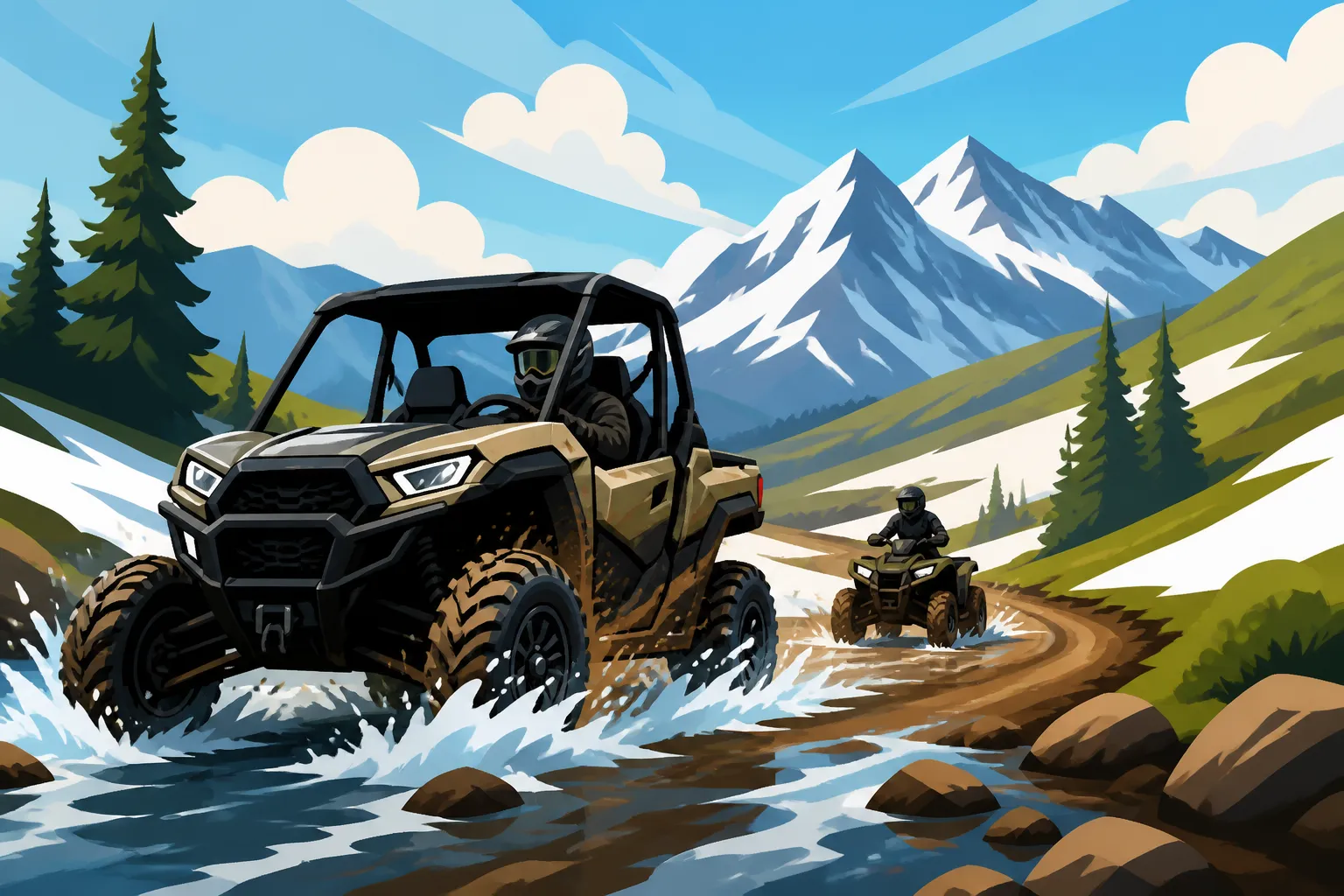
- Unpredictable Depth: What was ankle-deep in July could be waist-deep or more in May. Water levels can rise incredibly fast, even within a single day. A safe crossing in the morning might be impassable by afternoon. Always consider the potential depth before entering. If you can't see the bottom clearly, or if the water looks murky and brown, there might be hidden obstacles or a deceptively deep channel. Remember, even a few inches of flowing water can sweep an OHV off course, especially if it's got some current behind it.
- Strong Currents and Hidden Obstacles: The force of moving water is often underestimated. A strong current, even in relatively shallow water, can easily push your machine sideways, leading to a loss of control or tipping. Beyond the current, runoff often carries debris like branches, rocks, and even entire logs. These hidden obstacles can damage your machine, throw you off balance, or trap your wheels. Always scout water crossings on foot if possible, or observe how the water behaves before committing your machine. Pay attention to the sound of the water; a louder roar often indicates a stronger, more dangerous current.
- Eroded Approaches and Exits: The areas leading into and out of water crossings are highly susceptible to erosion. You might find steep drop-offs into the water, undercut banks, or soft, crumbling exits that make gaining traction difficult. A smooth, gradual entry in the fall could now be a precarious, steep slide into fast-moving water.
Mud Bogs and Rutted Trails: The Sticky Trap
Mud is synonymous with spring riding in many parts of Montana, and while some enjoy a good mud pit, deep mud bogs and severely rutted trails pose significant risks.
- Getting Stuck: This is the most obvious hazard. Tires can quickly dig down, sinking your machine to its frame. Once you're high-centered, extrication can be a monumental task, often requiring winches, multiple people, and a lot of effort. A winch, perhaps a heavy-duty model from a brand like SuperATV, becomes an absolute lifesaver in these scenarios. Without one, you might be looking at a very long walk or a very expensive tow.
- Damage to Your Machine: Trying to power through deep mud can put immense strain on your drivetrain, axles, and suspension components. Rocks and sticks hidden in the mud can strike vulnerable parts of your machine, leading to bent axles, torn CV boots, or even cracked engine cases. Overheating is also a risk, as mud can pack into radiators, reducing cooling efficiency. Investing in robust skid plates and A-arm guards can mitigate some of this risk.
- Loss of Control: Mud dramatically reduces traction and steering control. Your machine can slide unpredictably, making it hard to maintain your intended line. This can lead to collisions with trees, rocks, or other riders, or send you off the trail entirely. Deep ruts, created by previous vehicles, can grab your tires and steer your machine in directions you don't want to go, especially if your machine is wide and fits poorly in the rut. Riders on [Montana Trails That Suit a 50-Inch Machine] might find deeper ruts to be a particular challenge if they're forced to ride outside their track.
Soft Shoulders and Sloughing Banks: The Unseen Dangers
Beyond the obvious water and mud in the middle of the road, the edges can hide insidious dangers that lead to rollovers or machines sliding off the path.
- Undercut Shoulders: Water erosion can silently undermine the edges of a road or trail, especially on embankments or beside ditches. What looks like solid ground can actually be a thin crust over an empty void. Driving too close to the edge can cause the shoulder to collapse, sending your machine tumbling down an embankment. Always keep a safe distance from edges, particularly on roads traversing steep terrain.
- Sloughing Banks: Similar to undercut shoulders, saturated hillsides adjacent to roads can become unstable. Mudslides or sloughing (where sections of earth slowly slide downwards) can occur without warning, burying sections of road or creating new hazards. These areas are particularly prevalent in regions with heavy clay soils or steep cuts where the road was built into a hillside. If you see signs of recent ground movement, like fresh cracks in the soil or small piles of dirt and rocks on the road, proceed with extreme caution or turn back. [Montana Road Rules Riders Get Wrong] often involve misjudging these kinds of subtle but serious hazards.
Preparing Your Machine and Yourself for Spring Back Roads
Riding during spring runoff isn't about avoiding the conditions entirely; it's about being prepared to meet them head-on. Proper preparation of both your machine and your mindset can make the difference between a memorable adventure and a miserable ordeal.
Pre-Ride Inspection and Maintenance for Wet Conditions
Before you even think about hitting those muddy roads, a thorough inspection of your OHV is non-negotiable. Spring conditions demand your machine be in tip-top shape.
- Tires and Tire Pressure: Your tires are your primary point of contact with the ground, and in muddy conditions, traction is everything. Ensure your tires have aggressive tread patterns suitable for mud. Check your tire pressure carefully. While some riders advocate for slightly lower pressure in mud for a larger contact patch, dropping it too low can lead to bead leaks or rim damage on rocks. Consult your machine's manual for recommended pressures and experiment cautiously. For very deep mud, some riders might even consider specialized mud tires.
- Brakes and Fluids: Wet and muddy conditions are incredibly tough on brakes. Inspect your brake pads for wear and ensure your brake fluid is at the correct level and free from contamination. After a muddy ride, it's a good practice to thoroughly rinse your brakes to prevent premature wear. Check all other fluid levels—engine oil, coolant, transmission fluid—as working your machine harder in tough conditions will put more strain on these systems. [Insuring an ATV in Montana] might not cover damage from poor maintenance, so diligence pays off.
- Winch and Recovery Gear: If you plan on riding in runoff conditions, a winch is practically mandatory. Make sure it's in good working order, with a well-maintained cable or synthetic rope. Learn how to use it safely and effectively. Beyond the winch, carry recovery straps, a tree saver strap, and a shovel. These items are crucial for self-recovery or assisting a fellow rider. Companies like SuperATV offer a range of durable winches and recovery kits designed for the demands of off-road riding.
- Waterproofing Electrical Components: While most modern ATVs and UTVs have some level of water resistance, extreme submersion can still cause electrical issues. Consider dielectric grease on connections, and ensure your air intake is free from obstructions and high enough to prevent water ingestion. If you know you'll be hitting deep water, a snorkel kit might be a worthwhile investment for some machines.
Essential Gear for Spring Runoff Riding
Your personal gear is just as important as your machine's setup. Dressing appropriately and carrying the right emergency supplies can significantly enhance your safety and comfort.
- Waterproof and Layered Clothing: You will get wet, and you will get muddy. Invest in high-quality waterproof outerwear—jacket, pants, gloves, and boots. Layering is key, as spring weather in Montana can change rapidly from chilly mornings to warm afternoons, with sudden rain or snow showers. A waterproof backpack can keep your essential items dry.
- Safety Gear: Always wear a DOT-approved helmet. [Montana Helmet Rules for Riders Under 18] are strict, but even adults benefit greatly from head protection, especially in unpredictable terrain. Eye protection (goggles or a face shield) is crucial to keep mud, water, and debris out of your eyes. Consider body armor, knee pads, and sturdy gloves for added protection.
- Communication and Navigation Tools: Cell service is notoriously spotty in many Montana backcountry areas. Don't rely solely on your phone. Carry a satellite messenger (like a Garmin inReach or a SPOT device) for emergencies, especially if you're riding alone or in remote areas. A GPS unit pre-loaded with maps (like those from onX Offroad) or a detailed paper map and compass are also essential for navigation. [What to Carry on a Remote Montana Ride] emphasizes the importance of these items.
- Emergency Kit: Beyond recovery gear, pack a robust first-aid kit, a fire starter, extra food and water, a headlamp, and a multi-tool. A small saw or axe can be useful for clearing downed trees. Don't forget something to help clean off your visor or goggles.
Riding with a Buddy: The Golden Rule
Perhaps the single most important piece of preparation for riding in spring runoff conditions is to never ride alone.
- Mutual Assistance: When you inevitably get stuck, break down, or encounter an impassable obstacle, having a riding partner or a group significantly increases your chances of getting out safely. One person can operate the winch while the other spots, or one can go for help if communication is down. Trying to unstick a machine solo in deep mud is exhausting and often futile.
- Safety in Numbers: In case of an injury, a riding partner can administer first aid, call for help, or go for assistance. [Riding Safely in Grizzly Country] reminds us that the backcountry holds more than just mechanical dangers. Having another set of eyes and ears is always a good idea.
- Shared Experience: Riding with experienced partners can teach you invaluable techniques for navigating challenging terrain. You can learn from their approaches to water crossings or their strategies for dealing with mud. Conversely, your experience can help them too. Make it a point to always have at least one other rider with you, and ensure your group has the necessary recovery gear and skills.
Navigating Affected Back Roads Safely
Once you've prepared yourself and your machine, the key to a successful spring ride lies in your approach to the trail. It's about smart decision-making, controlled riding techniques, and knowing when discretion is the better part of valor.
Approach to Water and Mud: Slow and Steady Wins the Race
When you encounter water or mud on the road, resist the urge to simply blast through it. This is where most mistakes happen.
- Scout Ahead (Walk, Don't Ride): If possible, stop your machine and walk through the water or mud first. Use a stick to gauge depth, check for hidden rocks, logs, or drop-offs. Pay attention to the current. If it looks too deep or too swift, it probably is. Never assume a water crossing is the same as it was last season or even last week.
- Controlled Entry: If you decide the crossing is safe, enter slowly and steadily. Maintain a consistent, moderate throttle to create a bow wave in front of your machine, which helps keep water away from your engine and electrical components. Avoid sudden braking or acceleration, which can cause you to lose traction or hydroplane. For deeper crossings, ensure your exhaust is not fully submerged for too long, as water can back up into the engine when you slow down or stop.
- Maintain Momentum (But Don't Speed): The goal is consistent forward motion, not high speed. Too much speed can lead to loss of control, splash water into your air intake, or cause you to hit submerged obstacles with dangerous force. Too little speed, and you risk getting bogged down. It's a delicate balance that comes with practice.
Techniques for Muddy Terrain: Traction and Control
Riding through mud is an art form. It requires finesse, understanding your machine, and anticipating how the terrain will react.
- Choosing Your Line: Look for the firmest ground. Sometimes this is the high side, sometimes it's where other vehicles have compressed the mud. Avoid deep ruts if you can, or if your machine is a different width than the ruts, try to ride with one wheel on the high center. However, if the ruts are very deep and fit your machine, sometimes it's best to let your wheels track in them.
- Throttle Control: Smooth, consistent throttle application is crucial. Avoid spinning your tires excessively, as this will only dig you deeper. If your tires start to slip, ease off the throttle slightly to regain traction, then gently reapply. Use your machine's low range if equipped, as this provides more torque and better control at slower speeds.
- Body English: Lean into turns and use your body weight to shift the machine's center of gravity. If you feel one side sinking, shifting your weight to the higher side can sometimes help. In a UTV, maintain a firm grip on the steering wheel, anticipating sudden shifts as tires catch and release in the mud. For ATVs, standing up often gives you better visibility, control, and allows your legs to act as suspension, absorbing impacts.
- When to Use a Winch: If you start to get stuck, try a little back and forth rocking gently. If that doesn't work, don't keep spinning your tires and digging yourself deeper. It's far easier to winch out when you're only partially stuck than when you're buried up to the frame. Always use a tree saver strap around your anchor point (tree, large rock) to protect the environment. Brands like SuperATV offer strong, reliable synthetic ropes that are much safer and easier to handle than steel cables.
Knowing When to Turn Back: The Smart Rider's Decision
One of the most valuable skills for any backcountry rider is knowing when to call it a day or turn around. There's no shame in admitting a trail is beyond your current capabilities or the conditions are too dangerous.
- Assessing Conditions Constantly: Pay attention to weather forecasts, but also observe the conditions as you ride. Are water levels rising? Is the mud getting deeper? Are there fresh washouts? If the situation seems to be deteriorating, it's a clear signal to re-evaluate your plans. [Checking Snowpack Before a Trip] can give you an early heads-up on potential runoff, but conditions change rapidly.
- Risk vs. Reward: Ask yourself if the potential for getting stuck, damaging your machine, or even getting injured is worth pushing forward. Is that scenic overlook worth hours of winching in the cold and mud? Often, the answer is no.
- Listen to Your Gut: If a section of trail or a water crossing gives you a bad feeling, trust your instincts. It's better to be overly cautious than to regret a rash decision. There will always be another day to ride, and another trail to explore. A smart rider understands their limits and the limits of their machine. [What a Montana Warden Asks a Rider For] often includes common sense and responsible riding practices.
Here's a quick look at how to assess conditions:
| Condition Indicator | Low Risk (Go) | High Risk (Caution/Turn Back) |
|---|---|---|
| Water Level/Clarity | Clear, shallow (below axles), slow current | Murky, deep (above tires), strong current, unseen bottom |
| Mud Depth/Consistency | Surface mud, firm base, short sections | Deep, gooey, bottomless feel, long sections, hidden ruts |
| Road Surface | Visible gravel/dirt, minor ruts | Significant erosion, washouts, exposed sharp rocks |
| Shoulders/Banks | Firm, stable, clear edges | Undercut, crumbling, signs of recent sloughing/slides |
| Weather Forecast | Clear, stable temps | Heavy rain, sudden warm spell (rapid melt), impending storm |
| Group Support | Riding with experienced group, recovery gear | Riding alone, unprepared, limited recovery options |
Navigating spring runoff on Montana back roads with your ATV or UTV can be one of the most exciting and challenging times to ride, but it demands respect and careful consideration. By understanding the unique conditions, preparing thoroughly, and making smart decisions on the trail, you can ensure your adventures are not only thrilling but also safe and responsible. Embrace the mud, but always ride with your head up and a plan in mind.
Disclaimer
This article is for general informational purposes only and does not constitute professional advice. Laws, prices and regulations vary by location and change over time. Consult a qualified professional for guidance on your specific situation.