Loading Up on a Narrow Montana Shoulder
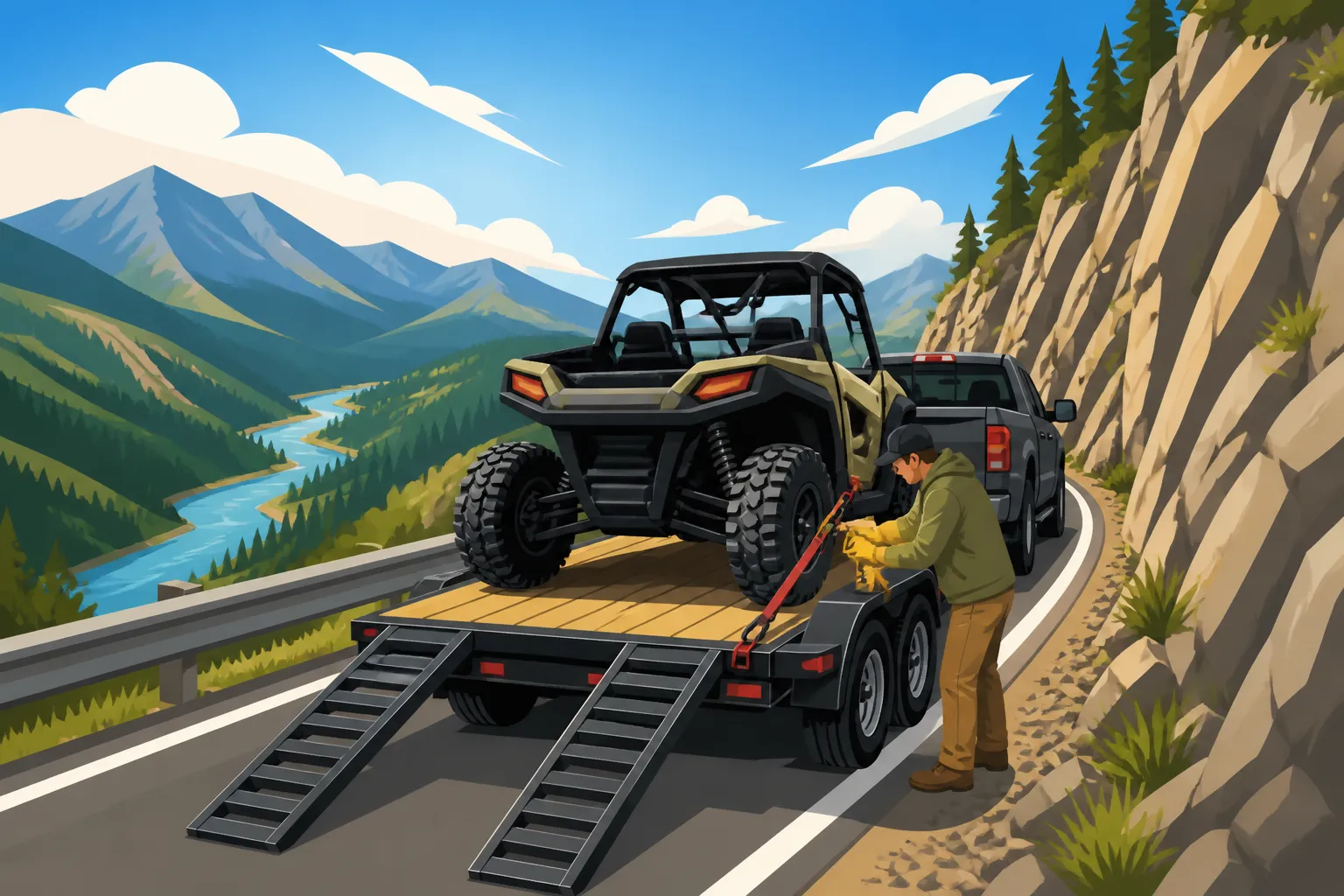
We’ve all been there: you’ve just finished an incredible day of tearing up the trails, sun setting low over the Montana mountains, and now it’s time to load your ATV or UTV back onto the trailer. But instead of a spacious staging area, you’re faced with a gravel pull-out that barely clears the white line, or worse, just a sliver of shoulder on a county road. It’s a moment that can instantly turn a relaxed post-ride glow into a stressful, even dangerous, scramble. This guide is all about tackling that exact frustration, offering practical advice and strategies for safely loading your machine when you're stuck with a narrow Montana shoulder.
The Risks of a Narrow Montana Shoulder
Navigating the great outdoors in Montana often means venturing onto roads that aren't designed for large vehicles, let alone those trying to perform a complex maneuver like loading an ATV or UTV. A narrow shoulder might seem like a minor inconvenience, but it poses significant risks to your safety, your equipment, and even your legal standing. It’s not just about fitting your machine; it’s about operating in a high-risk environment.
Traffic Hazards and Limited Visibility
Imagine trying to back a trailer, position ramps, and then drive a UTV up them, all while cars, trucks, and even huge tractor-trailers are whizzing past just a few feet away. This isn't just a hypothetical scenario; it's a regular occurrence on many Montana roads. Speeding vehicles create a powerful slipstream that can buffet you and your machine, making stability a real concern. On winding mountain roads or those with rolling hills, visibility can be severely limited. You might not see an approaching vehicle until it's nearly on top of you, and they certainly won't have much time to react to your stationary setup. This is particularly true if you're tucked into a blind corner or just over the crest of a hill. The stakes are incredibly high when you consider that a momentary lapse in attention from either party could lead to a devastating accident. It’s not just about what you can see, but what other drivers can’t see until it’s too late.
Legal Ramifications and Penalties
Beyond the immediate physical dangers, trying to load on a narrow shoulder can land you in legal hot water. Montana law, like most states, has provisions against obstructing traffic or creating a hazard on public roadways. If your trailer or machine extends even slightly into the travel lane, or if your operation causes drivers to swerve or brake suddenly, you could be cited. Law enforcement, whether it's a county sheriff or a state highway patrol officer, takes road safety seriously, especially when it involves recreational vehicles. Fines for obstructing traffic, unsafe stopping, or operating in a negligent manner can add up quickly. Furthermore, if your roadside operation leads to an accident, even a minor one, you could be held liable for damages, injuries, and face much more severe penalties. It’s always best to err on the side of caution rather than risk a ticket or, worse, a crash that could have been avoided with better planning. Sometimes, the frustration of finding an adequate spot is nothing compared to the hassle of dealing with a citation or an accident report. Remember, the goal is to enjoy the trails, not to spend your afternoon dealing with law enforcement or insurance adjusters. [Fines for an Unregistered Machine in Montana] are one thing, but traffic violations are another.
Damage to Machines and Equipment
Let’s not forget the risk to your valuable ATV or UTV itself. Loading on an uneven, narrow shoulder drastically increases the chances of a mishap. Ramps can slip on loose gravel or dirt, sending your machine tumbling off the side of the trailer. If you're on a sloped shoulder, the machine might roll sideways before it's properly secured. A ditch or embankment often waits just beyond that narrow strip of gravel, and a miscalculation could result in your quad or side-by-side taking a nasty spill. Even if it doesn't flip, scraping the underside on a hidden rock or bending a ramp can quickly turn a fun day into a costly repair. We've all seen those bent ramps or dinged tailgates that tell a story of a less-than-ideal loading situation. It's a reminder that good equipment and careful technique are paramount, especially when space is at a premium.
Smart Strategies for Safe Loading and Unloading
The good news is that with a bit of foresight and the right approach, you can mitigate many of the risks associated with loading on a narrow Montana shoulder. It’s all about being proactive and having a plan, rather than waiting until you’re in a stressful situation.
Scouting Locations and Planning Ahead
The absolute best defense against a dangerous loading situation is to avoid it entirely. This means incorporating "where to load" into your trip planning, right alongside "where to ride." Before you even leave home, pull up your maps – online satellite views are a goldmine for this. Look specifically for wider pull-outs, designated staging areas, or even side roads that have less traffic and more room to maneuver. [onX Offroad for Montana Trails] can be incredibly helpful here, not just for navigating trails but also for identifying potential staging points near trailheads.
Think about your route: are there any small towns or businesses along the way that might have a parking lot you could use with permission? A quick call to a local store owner or even a county office might reveal a safe, legal spot you hadn't considered. Don't be afraid to drive a little further if it means finding a truly safe and spacious place to get your machines on and off the trailer. Having a "plan B" or even "plan C" in mind is also a smart move. What if your intended loading spot is already occupied, or turns out to be too muddy or uneven? Knowing your alternatives can save you a lot of stress and keep you out of harm's way. This proactive scouting can be the difference between a smooth operation and a white-knuckle experience.
Signaling and Traffic Management
Once you've identified your loading spot, or if you simply have no other option than a narrow shoulder, making your presence known to approaching traffic is critical. Your hazard lights should be flashing as soon as you begin to slow down and pull over. But don't stop there. This is where safety cones or portable triangles become your best friends. Deploy them well in advance of your trailer, both in front and behind, to give drivers ample warning that something unusual is happening on the roadside.
Having a spotter is absolutely crucial, especially if you're dealing with blind spots or heavy traffic. This person can keep an eye on approaching vehicles and signal you when it's safe to proceed with loading or unloading. They can also help direct the machine onto the ramps, ensuring it's centered and stable. Communication is key here, whether through hand signals or a two-way radio. Consider using a bright, reflective vest for your spotter, making them highly visible to traffic. In Montana's often remote areas, [Whip Flags on a Montana Road Section] aren't just for the trails; a tall flag can also increase your visibility to traffic in certain situations, especially if you’re trying to catch the eye of drivers over a rise. Timing your operation to avoid peak traffic hours, if possible, can also dramatically reduce risk.
Equipment and Technique for Confined Spaces
When you're working with limited space, your equipment and technique become even more important. First, make sure your ramps are up to the task. They need to be long enough to create a gentle loading angle and strong enough to support the weight of your machine, especially if you have a heavy UTV. Ramps that are too short create a steep incline, increasing the risk of the machine tipping or losing traction. Consider ramps with aggressive traction surfaces to prevent slipping, even in wet or muddy conditions. Many reputable brands offer robust ramps perfect for this, and you can often find quality solutions from companies like SuperATV that are built to last and handle tough conditions.
For heavy UTVs, particularly if you're loading solo or on a tricky incline, a winch can be an absolute lifesaver. It allows you to slowly and precisely guide the machine onto the trailer without having to drive it under pressure. This eliminates the risk of overshooting or accidental acceleration. When loading, always engage your tow vehicle's parking brake, and ideally, chock the wheels for extra stability, especially if there's any slope. Drive onto the ramps slowly and deliberately, ensuring the machine is perfectly centered. Once loaded, secure your machine properly using high-quality tie-downs. Don't skimp here; four good tie-downs are a minimum, crisscrossing them for maximum stability. [Strapping a Machine Down for a Montana Pass] isn't just for highway driving; it starts the moment it's on the trailer. Even small adjustments to your technique, like taking an extra minute to get your alignment right, can make a world of difference when you’re working on a narrow shoulder.
Legalities and Best Practices for Montana Roadside Operations
Understanding the nuances of Montana's road rules is crucial, not just for riding, but for any roadside activity. Being aware of what’s allowed – and what definitely isn’t – can prevent you from inadvertently breaking the law or putting yourself in a dangerous situation.
Understanding Montana's Roadside Stopping Rules
Montana law, like that of most states, generally permits stopping on the shoulder for emergencies, such as a flat tire or mechanical breakdown. However, a planned stop for loading or unloading your recreational vehicle can be viewed differently, especially if it impedes traffic flow or creates a hazard. "Obstructing traffic" isn't always about blocking a lane entirely; it can also include forcing other drivers to slow down significantly, change lanes, or take evasive action because of your presence. The definition often leaves room for officer discretion, which means a polite and safe operation is less likely to draw unwanted attention.
Rules can also vary significantly depending on the type of road. A state highway, with its high-speed traffic, will have stricter interpretations than a remote county gravel road. Forest Service roads and BLM roads, common access points for OHV trails, often have their own specific regulations regarding stopping and parking. [Montana Rules on Forest Service Roads] and [Montana Rules on BLM Roads] might permit more flexibility in designated pull-offs, but it's still critical to consider visibility and traffic. Always aim for locations where you can pull completely off the traveled portion of the roadway, leaving plenty of room for traffic to pass safely. When in doubt, it’s better to drive a little further to a safer spot. Sometimes, what seems like a quick, harmless stop can quickly escalate into a legal headache if not handled with extreme care.
When to Seek Alternatives and Designated Staging Areas
Honestly, the best practice is to avoid narrow shoulders entirely whenever possible. Montana has many fantastic designated trailheads and staging areas precisely for this purpose. These spots are built with ample space for trailers, clear access to trails, and often include facilities like restrooms or information kiosks. Make it a habit to seek these out. [Montana Trailhead Parking and Staging] is a resource you should absolutely be familiar with. These locations are designed to be safe and efficient for loading and unloading, eliminating the stress and danger of roadside operations.
If no official staging area is available, consider other alternatives. Perhaps a wide, low-traffic intersection where you can quickly pull off. Or, if you're passing through a small town, inquire at a gas station or local business about using a corner of their parking lot for a few minutes. Many communities that cater to outdoor enthusiasts are quite accommodating, understanding the challenges riders face. Always ask for permission first if you're on private property. The few minutes it takes to find a truly safe alternative are always worth it compared to the risks of a precarious roadside load.
Communicating with Local Authorities or Landowners
If you find yourself in a truly unavoidable situation – say, a breakdown or an unforeseen trail closure that leaves you stranded with no safe loading zone – don't hesitate to communicate. If you're stuck on a road shoulder with a machine you can't load safely, a quick call to the local sheriff's department (non-emergency line, of course) or the Montana Highway Patrol can be a smart move. Explain your situation, the perceived hazard, and your plan to rectify it. They might be able to offer advice, suggest a safer alternative nearby, or even send an officer to help direct traffic while you load up. This proactive communication demonstrates responsibility and can prevent misunderstandings.
Similarly, if you're on a remote county road adjacent to private ranchland, and you desperately need a wide spot to pull off, consider trying to contact the landowner if you can identify them. A polite request can often be granted, especially if you assure them you'll be quick and respectful. Knowing who "owns" the road you're on can also be helpful; is it state highway, county road (managed by [County Commissioners and Montana County Roads]), Forest Service, or BLM? Different authorities have different rules and contact methods. Showing respect for the land and the law goes a long way in ensuring a positive experience for everyone.
Essential Gear and Preparedness for Roadside Loading
Being prepared isn't just about what's in your first-aid kit; it’s about having the right tools and equipment to handle unexpected situations, especially when you’re dealing with a challenging loading scenario.
Safety Equipment for Visibility and Warning
Visibility is your number one priority when operating on a narrow shoulder. You need to be seen, and you need to give others fair warning.
- Reflective Vests and Bright Clothing: Have a few on hand for anyone assisting with the loading, especially during dusk, dawn, or bad weather. Bright, neon colors are best.
- Portable Safety Triangles or Cones: As mentioned before, these are crucial for setting up a clear warning zone around your vehicle and trailer. Keep them easily accessible.
- Headlamps/Flashlights: Even if it’s not dark yet, low light conditions or the shade from trees can reduce visibility. A powerful headlamp frees up your hands for loading.
- [Reflective Tape Before a Dusk Ride]: While usually for your machine, reflective tape can also be applied to ramps or the rear of your trailer for added visibility during low-light loading. It’s all about making your presence unmistakable.
Tools and Recovery Gear
A small investment in roadside tools can save you a huge headache – and potentially a tow bill.
- Tire Repair Kit and Air Compressor: A flat tire on your trailer or tow vehicle could force you into an unsafe loading situation. Being able to fix a simple puncture can get you to a better spot.
- Winch, Snatch Block, and Tree Saver Strap: Even if your UTV has a winch, having a small, portable winch or recovery straps for your tow vehicle can be invaluable if you get stuck pulling off the shoulder, or if you need to use a tree as an anchor point to help stabilize your trailer while loading a heavy machine. High-quality straps and blocks, perhaps like those found in the extensive off-road recovery line offered by SuperATV, can make a difficult situation much easier.
- Basic Tool Kit: Pliers, wrenches, a utility knife, and zip ties can fix a surprising number of minor issues, from a loose tie-down buckle to a small mechanical hiccup that might prevent smooth loading.
- Small Shovel: Sometimes, a slightly uneven patch of ground is all it takes to make loading difficult. A small, folding shovel can help you quickly level out a spot for your ramps or trailer tires.
Staying Connected and Emergency Planning
Montana's vastness means cell service can be spotty at best, especially in the remote areas where the best riding often is.
- [Cell Service in the Montana Backcountry]: Assume you won't have service. Don't rely on your phone for emergencies.
- Satellite Messenger or Two-Way Radio: Devices like a Garmin inReach or a SPOT device can literally be a lifeline if you have a serious emergency and no cell signal. Two-way radios are great for communicating with your spotter or other members of your riding party.
- Informing Someone of Your Plans: Always let someone not on the trip know your route, your intended trails, and your estimated return time. Tell them your loading/unloading locations if you know them. This way, if you don't check in, they know where to start looking.
- Emergency Kit: Beyond your typical first aid, include extra water, snacks, warm layers, and a blanket. Being stuck roadside for an extended period, especially in Montana's unpredictable weather, requires more than just mechanical readiness.
By combining careful planning, smart equipment choices, and a strong emphasis on visibility and communication, you can navigate the challenge of loading up on even the most narrow Montana shoulders with greater confidence and safety. Always remember, a few extra minutes of caution are well worth avoiding a potential accident or legal issue.
Disclaimer
This article is for general informational purposes only and does not constitute professional advice. Laws, prices and regulations vary by location and change over time. Consult a qualified professional for guidance on your specific situation.