Riding Posted Ground in Montana
There's nothing quite like the thrill of exploring Montana's vast, wild landscapes on your ATV or UTV. But before you head out, it's absolutely crucial to understand the rules of the road – or, more accurately, the rules of the land – especially when it comes to posted ground. Many riders have found themselves in hot water, facing fines or worse, simply because they didn't realize they had crossed onto private property. This guide will walk you through everything you need to know to confidently and legally navigate Montana's unique mix of public and private lands, ensuring your adventures stay on the right side of the law.
Understanding Posted Ground in Montana: What It Means for OHV Riders
Riding an off-highway vehicle (OHV) in Montana means having a deep appreciation for the landscape, but it also means respecting property lines. The term "posted ground" might sound simple, but in Montana, it carries specific legal weight and implications for riders. It's not just about a "No Trespassing" sign; it's about understanding the nuances of private versus public land and how to identify what's what before you even start your engine.
The Basics of Private Property vs. Public Access
Montana operates on a fairly straightforward principle: if land is not clearly designated as public, you should assume it's private. This can be a tough pill to swallow for some, especially those new to the West, where vast expanses of open space might look inviting. However, much of that open space is privately owned, whether it's working ranches, timber company land, or simply undeveloped parcels. Unlike some states where access is granted unless explicitly denied, Montana places the onus on the rider to know where they are and to seek permission if they're not on public land.
This distinction is vital for OHV riders because inadvertently crossing onto private property, even for a short distance, constitutes trespassing. It doesn't matter if you didn't see a sign or if the fence line was barely visible; the responsibility rests with you to ensure you have legal access. Always plan your routes with this in mind, and when in doubt, it's far better to turn around or find an alternative route than to risk a confrontation or a citation. Understanding this fundamental difference is the first step toward responsible riding.
Montana's landscape is often a patchwork, especially in areas bordering national forests, BLM land, or state lands. A public trail might skirt the edge of private ranchland for miles, or a county road might have private property immediately adjacent to its right-of-way. This creates a constant need for vigilance and requires riders to be proactive in identifying boundaries. Don't rely solely on visual cues from your seat; always back up your observations with reliable maps and local knowledge to prevent accidental trespass.
Identifying Posted Land: Signs, Paint, and Fences
In Montana, landowners have several legal ways to post their property to prohibit trespass. The most common and universally recognized is the "No Trespassing" sign. These signs should be reasonably visible and strategically placed, typically at property corners, along fence lines, or at common access points like gates or cattle guards. Always take these signs seriously; they are a clear legal warning.
Beyond traditional signs, Montana law also recognizes purple paint and orange markers as a form of "no trespassing" notification. A vertical stripe of fluorescent purple paint, at least two inches wide and eight inches long, placed on trees or posts at specific intervals, carries the same legal weight as a written sign. Similarly, reflective orange paint or tape, or even flagging, especially on fence posts, can denote private property, often used by timber companies or large ranches. Ignoring these specific markers is just as unlawful as disregarding a traditional sign and can lead to serious consequences. You can learn more about these specific markers in [Montana's Purple Paint and Orange Post Marks].
Fences, even without explicit signs or paint, often indicate a property boundary. While a fence doesn't automatically mean "no trespassing," it should serve as a strong visual cue to verify your location and access rights. If you encounter a closed gate, always assume it's there for a reason – likely to keep livestock in or unauthorized vehicles out – and never open it unless you have explicit permission from the landowner to do so. Leaving a gate open can lead to livestock escaping, crop damage, or other problems that can severely strain landowner-rider relations.
Ultimately, your best defense against inadvertently trespassing is education and awareness. Before you head out, research your route thoroughly. While a casual Sunday ride might seem like a good way to discover new areas, a more organized approach will keep you safe and legal. Always be on the lookout for signs, paint, and fences, and adjust your plans accordingly. When you see posted ground, respect it and find another path.
Navigating Public Land with Private Inholdings or Access Roads
Montana's land ownership can be incredibly complex, especially in the western part of the state. What looks like an endless expanse of public forest often contains private "inholdings" – parcels of private land completely surrounded by public property. This checkerboard pattern, a legacy of historical land grants, can make navigating even well-intentioned public land difficult, as a legal route might suddenly cross onto private ground.
The Challenge of Checkerboard Land Ownership
Imagine riding a beautiful trail deep in a national forest, only to find yourself unexpectedly on private property because of a historical land claim. This "checkerboard" pattern of land ownership, where square-mile sections of public and private land alternate, is common in many parts of Montana. It can be incredibly confusing, as an OHV trail might weave in and out of public and private parcels without clear physical boundaries on the ground. This often happens along mountain ranges and valleys, where early settlers or railroads were granted alternating sections of land.
The biggest challenge for OHV riders is that these private sections, even if unfenced or unsigned, are still private property. Riding through them without permission is trespassing, regardless of whether you're trying to access another piece of public land. This is why having robust mapping tools is absolutely essential for anyone riding off-highway in Montana. Simply following a two-track you found on the internet or a vague map can lead to significant problems.
Furthermore, some public lands, particularly state trust lands, are managed for multiple uses, including grazing and timber. While some state lands allow OHV access, others might be closed or have specific restrictions. These lands are often leased to private individuals for ranching or farming, and sometimes the lessees, not the state, post the property. It becomes a maze that demands careful study of maps and current regulations before you ever leave your truck.
Obtaining Permission for Access: It's Not Always Impossible
While riding posted private land without permission is a definite no-go, sometimes that posted ground holds the key to accessing a vast stretch of public land. In these situations, seeking permission from the private landowner is your only legal option. It's not always easy, and often landowners are hesitant due to past negative experiences with irresponsible riders, but it's worth the respectful attempt.
When approaching a landowner, always do so politely and be prepared for a "no." Introduce yourself, explain your intentions (e.g., "I'm hoping to access the National Forest beyond your property to ride the [insert trail name here] trail"), and reassure them of your commitment to responsible riding. Offer to share your route plan, confirm that your machine is properly equipped with a spark arrester, and assure them you will pack out all trash and close any gates. Sometimes, bringing a map to show them exactly where you intend to go can help build trust. A "yes" might come with conditions, such as sticking to a specific two-track or only riding on certain days, which you must absolutely honor.
Remember, even if you receive verbal permission, it's always a good idea to confirm the specifics. If possible, get something in writing, however brief, indicating the scope and duration of the permission. This protects both you and the landowner. Respecting their property and decision, whether it's a "yes" or a "no," goes a long way in fostering positive relationships between the OHV community and private landowners, which is crucial for future access opportunities. When you're out there, having durable parts on your machine, perhaps from a brand like SuperATV, means you're less likely to break down and cause issues on someone's land, reinforcing that responsible image.
Legal Ramifications and Respectful Riding Practices
Nobody wants to cut a fun day of riding short with a run-in with law enforcement or a private landowner. Unfortunately, trespassing on posted ground can lead to some pretty significant headaches, both legally and financially. Beyond the legal consequences, every rider has a responsibility to uphold the positive image of the OHV community, and that starts with respecting private property.
Penalties for Trespassing on Posted Ground
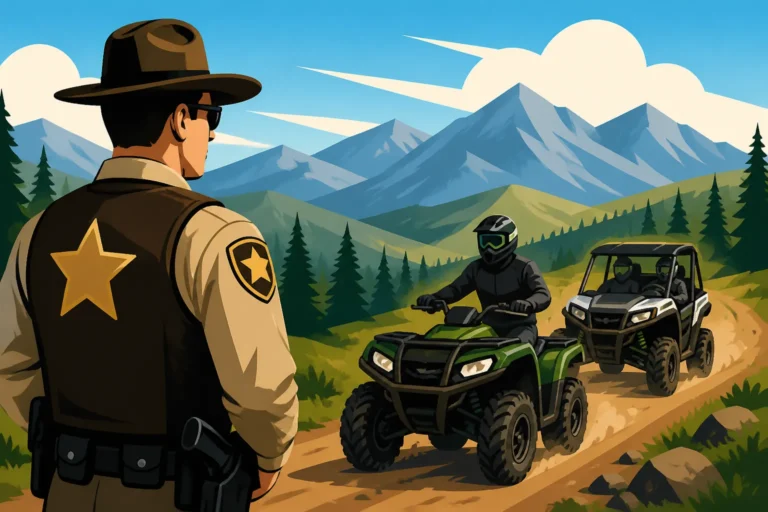
The penalties for trespassing on posted ground in Montana can vary, but they are not to be taken lightly. At a minimum, you could face a significant fine, which can easily range from a couple of hundred dollars to much more, depending on the specifics and whether it's a repeat offense. This alone is enough to ruin anyone's day and deplete their riding budget. Law enforcement officers, including sheriff's deputies, game wardens, and even some forest service rangers, have the authority to issue these citations.
Beyond fines, there's the possibility of your OHV being impounded. Imagine having your machine towed from a remote location, incurring not only the trespass fine but also towing and storage fees. This can be an incredibly expensive and frustrating ordeal. In more severe cases, especially if damage to property occurs or if the trespass is willful and repeated, you could face civil lawsuits from the landowner, leading to even greater financial burdens. It's far cheaper and less stressful to simply know your route and stay on legal ground.
Ignorance is absolutely not an excuse under Montana law. The presence of proper "No Trespassing" signs, purple paint, or other recognized markers means the landowner has taken reasonable steps to inform the public. If you ride past these warnings, you are legally liable. Understanding [Montana Trespass Law for Riders] is your first step in protecting yourself. These incidents can also impact your future access; a record of trespassing can lead to being banned from certain public lands or make it nearly impossible to gain permission from private landowners in the future.
The "Tread Lightly!" Philosophy and Landowner Relations
The "Tread Lightly!" philosophy is more than just a catchy phrase for responsible recreation; it's a guiding principle that every OHV rider should embody, especially in a state like Montana where public and private lands are so interwoven. It's about minimizing your impact on the land, being respectful of other users and private property owners, and contributing positively to the overall outdoor experience. When it comes to posted ground, this philosophy means strictly adhering to boundaries and always seeking permission if you need to cross private land.
The actions of a few irresponsible riders can unfortunately paint the entire OHV community in a negative light. One incident of trespassing, gate leaving, or littering can sour a landowner's perception of all riders, potentially leading to road closures, restricted access, or even increased enforcement on public lands nearby. By always riding respectfully and staying off posted ground, you are not just being a good individual, you are being a good ambassador for the sport, helping to preserve access for everyone.
This includes proper machine maintenance to avoid breakdowns, which could lead to accidental deviation from trails, and ensuring your machine is equipped for the terrain you plan to cover. Investing in quality parts and accessories, like those offered by SuperATV, can help ensure your machine is reliable and capable, minimizing the chance of getting stuck or damaging the environment. Always remember that the beauty of Montana's landscapes is a shared resource, and respectful riding ensures that we can all continue to enjoy it for years to come.
Tools and Resources for Responsible OHV Riding
In Montana, being a responsible OHV rider means being prepared and informed. The vastness and sometimes confusing nature of the landscape demand that you use every tool at your disposal to ensure you're riding legally and safely. Relying solely on your memory or a faded paper map from years ago just won't cut it anymore.
Mapping Apps and MVUMs: Your Best Defense
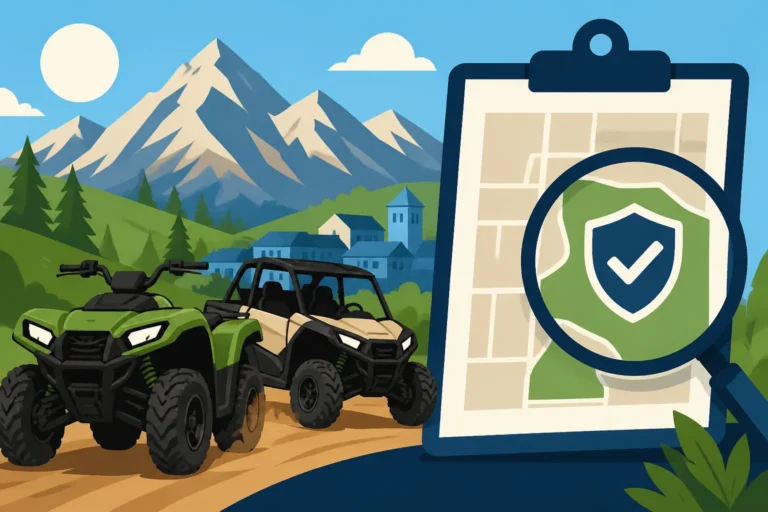
When it comes to avoiding posted ground, your best friend will always be an up-to-date map. For federal lands – specifically National Forests and Bureau of Land Management (BLM) areas – Motor Vehicle Use Maps (MVUMs) are non-negotiable. These maps are the official record of where motorized vehicles are permitted to travel. They clearly delineate designated trails, roads, and areas, as well as seasonal closures and restrictions. They'll also show land ownership boundaries, often indicating private parcels within public land. You can usually download these for free from Forest Service or BLM websites, or pick up paper copies at local ranger stations. Learning how to effectively use these maps is critical, and there's a lot to learn in [Reading a Montana Motor Vehicle Use Map].
In addition to MVUMs, advanced GPS mapping apps on your smartphone or dedicated GPS device are incredibly valuable. Many of these apps allow you to download maps for offline use, which is essential given the spotty [Cell Service in the Montana Backcountry]. These apps often layer public and private land ownership data, displaying property boundaries right on your screen. While no digital map is 100% infallible, using one in conjunction with a physical MVUM provides the most comprehensive picture of where you are and where you can legally ride. Always remember that while technology is great, visual confirmation on the ground with signs, fences, and purple paint remains paramount.
Before any ride, take the time to meticulously plan your route using these tools. Trace your path, identify potential areas of concern where private property might be close to a trail, and have contingency plans. It's far easier to adjust your route from the comfort of your home than when you're deep in the backcountry, trying to figure out if that barely visible fence marks a private boundary. This proactive approach will save you stress, time, and potential fines.
Local Knowledge and OHV Clubs: Tapping into Community Expertise
While maps and technology are powerful, there's no substitute for local knowledge. The OHV community in Montana is active and passionate, and local clubs are often treasure troves of information regarding trail conditions, recent closures, and, crucially, nuances of land access. These clubs work closely with land managers and private landowners, advocating for rider access and often performing trail maintenance.
Joining a local OHV club or attending their meetings can provide invaluable insights that you might not find on any map. Members often share firsthand experiences about tricky boundary lines, specific landowner requests, or areas where permission might be granted with the right approach. They are also instrumental in [Montana Trails Kept Open by Local Clubs], contributing countless hours to maintaining and advocating for trail systems. Being part of such a group not only enhances your riding knowledge but also allows you to contribute to the stewardship of the trails we all love.
Don't be afraid to connect with experienced riders you meet at trailheads or in local gear shops. Most seasoned Montanans are happy to share their knowledge, pointing out areas to avoid or offering tips on navigating specific challenges. Remember, responsible riding is a community effort. By tapping into this collective expertise, you not only make your own rides safer and more legal but also strengthen the entire OHV community's relationship with landowners and public land agencies. Many of these clubs and individuals rely on robust aftermarket parts, such as those from SuperATV, to keep their machines running reliably through countless hours of trail work and exploration.
Here's a quick reference on how to identify posted ground in Montana:
| Posting Method | Description | Legal Implication |
|---|---|---|
| "No Trespassing" Sign | Traditional signs with clear wording. | Explicit prohibition against entry. Entry is unlawful. |
| Purple Paint | Vertical fluorescent purple stripe, at least 2 inches wide and 8 inches long, on trees or posts. | Carries the same legal weight as a "No Trespassing" sign. Entry is unlawful. |
| Orange Markers | Reflective orange paint, tape, or flagging, often on fence posts or trees. | Commonly used by timber companies or large ranches to denote private property. Treat as a "No Trespassing" warning. |
| Fences/Gates | Physical barriers. A closed gate, especially, implies restricted access. | While not always an explicit "No Trespassing" sign, they strongly suggest private property or controlled access. Do not enter without permission. |
Disclaimer
This article is for general informational purposes only and does not constitute professional advice. Laws, prices and regulations vary by location and change over time. Consult a qualified professional for guidance on your specific situation.