Montana Rules for a 12-Year-Old on a Road
It’s a common scenario across Montana: your 12-year-old is itching to ride their ATV or UTV, maybe just down the gravel road to a neighbor's house, or perhaps across a short stretch of pavement to access a favorite trail. Many parents wrestle with understanding the exact legalities and safety concerns surrounding young riders on public roads. This guide aims to clear up the confusion, walking you through Montana’s specific rules for 12-year-olds operating off-highway vehicles on roads, so you can make informed decisions and keep your family safe and compliant.
Can a 12-Year-Old Really Ride an OHV on a Montana Road?
Let's cut right to the chase because this is the question every parent has at the top of their mind. The simple answer, like many things in life, isn't a straightforward "yes" or "no." Montana law has specific provisions that allow young riders, including those as young as 12, to operate off-highway vehicles (OHVs) like ATVs and UTVs, but these permissions come with very strict conditions, especially when it comes to public roads. It's not a free-for-all, and understanding the nuances is critical to avoid legal trouble and ensure safety.
Age and Driver's License Requirements for Road Use
Montana statute generally requires an OHV operator on a public street, road, or highway to hold a valid driver’s license. This is where the challenge often arises for younger riders. A 12-year-old, by definition, isn't going to have a standard driver's license. However, Montana law carves out exceptions, particularly for minors who have completed an approved safety course. It’s a bit of a balancing act, designed to encourage safety education while acknowledging the prevalent use of OHVs in our rural communities. The idea is that if a young rider has proven they understand the rules and safe operation, they might be granted limited privileges.
Without a driver's license, a 12-year-old typically falls under specific provisions for youth operators. This often means they can operate an OHV on designated public lands or trails, or even cross certain roadways, but riding along a road requires more. Think of it as a graduated system: permission expands as the rider matures and demonstrates responsibility and knowledge. For road use, this pathway usually means specific safety certifications and adherence to strict supervision rules, rather than a general right to operate. It’s never as simple as just hopping on and going, especially when a paved or even a maintained gravel road is involved.
The Role of an OHV Safety Certificate
This is where the OHV safety certificate becomes immensely important for a 12-year-old hoping to ride on a public road. Montana law states that a person who is 12 years of age or older, but under 16, may operate an OHV on a public road or highway if they have successfully completed an approved OHV safety education course and carry the certificate with them. This isn't just a suggestion; it's a legal requirement that provides the crucial exemption to the driver's license rule for this age group. The course covers everything from basic machine operation and maintenance to trail etiquette, environmental considerations, and, importantly, road rules and safety.
Parents often ask about where to get this certificate. Montana Fish, Wildlife & Parks (FWP) typically oversees approved courses, which can sometimes be found online or through local organizations. It's an investment in time and a small fee, but it’s invaluable for ensuring your child understands the responsibilities that come with operating a powerful machine, especially near vehicle traffic. Carrying that certificate is like carrying their "learner's permit" for OHV road use. Without it, a 12-year-old caught operating an OHV on a public road is essentially riding illegally, even if they're supervised, and that can lead to fines and other penalties. [Montana's Safety Education Requirement] explains more about the course itself.
Specific Road Types and Permission to Ride
Montana is a big state with many different kinds of roads, and the rules for OHV access can vary significantly depending on who manages that road. It’s easy to assume that if one gravel road allows OHVs, they all do, but that's a dangerous assumption. Knowing whether a county road, a city street, or a Forest Service road is open to OHVs is paramount, and it’s even more critical when a 12-year-old is at the controls. Lack of clarity here often leads to tickets and frustrated riders.
County Roads and the Commissioners' Say
County roads make up a vast network across Montana, and often, these are the roads closest to homes and ranches where OHVs are a way of life. The key thing to remember about county roads is that access is largely determined by the local county commissioners. They have the authority to designate which of their roads, or segments of roads, are open to OHV use. This means a road that’s open in one county might be closed in the next, or even a different section of the same road might have different rules. It's not a blanket rule across the state. For a 12-year-old, even with a safety certificate, they can only ride on these roads if the county has specifically opened them to OHVs.
Finding out which county roads are open requires a bit of homework. Your best bet is to check with the county commissioner's office or the sheriff's department in the specific county you plan to ride. Many counties now post this information on their websites, or you might find maps designating open routes. Don't rely on "everyone else does it" as your guide; those riders might be adults with driver's licenses or simply operating illegally. If a 12-year-old is riding on a county road that hasn't been specifically opened, they are likely in violation of the law, regardless of their safety training. [County Commissioners and Montana County Roads] goes into further detail about this process.
City Streets and Municipal Ordinances
When it comes to city or town streets, the rules become even tighter, and rightly so. These areas often have higher traffic volumes, more pedestrians, and specific safety considerations that make OHV use riskier. Most Montana cities and towns have ordinances that restrict or completely prohibit OHV operation on their streets. There are exceptions, of course, often in smaller, trail-oriented towns that actively embrace OHV tourism as a way to support local businesses. In these towns, you might find specific routes designated for OHV access, usually linking trailheads to local services like gas stations or restaurants.
For a 12-year-old, riding on city streets is almost always off-limits unless there's an explicit, well-marked municipal ordinance allowing it. Even in towns that permit OHV use, there are usually speed limits, time restrictions, and specific routes that must be followed. A 12-year-old with a safety certificate might be allowed on these specific designated routes, but they would still need to follow all other road-legal equipment and supervision rules. Never assume a city street is open to OHVs, especially for a young rider. Always check with the local city clerk's office or police department for precise information before a wheel ever touches pavement. [Montana City Streets and Municipal Ordinances] delves into these local rules.
Federal and State Agency Roads (Forest Service, BLM, State Parks)
Beyond county and city jurisdiction, a significant portion of Montana's landscape is managed by federal agencies like the U.S. Forest Service (USFS) and the Bureau of Land Management (BLM), as well as Montana State Parks. These agencies also have their own regulations regarding OHV access on roads and trails within their boundaries. Generally, USFS and BLM roads often allow OHV use, but this is always dictated by specific Motor Vehicle Use Maps (MVUMs) for each forest or district. These maps are the definitive guide, showing which roads and trails are open to which types of vehicles and during what seasons.
For a 12-year-old, if they are riding an OHV on a USFS or BLM road that is designated for OHV use on an MVUM, and they possess the required safety certificate, they are generally permitted to do so. However, all other road-legal equipment and supervision rules still apply. It's crucial to download and understand the relevant MVUM before heading out, as roads can change status or have seasonal closures. State Parks, on the other hand, tend to be much more restrictive, often limiting OHV use to specific designated areas or entirely prohibiting it on park roads. Always check the individual park's rules. [Montana Rules on Forest Service Roads] and [Montana Rules on BLM Roads] offer more context for these federal lands.
Mandatory Equipment for Road Legality
Riding an OHV on any public road in Montana, regardless of the rider's age, comes with a specific set of equipment requirements. This isn't just about safety; it's about making the OHV visible and controllable in a shared-road environment, ensuring it can interact safely with other vehicles. These rules are in place for a reason – to prevent accidents and protect everyone on the road. For parents of a 12-year-old, ensuring their machine meets these standards is as critical as ensuring they have the safety certificate. You can’t just put some shiny accessories on any old ATV; it has to meet the legal bar.
Lighting and Visibility Requirements
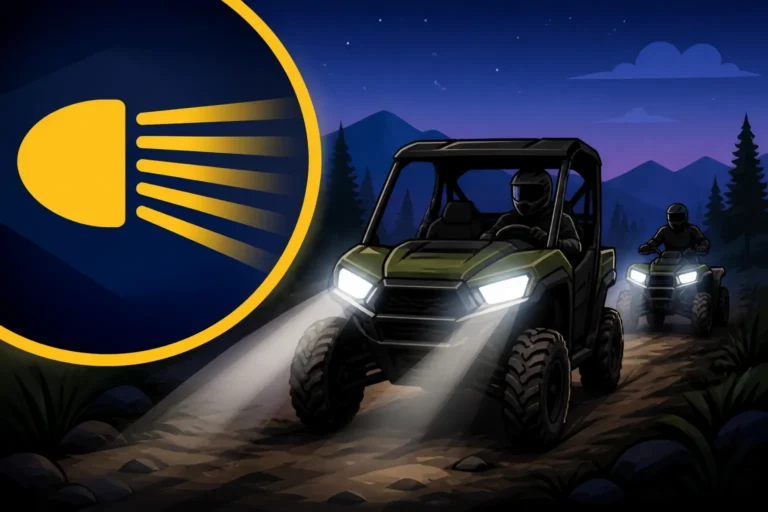
When an OHV is operated on a public road, it must be equipped with proper lighting to ensure it's seen by other motorists, especially during dawn, dusk, or in less-than-ideal weather conditions. This includes at least one headlight and one taillight, both of which must be operational and, importantly, turned on at all times when riding on a public road, even during daylight hours. Many stock ATVs and UTVs come with these, but it's essential to verify they meet the minimum brightness standards and are in good working order. Additionally, a taillight must be capable of illuminating the rear registration plate (if applicable, though OHVs usually have decals).
Beyond basic lights, some riders opt for additional visibility enhancements. Reflective tape on the machine, bright flags, or even a SuperATV light bar for those early morning or late evening rides can significantly improve how well your 12-year-old and their machine are seen. Remember, a smaller OHV can be harder for a larger vehicle to spot, especially around blind curves or hills common on Montana's back roads. Ensuring the lights are clean and functioning before every ride is a simple, yet vital, safety check that can prevent serious incidents.
Brakes, Mufflers, and Mirrors
Beyond lighting, other critical components ensure the OHV can be safely controlled and is not a nuisance to others. Every OHV operated on a public road must have a braking system that is adequate to control the movement of the vehicle and stop it within a reasonable distance. This typically means both front and rear brakes, in good working order. A pre-ride inspection should always include checking the brakes for proper function and adjustment.
Mufflers are also a must. An OHV on a public road must be equipped with a muffler in good working order and in constant operation to prevent excessive or unusual noise. This is particularly important in quiet rural areas or small towns where noise complaints can lead to restrictions on OHV use. A spark arrester, certified by the U.S. Forest Service, is also usually required for any OHV operating on public land or roads that access it, to prevent wildfires. Lastly, an OHV operated on a public road must have at least one mirror, mounted on the left or right side of the handlebars or vehicle, that is capable of affording the operator a clear view of the roadway to the rear. This is crucial for safely monitoring traffic behind them.
Road-Legal Add-ons and the "Street Legal" Concept
While stock OHVs have many of the basic requirements, some aftermarket additions can further enhance safety and compliance for road use. Beyond the mandatory elements, some riders choose to add turn signals, a horn, and even side mirrors (beyond the single required one) for improved situational awareness. Brands like SuperATV offer a range of products designed to help make OHVs more road-friendly, from lighting kits to full street-legal conversion kits. While Montana doesn't have a specific "street legal" OHV registration category in the same way some states do for regular vehicles, meeting these equipment requirements is what essentially makes it "road legal" for permitted use.
It's important to differentiate between general trail riding and road riding. On the trail, some of these items might be optional, but for a 12-year-old on a county road, every piece of required equipment needs to be functional. Parents should consider that a well-equipped machine, even beyond the minimum, provides an extra layer of safety for a young, less experienced rider who might not react as quickly to traffic situations as an adult. This comprehensive approach to equipment gives both the rider and other road users a better chance of a safe journey.
Supervision and Passenger Rules for Young Riders
Even with a safety certificate and a properly equipped machine, a 12-year-old operating an OHV on a Montana road still falls under specific supervision and passenger rules. These regulations are designed to provide an additional layer of safety and guidance for young riders who may not yet have the judgment or experience to handle all road situations independently. It’s about building confidence and skill while minimizing risk. As a parent, this means you can't just send your 12-year-old off alone on a road, even if they're technically "legal."
Adult Supervision Requirements
For a 12-year-old operating an OHV on a public road in Montana, even if they possess the required safety certificate, they must be under the direct supervision of a person 18 years of age or older. "Direct supervision" is a critical term here. It generally means the adult supervisor must be readily available to provide instruction and assistance. Often, this means the adult is riding another OHV immediately behind or alongside the young rider, or in a lead position if the road and conditions allow for safe observation. It does not typically mean the adult can be miles away or simply "at home waiting."
The intent of this rule is clear: a young rider needs an experienced mentor to guide them, help them navigate traffic, understand road signs, and make safe decisions. The supervising adult is also responsible for ensuring the young rider adheres to all laws, including speed limits and proper equipment use. This isn't just a legal formality; it's a practical safety measure. Road environments can be unpredictable, and a 12-year-old, no matter how skilled on a trail, will encounter new challenges like approaching vehicles, blind spots, and unexpected turns that an adult can help them manage. [Montana Road Rules for Young Riders] offers a broader look at these supervisory expectations.
Passenger Rules for OHVs
Beyond the supervision of the operator, Montana law also has rules regarding passengers on OHVs, especially when operated on roads. Generally, an ATV (a single-rider machine) is not designed or intended to carry a passenger, and doing so on a public road is usually prohibited. Side-by-sides (UTVs), however, are designed with multiple seats and roll cages, making them suitable for passengers. When carrying passengers on a public road, the UTV must be designed by the manufacturer to carry more than one person, and all passengers must be seated in designated seating positions.
For a 12-year-old operating a UTV on a public road, any passengers they carry must also adhere to these rules. Crucially, if the operator is under 16, and they are carrying passengers, the same adult supervision rules typically apply to the entire machine. This means the supervising adult needs to be aware of the young operator and any passengers they have, ensuring everyone is riding safely and legally. For instance, putting another young child in the passenger seat of a UTV operated by a 12-year-old might increase the supervising adult's responsibility. It's always best for parents to model safe behavior and ensure every person on the machine is properly secured and understands the rules.
Safety Gear and Helmet Requirements
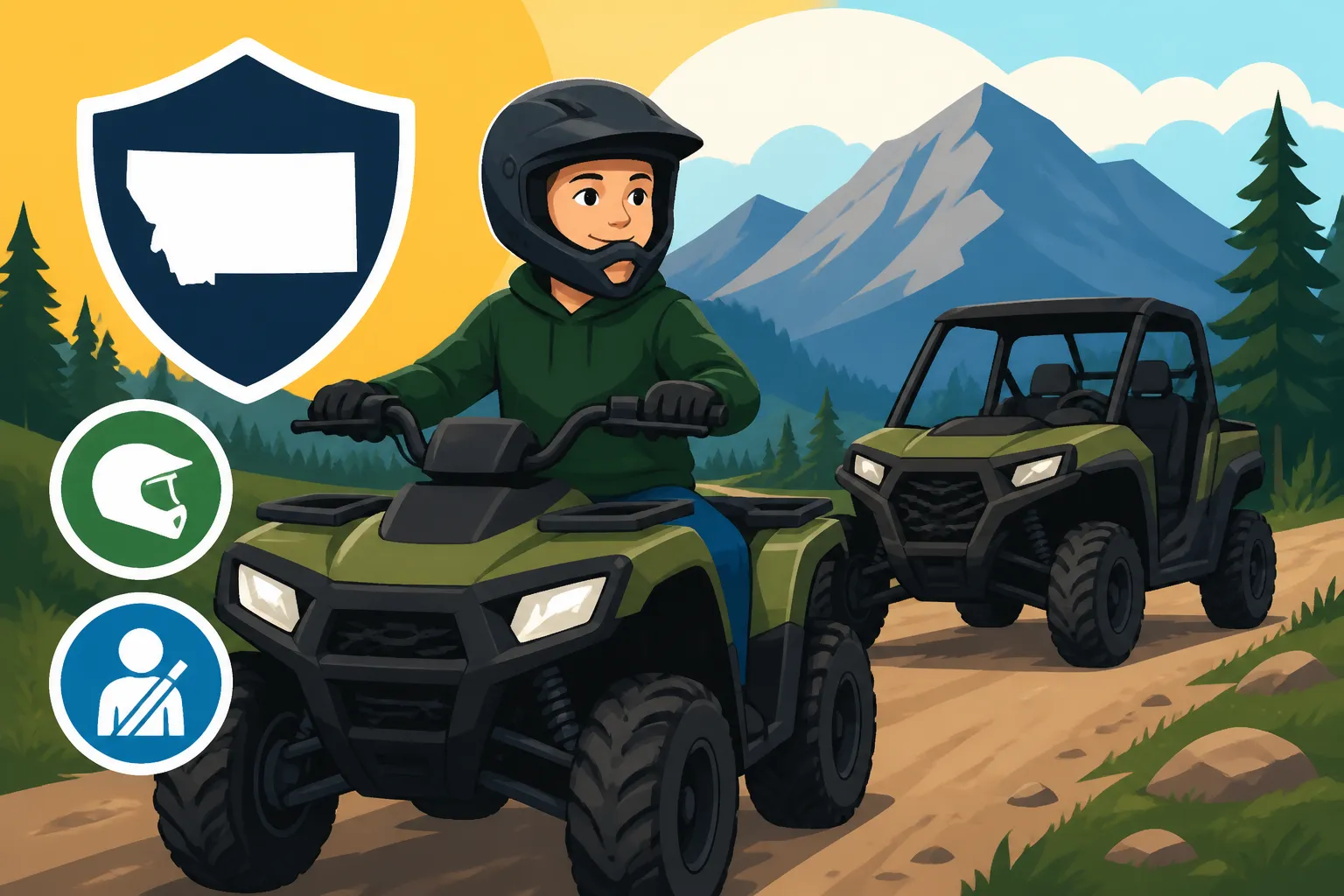
While Montana's general helmet law for OHV riders only applies to those under 18 years of age (and sometimes to passengers), the rules for road riding can be slightly different or interpreted more strictly due to the increased risks. For any 12-year-old operating an OHV on a public road, a U.S. DOT-approved helmet is legally required. This is non-negotiable. The helmet must be properly fitted and securely fastened. Beyond the helmet, eye protection (goggles or a face shield) is also mandatory when riding on a public road, protecting against dust, debris, and insects that can impair vision.
Beyond the legal minimums, parents should strongly consider additional protective gear. This includes sturdy over-the-ankle boots, long pants, long-sleeved shirts, and gloves. While not always legally mandated for road riding for those over a certain age, this gear significantly reduces the risk of injury in the event of a fall or collision. When a 12-year-old is sharing the road with cars and trucks, the consequences of an accident are much higher. Investing in quality protective gear, much like equipping the machine with SuperATV accessories for safety, is a wise choice for any parent. [Montana Helmet Rules for Riders Under 18] provides more detail on these essential safety requirements.
What Happens If the Rules Are Broken?
No one wants to think about getting a ticket, especially when it involves their child. However, understanding the potential consequences of violating Montana's OHV road rules is an important part of making informed decisions. Law enforcement, whether it's a county sheriff, a state highway patrol officer, or a Fish, Wildlife & Parks warden, takes these rules seriously. Their primary goal is public safety, and unregistered, improperly equipped, or illegally operated OHVs, especially by minors, pose a significant risk.
Fines and Citations for Violations
If a 12-year-old is caught operating an OHV on a public road without the required OHV safety certificate, without proper adult supervision, on a road not designated for OHV use, or on a machine lacking the mandatory equipment (like proper lights or a mirror), they or their supervising adult could face citations and fines. The specific amount of the fine can vary depending on the nature of the violation and the jurisdiction. These aren't just slaps on the wrist; fines can quickly add up, and repeat offenses can lead to increased penalties.
Beyond the immediate financial impact, there could be other consequences. Depending on the severity of the violation, law enforcement might temporarily impound the OHV, or they might restrict the child's future riding privileges. It's also worth noting that if an accident occurs while violating these rules, insurance coverage might be jeopardized, leaving parents personally liable for damages or injuries. It’s a situation no one wants to be in, and prevention through education and compliance is always the best strategy. [Montana Penalties for an Unregistered OHV in Montana] gives a general idea of fine structures.
The Impact on Insurance and Liability
One aspect often overlooked until it's too late is the impact of rule violations on insurance coverage and personal liability. Most standard auto insurance policies do not cover OHVs, and you likely have a separate OHV insurance policy. However, even with an OHV-specific policy, operating the machine in violation of state laws, such as allowing an underage or unsupervised rider on a public road, could void your coverage in the event of an accident. Imagine the financial burden if your 12-year-old is involved in a collision with a passenger vehicle and your insurance company denies the claim because they were riding illegally.
Parents could face significant personal liability for medical bills, property damage, and legal fees. This is why strict adherence to Montana’s rules is not just about avoiding a ticket, but about protecting your family's financial well-being. Always check with your insurance provider to understand the specifics of your OHV policy, particularly regarding youth operators and road use. Many policies have clauses about legal operation, and if you’re not compliant, you could be left holding the bag.
| Requirement / Rule | 12-Year-Old on Montana Road (OHV) | Adult (Licensed) on Montana Road (OHV) | General Trail Use (Any Age) |
|---|---|---|---|
| Driver's License | No (Safety Certificate Required) | Yes (Valid Driver's License) | No (Unless crossing road) |
| OHV Safety Cert. | Mandatory | Not required (for adults) | Required (if under 16) |
| Adult Supervision | Mandatory (18+ years old) | Not required | Required (if under 16) |
| Headlights On | Mandatory (Day & Night) | Mandatory (Day & Night) | Not always (depends on trail/light) |
| Taillight On | Mandatory (Day & Night) | Mandatory (Day & Night) | Not always (depends on trail/light) |
| Brakes | Mandatory (Adequate) | Mandatory (Adequate) | Mandatory (Adequate) |
| Muffler | Mandatory (Good working order) | Mandatory (Good working order) | Mandatory (Good working order) |
| Spark Arrester | Mandatory | Mandatory | Mandatory |
| Mirror(s) | Mandatory (At least one) | Mandatory (At least one) | Not required |
| DOT Helmet | Mandatory | Not always (if 18+) | Mandatory (if under 18) |
| Eye Protection | Mandatory | Mandatory | Mandatory |
| Road Permitted | Only on designated roads | Only on designated roads | Varied by MVUM/land manager |
Promoting Responsible Riding Habits
Ultimately, the goal is to foster a love for riding in your child while instilling a deep respect for safety and the law. Teaching a 12-year-old to ride responsibly on a public road involves more than just explaining the rules; it's about modeling good behavior. This means always wearing appropriate gear yourself, meticulously checking the machine before each ride, and consistently following all traffic laws and local ordinances. Discuss potential hazards with your child, such as blind driveways, distracted drivers, or sudden changes in road surfaces.
Encourage them to ride defensively, anticipating potential issues. Start them on quiet, clearly designated roads before venturing into areas with more traffic. Regular practice, under your watchful eye, will build their confidence and judgment. It’s also a good idea to discuss what to do in an emergency, how to signal turns, and how to maintain a safe following distance from other vehicles. By taking a proactive, comprehensive approach to education and supervision, you can help your 12-year-old enjoy the freedom of riding while keeping them safe and within the bounds of Montana law.
Disclaimer
This article is for general informational purposes only and does not constitute professional advice. Laws, prices and regulations vary by location and change over time. Consult a qualified professional for guidance on your specific situation.