Where a Montana Trail Meets a County Road
Ah, the classic Montana dilemma! You've been tearing up some incredible trail – maybe the Wild Bill OHV trails in the Flathead, or perhaps exploring the Custer Gallatin near Bozeman – feeling free and connected to the big sky country. Then, suddenly, the dirt track ends, and you're staring down a county road. That moment can bring a jolt of uncertainty: "Am I allowed to be here? What are the rules? Do I just cross it, or can I actually ride it?" It's a common point of confusion for many riders, both locals and visitors alike, and navigating this transition safely and legally is crucial. This guide will help you understand precisely what happens when a Montana trail meets a county road, covering the regulations, necessary equipment, and responsible riding practices to keep your adventure going without a hitch.
Understanding the Legal Landscape at the Junction
Montana's stance on off-highway vehicles (OHVs) on public roads isn't a simple "yes" or "no." It's a nuanced patchwork, and county roads often fall into a special category. Unlike primary state highways or interstates where OHVs are generally prohibited, county roads have more flexibility, but that flexibility comes with local control. This means that while the state sets a baseline, individual counties, and sometimes even specific towns within those counties, have the authority to decide if and how OHVs can use their roads.
Imagine you're riding a gorgeous singletrack deep in the Lolo National Forest. You hit a cattle guard, crest a small rise, and suddenly, you're on a well-maintained gravel road that's clearly marked as a county route. Your first thought might be to just keep going, but you need to pause. Is this particular county road open to OHVs? Have the county commissioners voted to open it? It's not always obvious. Many counties recognize the value of OHV recreation and have opened sections of their road systems to facilitate access to trails, fuel, or services. However, others have kept their roads closed, or only opened very specific segments. Ignoring these local rules can lead to significant fines and put a real damper on your trip. It's really about knowing the specific jurisdiction you're in at that precise moment.
The Power of County Commissioners
The county commissioners hold the keys to a lot of those gravel roads. They are the ones who can pass ordinances allowing OHVs on certain county roads or keeping them closed. This is why you'll often hear about rider groups working with local government to advocate for more access. For instance, in some parts of Montana, such as those around trail-friendly communities like Lincoln or Darby, county roads might be broadly open to OHVs to help riders connect trail systems or access town amenities. In others, particularly closer to more populated areas, they might be more restrictive. This local control means that a road that's open in Gallatin County might be closed in Flathead County, even if the road type looks identical. Before you plan a route that involves significant county road travel, it's always wise to check with the specific county's website or even call their road department or sheriff's office. You might also find local maps or signs indicating approved routes. This patchwork nature means there's no single statewide answer for every county road. You can dive deeper into this topic by reading about [County Commissioners and Montana County Roads].
Exceptions and Designated Routes
Beyond the general county ordinances, there are often specific designated routes. These might be county roads that are explicitly signed for OHV use, or they could be routes where a trail officially transitions to a road for a short distance before picking up another trail. These exceptions are usually clearly marked, either with specific OHV trail signs or with signage indicating that OHVs are permitted. It's crucial to distinguish between a designated motorized route on a county road and simply assuming all county roads are fair game. Many times, these designated routes are critical connectors for larger trail systems, allowing you to bridge gaps between national forest lands and other public access points. Think of it like a puzzle piece – sometimes a county road is the only way to connect two fantastic trail sections. Without these designated sections, many of Montana's incredible multi-day riding opportunities simply wouldn't exist. Always keep an eye out for official signage from the Forest Service, BLM, or the county itself indicating these specific allowances.
Preparing Your Machine for the Pavement (or Gravel)
Alright, so you've confirmed that the county road you're eyeing is open to OHVs. Fantastic! But before you hit the throttle, you need to make sure your machine itself is legally equipped for road use in Montana. This isn't just about safety; it's about compliance with the law. Just because you can ride your quad or side-by-side on a trail doesn't mean it's automatically ready for the road. Montana has specific requirements for what constitutes a "street-legal" OHV on designated public roads.
Consider your machine as it rolls off a dirt trail – it's probably covered in mud, maybe missing a mirror from a close call with a tree, and its lights are fine for the woods but might not cut it on a county road. Transitioning from trail to road means your machine needs to transform from a pure off-road beast into something that can coexist with cars and trucks, even if only for a short distance. This involves a few key additions and checks that often get overlooked by eager riders. For a comprehensive overview, check out [What Montana Requires on an OHV Road Ride].
Required Safety Equipment for Road Use
Montana law specifies several pieces of equipment that your OHV must have if you plan to operate it on a public road, including county roads. These aren't suggestions; they're legal mandates.
- Headlights and Taillights: You'll need at least one white headlight visible from 500 feet and at least one red taillight visible from 500 feet. These lights must be on at all times when operating on a public road, even during the day. This isn't just about being seen at dusk; it's a constant visibility requirement to ensure other drivers can spot you.
- Brakes: Your machine must have a braking system capable of stopping it within 40 feet at 20 mph. This is standard for most modern OHVs, but it's worth checking your brakes are in good working order before any road sections.
- Muffler and Spark Arrester: A muffler is required to keep noise within limits, and a spark arrester is crucial for preventing wildfires, especially on public lands where many trails connect to county roads. Excessive noise is a common complaint in small towns, and you certainly don't want to be that rider.
- Mirrors: You need at least one rear-view mirror mounted to provide a clear view of the road behind you for at least 200 feet. This is vital for situational awareness when sharing the road with other vehicles. Many riders opt for aftermarket mirrors from brands like SuperATV that are designed for rugged use but still meet road-legal requirements.
- Horn: A working horn or warning device is necessary for signaling other vehicles or pedestrians. A polite "toot" can go a long way in preventing misunderstandings.
- Tires: Your tires must be pneumatic (air-filled) and in safe operating condition.
- Reflectors: At least one red reflector on the rear of the machine is typically required, enhancing your visibility, especially at night or in low light conditions.
- Turn Signals (often highly recommended/required by local ordinances): While state law might be a bit vague on turn signals for all OHVs, many local county ordinances for road riding will explicitly require them, or they're highly recommended for safety. They make your intentions clear to other drivers. This is another area where aftermarket kits, often found from companies like SuperATV, can easily be added to your machine.
Remember, this equipment is for your safety and the safety of others sharing the road. A county deputy or FWP warden can issue a citation if your machine isn't properly equipped. It's also critical to ensure your OHV is properly registered in Montana and that you have the appropriate decal displayed. Check out [Montana OHV Decals and Rear Placement] for more on that.
Pre-Ride Checks for Road Safety
Beyond the legal requirements, a few quick pre-ride checks can prevent headaches when transitioning to a county road:
- Tire Pressure: While lower pressures are great for traction on trails, they can compromise handling and wear on paved or gravel roads. A quick top-up to the manufacturer's recommended road pressure (if applicable) can make a big difference.
- Secure Loose Items: Those extra fuel cans, cooler straps, or gear bags that were fine jostling on the trail need to be extra secure for road speeds. Losing something on a county road can create a hazard for other drivers.
- Clean Lights and Reflectors: Mud and dust can quickly obscure your lights and reflectors. A quick wipe down ensures you're visible, especially if the sun is setting or conditions are dusty.
- Fuel Levels: County roads might connect you to services, but they can also be long, desolate stretches. Always ensure you have enough fuel to reach your next destination or a gas station. There’s nothing worse than running out of gas miles from anywhere on a remote gravel road.
Rider Responsibilities and Best Practices
So, your machine is trail-ready and road-legal, and you've confirmed the route is open. Now, let's talk about the most important part: you, the rider. When you transition from a secluded trail to a county road, your mindset and behavior need to shift dramatically. You're no longer in a purely recreational environment; you're sharing space with different types of traffic, from ranch trucks to delivery vans, and potentially even passenger cars. This means adhering to traffic laws, exercising common courtesy, and prioritizing safety above all else.
Think about the difference: on a trail, you might be the biggest thing out there, and generally, other riders are expecting you. On a county road, you're smaller, slower, and often less visible than cars. Your vulnerability increases, and so does your responsibility to ride defensively and respectfully. This is where good habits and an understanding of the rules of the road really pay off.
Driver's License and Age Requirements
Just like driving a car, operating an OHV on a county road in Montana requires specific licensing and age compliance.
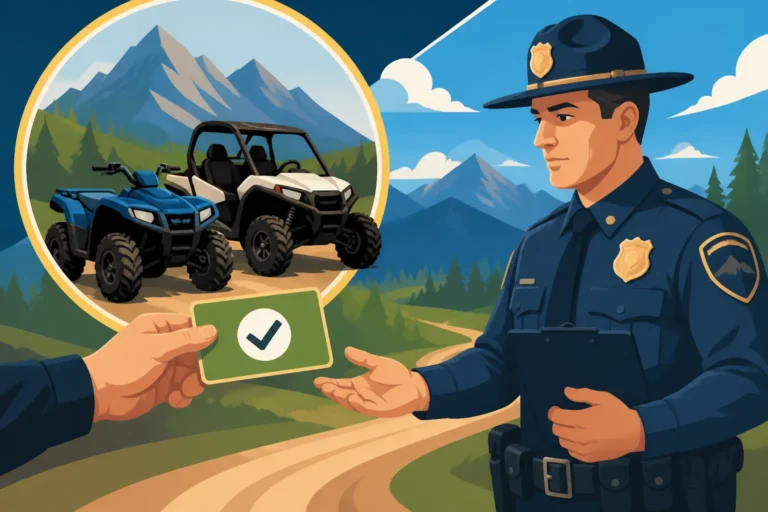
- Driver's License: Anyone operating an OHV on a public road in Montana must possess a valid driver's license. Your standard Class D driver's license for a car is usually sufficient. This means that riders who only have an OHV safety certificate or are under the legal driving age generally cannot operate an OHV on county roads.
- Age Rules: For younger riders, Montana has specific age restrictions. For example, riders aged 12 to 15 may operate an OHV on private land or designated OHV trails, but often require adult supervision and a safety certificate. However, these rules often change when it comes to public road use. Generally, if they don't have a valid driver's license, they can't be on the road. Parents, this is a critical distinction to remember when planning family rides that might involve county road sections. You can read more about this in [Montana Road Rules for Young Riders].
- Safety Education: While not always required for adults with a driver's license on roads, having completed an OHV safety course is always a smart move. It reinforces good riding habits and hazard awareness.
Sharing the Road and Road Etiquette
When you're on a county road, you are now part of the general traffic flow.
- Stay to the Right: Always ride on the right side of the road, just like a car. Don't hug the center or weave across lanes, especially on blind corners.
- Observe Speed Limits: County roads have posted speed limits, and even if they don't, you should drive at a safe and reasonable speed for conditions. Going too fast on a gravel road can quickly lead to loss of control, especially around turns or over washboards.
- Signal Your Intentions: Use hand signals or, if equipped, your turn signals to indicate turns or lane changes. Clear communication prevents accidents.
- Yield to Other Vehicles: OHVs are typically slower than cars and trucks. Be prepared to pull over safely to allow faster traffic to pass, especially on narrow or dusty roads. Don't be "that guy" holding up a line of vehicles.
- Dust Management: On dry gravel roads, OHVs can kick up a significant amount of dust. Be mindful of this, especially if you're riding in a group or if there are homes or businesses nearby. Slowing down can help reduce dust.
- Pass with Caution: If you need to pass another OHV or a slow-moving vehicle, do so only when it's safe, legal, and you have clear visibility.
- Respect Private Property: Many county roads are bordered by private land. Do not trespass, litter, or create excessive noise that could disturb residents. Rural communities cherish their quiet, and being respectful helps maintain a good relationship between riders and landowners.
Riding in Groups on Roads
Riding in a group on a county road requires extra vigilance.
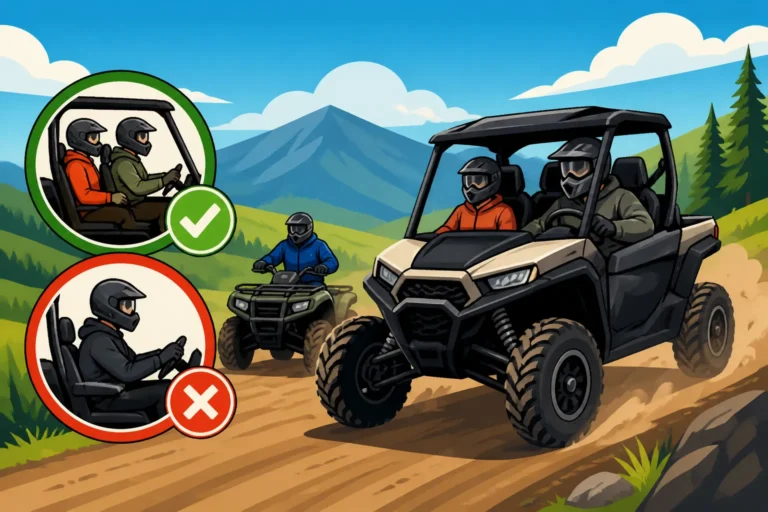
- Single File: Generally, it's best practice to ride in single file, especially on narrow roads, to maximize visibility and allow other vehicles to pass safely.
- Maintain Distance: Leave plenty of space between machines. This allows for sudden stops, avoids dust-outs from the machine ahead, and gives other drivers room to maneuver around the group.
- Staggered Riding (if appropriate and safe): On wider roads, some groups might ride in a staggered formation, but always prioritize single file if the road is narrow, curvy, or has heavy traffic.
- Designate a Leader and Sweeper: The leader sets the pace and navigates, while the sweeper ensures no one gets left behind and can alert the group to hazards from the rear.
Navigating Intersections and Road Crossings
Even if you're not planning to ride on a county road, you'll inevitably encounter situations where a trail either crosses a road or ends directly at one. These junctions are high-risk areas, and knowing how to approach them safely and legally is paramount. It’s not just about getting across; it’s about making sure everyone, including motorists who might not be expecting an OHV, stays safe.
Think about a typical scenario: you're coming down a mountain trail, enjoying the descent, when through the trees, you spot a "Stop Ahead" sign and then the glint of asphalt. This isn't the time to suddenly realize you're unprepared. Your speed, your awareness, and your machine's equipment all need to be in check well before you reach that paved strip. These transitions require a moment of mental shift from "trail mode" to "road mode," even if it's just for a few seconds.
Stopping, Looking, and Yielding
This is the golden rule for any road crossing:
- Full Stop: Always come to a complete stop before entering or crossing any road. Even if you think you have a clear view, a full stop gives you time to assess the situation.
- Look Both Ways (and then some): Visually scan far down the road in both directions. Don't just glance; actively look for approaching vehicles, bicycles, or pedestrians. Remember that an OHV is less visible than a car, so you need to be extra cautious. Sound is also your friend; listen for approaching traffic, especially large trucks.
- Yield to All Traffic: Traffic on the road has the right-of-way. Do not pull out or cross until you have a clear and safe gap. This applies to vehicles, pedestrians, and cyclists. Never assume a motorist sees you or will slow down for you.
- Cross When Clear: Once you've confirmed it's safe, cross the road in a perpendicular fashion, taking the most direct route. Don't meander or travel down the road unless that specific section is open to OHVs and your machine is fully road-legal.
Specific Considerations for Road Crossings
When approaching a road crossing, there are often details beyond simply stopping and looking.
- Visibility Issues: Some trailheads or trail exits might have limited visibility due to vegetation, hills, or blind curves on the county road. Approach these with extreme caution, and if necessary, have a spotter (if riding in a group) help confirm the road is clear. In areas with poor visibility, you might even consider getting off your machine and walking to the edge of the road to get a better view before crossing.
- Heavy Traffic: During peak seasons, some county roads, especially those leading to popular recreational areas or towns, can have surprisingly heavy traffic. If you encounter significant traffic, be patient. Wait for a truly safe opening; forcing a crossing can lead to dangerous situations. This is especially true near popular destinations like West Yellowstone or Red Lodge, where county roads can see a lot of tourist traffic.
- Group Crossings: If you're riding in a group, only cross when the entire group can make it safely, or cross one or two at a time, ensuring each segment clears the road before the next begins. Communication within the group is key here. Never string out across the road, creating a moving barrier for motorists.
- Designated Crossing Points: Some roads might have designated OHV crossing points, which could be marked with signs or even have rumble strips or flashing beacons to alert motorists. Always use these if available, as they are typically chosen for optimal visibility and safety.
Here's a quick reference table to help you remember the essentials when a Montana trail meets a county road:
| Aspect | Trail Riding Mindset | County Road Riding Mindset |
|---|---|---|
| Legal Access | Generally open if signed for OHVs | Requires explicit county ordinance or specific designation |
| Machine Equipment | Basic safety gear (helmet, spark arrester) | Full road-legal kit (lights, mirrors, horn, brakes, etc.) |
| Registration/Decal | Required for public land use | Required for public road use [Registering an OHV in Montana] |
| Driver's License | Not always required for all ages/situations | Required for all operators |
| Speed Limit | Based on trail conditions/safety | Posted speed limits, shared with other vehicles |
| Yielding | To uphill traffic, hikers, horses | To ALL road traffic (cars, trucks, bikes, pedestrians) |
| Visibility | Less critical, generally just for other riders | Paramount; be seen by much larger, faster vehicles |
| Dust | Acceptable trail impact | Mindful of other drivers, homes, businesses |
| Group Riding | Often side-by-side where safe | Single file for safety and courtesy |
| Brand Focus (e.g.) | Performance parts (SuperATV lift kits) | Road-legal accessories (SuperATV mirrors, turn signals) |
Navigating these transitions confidently means being informed and prepared. Enjoy Montana's incredible riding, but always ride smart and ride safe!
Disclaimer
This article is for general informational purposes only and does not constitute professional advice. Laws, prices and regulations vary by location and change over time. Consult a qualified professional for guidance on your specific situation.