Stopping Where a Montana Road Crosses a Trail
It's easy to get caught up in the thrill of a Montana trail ride, the wind in your face, the incredible scenery unfolding around you. But that momentary lapse in focus, that assumption that "nothing's coming," can have serious consequences when a trail suddenly spills out onto a road. This guide is all about equipping you with the knowledge and habits to safely and legally navigate those crucial intersections where the dirt meets the pavement, ensuring your adventures continue without incident or penalty.
The Critical Importance of Stopping at Montana Road Crossings
You're out enjoying the vast network of trails in Montana, maybe tearing through a section of the Lolo National Forest, or perhaps exploring some of the incredible routes near Red Lodge. The rhythm of the trail can be mesmerizing, and it's easy to feel invincible on your machine. But every so often, that trail is going to intersect with a public road, whether it's a quiet gravel county road or a busy state highway. These moments demand your full attention and adherence to the rules of the road. Failing to stop at these crossings isn't just about avoiding a ticket; it's about preventing potentially life-altering accidents.
Why the Law Demands a Stop
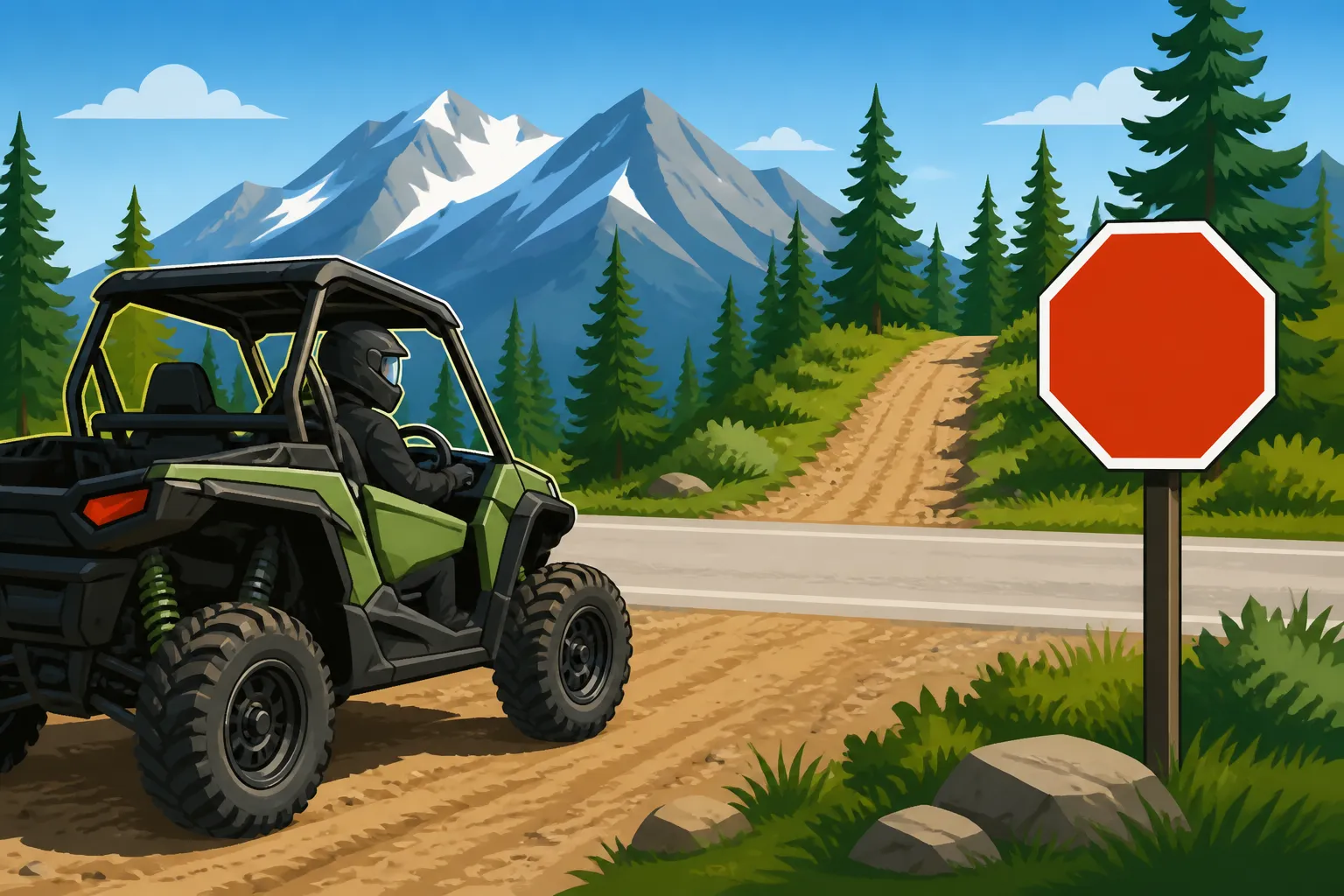
Think about it from a common-sense perspective. When you're driving a car and come to an intersection with a stop sign, you stop. Why? Because other traffic, often moving at higher speeds, has the right-of-way, and your failure to yield creates an immediate hazard. The same principle applies, perhaps even more so, when you're operating an ATV or UTV and approaching a road. Montana law is crystal clear on this: if you encounter a public road, you must stop and yield to all traffic on that road before proceeding. This isn't a suggestion; it's a legal requirement.
The legal framework is designed to protect everyone involved – you, your passengers, and anyone else on the road. A warden or a local sheriff's deputy isn't going to look kindly on a rider who blasts across a paved road without stopping. [Montana Fines for Illegal Road Riding] can be steep, not to mention the potential for points on your driving record or even more severe penalties if an accident occurs. Beyond that, failing to stop could be seen as reckless operation, which carries its own set of problems. You need to be aware of [What Montana Requires on an OHV Road Ride], and that absolutely includes the fundamental rule of stopping at road crossings.
Beyond the Law: Practical Safety for Riders
Even if there wasn't a law, the sheer practicality of safety should compel every rider to stop. OHVs, by their nature, are often quieter than cars and less visible. You might think you've got a clear line of sight, but what about the driver in that pickup truck who's been going 60 MPH down a straight stretch of highway, not expecting an ATV to suddenly appear from the treeline? Your perception of speed and distance can be dramatically different from a driver's. They might not see you, especially if your machine isn't equipped with extra bright lighting, or if you're coming out of a shaded area.
Stopping gives you a crucial moment to assess the situation fully. It allows you to listen for approaching vehicles you might not see, especially around blind corners or crests. It’s also your chance to verify the type of road you're crossing and any specific local ordinances that might apply. For instance, if you're riding a utility machine on a ranch and encounter a county road, even though you might have some exemptions for agricultural use on your own land, those typically don't extend to disregarding public road laws. You should definitely check [Montana OHV Rules for Ranch Machines] for specifics, but the general rule of stopping at intersections remains paramount for everyone's safety.
Navigating Different Types of Road Crossings in Montana
Montana is vast and diverse, and so are its roads. A crossing in the middle of a national forest will feel very different from one on the edge of a small town, but the core principle of stopping, looking, and yielding remains constant. Understanding the nuances of each type of crossing will make you a safer, more responsible rider.
State Highways and US Routes: The Most Dangerous Crossings
When your trail connects with a state highway like US-93 through the Flathead Valley, or a busy route like US-191 near Big Sky, this is arguably the most critical and dangerous type of crossing you'll encounter. Traffic on these roads often moves at high speeds, 55 MPH or even 70 MPH in some sections, meaning approaching vehicles cover ground very quickly. You have precious little time to react, and their stopping distance is significantly longer than yours, especially for larger vehicles like semi-trucks.
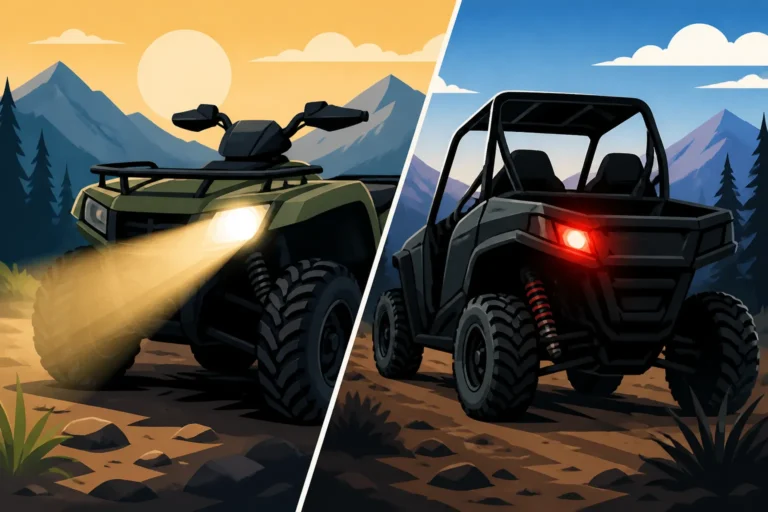
The biggest challenges here are the speed differential, limited visibility due to terrain or roadside vegetation, and the sheer volume of traffic during peak seasons. You must execute a complete, undeniable stop, well before the edge of the pavement. Lean forward, peer around obstructions, listen intently, and double-check both directions multiple times. Don't assume a gap in traffic means it's safe; a vehicle might appear over a rise faster than you expect. This is where high-quality lighting on your machine truly matters, not just for night riding, but for daytime visibility. Accessories from brands like SuperATV, for instance, offer robust LED light bars that can make your machine much more noticeable to oncoming traffic, even in bright sunlight. Remember, [Headlight and Taillight Rules in Montana] are not just for after dark; having your lights on during the day can be a critical safety measure, especially at these high-risk crossings.
County Roads and Rural Routes: Still Require Caution
Montana is crisscrossed by thousands of miles of county roads and rural routes, many of them gravel, winding through forests, ranch land, and open prairies. While these typically see less traffic and often have lower speed limits than state highways, they are by no means less important when it comes to stopping at trail crossings. The risks can be different but equally serious. Blind corners, dust clouds from previous vehicles, and even loose gravel affecting your traction can create hazards.
You might encounter anything from a rancher moving equipment, a school bus, or another recreational vehicle. [Sheriff Enforcement on Montana Back Roads] is a real thing; just because it's a gravel road doesn't mean the rules don't apply. Moreover, many of these roads are used by local residents who are accustomed to their quiet routes, and an unexpected ATV or UTV bursting onto the road can startle them and cause an accident. Always approach these crossings with the same level of caution as a paved road. Even if you ride the same trail every week, never assume you know what's coming. A careful, complete stop allows you to fully assess the current conditions, which can change rapidly with weather, season, or local activity.
Town and City Streets: Unexpected Hazards
Some Montana towns have embraced OHVs, allowing them on specific city streets to connect to trails or access local businesses. If you're riding in a town like Red Lodge or West Yellowstone, you might be enjoying the convenience of [Montana Towns That Allow OHVs on Their Streets]. However, even in these friendly environments, every intersection with a street is a potential hazard, and stopping is non-negotiable. City streets bring their own set of unique challenges: parked cars obscuring views, pedestrians, bicyclists, delivery trucks, and more frequent intersections.
Traffic lights, stop signs, and crosswalks become part of your navigational landscape. People are often distracted in town, looking for parking, talking on their phones, or simply not expecting an OHV to be part of the flow of traffic. Your machine might be loud, but it doesn't necessarily register with someone who's focused on parallel parking. It’s crucial to be extra vigilant, make eye contact with drivers and pedestrians if possible, and signal your intentions clearly. You need to remember that [Riding an OHV on the Road in Montana] is a privilege, not a right, and maintaining a high standard of safety, which includes stopping at every required intersection, helps preserve that privilege for all riders.
How to Execute a Safe Stop and Crossing
Making a safe crossing isn't just about slamming on the brakes at the last second. It's a systematic approach that starts long before you reach the actual pavement or gravel. A smooth, controlled stop and confident crossing are the hallmarks of an experienced, responsible rider.
Pre-Approach: Assessing the Crossing Ahead
Safety at a road crossing begins well before you see the "Stop Ahead" sign, or even the road itself. As you ride, be aware of changes in the trail that might indicate an upcoming road – a sudden clearing, the sound of vehicle traffic, or a change in trail surface. Begin to slow down and shift your weight to prepare for a stop. Look for any official signage, like a stop sign or a road crossing warning. These signs are there for a reason and give you critical advance notice.
Consider your visibility to others. Are you emerging from a dense thicket of trees? Is the sun directly behind you, making you a silhouette? Or perhaps you're approaching from a dip in the terrain. These factors dictate how early you need to slow down and how much space you'll need to make a safe, visible stop. Think about your machine's condition too. Are your brakes responsive? Is your engine running smoothly so you can accelerate confidently across the road? Products like SuperATV's heavy-duty brake pads or enhanced suspension components can contribute to better control and stopping power, giving you an extra edge in these critical moments. Regular maintenance, especially of your braking system, is vital. You should also be aware of [Brake Requirements for a Montana Road Ride] to ensure your machine is compliant and safe.
The Full Stop: What It Entails
A "full stop" means exactly that: your machine must come to a complete halt. Not a rolling stop, not a slow crawl, but a definite, undeniable pause. You should stop far enough back from the edge of the road to allow oncoming traffic to clearly see you and to give yourself ample space to observe. Positioning your machine where you have the best possible line of sight, without entering the flow of traffic, is key.
Once stopped, scan both left and right, then left again. Listen for sounds of engines, even if you can't see anything. Sometimes, especially in hilly or winding terrain, you'll hear a vehicle before you see it. If you have passengers, make sure they are aware of the situation and sitting properly. If you're riding in a group, ensure everyone understands the protocol; the lead rider needs to set the example. If you're on a multi-day trip, perhaps riding some of the amazing [Montana Trails That Link Two Towns], you'll encounter numerous crossings, and consistent, disciplined stopping is paramount every single time.
Making the Crossing: Judgment and Execution
After you've come to a complete stop, observed traffic, and determined the way is clear, execute your crossing decisively. Don't hesitate or dawdle. Accelerate smoothly across the road, maintaining control of your machine. Your goal is to get from one side of the road to the other as quickly and safely as possible, minimizing the time you are in the path of potential traffic.
It's a balance of caution and confidence. You need to be patient enough to wait for a truly safe gap, but once you commit, do so with purpose. Avoid rapid, jerky movements that could lead to loss of control, especially on gravel or uneven surfaces. Once you've safely crossed and are back on the trail, continue to be alert for a moment, just in case another vehicle approaches unexpectedly or you need to react to something on the trail immediately after the crossing. If you’re riding a side-by-side, ensure all occupants are properly secured with seatbelts, as even a minor bump during a crossing can cause injury.
| Crossing Type | Traffic Speed | Visibility Challenges | Key Safety Focus |
|---|---|---|---|
| State Highways | High (55-70 MPH+) | Blind curves, hills, dense vegetation | Maximum distance of observation, decisive crossing |
| County Roads | Moderate (35-55 MPH) | Dust, gravel, blind corners, local traffic | Listen for traffic, assess surface condition |
| Town/City Streets | Low (25-35 MPH) | Parked cars, pedestrians, frequent intersections | Eye contact, clear signaling, look for distractions |
Consequences of Failing to Stop at a Montana Road Crossing
Ignoring the stop sign or the basic requirement to yield at a Montana road crossing isn't just a minor infraction. It sets off a chain of potential negative consequences, ranging from legal trouble to severe physical harm and damage to the overall reputation of the OHV community.
Legal Repercussions: Tickets and Penalties
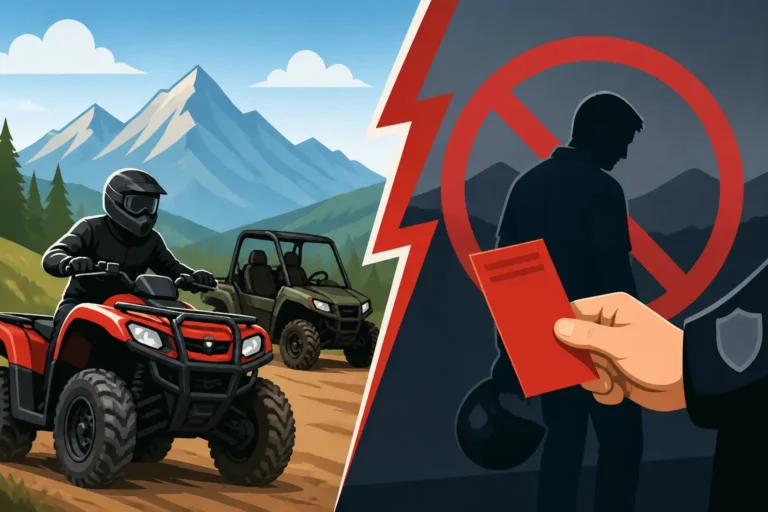
Let's not sugarcoat it: a warden or a sheriff's deputy sees you blow through a stop at a road crossing, and you're likely getting a ticket. This isn't a small slap on the wrist. [Montana OHV Ticket Costs by Violation] can add up, and repeat offenses or particularly egregious violations can lead to more serious penalties. Depending on the specifics, you could face fines, points on your driver's license, and potentially even a temporary loss of your OHV riding privileges. Imagine having your season cut short because you were in too much of a hurry to stop for two seconds.
Beyond the immediate costs, a moving violation like failing to stop at a posted sign can affect your insurance rates for your regular vehicles, as it signals a higher risk driver. And if alcohol is involved in any way, even just "having a few" on the trail, then failing to stop could escalate into much more severe charges, including a DUI on an OHV, which carries very serious ramifications. [Montana Alcohol Limits for OHV Operators] apply on the trails and public roads, and impaired judgment only magnifies the risks at a crossing.
Accident Risks and Liabilities
The most immediate and devastating consequence of not stopping is, of course, an accident. A collision between an OHV and a passenger vehicle or even another OHV can result in catastrophic injuries or fatalities for everyone involved. ATVs and UTVs offer less protection than a enclosed car, leaving riders vulnerable. Beyond the physical trauma, the financial and emotional fallout can be immense.
If you are at fault for an accident because you failed to stop and yield, you will be held liable for damages. This includes property damage to your machine and the other vehicle, medical bills for injured parties, lost wages, and potentially pain and suffering. Even with good insurance, the legal battles can be protracted and incredibly stressful. Understanding [Montana OHV Accident Reporting] procedures is crucial, but prevention is always the best course of action. This is where your personal liability insurance for your machine comes into play, but even the best policy won't mitigate the trauma of being involved in a serious crash.
Damaging the Reputation of OHV Riders
Every time an OHV rider disregards traffic laws, it paints a negative picture of the entire OHV community. Local residents, law enforcement, and even politicians often base their opinions on observed behavior. When riders are seen as reckless or disrespectful of public safety, it creates friction and can lead to backlash. This might manifest as increased enforcement, stricter ordinances, or even the closure of valuable trails and riding areas.
Trail systems like those in [Montana's National Forest Trail Systems] are a privilege, not a right, and maintaining access often depends on demonstrating responsible use. The actions of a few careless riders can negatively impact access for everyone. By consistently adhering to traffic laws, including stopping at every road crossing, you not only protect yourself but also contribute to a positive image of OHV recreation in Montana, helping to ensure that these incredible riding opportunities remain available for future generations. Don't be the reason a favorite trail gets closed or an entire community gets a bad rap.
Disclaimer
This article is for general informational purposes only and does not constitute professional advice. Laws, prices and regulations vary by location and change over time. Consult a qualified professional for guidance on your specific situation.