Towing a Trailer Behind an OHV in Montana
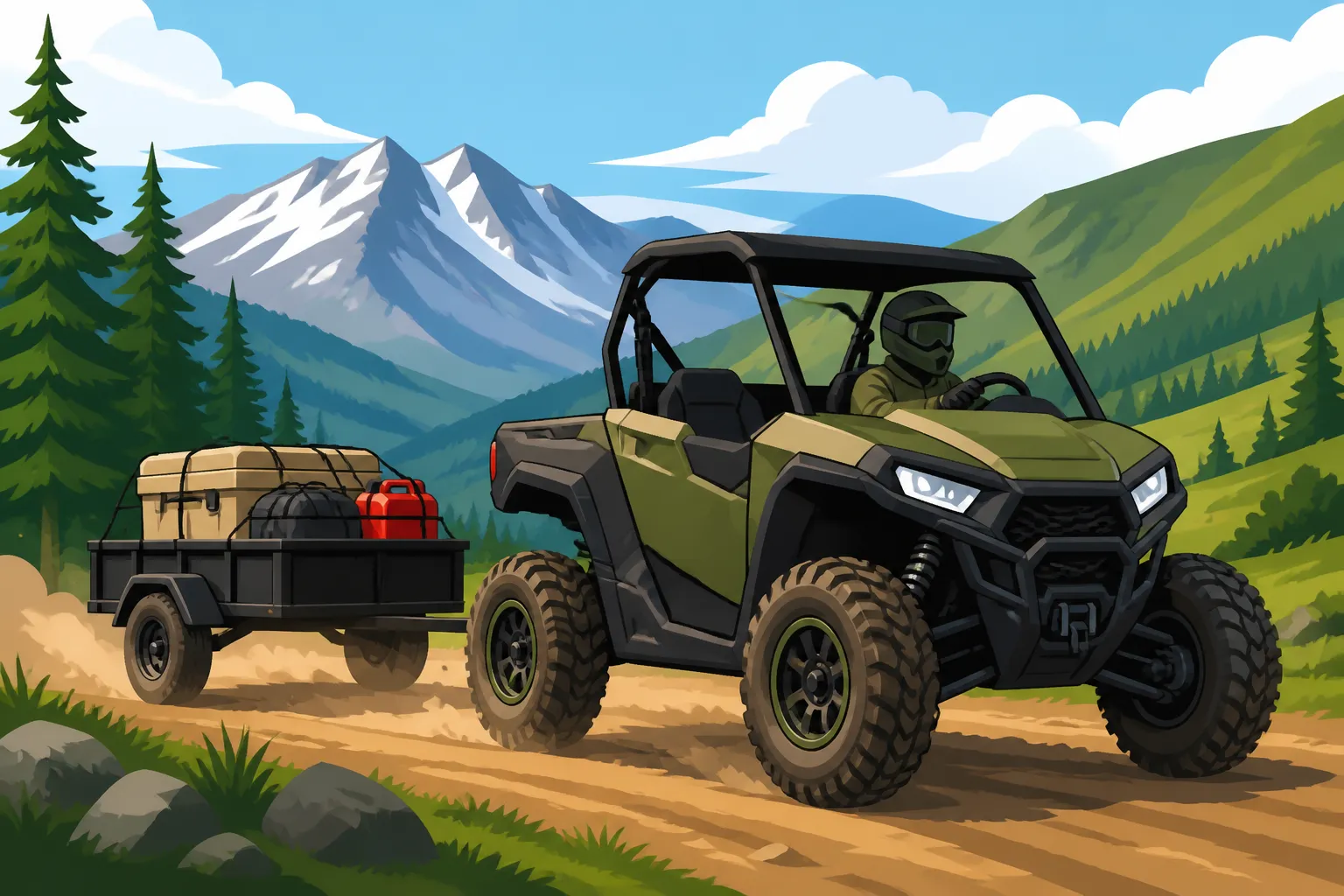
There’s nothing quite like the versatility of an ATV or UTV in Montana, especially when it comes to hauling gear, firewood from your property, a successful hunting harvest, or even just clearing brush around the ranch. But while strapping a small utility trailer to your machine seems straightforward, the rules and practicalities of towing one behind an off-highway vehicle (OHV) in Big Sky Country can actually be a bit of a head-scratcher. This guide aims to clear up the confusion, helping you understand the regulations, safety measures, and best practices for towing a trailer with your OHV on Montana's diverse landscapes.
Montana's General Rules for OHV Trailer Towing
It's easy to assume that if your OHV can handle a heavy load, it can tow a trailer anywhere. However, Montana has specific distinctions between riding on private land, designated trails, and public roads, and these distinctions directly impact how you can tow a trailer. Understanding these foundational rules is the first step to staying legal and safe.
Road Versus Trail Rules
The most crucial distinction when considering towing a trailer with your OHV in Montana is whether you'll be on a public road or a designated trail. On your own private land or a private ranch with permission, the rules are largely dictated by common sense and safety, assuming you're not operating for hire. However, as soon as you venture onto public lands or roads, Montana's regulations come into play.
For trail use, like those managed by the Forest Service or BLM, generally, if the trail allows OHVs, it will also permit towing a small utility trailer, provided it doesn't exceed the trail's width restrictions or cause excessive resource damage. These aren't typically "highway" trailers but smaller, single-axle units designed for utility or hauling game. The focus here is on low speeds and maneuvering through natural terrain. Many trail systems are set up with wider corridors or designated routes that can accommodate a towed implement. You’ll often see ranch hands using their side-by-sides to pull small feed trailers or fence repair supplies down two-track roads. The key is to check the specific Motor Vehicle Use Map (MVUM) for the area you plan to ride, as some narrow single-track trails are strictly for dirt bikes or ATVs without trailers.
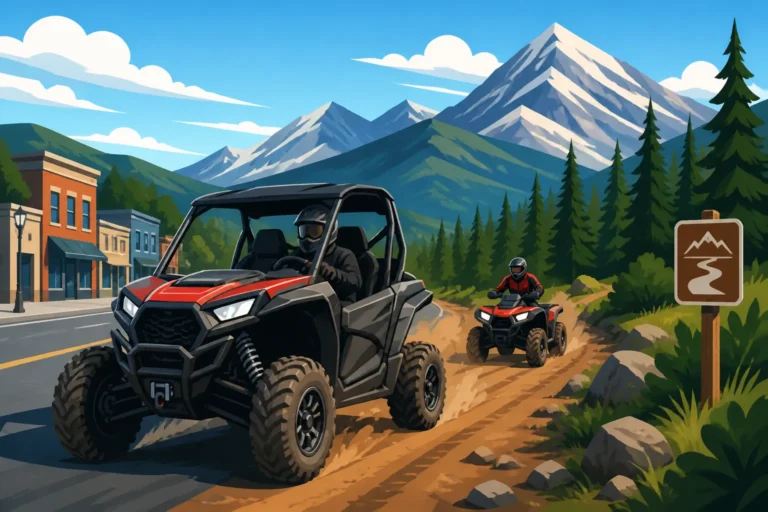
When it comes to public roads—like county roads, secondary highways, or even certain city streets where OHVs are permitted—the rules become much more stringent. For your OHV to be legally on these roads, it must meet specific "street legal" requirements set by Montana law. This typically includes proper registration, lights, mirrors, and sometimes even turn signals. If your OHV isn't street legal, you can't be on the road, let alone towing a trailer. Think about it: a slow-moving OHV with a trailer that lacks proper lighting or visibility could be a serious hazard on a public road where cars are traveling at higher speeds. This is where understanding [What Montana Requires on an OHV Road Ride] becomes absolutely critical.
Registration and Licensing Requirements
Your OHV itself absolutely needs to be properly registered in Montana to be operated on public lands or roads. This is a non-negotiable step. Whether you have a [Montana's One-Time Permanent OHV Registration] or a seasonal registration, that sticker and paper proof of ownership must be current. If you're pulled over and your machine isn't registered, you're looking at potential fines, and that's even before the trailer comes into play. You can find more information about this at [Registering an OHV in Montana].
Now, regarding the trailer itself: In Montana, most small utility trailers used behind OHVs, especially those under a certain weight threshold (often 3,000 pounds or less), do not require separate registration or a title if they're not used for commercial purposes. This is a common point of confusion. For the vast majority of personal use scenarios—like hauling a deer out of the backcountry, moving firewood, or taking tools to a remote fence line—you won't need a separate license plate for the utility trailer itself. However, if you're using a full-sized utility trailer designed for a truck, or a dedicated OHV transport trailer on the road, then it will fall under standard vehicle registration laws and will need its own plate and registration. It's a subtle but important distinction. Generally, if it's clearly a small, basic utility trailer meant for light duty, Montana doesn't require a separate registration for it. However, if you’re pulling a larger trailer that might require a [Montana Trailer Plate Cost], you’ll need to make sure you’re in compliance.
Weight and Size Limitations
Montana law doesn't specify explicit maximum weights or sizes for OHV-towed utility trailers in the same way it does for commercial trucks. Instead, it relies on general safety principles and manufacturer recommendations. The most important rule of thumb here is: never exceed the towing capacity of your OHV as specified by the manufacturer. Pushing your machine beyond its limits can lead to catastrophic failure, severe damage to the engine or transmission, and dangerous instability.
Consider the Gross Vehicle Weight Rating (GVWR) of your OHV, the Gross Axle Weight Rating (GAWR) of your trailer, and the Gross Combined Weight Rating (GCWR) of your OHV and loaded trailer together. These numbers are critical. A side-by-side like a Polaris Ranger might have a towing capacity ranging from 1,500 to 2,500 pounds, while many ATVs are closer to 500-1,200 pounds. This includes the weight of the trailer and its cargo.
| OHV Type | Typical Towing Capacity (Approx.) | Common Trailer Uses | Key Considerations |
|---|---|---|---|
| ATV | 500 – 1,200 lbs | Small utility, game, firewood | Stability, turning radius, braking distance |
| UTV | 1,500 – 2,500+ lbs | Utility, larger game, tools, small implements | Suspension, engine power, braking capacity |
| Street-Legal OHV | Varies by machine, check specs | Road-legal utility, small equipment | Lighting, mirrors, speed limits, proper hitch |
Size also plays a role. While on trails, you need to ensure your trailer doesn't make your combined rig too wide for the designated route. On public roads, an excessively wide trailer can impede traffic flow and create safety hazards, even if it's within the OHV's towing capacity. Always remember that your trailer should never obscure your rear view, and if it does, you'll need supplemental mirrors. For specific situations, especially if your machine is equipped with heavy-duty accessories from brands like SuperATV, you might feel confident in its capabilities, but always double-check the manufacturer's guidelines for safe towing.
Equipment and Safety Considerations for OHV Trailer Towing
Towing a trailer with an OHV isn't just about legality; it's profoundly about safety. The dynamic of your machine changes dramatically when you add a loaded trailer behind it. Proper equipment, regular maintenance, and smart loading are paramount to ensuring you and your cargo arrive safely.
Essential Hitch and Ball Components
The connection point between your OHV and trailer is absolutely critical. You want a robust, properly rated hitch and ball. Most ATVs and UTVs come standard with a receiver hitch, allowing you to insert a drawbar with the appropriate size ball. Common ball sizes are 1 7/8 inches or 2 inches. It is essential that your hitch ball matches the coupler on your trailer. A mismatched ball and coupler is an accident waiting to happen.
When selecting your drawbar and ball, ensure they are rated to exceed the maximum weight you plan to tow. Don't cheap out here. A stronger hitch component provides a crucial margin of safety. Many aftermarket suppliers, including SuperATV, offer heavy-duty receiver hitches and drawbars specifically designed for the rigors of off-road towing, which can be a wise investment if you tow frequently or in challenging terrain.
Beyond the hitch ball, a safety pin or clip is a must-have to prevent the drawbar from sliding out of the receiver. Additionally, always connect safety chains or cables from the trailer to the OHV's frame or a sturdy, designated point. These chains are your last line of defense if the primary hitch connection fails. They should be crossed under the tongue of the trailer to cradle it if it detaches, preventing it from digging into the ground.
Trailer Type and Condition
The type of trailer you use should match your towing needs and the capabilities of your OHV. For most OHV applications, a single-axle utility trailer is ideal. These are lighter, more maneuverable, and generally easier to manage off-road. You can find specialized ATV/UTV trailers that feature larger, wider tires, higher ground clearance, and robust suspensions designed for rough terrain.
Before every tow, conduct a thorough inspection of your trailer. This includes:
- Tires: Check for proper inflation, tread wear, and any cracks or bulges. Underinflated tires can cause sway and overheating, while overinflated tires can reduce traction and increase susceptibility to punctures on rough trails.
- Lights: If you're on a public road, your trailer must have functional taillights, brake lights, and turn signals (unless the OHV's lights are clearly visible and functioning). Even off-road, working lights improve visibility, especially in low light conditions or when backing up.
- Bearings: Check for any play in the wheel bearings by trying to wiggle the tire when the trailer is jacked up. Worn bearings can lead to wheel failure.
- Frame and Deck: Look for any signs of rust, cracks, or damage to the trailer frame or deck that could compromise its integrity.
- Coupler: Ensure the coupler mechanism is clean, lubricated, and latches securely onto the hitch ball.
Proper maintenance of your trailer prevents breakdowns and ensures its longevity.
Loading and Weight Distribution
This is arguably the most critical aspect of safe towing. Improper loading can make even a small trailer incredibly dangerous.
- Tongue Weight: This refers to the downward force the trailer tongue exerts on the OHV's hitch. Too little tongue weight (less than 10-15% of the total trailer weight) can cause severe trailer sway, making your OHV unstable and difficult to control. Too much tongue weight can overload your OHV's rear suspension, affecting steering and braking. Aim for roughly 10-15% of the total trailer weight on the tongue for most utility trailers.
- Cargo Placement: Place heavier items low and over the trailer axle. Distribute weight evenly from side to side to prevent listing. Secure all cargo with straps, nets, or tie-downs. Loose items can shift during transit, throwing off your weight distribution and potentially falling out, creating hazards.
- Overhangs: Avoid excessive rear overhangs, which can reduce tongue weight and affect stability.
Imagine you're hauling a load of firewood. Don't stack all the heavy logs at the very back of the trailer; push them forward to be centered over the axle, and ensure some weight is resting on the tongue. This prevents the "tail wagging the dog" scenario.
Braking and Suspension Needs
When you add a trailer, you significantly increase the overall weight your OHV has to stop and support.
- Braking: Your OHV's brakes are designed for the machine itself, not for an additional 1,000 pounds of trailer and cargo. Expect significantly longer braking distances when towing, especially on declines or slippery surfaces. Anticipate stops, reduce speed well in advance, and use your engine braking (downshifting) to help control descent on hills. For heavier loads, trailers equipped with their own braking systems (electric or hydraulic) are ideal, though less common for small OHV utility trailers.
- Suspension: The added tongue weight will compress your OHV's rear suspension. If you tow frequently or heavy loads, consider upgrading your OHV's rear springs or adding air shocks to maintain proper ride height and stability. This is particularly true for older machines or those with softer, comfort-oriented suspensions. Overloading the suspension can lead to reduced ground clearance, bottoming out, and even damage to your OHV's frame or axles. SuperATV offers various suspension upgrades that could be beneficial for those looking to enhance their OHV's towing capabilities.
Practical Tips for Towing a Trailer in Montana's Diverse Terrain
Montana's landscape is famously varied, from the steep, rocky trails of the Bitterroot Mountains to the rolling plains of the eastern part of the state. Each environment presents its own unique challenges when you're towing a trailer behind your OHV. Being prepared and knowing how to adapt your driving style is key to a successful and safe trip.
Navigating Hills and Steep Grades
Montana is full of inclines and declines, whether you're on a forest service road or a two-track leading to a hunting blind.
- Ascending: When going uphill with a trailer, shift into a lower gear before you start the climb. This allows your engine to operate efficiently and prevent overheating. Maintain a steady, consistent speed. If you try to power up a steep hill in too high a gear, you'll lug the engine, strain the transmission, and likely overheat. Watch your temperature gauge closely, especially on long climbs.
- Descending: Gravity becomes your biggest challenge when going downhill. Again, use a low gear and let your engine braking do most of the work. Avoid "riding" your brakes, as this can cause them to overheat and fade, meaning they lose their effectiveness. This is particularly crucial with a loaded trailer pushing you from behind. Take it slow and controlled. For incredibly steep descents, sometimes stopping and reassessing the best line is the safest approach.
Handling Rough or Uneven Trails
Montana's trails can be rugged, featuring rocks, ruts, mud, and stream crossings.
- Speed is your enemy: Slow down considerably on rough terrain. High speeds amplify bumps and can cause the trailer to bounce violently, potentially leading to a loss of control or even tipping over.
- Pick your line carefully: Look ahead for the smoothest path, avoiding large rocks, deep ruts, or sharp drop-offs that could snag the trailer's axle or tongue. Your trailer will follow a different path than your OHV, especially on turns, so account for its swing and off-tracking.
- Stream Crossings: Approach water crossings slowly and deliberately. Test the depth if unsure. Water can lift a light trailer, causing it to float and lose control. Ensure your cargo is waterproofed.
- Off-Camber Situations: These are particularly dangerous with a trailer. An off-camber trail slopes significantly to one side. The added weight of the trailer, especially if loaded high, can drastically increase the risk of your entire rig rolling over. Avoid these situations if possible, or approach them with extreme caution and minimal speed.
Visibility and Awareness
Your field of vision changes when you have a trailer attached.
- Mirrors: Ensure your OHV has adequate mirrors. While not strictly required for every OHV on every trail, they are invaluable when towing. If your trailer is wider than your OHV, you might need extension mirrors to see around it.
- Look Far Ahead: Anticipate turns, bumps, and other obstacles well in advance. This gives you more time to react and adjust your speed.
- Trailer Swing: Remember that when you turn, the trailer's wheels will track inside the path of your OHV's wheels. This "off-tracking" means you need to take wider turns, particularly in tight spots or around trees, to prevent the trailer from hitting obstacles or running off the trail.
- Backing Up: This can be tricky. Small, short trailers tend to react very quickly to steering input. Make small, controlled steering adjustments. It often helps to place a hand at the bottom of the steering wheel; moving your hand in the direction you want the trailer to go can simplify the process. Sometimes, it's easier to unhitch and manually push the trailer into place.
Weather Considerations
Montana weather is notoriously unpredictable and can dramatically affect towing conditions.
- Mud: A little mud can quickly become a lot of mud. Trailers become heavy anchors in mud, drastically reducing traction. If you encounter deep mud, consider the traction of your OHV's tires and the weight of your trailer. Sometimes, it's better to unhitch the trailer and use your OHV to ferry the cargo in multiple trips.
- Snow and Ice: These conditions severely reduce traction and increase braking distances. Studded tires on your OHV can help, but a trailer will still push you. Avoid steep grades and ensure your tires are in excellent condition. Winter driving with a trailer requires extreme caution and reduced speeds.
- Rain: Wet conditions mean slippery surfaces. Roads and trails become slick, and visibility can be reduced. Again, slow down and increase your following distance if you're on a public road.
Always check [Checking Montana Trail Status Before You Drive] before heading out, especially if recent weather events could have impacted conditions.
Avoiding Common Pitfalls When Towing with Your OHV
Even experienced riders can sometimes make mistakes when towing a trailer. Being aware of the most common pitfalls can help you avoid costly breakdowns, dangerous situations, and potential legal troubles. A little foresight goes a long way when you’re pulling a load across Montana.
Overloading and Overheating
The temptation to cram "just one more thing" onto the trailer can be strong, especially when you're making a long haul or want to minimize trips. But overloading is the number one cause of OHV drivetrain failures when towing.
- Exceeding Capacity: Continuously operating your OHV with a trailer that exceeds its stated towing capacity, or even pushing it to its very limit, puts immense strain on your engine, transmission, and braking system. You'll likely experience slower acceleration, difficulty maintaining speed on inclines, and longer stopping distances. This accelerated wear and tear can lead to premature failure of expensive components.
- Overheating: When an engine and transmission work harder, they generate more heat. Towing heavy loads, especially uphill or at low speeds in high ambient temperatures, can quickly push your cooling system beyond its limits. Overheating can warp engine components, cause gasket failure, and drastically shorten the life of your engine. Always monitor your temperature gauge, and if it starts to climb, pull over in a safe spot, let the engine cool down, and investigate the cause.
Improper Hitching
A trailer detaching from your OHV is a terrifying and dangerous scenario. It's often caused by simple oversight.
- Verify Connection: Always, always double-check that the trailer coupler is fully seated and latched onto the hitch ball. Wiggle the tongue to ensure it's securely attached.
- Safety Chains: Never tow without safety chains. As mentioned, they are your last resort. Ensure they are crossed under the tongue and have enough slack to allow for turns but not so much that they drag on the ground.
- Pin the Drawbar: Make sure the drawbar is secured in the receiver with a proper hitch pin and clip. A missing or faulty pin means your drawbar could slide out at any bump.
These seem like basic checks, but it's easy to get complacent when you're in a hurry. Make them part of your routine.
Neglecting Maintenance
Your OHV works harder when towing, so its maintenance needs become even more critical.
- Pre-Trip Inspection: Before every trip where you plan to tow, do a quick walk-around. Check tire pressure on both the OHV and the trailer, confirm all lights are working (OHV and trailer), inspect the hitch connection, and ensure all fluids (oil, coolant, brake fluid) are at appropriate levels.
- Regular Servicing: Adhere strictly to your OHV manufacturer's service schedule, or even shorten intervals if you tow frequently. Pay particular attention to oil changes, transmission fluid (if applicable), brake inspections, and cooling system checks. A well-maintained machine is a reliable machine.
- Brake Wear: Towing significantly increases brake wear. Regularly inspect your brake pads and rotors/drums for wear and tear. Don't wait until you hear grinding noises to address your brakes.
- Suspension Components: The added weight will also put more stress on your OHV's suspension. Check shocks, springs, and bushings for signs of wear or damage. SuperATV and other aftermarket brands offer heavy-duty springs and shock kits that can greatly improve your OHV's ability to handle consistent towing loads.
Ignoring Local Ordinances
While Montana has general state laws, specific counties and towns have the authority to create their own ordinances regarding OHV use on their roads, and this can extend to towing. What might be perfectly legal on a Forest Service road might not be allowed on a county road or within city limits.
- Research Your Route: If you plan to tow a trailer on public roads or through specific towns, take a few minutes to research their local OHV ordinances. This is especially true if you are planning on riding through a town to get to a trailhead. Many communities, for instance, might allow OHV street use but have specific rules about maximum speeds or operating hours.
- Signage: Always pay attention to local signage. Closures, restrictions, and specific rules are often posted at trailheads and along road access points. Ignoring these signs can lead to fines and, in some cases, the loss of riding privileges. You might be asked by a warden for your [What a Montana Warden Asks a Rider For], and ignorance of local rules is not an excuse.
By understanding these common pitfalls and taking proactive steps to avoid them, you can ensure your OHV towing experience in Montana is both productive and safe, allowing you to maximize the utility of your machine in this incredible state.
Disclaimer
This article is for general informational purposes only and does not constitute professional advice. Laws, prices and regulations vary by location and change over time. Consult a qualified professional for guidance on your specific situation.