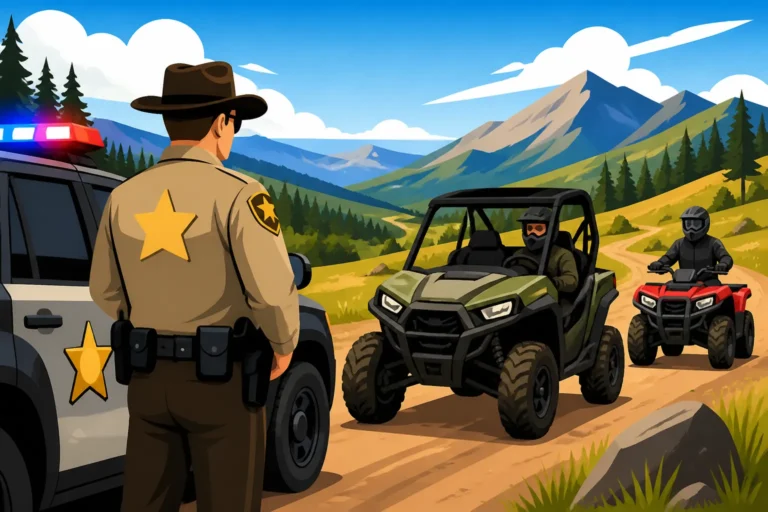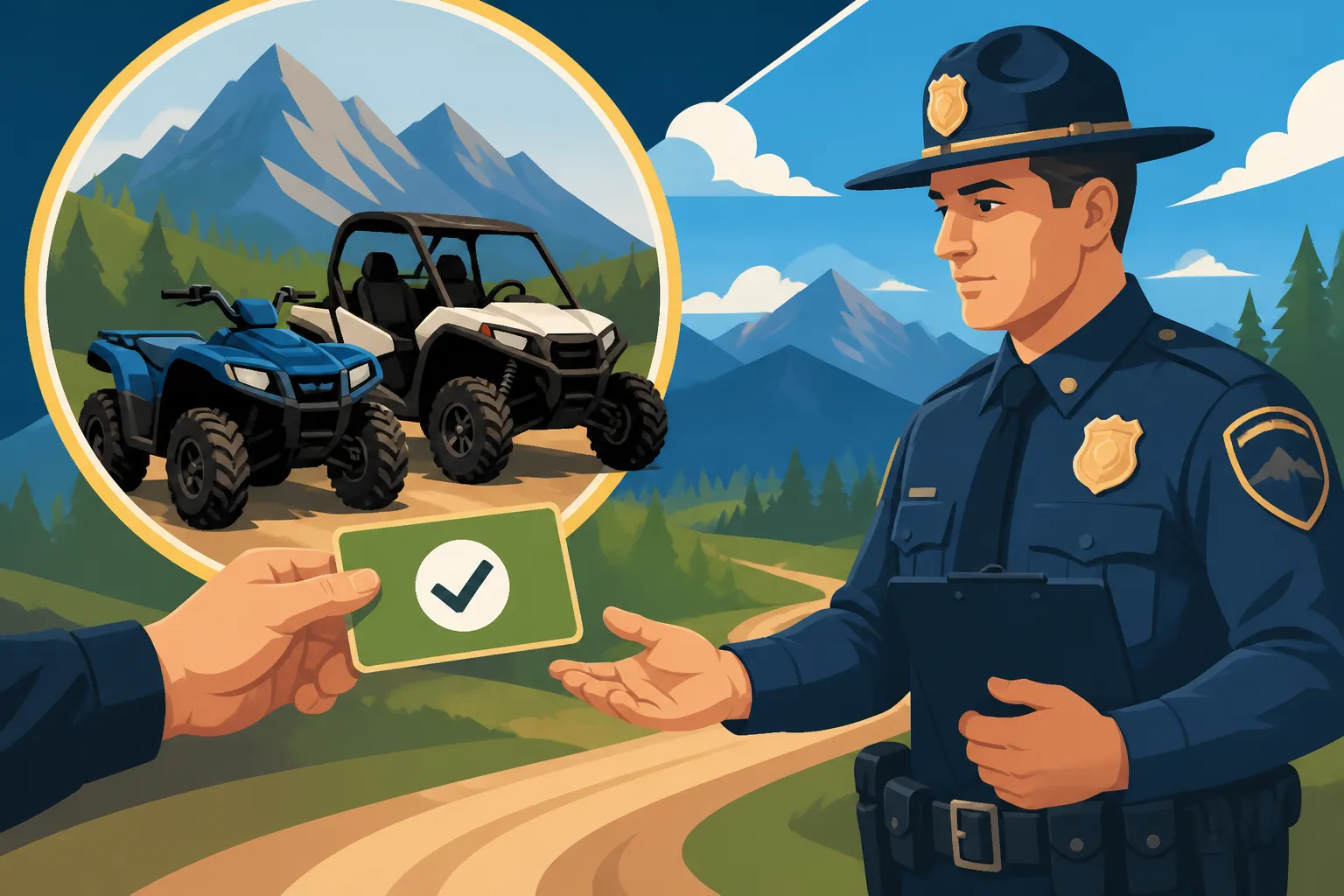
Getting Permission From the Montana Highway Patrol
Many of us, myself included, have looked at a map, seen a county road connecting two trails, or wondered about crossing a busy highway to get to the next adventure. The idea of riding our ATVs or UTVs on public roads in Montana can be incredibly appealing, offering convenience and expanding our riding opportunities. However, the rules surrounding off-highway vehicle (OHV) use on roads in Big Sky Country are often misunderstood and can feel like a confusing maze. This guide aims to clear up some of that confusion, specifically addressing when and how you might interact with or seek guidance from the Montana Highway Patrol regarding road access for your ATV or UTV.
Understanding Montana's General OHV Road Rules
The Core Principle: Permission is Key
When it comes to riding your ATV or UTV on public roads in Montana, the overarching principle is that you generally need explicit permission. This isn't like driving a regular car where access is assumed unless prohibited; for OHVs, it's the opposite. Access is usually prohibited unless explicitly allowed. This permission doesn't always come from a single source. It can stem from state law, county ordinances, or specific municipal rules. For example, some counties have passed resolutions allowing OHVs on certain county roads, while individual towns might have specific bylaws detailing where and how an OHV can operate within city limits. It’s not enough to assume; you really have to do your homework. This is where many riders get into trouble, inadvertently breaking a rule they didn't even know existed simply because the signage wasn't clear or they hadn't checked the local regulations. It can be a real headache to plan a trip, only to find out part of your route is off-limits.
Imagine you're planning a fantastic loop ride in southwestern Montana, connecting a forest service trail with another section of public land via a scenic county road. You've mapped it out, you're excited, but you haven't checked the local county commissioner's resolutions. Halfway through your ride, you encounter a sheriff's deputy who informs you that particular stretch of county road is closed to OHVs, despite looking identical to other roads you've legally ridden. Suddenly, your adventure is interrupted, and you could be facing a fine. The key takeaway here is that "permission" is an active state – it needs to be explicitly granted, not passively assumed. This includes everything from crossing a busy highway to riding a gravel road into a small town to grab lunch. Each segment of your journey needs to be considered under the lens of who owns that road and what their specific rules are. You can get a good start on understanding the rules by reading [Riding an OHV on the Road in Montana].
Why Road Access Varies So Much Across Montana
Montana is a vast state, and what's permissible for OHV use on roads in one county or town might be strictly forbidden just a few miles down the highway. This patchwork of regulations is one of the biggest frustrations for riders. It's not a unified "Montana law" that applies equally to all roads. Instead, the authority to regulate OHV use on local roads, like county roads and city streets, often rests with local governing bodies – the county commissioners for county roads and municipal councils for city streets. State law provides the framework, but local entities get to make the specific decisions. This means a county might vote to open all its unpaved roads to OHVs, while an adjacent county might keep them all closed, or only open a select few. The reasons for these varying approaches are diverse; they can range from concerns about road damage, dust, noise, public safety, or simply a lack of public interest in certain areas.
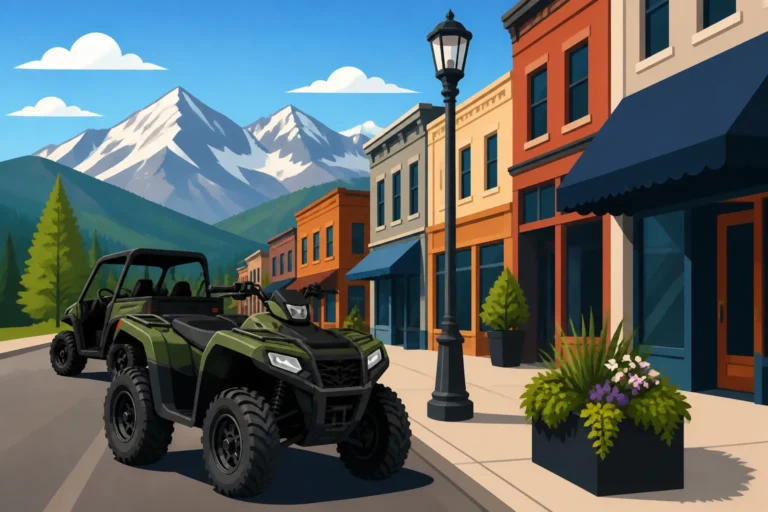
Consider two neighboring communities, perhaps one is a bustling tourist hub like West Yellowstone, and the other a quiet ranching town like Ennis. West Yellowstone has embraced OHV tourism, with clear ordinances allowing street-legal OHVs on many of its streets to facilitate access to trails and businesses. [Riding an OHV Into West Yellowstone] is a common practice there. Ennis, on the other hand, might have very restrictive rules, prioritizing the peace and quiet of its residential areas or maintaining its traditional character. This stark difference means that as you travel across the state, you can't rely on your experience in one area to predict the rules in another. It requires a proactive approach, which can involve checking county websites, calling local sheriff's offices, or even stopping into a local town hall or visitor center. It's a logistical challenge, especially for those planning multi-day trips across different jurisdictions.
What "Street Legal" Really Means for an OHV in Montana
The term "street legal" gets thrown around a lot in the OHV community, but in Montana, it carries specific requirements if you want to operate on roads where it's allowed. Simply having a set of turn signals and a horn doesn't automatically grant you road access. First and foremost, your OHV must be properly registered in Montana, which often involves getting a [Registering an OHV in Montana] and displaying the appropriate decals. Beyond registration, state law outlines the specific equipment required for an OHV to be considered "street legal" when operating on roads that permit it. This typically includes things like headlamps and taillights, brake lights, turn signals, at least one rearview mirror, a horn, a spark arrester, and working brakes. Some states also require specific tires or a windshield, but Montana's rules focus on these core safety components, as detailed in [What Montana Requires on an OHV Road Ride].
Many riders turn to aftermarket parts providers like SuperATV to get their machines up to snuff for road use. They offer kits and individual components like turn signal kits, mirrors, and horns that are designed to help make your UTV or ATV compliant with state requirements. However, simply installing these parts isn't the final step. You still need to ensure your machine meets all the requirements for the specific road you intend to ride, and that the road itself is open to OHVs. For instance, even with all the proper equipment, you still can't just drive your OHV down a federal highway like I-90 or US-93, unless you are strictly crossing it at an approved intersection, as those are generally off-limits to OHVs. It's about having the right equipment and having permission for the specific piece of pavement or gravel you're on.
When You Might Need to Contact the Montana Highway Patrol
Crossing State Highways and Interstates
One of the most common scenarios where riders wonder about the Montana Highway Patrol's involvement is when they need to cross a major state highway or, in rare cases, an interstate. Let's be very clear: sustained riding on state highways (like US-2, US-93, US-12, US-89, etc.) or interstates (I-90, I-15) is generally prohibited for OHVs in Montana. These roads are designed for higher-speed, conventional vehicle traffic, and OHVs pose a safety risk due to their speed limitations, size, and different handling characteristics. The MHP's primary role on these roads is to enforce these state-level traffic laws. However, there are very specific instances where an OHV might need to cross such a highway to access another trail system or connect two pieces of private property.
In these specific crossing situations, while local law enforcement or county commissioners might have jurisdiction over county roads leading to these points, the state highway itself falls under the Montana Department of Transportation (MDT) and the enforcement purview of the Montana Highway Patrol. If you're planning a crossing that feels ambiguous, or if there's no clear signage, contacting the MHP for clarification is a prudent step. They can provide guidance on whether a specific intersection is permissible for an OHV crossing and what precautions you should take. They are focused on safety and legal compliance on state routes, so their advice can be invaluable, potentially saving you from a dangerous situation or a costly citation. Remember, crossing should be direct and at a ninety-degree angle to minimize time on the highway.
Navigating Unclear Local Ordinances
Another situation where the Montana Highway Patrol might be a point of contact, though indirectly, is when you're trying to understand confusing or seemingly contradictory local ordinances. As we discussed, OHV road access can vary wildly from one jurisdiction to the next. Sometimes, a county or city ordinance might be vaguely worded, or you might find conflicting information online. While the MHP doesn't create these local ordinances, they are often involved in enforcing them, especially if they patrol a particular rural area or if a local agency requests their assistance. If you've tried contacting county commissioners, the local sheriff's office, or city hall and are still getting mixed messages about a specific road or area, the MHP might be able to offer clarity on how they interpret and enforce the existing regulations.
For instance, you might be planning a ride that uses a small section of county road to connect to Bureau of Land Management (BLM) land. You've checked the county website, but the ordinance for OHV use on that specific road is unclear, perhaps mentioning "motorized vehicles" without specifically excluding or including OHVs. In such a scenario, while the county clerk might give you the letter of the law, an MHP trooper might be able to tell you how they practically interpret and enforce that law on the ground. They are the ones who might pull you over, so understanding their enforcement perspective is critical. It's not about asking them for permission to break a rule, but for a clear understanding of the rules as they are enforced. [Asking County Commissioners to Open a Road] might be the process for changing the rules, but for understanding them, MHP can sometimes help. You should also remember that [Montana Rules on Forest Service Roads] and [Montana Rules on BLM Roads] often dictate access.
Seeking Clarification for Specific Situations
Beyond general road crossings or unclear ordinances, there might be unique situations where you're unsure about the legality of OHV road use, and the MHP is the most authoritative body to consult. This could involve an unusual route, a temporary road closure that impacts your OHV access, or questions about specific equipment requirements that seem to vary depending on who you ask. For example, if you're part of an organized event or a group ride that plans to utilize a combination of private land, county roads, and perhaps even quick crossings of minor state routes, a proactive call to the MHP could prevent significant issues.
Let's say you're organizing a charity poker run that involves riding through a small, unincorporated community and then across a state secondary highway before heading back onto forest service roads. You've gotten permission from the private landowners and the forest service, but the local county sheriff's office seems unsure about the state highway crossing. In this instance, reaching out directly to the MHP's local district office would be the appropriate step. They can advise on the legality, safety protocols, and any permits that might be required for such a specific, organized movement. This demonstrates due diligence and shows a commitment to safe and legal riding, which enforcement agencies always appreciate. They might even be able to connect you with the right local authority if the issue truly falls outside their direct jurisdiction.
The Process of Reaching Out to the MHP
What Information to Prepare Before You Call
Before you pick up the phone to contact the Montana Highway Patrol, it's crucial to have all your ducks in a row. They are busy professionals, and being prepared will ensure you get the most accurate and helpful information in the shortest amount of time. First, clearly define the specific road or intersection you are inquiring about. Use specific road names, highway numbers, and even mile markers if possible. GPS coordinates can also be incredibly helpful. If you're looking at a map, reference the exact points where you intend to access or cross a road.
Second, be ready to describe your machine. Is it an ATV or a UTV? What year, make, and model? Mention if it's currently registered in Montana and if you have made any modifications to make it "street legal" with components like those from SuperATV. For instance, "I have a 2022 Polaris RZR Pro XP, Montana registered, with a full street-legal kit including turn signals, horn, and mirrors." This helps them understand the context of your inquiry. Third, explain your intended purpose. Are you trying to get from Point A to Point B for recreational riding? Are you using it for agricultural purposes? The "why" can sometimes influence the advice they provide, as certain exemptions might apply in specific situations. Finally, have specific questions ready. Instead of "Can I ride my UTV on the road?" ask "Is it permissible to cross US Highway X at the intersection of Y Road with my registered, street-legal UTV to access the Z Trailhead?" The more specific you are, the more specific and accurate their answer can be.
Understanding Their Role and Limitations
It's important to understand what the Montana Highway Patrol can and cannot do. Their primary role is to enforce state traffic laws and ensure public safety on state highways and certain other public roads. They are not the authority that grants blanket permission for OHV road use. That authority typically lies with county commissioners for county roads or municipal governments for city streets. The MHP will enforce whatever laws and ordinances are in place, but they generally do not have the power to override or create new local rules. So, while they can provide an interpretation of state law or tell you how they would enforce a particular local ordinance on a road they patrol, they cannot grant you an exemption from a rule that's legally in place.
Think of them as the interpreters and enforcers of the rulebook, not the authors of it. If you call them asking if you can ride your ATV down Main Street in a town that has explicitly prohibited it, their answer will be a firm "no," because that's what the local ordinance states and what they are sworn to enforce. However, if you're asking about the legality of a specific piece of equipment for state road crossings, or the interpretation of a state statute, they are the definitive experts. Their advice should be taken seriously, as it directly reflects how you might be treated if stopped on the road. Remember, their priority is safety, so any guidance they offer will be rooted in minimizing risk for both OHV operators and other road users.
Documenting Any Permissions or Guidance
If you do manage to get specific guidance or a unique permission from the Montana Highway Patrol for a particular situation, it is absolutely critical to document it. A verbal conversation, while helpful, can be hard to prove if you're ever stopped by a different officer who might have a different interpretation or simply wasn't privy to your prior discussion. If possible, ask for the information in writing, such as an email or a reference to a specific statute or policy. If that's not feasible, at the very least, note down the date and time of your call, the name and badge number of the officer you spoke with, and a detailed summary of the advice given.
Carrying this documentation with you while riding, perhaps in a waterproof pouch along with your [Keeping Registration Papers on the Machine], can be invaluable. Imagine you're crossing a particular state highway section that the MHP explicitly told you was permissible. Having a written note or email referencing that conversation could save you a lot of hassle and potential fines if you're pulled over. While it won't supersede an actual law or ordinance, it demonstrates your due diligence and good faith effort to comply, which can often lead to a more understanding interaction with law enforcement. It's all about being prepared and protecting yourself from misunderstandings in a system that can often feel opaque.
Common Misconceptions About MHP's Authority
MHP Doesn't Grant Blanket Road Access
This is perhaps the most significant misconception riders have when it comes to the Montana Highway Patrol and OHV road use. Many people mistakenly believe that if they just get "permission" from the MHP, they can then ride their OHV freely on state roads or even other public roads. This is simply not how it works. The MHP's role is enforcement, not policy-making or granting widespread access. They do not have the authority to issue a blanket "yes" for OHVs to ride on state highways, county roads, or city streets where it is otherwise prohibited by law.
Their enforcement of existing laws and ordinances is paramount. If state law or a specific county or city ordinance says "no OHVs on this road," then the MHP will enforce that "no." They cannot grant you an exception or "permission" to disregard those laws. The only entities that can grant permission or open roads are legislative bodies—the state legislature, county commissioners, or city councils. A call to the MHP is for clarification on existing rules and their enforcement, not for obtaining special permission that isn't already codified into law. Understanding this distinction is vital to avoid frustration and potential legal issues. Should you be caught riding where you shouldn't, you could face [Penalties for an Unregistered OHV in Montana] or other fines.
Local Control vs. State-Level Enforcement
Another area of confusion stems from the intricate web of jurisdiction between state and local authorities. While the Montana Highway Patrol is a state-level law enforcement agency, their primary jurisdiction for OHV road use enforcement often intersects with, or even defers to, local control. For example, [County Commissioners and Montana County Roads] have significant power to decide whether OHVs are allowed on roads within their county. Similarly, city councils set the rules for [Montana City Streets and Municipal Ordinances]. The MHP might patrol these roads, particularly in unincorporated areas, but they are enforcing the local rules, not state ones that supersede them.
This means if a county has a strong anti-OHV road use stance, the MHP will uphold that stance when patrolling those county roads, even if it might seem restrictive compared to a neighboring county. Their enforcement arm extends to wherever they have jurisdiction, but they operate within the framework of whichever governmental body has authority over that specific road segment. It's not about MHP making the rules for county roads or city streets; it's about MHP enforcing the rules that those local bodies have already established. This makes the job of an OHV rider even more complex, requiring diligence in checking all levels of governance for their intended route.
The Difference Between Advice and Formal Permission
When you contact the Montana Highway Patrol, the information you receive will almost always be advice or an interpretation of current law, not a formal grant of permission. There's a subtle but crucial difference. Advice guides you on how to comply with existing rules, while formal permission would be an official waiver or approval to do something that might otherwise be restricted. The MHP generally isn't authorized to issue the latter for general OHV road use.
For example, if you ask about the required equipment for an OHV to cross a state highway, they will give you advice based on state statutes. They might say, "You need working headlamps, taillights, turn signals, and a rearview mirror to make that crossing legally." This is helpful advice on how to operate within the law. They are not, however, giving you a signed document that says, "You, John Doe, have permission to cross US-93 at Mile Marker 15." That type of formal permission, if it exists at all for OHVs, would typically come from the Department of Transportation or be part of a very specific, limited-duration permit for an event. It's important to set realistic expectations for what you can achieve from a conversation with the MHP. Their guidance is to help you stay out of trouble, not to open up new legal avenues for riding.
Practical Tips for Responsible Road Riding
Essential Gear for Road-Legal OHVs
If you plan on venturing onto any public road where OHV use is permitted, whether it's a short crossing or a designated county road, your machine needs to be equipped properly. It's not just about what's legally required, but what's essential for your safety and the safety of others. Beyond the basic [Headlight and Taillight Rules in Montana], your OHV should have functional turn signals, brake lights that activate when you apply the brakes, and at least one rearview mirror – though two are highly recommended for better visibility. A horn is also crucial for alerting other drivers to your presence. These are not optional extras; they are fundamental safety features that allow your OHV to communicate its intentions to other traffic, just like any conventional vehicle.
Visibility is another massive factor. Consider adding a whip flag, especially if you're riding in an area with varied terrain or limited sightlines, and think about reflective tape on your machine, particularly if you anticipate riding near dusk or dawn. While your headlights will be on, extra reflective elements never hurt. Brands like SuperATV offer a range of products, from full street-legal kits to individual mirrors and horns, that can help you meet these requirements. Ensuring your tires are in good condition and suitable for mixed terrain (off-road and pavement) is also key, as knobby tires can wear quickly and handle differently on asphalt. Always check your brakes before heading out. The more you blend in safely with regular traffic, the better your experience will be and the less likely you are to attract unwanted attention from law enforcement.
Knowing Your Local Ordinances First
Before you even think about contacting the Montana Highway Patrol, or even loading your machine onto a trailer, the very first step is to thoroughly research the specific local ordinances for the areas you plan to ride. This cannot be stressed enough. Start with the county commissioner's office or website for county roads. Many counties in Montana now have their resolutions regarding OHV use on county roads posted online. For town or city streets, check the municipal website or contact the city clerk's office. [Finding a Montana Town's OHV Ordinance] is a critical piece of homework.
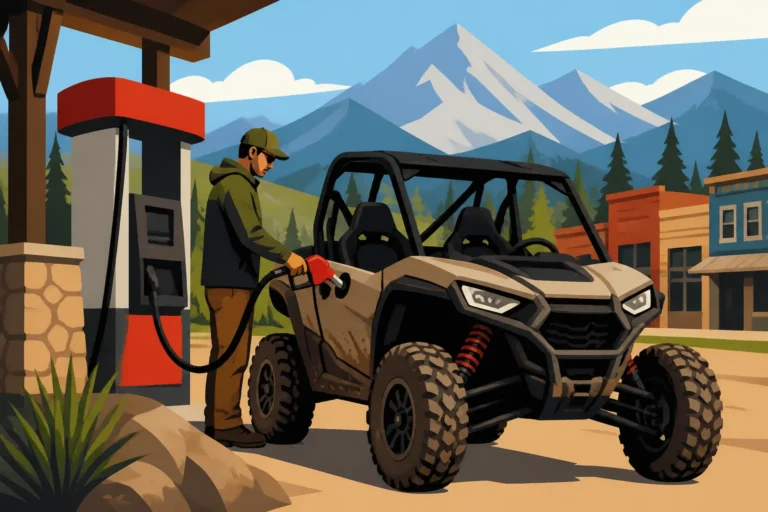
Don't rely on word-of-mouth or outdated information from a few years ago. Laws and ordinances change. What was open last year might be closed this year, and vice-versa. If you're visiting a popular OHV destination, visitor centers or local powersports dealers often have current information or can point you to the right resources. For example, if you're heading to a specific trail town, stop at a local gas station or general store; they often cater to riders and can give you a quick rundown of what roads are open for OHV access into town for [Fueling an OHV in a Montana Trail Town] or [Riding to a Cafe in a Montana Trail Town]. Having this foundational knowledge will guide all your other decisions and prevent you from asking the MHP questions that are outside their purview.
The Importance of a Safety-First Mindset
Riding an ATV or UTV on a public road, even when legally permitted, is inherently different from riding on a dedicated trail. You are sharing the road with much larger, heavier, and faster vehicles whose drivers might not be expecting an OHV. Therefore, adopting a safety-first mindset is paramount. This means riding defensively, being hyper-aware of your surroundings, and always anticipating potential hazards. Use hand signals in conjunction with your turn signals, maintain a safe following distance, and be extra cautious at intersections.
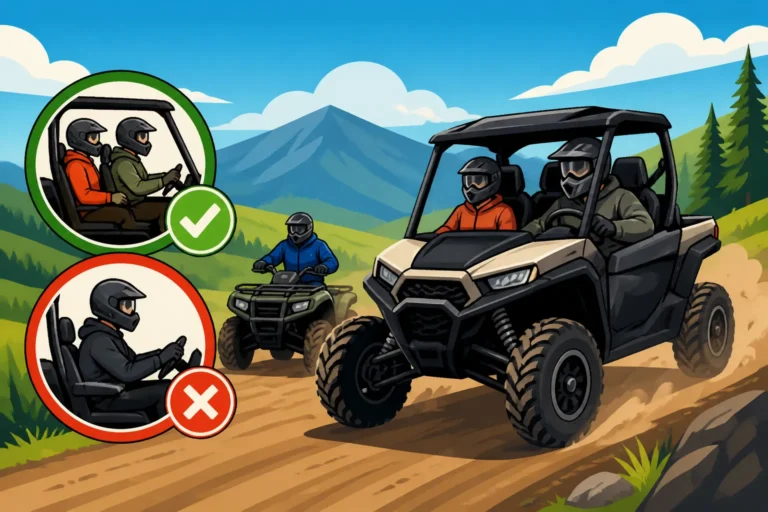
Always wear a helmet, even if you are an adult and [Montana Helmet Law for Riders Over 18] doesn't strictly require it. Eye protection is also non-negotiable, protecting you from dust, debris, and insects. Maintain proper speed for conditions, recognizing that your OHV handles differently than a car on pavement, especially when braking or cornering. [Montana Speed Limits for OHVs on Roads] are often lower than for cars. Avoid distractions, and never operate an OHV on a public road under the influence of alcohol or drugs, as [Montana Alcohol Limits for OHV Operators] apply just as they would for a car. Your visibility, stability, and protection are all significantly less than in a conventional vehicle, making a cautious and responsible approach absolutely essential for everyone's safety. For young riders, special rules apply, as detailed in [Montana's Rule for Riders Aged 12 to 15] and [Montana Road Rules for Young Riders], including those regarding [Driver's License Rules for Montana Road Riding].
Key Contacts for OHV Road Access Questions
| Entity | Primary Jurisdiction / Role | When to Contact |
|---|---|---|
| County Commissioners Office | County roads, local ordinances, opening/closing roads | Inquire about OHV access on specific county roads, local resolutions. |
| City/Town Hall (City Clerk) | City streets, municipal ordinances, local traffic laws | Inquire about OHV access on specific city streets, parking, local rules. |
| Montana Highway Patrol (MHP) | State highways, enforcement of state traffic laws, interpretation of laws | Clarification on crossing state highways, unclear state statutes, specific enforcement. |
| Local Sheriff's Office | County roads, local enforcement, general public safety | Local enforcement on county roads, general questions about local OHV rules. |
| Montana FWP (Fish, Wildlife & Parks) | OHV registration, trail passes, public land access (some areas) | Questions about [Montana's Resident OHV Trail Pass], registration generally. |
Conclusion
Navigating the rules for riding your ATV or UTV on Montana's roads can feel daunting, with a complex interplay of state laws and local ordinances. While the allure of connecting trails or running into town for supplies is strong, it's absolutely vital to approach road use with a clear understanding of the regulations and a commitment to safety. The Montana Highway Patrol plays a crucial role in enforcing these rules, particularly on state highways, and can be an invaluable resource for clarifying specific situations or interpreting state statutes. However, remember they are primarily enforcers, not grantors of permission. Your first line of defense against legal trouble and unsafe situations will always be thorough research into local ordinances and ensuring your machine is properly equipped and operated with a safety-first mindset. Do your homework, ask the right questions to the right people, and enjoy the vast opportunities Montana offers for responsible OHV adventures.
Disclaimer
This article is for general informational purposes only and does not constitute professional advice. Laws, prices and regulations vary by location and change over time. Consult a qualified professional for guidance on your specific situation.