Sheriff Patrols on Montana OHV Routes
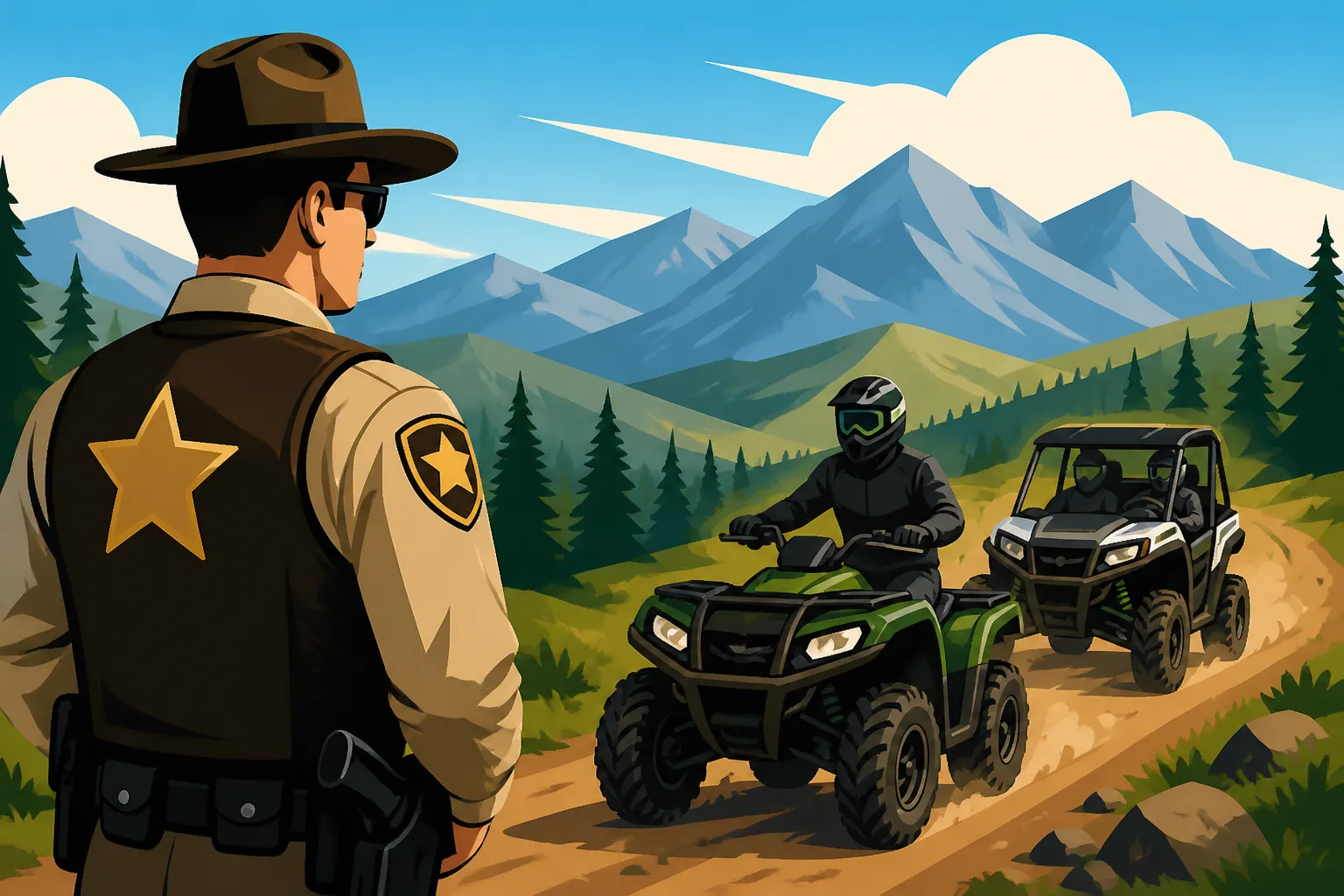
Picture this: you're out enjoying a beautiful Montana day on your ATV or UTV, the dust flying, the scenery incredible, and then you see it—the flashing lights of a sheriff's vehicle. It can be a real moment of panic or confusion, even if you’re doing everything right. This guide is here to demystify sheriff patrols on Montana OHV routes, helping you understand why they're out there, what they're looking for, and how to ensure your ride is always compliant and carefree.
Why Sheriffs Patrol Montana's OHV Routes
It’s easy to feel like law enforcement is out to spoil your fun when you see them on the trails or forest roads. However, county sheriffs, along with game wardens from Montana Fish, Wildlife & Parks (FWP) and sometimes Forest Service or BLM rangers, patrol OHV routes for very specific, important reasons. Their presence isn't usually about catching you off guard, but rather about ensuring the safety of all riders and preserving the very places we love to explore.
Ensuring Public Safety and Responsible Riding
The vast majority of OHV riders are responsible, respectful individuals who just want to enjoy the backcountry. But, as with any popular activity, there can be a few bad apples whose actions put others at risk or damage the environment. Sheriffs often patrol to deter reckless driving, underage operation, or impaired riding that can lead to serious accidents. They're looking out for everyone's well-being, including yours. Think about it: a well-patrolled trail helps keep speeds down, prevents dangerous passing, and generally makes for a safer experience for families and solo riders alike. It's about maintaining a reasonable level of order so that the trails remain accessible and enjoyable for everyone.
They also respond to incidents. Whether it's a lost rider, an accident, or a medical emergency deep in the backcountry, sheriffs are often among the first responders. Their patrols mean they’re familiar with the terrain and can get to you quicker if something goes wrong. Plus, they act as a visible deterrent to other illegal activities that can sometimes occur in remote areas.
Enforcing Rules and Protecting Natural Resources
Montana has rules in place for a reason. These aren't arbitrary guidelines; they're designed to manage the impact of motorized recreation on our fragile ecosystems and shared public lands. Sheriffs and wardens enforce laws regarding legal access, such as ensuring riders stay on designated trails and avoid trespassing on private property. They also check for proper registration and required safety equipment. Every time you see a sheriff, they might be checking for proper spark arresters to prevent wildfires or making sure machines aren't too loud, respecting wildlife and nearby residents.
Another crucial aspect of their presence is protecting wildlife habitats. Riding off-trail can damage sensitive areas, disturb wildlife, and contribute to erosion. Law enforcement's role is to ensure riders respect these boundaries, which is key to keeping these areas open for generations to come. It’s a delicate balance, and their enforcement helps maintain that balance. For more on specific local rules, you might find [County Commissioners and Montana County Roads] helpful, as local decisions often impact patrol routes.
Responding to Community Concerns
Many OHV routes pass near or through rural communities, and local residents often have concerns about noise, dust, and unsafe riding practices. Sheriffs frequently increase patrols in response to these community complaints. When you see a sheriff, it might be because a local rancher reported excessive noise near their livestock, or a homeowner observed riders on a private road. These patrols are a direct response to community feedback, aiming to address issues before they escalate and potentially lead to stricter regulations or trail closures.
It’s a tough situation for law enforcement, balancing the rights of riders with the concerns of residents. By being a visible presence, they can educate riders on local ordinances and encourage respectful behavior, which ultimately helps keep trails open for everyone. Understanding that these patrols are often driven by community input can help riders approach interactions with a more cooperative mindset, rather than feeling targeted.
What Montana Law Enforcement Looks For
When a sheriff or warden encounters you on a Montana OHV route, they're typically looking for a specific set of items and behaviors to ensure compliance and safety. It’s not just about a fishing expedition; they have clear guidelines for what constitutes a legal and safe operation of an OHV. Knowing what they're checking for can help you be prepared and avoid any unnecessary hassles.
Valid Registration and Decals
This is usually one of the first things a law enforcement officer will check. In Montana, all off-highway vehicles operating on public land or designated routes must be properly registered with current decals displayed. An expired registration or a missing decal is a pretty clear indicator that something isn't quite right. They’ll be looking for that small, often green, sticker properly affixed to the rear of your machine, usually on the left side.
Make sure your machine's registration is current and that the decal is clearly visible and not peeling off. It's a common oversight to forget to renew, or to have a decal get damaged during a rough ride or over winter storage. If your decal looks like it's seen better days, it's wise to get a replacement. [Replacing a Montana OHV Decal] can guide you through that process. Having your physical registration card with you, whether in a waterproof pouch or stored securely on your person, is also crucial, as wardens will often ask to see it. It proves the machine is yours and legally able to be on the trail.
Required Safety Equipment
Montana has specific safety equipment requirements, especially for machines being operated on roads or by younger riders. For any road-legal sections, this includes items like headlights, taillights, a horn, and mirrors. Even on trails, proper functioning brakes are a must. For riders under 18, helmets are mandatory. Officers will be checking for these items to ensure you and your passengers are adequately protected.
For instance, if you're riding a side-by-side with aftermarket modifications, an officer might check if those modifications still comply with road-legal requirements, especially if you're on a county road. Brands like SuperATV offer a range of accessories, from mirrors to turn signal kits, that can help ensure your machine meets these road-going standards, making your ride safer and compliant. Having working lights, even during the day, vastly improves visibility, which is a big deal for safety-conscious officers. [Montana Helmet Rules for Riders Under 18] delves deeper into those specific regulations.
Age and Driver Certification
Montana has rules about who can operate an OHV and where. For young riders, specific age limits and safety education requirements apply. Officers will check to make sure underage operators meet these criteria, and if they're supervised as required. For anyone operating on public roads, a valid driver's license is typically necessary.
It's common for officers to stop a group if they see what appears to be a younger rider, just to verify their age and supervision. If you're riding with kids, be prepared to show proof of their age and demonstrate that they've completed the required safety course. [Montana's Safety Education Requirement] outlines what's needed for younger riders. This isn't just about tickets; it's about making sure kids are riding safely and have the skills to handle their machines, protecting them from serious injury.
Impaired Operation and Reckless Behavior
This is perhaps the most serious concern for law enforcement. Operating an OHV under the influence of alcohol or drugs is illegal and extremely dangerous, not only to the operator but to everyone else on the trail. Sheriffs are vigilant in looking for signs of impaired driving, such as erratic movements, swerving, or general instability. They also keep an eye out for reckless behavior, like excessive speed, riding off-trail, or deliberately trying to damage property.
The consequences for impaired or reckless operation can be severe, including significant fines, loss of riding privileges, and even criminal charges. It’s a zero-tolerance issue for a reason: the backcountry environment, with its uneven terrain and potential hazards, is no place for impaired judgment. Always save the celebrations for after the ride. [Montana Alcohol Limits for OHV Operators] explains the legal boundaries.
What to Do If You're Stopped by Law Enforcement
Encountering a sheriff or warden can be nerve-wracking, but knowing how to respond can make the interaction smooth and quick. Remember, they are primarily focused on safety and compliance, and a cooperative attitude goes a long way.
Pull Over Safely and Remain Calm
The moment you see those lights and hear a siren, safely pull your OHV to the side of the trail or road. Choose a spot that is out of the main path of travel and as level as possible. Turn off your engine, remove your helmet, and keep your hands visible, perhaps resting them on the handlebars or steering wheel. Avoid making any sudden movements or reaching for things in a hurried manner.
Staying calm is key. Even if you think you haven’t done anything wrong, getting defensive or argumentative won’t help the situation. Take a deep breath. An officer's job involves assessing many factors, and your demeanor is one of them. A calm, respectful approach sets a positive tone for the entire interaction.
Provide Documentation When Requested
An officer will typically ask for your identification, your OHV's registration, and proof of ownership. Have these documents readily accessible. Many riders keep them in a waterproof bag in their storage compartment or a fanny pack. If you're on a road, they might also ask for your driver's license. If you're riding a borrowed machine, have a note of permission or a copy of the owner's registration if possible.
It's important to provide only what is asked for. You don't need to volunteer extra information unless it directly answers a question. Be clear and concise in your responses. If you're unsure about what they're asking, politely ask for clarification. For more details on the usual requests, see [What a Montana Warden Asks a Rider For].
| Document Type | Purpose | Where to Keep It |
|---|---|---|
| Driver's License | Personal identification, road riding permit | Wallet, secure pocket |
| OHV Registration | Proof of current registration, ownership | Waterproof pouch on machine or person |
| Proof of Ownership | Bill of sale, title (if applicable) | At home, or copy with registration |
| Safety Certificate | Required for youth riders | With youth, or easily accessible |
| Proof of Insurance | Required for road-legal use | With registration, or on phone |
Be Respectful and Answer Questions Truthfully
Engage with the officer respectfully. Use "yes, sir" or "no, ma'am" if that feels comfortable, or simply be polite. Answer their questions truthfully and avoid fabricating stories, as this can often lead to more problems than the initial infraction. If you genuinely don't know the answer to a question, it's okay to say so.
Remember, a little respect goes a long way. Officers are people, too, and they appreciate cooperation. If they issue a warning or a citation, accept it without escalating the situation. You can always address it through the proper legal channels later if you believe it was unwarranted. Maintaining a good rapport with law enforcement ultimately benefits the OHV community by showing that riders are responsible and willing to comply with rules.
Common OHV Violations on Montana Routes
Understanding common violations can help you avoid them and ensure your rides are always within legal bounds. Many citations stem from easily preventable issues that riders might overlook in their excitement to hit the trails.
Improper Registration or Decal Placement
This is a frequent one. Riders sometimes forget to renew their annual OHV registration, or they don't have the current year's decal properly affixed to their machine. Montana law requires your OHV to be registered if you're riding on public lands, and the decal needs to be visible on the left-rear of the machine. An officer can easily spot an expired or missing decal, leading to a stop and potential fine.
Imagine you've just bought a used machine. You might assume the previous owner's registration is still valid, but that's rarely the case. [Why a Sold Machine Loses Its Registration] clarifies this. Always ensure you've got your own current registration. Sometimes, the decal simply falls off during a rigorous ride or peels after sitting in the winter sun. Having a replacement plan in mind is always a good idea.
Illegal Road Riding and Trespassing
Montana has specific rules about where OHVs can and cannot operate on public roads. While some county roads and municipal streets are open to OHVs, many are not, especially state highways or federal interstates. Riding on a closed road is a quick way to get pulled over. Similarly, trespassing on private property, whether intentionally or accidentally, is a serious offense that sheriffs take very seriously.
Always consult a current motor vehicle use map (MVUM) or local ordinances to confirm where you're allowed to ride. These maps are available from Forest Service or BLM offices and clearly mark open and closed routes. It’s too easy to accidentally stray onto private land if you're not paying attention, especially in areas where public and private parcels are intertwined. Look for "No Trespassing" signs or purple paint on fence posts, which are common indicators of private property in Montana. [Montana Trespass Rules Along Roads] can offer more guidance here.
Lack of Required Safety Gear or Equipment
This goes back to the safety checks officers perform. Not wearing a helmet if you're under 18, or not having basic equipment like working headlights, taillights, or a spark arrester, can result in a citation. If you're riding on roads where OHVs are permitted, you'll need additional items like mirrors and sometimes turn signals.
It’s worth noting that while some aftermarket parts enhance performance, others, like those from SuperATV, focus on safety and compliance. For instance, upgrading your factory lights to brighter, more durable ones ensures you're visible, which is paramount for road sections. Similarly, proper mirrors allow you to see what's behind you, a simple safety feature that many stock machines lack or have inadequate versions of. Officers appreciate riders who take the initiative to be more visible and safer.
Violations of Age Restrictions and Supervision Requirements
Montana's rules about youth operators are in place to ensure children are safe and competent riders. Operating a machine that’s too large for their age, riding unsupervised when supervision is required, or riding without the mandatory safety certificate can lead to fines for both the young rider and their supervising adult.
It’s about more than just a piece of paper; it’s about making sure young riders have the skills and judgment to handle the machine and the trail conditions. An officer might observe a young rider struggling with their machine or riding in a way that suggests they lack experience, prompting a stop. Always err on the side of caution when it comes to youth riders; their safety is paramount.
Disclaimer
This article is for general informational purposes only and does not constitute professional advice. Laws, prices and regulations vary by location and change over time. Consult a qualified professional for guidance on your specific situation.