Fines for Speeding on a Back Road
It's easy to get carried away on those wide-open Montana back roads, isn't it? The dust flying, the engine roaring, and the feeling of freedom can make you forget that even out there, speed limits and regulations still apply. This guide is here to walk you through the realities of speeding fines on Montana's unpaved roads, what it can cost you, and how to avoid that sinking feeling when the flashing lights appear in your rearview.
Understanding Montana's Speed Laws on Back Roads
When you're out exploring Montana's vast network of gravel roads, forest service roads, and county routes on your ATV or UTV, it's natural to feel a sense of liberation. These aren't the interstates, after all. But that doesn't mean it's a free-for-all when it comes to speed. Many riders mistakenly believe that because a road is unpaved or less traveled, the typical traffic laws don't apply as strictly, or that speed limits are non-existent. That's a myth that can cost you.
What Constitutes a "Back Road" in Montana?
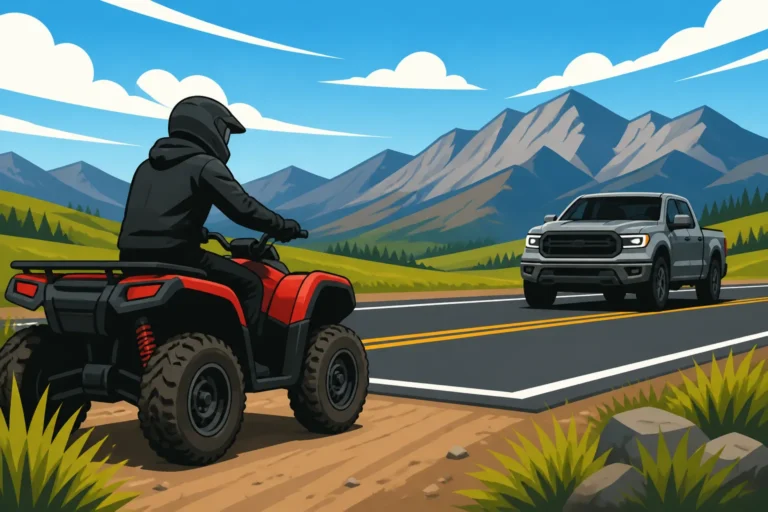
In Montana, a "back road" can encompass a wide variety of routes. It might be a county road maintained by the local government, a Forest Service road winding through a national forest, or a Bureau of Land Management (BLM) road crossing open rangeland. Crucially, unless explicitly designated otherwise and posted with specific OHV trail rules, these roads are generally considered public thoroughfares. This means they fall under Montana's general traffic laws, just like any paved road. While the speed limit might be implicitly lower due to road conditions, safety, or local ordinance, the rules of the road are still very much in effect. You might think no one's watching miles from the nearest town, but wardens, county sheriffs, and even Forest Service rangers routinely patrol these areas, often in unmarked vehicles or ATVs themselves.
Posted vs. Unposted Speed Limits
You'll encounter two main types of speed limits on Montana's back roads: posted and unposted. Posted speed limits are straightforward – if you see a sign, that's the maximum legal speed. Ignoring these signs is a clear violation. However, many unpaved roads, especially in remote areas, may not have physical speed limit signs. This is where the "basic rule" or "reasonable and prudent" speed law comes into play. Even without a sign, you're expected to drive at a speed that is safe for the current conditions, which includes visibility, road surface (gravel, dirt, mud, snow), traffic, and potential hazards like wildlife, curves, or blind hills.
For OHVs, there are often additional considerations. When riding on public roads where OHVs are permitted, you still need to adhere to the general speed limits set for all vehicles, not just what feels fast on your machine. Furthermore, some specific county ordinances or Forest Service regulations might impose lower blanket speed limits for OHVs on certain routes, especially near campgrounds or residential areas. Always check local rules and [Montana Speed Limits for OHVs on Roads] to make sure you're compliant.
The Financial Hit: What Speeding Fines Look Like
A speeding ticket on a Montana back road isn't just a slap on the wrist. It's a real financial burden that can sting your wallet, sometimes more than you expect. While I can't give you exact dollar amounts (they change and vary by jurisdiction), I can tell you about the categories of costs and how they can add up.
Base Fines and Surcharges
Every speeding ticket starts with a base fine. This amount typically increases with how far over the limit you were going. For example, going 10 mph over might incur a lower base fine than going 25 mph over. But the base fine is rarely the only cost. Montana, like most states, adds various surcharges, court costs, and fees to the base amount. These can include fees for highway patrol, court administration, victim services, and more. These surcharges can sometimes double or even triple the initial fine, turning a seemingly small ticket into a significant expense. If you're riding with friends and one of you gets a ticket, it quickly puts a damper on the whole trip.
Points on Your Driving Record and Insurance Premiums
Beyond the immediate financial outlay, a speeding ticket can have long-term repercussions on your driving record. Montana uses a point system, and speeding violations add points to your driver's license. Accumulating too many points within a certain timeframe can lead to license suspension. Even if you're riding an OHV that doesn't require a standard driver's license (like a younger rider with a safety certificate), the violation can still be recorded and impact future licensing.
Perhaps even more impactful is the hit to your insurance premiums. Your auto insurance company, and potentially your OHV insurance provider, will see the speeding ticket on your record. Insurers view speeding as a risk factor, and higher risk often translates to higher premiums for several years. That means you'll be paying for that moment of exhilaration long after the fine is paid. It's worth considering [Does Auto Insurance Cover a Montana OHV?] when thinking about these potential costs.
Table: Potential Consequences of a Montana OHV Speeding Ticket
Here’s a general overview of the potential impacts you might face for a speeding violation on a Montana back road:
| Consequence | Description |
|---|---|
| Monetary Fines | A base fine, which varies depending on how far over the limit you were traveling. This is often accompanied by significant additional surcharges and court costs that can inflate the total amount considerably. |
| Points on Driving Record | Most speeding violations result in points added to your Montana driver's license. Accumulating too many points within a specific period (e.g., 12 points in 3 years) can lead to suspension or revocation of your driving privileges for all vehicles, not just your OHV. |
| Increased Insurance Premiums | Insurance companies view speeding tickets as an indicator of higher risk. Expect your auto insurance premiums, and potentially your OHV insurance rates, to increase for several years following a conviction, making your overall cost of ownership higher. |
| Safety Course Requirement | Depending on age, severity, or prior offenses, you might be mandated to complete a defensive driving or safety course. While beneficial, this adds time and additional cost to your obligations. |
| Potential License Suspension | For egregious speeding offenses (e.g., reckless driving or excessive speed), or for accumulating too many points, your driving license can be suspended or revoked, making it impossible to legally operate any motorized vehicle, including your OHV on public roads. Consider Montana OHV Rules for Young Riders if you are a youth rider or supervising one. |
| Vehicle Impoundment (Rare) | In extreme cases, particularly for very high speeds, reckless endangerment, or repeat offenses, law enforcement may have the authority to impound your OHV, leading to towing fees, storage costs, and a lengthy process to recover your machine. This is thankfully rare but a severe possibility. |
| Reputational Damage | While not a legal penalty, receiving a ticket can detract from your reputation as a responsible rider and can impact how other trail users or local communities view OHV recreation in general. |
Beyond the Fine: Other Consequences of a Lead Foot
A speeding ticket is never just about the money. There are a host of other consequences, some legal, some practical, that can arise from pushing your machine too hard on Montana's back roads. These can significantly impact your riding enjoyment and even your freedom to explore.
Legal Ramifications Beyond Monetary Penalties
If you're caught speeding excessively, or in a manner deemed reckless, the penalties can escalate beyond a simple fine. You might face charges like reckless driving, which can carry much stiffer penalties, including larger fines, extended license suspension, and even potential jail time in severe cases. This is especially true if your speeding contributes to an accident or endangers others. Furthermore, if alcohol is involved, a speeding ticket can quickly transform into a DUI charge, which has devastating consequences for your driving record, finances, and personal liberty. It’s always best to be aware of [Montana Alcohol Limits for OHV Operators].
Another often-overlooked legal ramification is when a jurisdiction decides to close a particular road or area to OHV access due to repeated violations, including speeding. When a few bad apples spoil the bunch, it's the responsible riders who ultimately pay the price through lost access to valuable riding areas. This is why following all rules, including speed limits, is so vital for the entire OHV community.
Safety Risks and Environmental Impact
The most immediate and severe consequence of speeding on a back road isn't a fine, it's a crash. Unpaved roads often have unpredictable surfaces: loose gravel, washboards, potholes, sudden dips, and blind curves. Add dust, wildlife, or other vehicles (tractors, logging trucks, other OHVs) into the mix, and high speed becomes incredibly dangerous. A loss of control at speed can lead to serious injuries, permanent disability, or even death for you and your passengers. Even if you're not directly involved in a collision, kicking up excessive dust at high speeds significantly reduces visibility for other riders and drivers, creating hazardous conditions for everyone else on the road.
Beyond personal safety, speeding can also contribute to environmental damage. Skidding around corners or driving too fast on wet roads can cause erosion, widen trails, and damage sensitive ecosystems. Responsible riding means protecting the land we're so lucky to enjoy. Taking the time to observe speed limits and ride safely helps preserve these areas for future generations.
Staying on the Right Side of the Law
The best way to avoid fines and other headaches is, quite simply, to ride responsibly. Montana offers incredible opportunities for ATV and UTV enthusiasts, and by understanding and respecting the rules, you can ensure those experiences remain positive and penalty-free.
Adhering to Posted Limits and Prudent Speeds
Always, always obey posted speed limits. They're there for a reason, often considering sightlines, road conditions, and potential hazards unique to that section of road. When there are no signs, engage your common sense. What's a "reasonable and prudent" speed given the current conditions? If the road is rough, narrow, dusty, or winding, slow down. If you're approaching an intersection, a blind rise, or a residential area, reduce your speed significantly. Remember, visibility can change in an instant, especially when rounding a bend in a forested area. [Sheriff Enforcement on Montana Back Roads] means you need to be alert.
It's also a good idea to ensure your machine is properly equipped for any road riding you plan to do. While SuperATV offers many performance parts, they also carry crucial safety accessories. Installing things like proper mirrors, functional turn signals, and a windshield (if applicable) not only helps meet [What Montana Requires on an OHV Road Ride] but also enhances your ability to ride safely and legally. These components, often found in the vast SuperATV catalog, make your machine more visible and help you observe your surroundings, which in turn helps you maintain safe speeds.
Understanding and Respecting Enforcement
Law enforcement in Montana, whether it's local sheriff's deputies, Fish, Wildlife & Parks wardens, or Forest Service rangers, are out there to ensure safety and protect resources. They are not always visible, and they know the back roads intimately. They're often responding to complaints about excessive speed, noise, or unsafe driving from local residents, other recreationists, or even ranch owners whose property abuts these roads.
If you are pulled over, remain courteous and cooperative. Provide your identification, registration, and proof of insurance promptly. Arguing or being disrespectful will not help your situation and can often escalate the encounter. Remember, these officers are working to keep everyone safe. Accepting responsibility and learning from the experience is key. It's also worth noting that if you were riding without proper documentation, you could face additional fines, making the situation even worse. For details on how to register your machine, see [Registering an OHV in Montana].
Planning Your Ride and Equipping for Safety
A little preparation goes a long way in preventing speeding tickets and ensuring a safe ride. Before you head out, check maps for designated OHV routes and any specific local ordinances. Plan your route, and budget enough time so you don't feel rushed and tempted to speed. Know your machine's capabilities and, more importantly, your own. Don't push beyond your comfort zone or skill level.
Finally, always wear appropriate safety gear. A good helmet, eye protection, gloves, and sturdy riding gear can mitigate injuries in case of an unforeseen incident. Even if you ride at safe speeds, conditions on back roads can be unpredictable, and quality gear is your first line of defense. Ensuring your lights, brakes, and tires are in good working order is also part of being a responsible rider. For those who like to customize, brands like SuperATV can provide robust aftermarket components like skid plates, A-arms, and heavy-duty axles that can withstand the rigors of Montana's varied terrain, indirectly contributing to a safer, more controlled ride at appropriate speeds, reducing the temptation to "get away with" pushing an ill-equipped machine too hard.
Disclaimer
This article is for general informational purposes only and does not constitute professional advice. Laws, prices and regulations vary by location and change over time. Consult a qualified professional for guidance on your specific situation.