Mufflers and Spark Arresters in Montana
There's nothing quite like the rumble of your ATV or UTV as you head out for a day on Montana's incredible trails, but that rumble can quickly turn into a headache if your machine isn't playing by the rules. Many riders face the frustration of wondering if their aftermarket exhaust is legal or if that old spark arrester is still doing its job, especially when they just want to enjoy the ride without worrying about tickets or trail closures. This guide is here to cut through the confusion, helping you understand Montana's specific requirements for mufflers and spark arresters so you can ride confidently and responsibly.
Why Montana Cares About Your Machine's Noise
Montana, with its vast wilderness and close-knit communities, balances the thrill of off-highway vehicle (OHV) riding with the need to protect its natural resources and maintain peace. The regulations around your machine's exhaust and noise levels aren't just arbitrary rules; they're in place for very good reasons that impact everyone from the wildlife to your fellow riders and even the folks living near popular trailheads.
The Impact of Excessive Noise on Trails and Communities
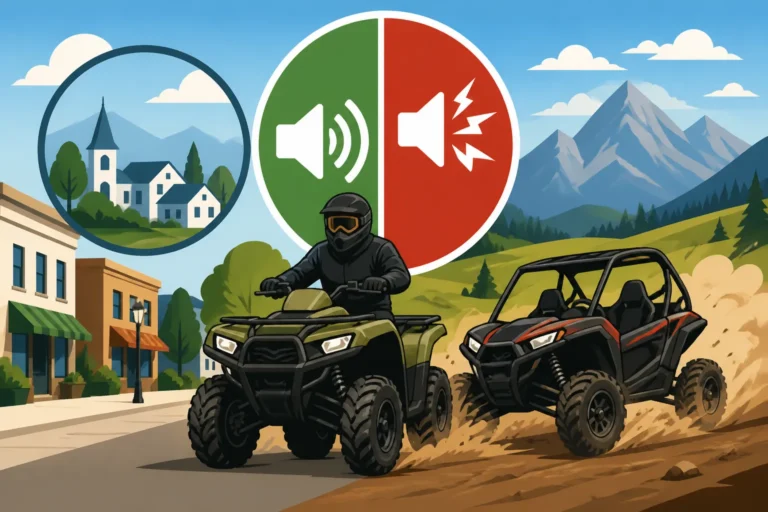
Imagine pulling up to a serene mountain lake, only to have the quiet shattered by a roaring engine. That's the reality for many hikers, campers, and equestrians when OHV noise levels aren't kept in check. Excessive noise can degrade the outdoor experience for non-motorized users, leading to friction and calls for stricter regulations or even outright trail closures. This isn't just about personal preference; it's about respecting the diverse ways people choose to enjoy our public lands and ensuring everyone has a positive experience.
Beyond the trails, many of Montana's small towns and rural communities are nestled right against popular riding areas. A steady drone of loud machines can be a real nuisance for residents, impacting their quality of life and creating tension between riders and locals. These communities are often the lifeblood of our riding economy, providing fuel, food, and lodging, so it's in everyone's best interest to be considerate. Ignoring these impacts can lead to local ordinances being passed that restrict access or impose curfews, ultimately limiting where and when we can ride. We've even seen towns in Montana begin to adopt specific rules for OHVs on their streets, like those discussed in [Montana Noise Rules in Small Towns], which can definitely be affected by how loud your machine is.
How Noise Regulations Protect Wildlife and Fellow Riders
Wildlife in Montana is abundant and sensitive. Loud, unexpected noises from OHVs can startle animals, causing them to flee their feeding grounds, disrupt breeding patterns, or even separate young from their mothers. This is particularly critical in areas frequented by sensitive species or during crucial times of the year, like calving or nesting seasons. Respecting noise limits helps minimize disturbance to these animals, ensuring they can thrive in their natural habitats. It’s part of our responsibility as stewards of the land to protect the very wildlife that makes Montana such a special place to ride.
For your fellow riders, especially those exploring the backcountry, excessive noise can be more than just annoying; it can be a safety concern. It can mask the sounds of approaching hazards, other vehicles, or even calls for help. Furthermore, the constant roar can lead to rider fatigue and a less enjoyable experience overall. Think about riding in a group: if one machine is significantly louder than the others, it makes communication difficult and detracts from the shared enjoyment of the ride. Adhering to noise regulations helps create a safer, more pleasant environment for every single person out on the trail, fostering a sense of community rather than conflict.
Local Ordinances and Their Role in Noise Control
While Montana has state-wide regulations regarding OHV noise and equipment, it's crucial to remember that local jurisdictions — counties and even individual towns — can enact their own specific ordinances that might be more restrictive. This means that a muffler that's perfectly legal on a Forest Service road in one county might actually get you a ticket if you ride it through the main street of a small town in another. It's a patchwork of rules that can be tricky to navigate, and it’s a common frustration for riders traveling across the state.
These local ordinances often come about in response to community complaints about noise, particularly in areas where residential zones abut popular OHV access points. County commissioners and town councils have the authority to establish decibel limits, restrict riding hours, or even prohibit certain types of OHVs on specific roads or within town limits. Before you head out, especially if you plan to pass through or stay near a community, it's always a good idea to check with the local sheriff's office or town clerk's office for any specific rules. Ignoring them won't win you any favors and could lead to unnecessary fines, impacting your ability to enjoy the very trails you came to ride.
Understanding Spark Arresters: Your First Line of Defense
When you're out riding in Montana, especially during our dry summers, the risk of wildfire is always on our minds. A spark arrester isn't just a piece of metal in your exhaust; it's a critical safety device designed to prevent catastrophic fires. Understanding what it is, why it's legally required, and how to maintain it is paramount for every responsible OHV owner.
What Exactly is a Spark Arrester and How Does It Work?
At its core, a spark arrester is a device that prevents incandescent particles—sparks—from exiting your engine's exhaust system. When your engine runs, it burns fuel, and sometimes tiny bits of uncombusted carbon or other materials can get hot enough to glow. Without a spark arrester, these red-hot embers can be ejected from your muffler and land in dry grass, pine needles, or other flammable debris, instantly igniting a wildfire.
A spark arrester typically consists of a screen, baffles, or a chamber designed to capture or cool these sparks before they leave the exhaust. As exhaust gases pass through the device, the sparks are either trapped by a fine mesh screen, forced to change direction multiple times within a baffled chamber, or cooled down below ignition temperature. This simple but effective mechanism dramatically reduces the risk of accidental fires, protecting Montana's forests, homes, and wildlife. It's an often-overlooked component, but its importance cannot be overstated, especially when you're riding dry trails where conditions are ripe for a fire.
Legal Requirements for Spark Arresters in Montana
Montana law, like federal law governing national forests and Bureau of Land Management (BLM) lands, is very clear: any OHV operating on public land must be equipped with a US Forest Service (USFS) approved spark arrester. This isn't a suggestion; it's a non-negotiable requirement. Whether you're cruising on a designated trail in the Flathead National Forest or exploring BLM roads near Billings, your machine needs to have this device properly installed and in good working order. There are no exceptions for specific types of machines or certain times of the year when fire danger seems low.
The key phrase here is "USFS approved." This means the spark arrester must meet specific design and testing standards established by the Forest Service. Most factory-installed mufflers on modern ATVs and UTVs come with an integrated, approved spark arrester. However, if you've installed an aftermarket exhaust system, you need to verify that it either incorporates an approved spark arrester or that you've added one separately. You'll usually find a stamp or label on the device indicating its USFS approval, often with "USFS approved" or "Spark Arrestor" followed by a code. A warden checking your machine, as discussed in [What a Montana Warden Asks a Rider For], will be looking for this certification.
Inspecting and Maintaining Your Spark Arrester
A spark arrester is only effective if it's clean and undamaged. Over time, carbon deposits can build up on the screen or within the baffles, reducing its efficiency and potentially restricting exhaust flow. This can lead to decreased engine performance and, ironically, an increased risk of sparks being forced through smaller openings. Regularly inspecting your spark arrester should be a standard part of your pre-ride and post-ride maintenance routine.
To inspect, typically you'll need to remove the end cap of your muffler (if it's a removable style) and then pull out the spark arrester screen or baffle. Check for any holes, tears, or significant blockages. If it's heavily clogged with carbon, carefully clean it using a wire brush, a stiff scraper, or sometimes even a drill bit (for specific designs) to clear the passages. Replace any damaged spark arresters immediately. Trying to ride with a compromised or missing spark arrester is not only illegal but incredibly reckless, especially given Montana's fire-prone environment. Think of it as cheap insurance for our invaluable forests.
Muffler Requirements: Keeping it Quiet (and Legal)
Beyond preventing sparks, your muffler's primary job is to keep your machine's noise output within legal limits. This is where things can get a bit more subjective than a simple "yes" or "no" for a spark arrester, leading to many questions about what's truly acceptable. Montana, like many states, has established decibel limits to ensure OHVs don't become a public nuisance or environmental disturbance.
Decibel Limits and Enforcement on Montana's Roads and Trails
Montana law specifies that all OHVs must be equipped with a muffler that is in good working order and effectively prevents excessive or unusual noise. While there isn't a single, universally applied decibel limit across all of Montana for all types of riding, the general expectation is that your machine should not exceed certain thresholds. Many public land agencies (like the Forest Service and BLM) enforce a maximum noise level, typically around 96-99 decibels (dB) when measured under a specific SAE J1287 standard test. This test is usually conducted at half the engine's maximum RPM, at a distance of 20 inches from the exhaust outlet, at a 45-degree angle.
Now, let's be realistic: a warden isn't usually carrying a certified decibel meter and performing a precise test on the side of a trail. Enforcement often comes down to their discretion and whether your machine sounds excessively loud. If your OHV is noticeably louder than other stock machines, or if it has a modified exhaust that clearly amplifies sound, you're more likely to attract attention. The goal is to avoid drawing that attention in the first place by running a compliant muffler. Remember, the rules for [Riding an OHV on the Road in Montana] can also involve noise considerations, so being within limits is critical across the board.
The Difference Between Stock and Aftermarket Mufflers
Most ATVs and UTVs come from the factory with exhaust systems designed to meet both spark arrester and noise regulations. These "stock" mufflers are generally quieter and more restrictive than many aftermarket options. They are built for compliance and longevity, often with multiple chambers and sound-deadening materials. For most riders, a well-maintained stock muffler is all they need to stay legal and enjoy the trails.
Aftermarket mufflers, on the other hand, are often designed with performance in mind. They might promise increased horsepower, a sportier sound, or a lighter weight. Brands like SuperATV offer a range of exhaust components that, while appealing for their performance benefits, need careful consideration regarding compliance. Some aftermarket systems are designed to be "trail legal" and include a USFS-approved spark arrester and aim for compliant decibel levels. Others are built strictly for closed-course racing and are explicitly not legal for public land use due to their high noise output and lack of spark arresters. If you choose to go aftermarket, you absolutely must verify that the system you install meets all Montana and federal regulations for noise and spark arresting. Don't assume; check the specifications carefully.
Common Issues with Mufflers and How to Address Them
Mufflers, like any part of your OHV, can develop problems over time. One of the most common issues is simply the muffler becoming louder due to age, internal baffles deteriorating, or packing material breaking down. If your machine suddenly sounds much louder than it used to, it's worth investigating. Another problem can be a loose connection in the exhaust system, such as a clamp coming undone or a gasket failing. These leaks allow exhaust gases to escape prematurely, creating a much louder and often irritating sound.
Addressing these issues usually involves a few steps. First, visually inspect your entire exhaust system for any cracks, rust, or loose components. Check all clamps and bolts to ensure they are tight. If you suspect internal damage, you might need to disassemble the muffler or consult a mechanic. For aftermarket systems, sometimes repacking the muffler with new sound-dampening material can restore its original sound level. If your stock muffler is simply worn out and too loud, replacement with another stock unit or a compliant aftermarket option is often the best course of action. Ignoring a loud muffler issue isn't just a matter of courtesy; it could lead to fines for [Aftermarket Exhaust and Montana Trail Access] that isn't compliant.
What Happens if Your Machine is Too Loud or Lacks a Spark Arrester?
Riding an OHV in Montana with a non-compliant muffler or a missing/defective spark arrester isn't just a minor oversight; it's a violation of the law. The consequences can range from a simple warning to significant fines, impoundment of your machine, and even the loss of your riding privileges. It's crucial to understand the potential repercussions, as ignorance of the law is rarely an acceptable defense.
Penalties and Fines for Non-Compliance
If you're caught operating an OHV on public land in Montana without a USFS-approved spark arrester, or with a muffler that exceeds noise limits, you can expect a citation. The specific fine amount can vary depending on the jurisdiction (state land, Forest Service land, BLM land, or county roads) and the discretion of the enforcing officer, but it's typically considered a misdemeanor offense. These fines can add up quickly, especially if you're cited multiple times or if other infractions are noted, such as riding in a closed area or reckless operation.
It's not uncommon for these fines to be in the range of several hundred dollars, and that's just for the initial offense. Beyond the financial hit, a citation can also mean an unpleasant end to your riding day, as wardens may require you to cease operation until the issue is rectified. In some cases, if the machine is deemed dangerously non-compliant (e.g., a high fire danger due to a completely missing spark arrester), your OHV could even be impounded. This is a hassle nobody wants, forcing you to deal with towing and impound fees just to get your machine back.
Trail Closures and Restrictions Due to Noise
The collective actions of a few loud riders can have far-reaching consequences for the entire OHV community. When noise complaints from residents, hikers, or other public land users reach a critical mass, land managers (like the Forest Service or BLM) are often forced to take action. This can manifest as increased enforcement patrols, but more severely, it can lead to restrictions or even outright closures of popular trails or entire riding areas.
Imagine losing access to a favorite loop or staging area because too many riders ignored the noise rules. It's a frustrating scenario, but it happens. Land managers have a responsibility to balance various recreational uses and protect resources, and if OHV noise becomes an unmanageable conflict, closing areas to motorized use is a measure they will consider. These closures impact everyone, even those who ride responsibly with compliant machines. So, by ensuring your machine is quiet and legal, you're not just protecting yourself from a ticket; you're helping to preserve access for the entire riding community. This kind of stewardship is vital for the future of riding in Montana, and it ties into broader discussions about [Montana's National Forest Trail Systems] and access.
The Warden's Discretion and How to Avoid Trouble
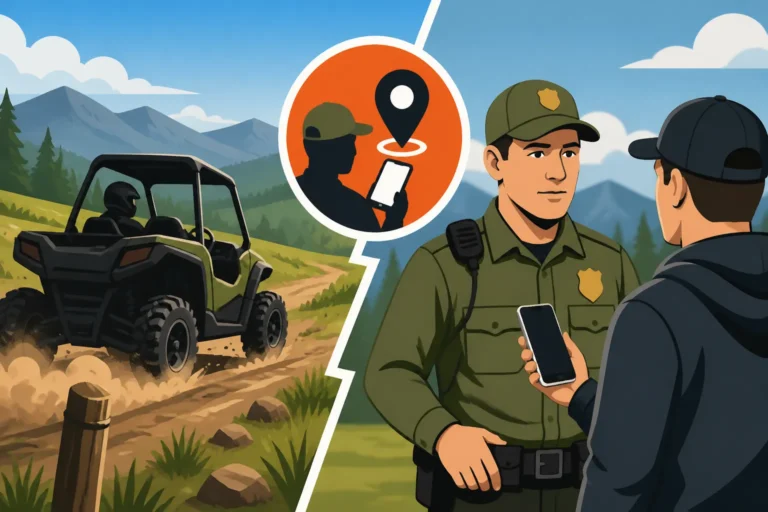
While there are specific laws, enforcement often involves an officer's discretion. A Montana Fish, Wildlife & Parks warden, a Forest Service law enforcement officer, or a local sheriff's deputy might pull you over if your machine sounds too loud. They'll then likely inspect your exhaust for a spark arrester and assess the overall noise level. If they deem your muffler to be non-compliant or your spark arrester missing, they have the authority to issue a citation.
To avoid trouble, the best strategy is proactive compliance. Don't wait until you're pulled over to check your equipment. Before every ride, especially on public lands, do a quick visual and auditory check of your exhaust system. Does it sound abnormally loud? Is the spark arrester screen visible and clear? If you're running an aftermarket exhaust, be prepared to show documentation (if available) that it's USFS approved and meets noise standards. Being polite and cooperative with an officer goes a long way, but having a compliant machine is your best defense. Remember, the rules apply equally whether you're out hunting, as covered in [Montana OHV Rules During Elk Season], or just joyriding.
Choosing and Installing Compliant Equipment
Navigating the world of OHV parts can be overwhelming, especially when you're trying to ensure your machine is fully compliant with Montana's regulations. From selecting the right aftermarket muffler to ensuring proper installation, there are a few key considerations to keep in mind to keep your machine legal and your mind at ease.
Finding Aftermarket Solutions that Meet Montana Standards
If you're looking to replace a worn-out stock muffler or upgrade your exhaust system, the market is flooded with options. However, not all aftermarket mufflers are created equal when it comes to compliance. Your first priority should always be to look for systems explicitly labeled as "USFS approved" and designed to meet noise regulations for public land use. Many reputable manufacturers clearly state this information in their product descriptions or on the product itself.
When browsing, pay close attention to decibel ratings if they are provided. While it can be tough to compare directly without a standardized test, look for systems that advertise a "quiet core" or "trail legal" designation. Some manufacturers, including brands like SuperATV, offer specific spark arrester inserts or quiet tips that can be added to their exhaust systems to help them meet compliance standards. Always cross-reference the product's claims with Montana's general regulations to ensure you're making an informed choice. Don't hesitate to contact the manufacturer directly if you have any doubts about a specific product's legality for public land use.
DIY vs. Professional Installation for Mufflers and Spark Arresters
For many riders, installing a new muffler or spark arrester is a manageable DIY project. Basic tools, a little mechanical know-how, and a good set of instructions are usually all that's required. If you're comfortable working on your machine, doing it yourself can save you money and give you a better understanding of your OHV's components. When installing, always use new gaskets and ensure all connections are tight to prevent exhaust leaks, which can both increase noise and reduce engine efficiency.
However, if you're unsure about the process, or if the installation requires welding or specialized tools, it's always best to take your machine to a professional mechanic. Improper installation can lead to exhaust leaks, rattling, or even damage to other engine components. A professional can ensure the new system is installed correctly, that it's sealed properly, and that it meets all necessary specifications. This investment in professional service can save you headaches, potential damage, and even fines down the road.
Resources for Checking Product Compliance
It can feel like a maze trying to figure out if your specific exhaust system or spark arrester meets all the requirements. Thankfully, there are resources available to help you confirm compliance. The US Forest Service often publishes lists or guidance on approved spark arresters. Many aftermarket exhaust manufacturers will also clearly state on their packaging or website if their products are USFS-approved and meet specific noise standards.
For noise, some aftermarket mufflers come with certification tags or information about the decibel levels they produce under specific testing conditions. Keep this documentation with your machine's paperwork. If a warden asks, having proof of compliance can certainly help your case. It's also wise to check the official Montana Fish, Wildlife & Parks (FWP) website or local Forest Service/BLM district offices for any specific, localized regulations or updates. Being informed is your best tool for staying legal and ensuring your adventures are worry-free.
Disclaimer
This article is for general informational purposes only and does not constitute professional advice. Laws, prices and regulations vary by location and change over time. Consult a qualified professional for guidance on your specific situation.