Who Grants Permission on a Montana Road
Navigating the myriad rules for where you can and cannot ride your ATV or UTV in Montana can feel like trying to solve a riddle wrapped in an enigma. It's a common frustration for riders, especially when you see someone else on a road you thought was closed, or worse, get a ticket for riding somewhere you believed was open. This guide is here to untangle the complexities of road access in Big Sky Country, laying out exactly who holds the power to grant permission for off-highway vehicles on Montana's diverse network of roads.
The Landscape of Montana Road Authority
Montana's vast and varied landscape means that road management isn't a one-size-fits-all situation. Unlike some states where rules are uniform, here, you're dealing with a patchwork of jurisdictions, each with its own specific set of regulations for off-highway vehicles (OHVs). It’s easy to get confused, and honestly, many riders do. The key is to understand that "a road" isn't just "a road" in Montana; its designation and ownership determine who can open or close it to OHV traffic.
Layers of Jurisdiction: State, County, and Municipal
Imagine a gigantic layer cake, with each layer representing a different level of government. At the very top, you have state laws, which set a baseline for OHV operation across Montana. These laws define what an OHV is, basic registration requirements, and broad rules for public lands and certain highways. However, they don't typically dictate specific access on every single backroad or town street. That's where the next layers come in.
Below the state level, county governments have significant authority over the roads within their borders, particularly the unpaved backroads and rural connectors that OHV riders often want to access. Each of Montana's 56 counties can, and often does, have its own set of rules. Then, even further down, individual cities and towns manage their own streets. A small, remote town might be incredibly welcoming to OHVs, even allowing them on main streets, while a larger city might ban them entirely, except for very specific cross-town routes. This multi-layered approach means that permission isn't granted by a single entity but by the specific authority responsible for the stretch of road you're eyeing. It’s why you can have two seemingly identical gravel roads just a few miles apart, one open and one closed, purely based on county or municipal decisions.
The Role of the Montana Highway Patrol and Sheriffs
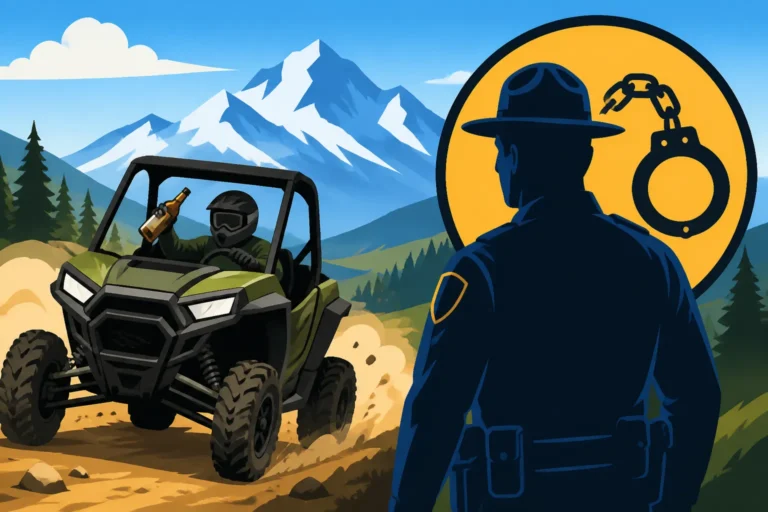
While it might feel like the Montana Highway Patrol or a county sheriff is the one "granting" or "denying" permission when they issue a warning or a ticket, that's not quite accurate. These law enforcement agencies are primarily the enforcers of the rules, not the rule-makers themselves. Their job is to ensure that riders adhere to the ordinances and statutes that have been established by the state, county, or municipality.
When a sheriff's deputy pulls you over on a county road and explains that OHVs aren't allowed there, they're not making an on-the-spot decision. They are upholding a resolution passed by the county commissioners. Similarly, a Montana Highway Patrol trooper enforcing a restriction on a state highway is simply following state law. Understanding this distinction is crucial: you can't usually "ask" an officer for permission; you need to understand the underlying laws and ordinances they are tasked with enforcing. Their presence serves as a reminder that these regulations are taken seriously, and ignorance of the law is rarely a valid defense.
County Roads: The Commissioners' Domain
For many Montana ATV and UTV enthusiasts, county roads are the most common desire. These often unpaved, scenic routes can connect trails, provide access to fishing spots, or simply offer a different kind of ride. However, gaining access here isn't as simple as just heading out. The power to open or close these roads lies firmly with the elected county commissioners.
How County Commissioners Open or Close Roads
In Montana, the board of county commissioners in each county holds the authority to regulate OHV use on county-maintained roads. This isn't a power they wield arbitrarily; it typically involves a public process. Commissioners often consider requests from local OHV clubs, citizen groups, or even individual landowners. They weigh factors like public safety, dust control, noise complaints, potential road damage, and the economic benefit of recreational tourism.
The decision to open or close a specific road, or even an entire network of roads, usually comes in the form of a formal resolution or ordinance passed during a public meeting. These decisions are not always permanent and can be revisited if conditions or public sentiment change. It's a localized, sometimes politically charged, process that can vary wildly from one county to the next. What one group of commissioners in a rural county might embrace, another group in a more populated area might reject out of hand. If you're interested in advocating for OHV access on particular county roads, attending these meetings and presenting a well-researched case is often the best approach. More detail on this can be found in our article on [County Commissioners and Montana County Roads].
Navigating Unmarked County Roads
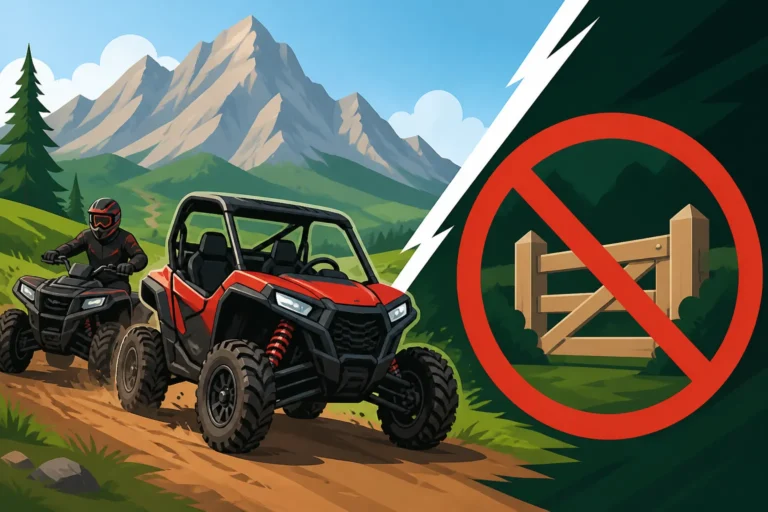
One of the biggest pitfalls for riders is assuming that if a county road isn't explicitly marked as closed, it's open. In Montana, the opposite is often true: unless a county road has been specifically designated and signed as open for OHV use by the county commissioners, it generally remains closed to OHVs operating under their own power. This "closed unless posted open" mentality is critical for avoiding violations.
Imagine you're exploring a new area, turn off a paved highway onto a gravel road, and see no signs. Your instinct might be to assume it's fair game. However, without a specific county ordinance opening that road, you could be in violation. This is why local knowledge, mapping applications that show OHV-legal routes, and checking county websites are invaluable. Don't rely on the absence of a "No OHVs" sign as permission. Instead, actively seek out evidence of permission. Local OHV clubs are fantastic resources for this, as they often work directly with commissioners and can provide up-to-date information on where you can and cannot ride legally. They also often know which roads are open to get you from point A to point B, or which might allow access to specific trails.
City and Town Streets: Local Ordinances Rule
While county roads offer a certain kind of adventure, the ability to ride your ATV or UTV directly into a small Montana town for gas, a bite to eat, or a quick stop can be incredibly convenient and enhance the overall riding experience. However, just like with county roads, this privilege is granted at the local level by municipal authorities.
Municipal Authority Over City Streets
Montana's towns and cities have the power to create and enforce their own ordinances regarding OHV use within their corporate limits. This means that a city council, town board, or similar governing body can decide which streets, if any, are open to ATVs and UTVs. These decisions are often influenced by local dynamics: a small, trail-centric town like Lincoln or Darby might embrace OHVs as a boost to tourism, seeing riders as vital customers for local businesses. In such places, you might find clearly marked routes that allow you to ride from your lodging directly to the trailhead, or even cruise down Main Street.
On the flip side, larger towns or those with a higher population density might prioritize noise reduction, pedestrian safety, or traffic flow, leading them to restrict or even ban OHVs from most, if not all, city streets. The specific rules can be incredibly granular, sometimes stipulating hours of operation, speed limits far below the posted limit, or even requiring certain safety equipment not always mandated on trails. Understanding these local nuances is paramount to a smooth and legal ride. We dive deeper into this topic in [Montana City Streets and Municipal Ordinances].
Finding Local OHV Ordinances in Montana Towns
The challenge with municipal rules is that they can vary wildly from one town to the next, even within the same county. There isn't a single, statewide list of every town's OHV policy. So, how do you find out if your destination town allows OHVs on its streets? The most reliable methods involve a bit of proactive research.
Start by checking the town's official website; many progressive towns with OHV access will proudly post their ordinances and maps online. If that doesn't yield results, a phone call to the city clerk's office, the local police department, or even a chamber of commerce can often provide the answers you need. Be specific in your questions: "Can I ride my UTV on any streets in your town?" or "Are there designated routes for OHVs to access trails from the edge of town?" Some towns even have specific requirements for street-legal conversion, like turn signals, specific mirrors, or DOT-approved tires. If you're looking to upgrade your rig to meet these kinds of demands, shops like SuperATV offer a wide range of street-legal kits and accessories to help ensure compliance. It's always better to know before you roll into town and risk an unexpected conversation with local law enforcement. For a general overview, you might also find our article on [Montana Towns That Allow OHVs on Their Streets] helpful.
Federal Lands: Forest Service and BLM Rules
Beyond the state, county, and municipal roads, a significant portion of Montana is comprised of federal public lands managed by agencies like the U.S. Forest Service (USFS) and the Bureau of Land Management (BLM). These lands offer some of the most spectacular riding opportunities, from alpine trails to high desert two-tracks. Access here is governed by a different set of rules, often less about "permission" in the traditional sense and more about "designated routes."
Motor Vehicle Use Maps (MVUMs) as Your Guide
On federal lands, specifically National Forests and BLM districts, the primary authority for motorized vehicle use is the Motor Vehicle Use Map (MVUM). These maps are non-negotiable legal documents that designate which roads and trails are open to specific types of motorized vehicles, including ATVs and UTVs. They are the law on these lands, and if a route isn't explicitly shown on an MVUM as open, it is considered closed. This is a critical distinction: unlike county roads where sometimes "not posted" means "unknown," on federal lands, "not on the MVUM" means "closed."
MVUMs are typically updated annually or as needed and are available free of charge at Forest Service and BLM offices, often online, and through various mapping apps. They distinguish between roads open to highway-legal vehicles, roads open to all motor vehicles (including OHVs), and trails specifically for OHVs. Familiarizing yourself with the MVUM for the area you plan to ride is perhaps the single most important piece of preparation for riding on federal land. It’s not about asking for permission, but rather adhering to the routes that have been designated and legally opened. Our guide on [Reading a Montana Motor Vehicle Use Map] offers more insights.
Understanding Seasonal and Emergency Closures
Even if a route is clearly marked as open on an MVUM, there are instances where access can be temporarily revoked or altered. Federal land managers have the authority to implement seasonal closures, often related to wildlife protection (e.g., elk calving areas in spring), preventing resource damage (e.g., muddy trails during spring runoff), or historical reasons (e.g., maintaining quiet areas during specific times). These closures are usually posted at trailheads and access points, and sometimes on agency websites.
Emergency closures are another important consideration, particularly during Montana's fire season. Wildfires can lead to vast areas of forest or BLM land being closed to all public entry, often for extended periods. It is imperative to check current conditions and closure orders with the local Forest Service or BLM office before heading out, especially during the late summer and fall. Riding on closed routes, even temporarily closed ones, can result in significant fines and environmental damage. When navigating these remote and sometimes challenging federal routes, having reliable gear is a must. Many riders enhance their UTVs with durable components from SuperATV, such as heavy-duty axles or winches, which can be lifesavers if you encounter unexpected obstacles or need to self-recover on a remote fire road. For more information, you can also check out [Montana Rules on Forest Service Roads] and [Montana Rules on BLM Roads].
State Highways and Private Roads: The Clear-Cut "No" or "Yes"
While federal, county, and municipal roads present a spectrum of possibilities, state highways and private lands tend to be much more black and white when it comes to OHV access in Montana. These categories generally represent either outright prohibitions or explicit requirements for permission.
Why State Highways Are Generally Off-Limits
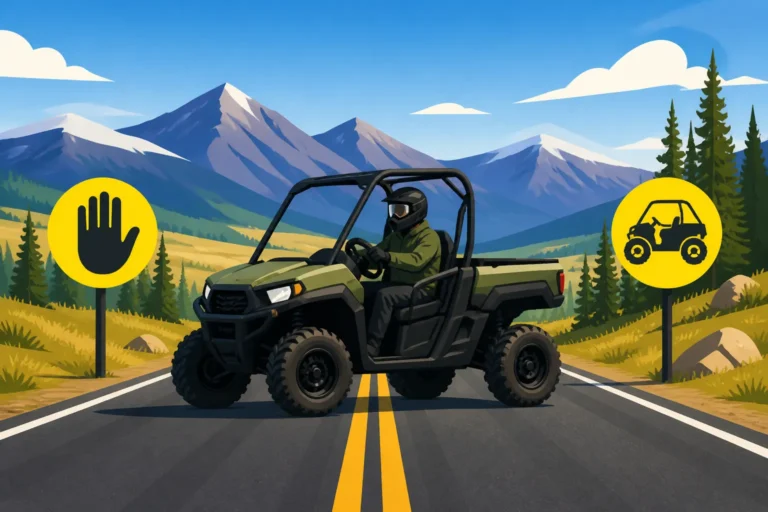
Montana state law is generally clear: off-highway vehicles are not allowed to operate on federal-aid highways (e.g., interstates, most U.S. routes, and many state highways) unless specifically authorized. These roads are designed for vehicles that are fully street-legal, registered, and insured, meeting all the requirements for conventional automobiles. ATVs and UTVs, by their nature, typically do not meet these standards. The dangers of mixing slower, less protected OHVs with high-speed highway traffic are significant, which is why the state maintains these restrictions.
There are, however, very limited exceptions. You might be allowed to cross a state highway at an intersection, or ride a very short distance on the shoulder to connect two legal OHV routes, but these instances are rare and usually require specific local or state approval and often stringent equipment requirements. These exceptions are not a blanket permission to cruise down a state highway. Riders should assume that state highways are off-limits for OHV travel unless they have unequivocal, official verification for a specific, limited situation. For a deeper dive into this, see [Can You Ride an OHV on a Montana Highway?].
Private Land and Permission
When it comes to private land in Montana, the rule is absolutely straightforward: you must have explicit permission from the landowner before riding your ATV or UTV. This isn't a suggestion; it's a legal requirement, and trespassing can lead to fines, legal action, and a damaged reputation for all OHV riders. Montana takes private property rights seriously, and disrespecting them can quickly close off future access for everyone.
Permission can be verbal, but written permission is always preferable, especially if you're riding regularly on someone else's property or if there's any ambiguity. A simple signed note indicating the dates, specific areas, and names of riders can prevent misunderstandings. Many ranch owners are gracious and might allow access for specific purposes, such as hunting, fishing, or simply enjoying the land. However, this permission is a privilege, not a right. Always leave gates as you found them, stay on designated routes, and adhere to any specific requests from the landowner. If you're using your UTV for ranch work, like hauling hay or checking fences, there might be specific exemptions and considerations, but direct permission is still the cornerstone. For more on this, our article [Montana Trespass Law for Riders] provides important context. For those using their machines on private land and needing to navigate rough terrain, especially with the landowner's blessing for modifications, parts from SuperATV like lift kits or heavy-duty suspension components can significantly improve ground clearance and durability. You might also find [Montana OHV Rules for Ranch Machines] relevant.
Essential Equipment and Rider Responsibility
While knowing who grants permission is the first step, riding legally and responsibly on Montana roads also requires you to ensure your machine is properly equipped and that you, as the operator, understand your obligations. This isn't just about avoiding a ticket; it's about safety for yourself, your passengers, and others on the road.
What Montana Requires on an OHV for Road Use
If you do secure permission to ride your ATV or UTV on a public road in Montana, whether it's a county road or a town street, your machine generally needs to meet certain equipment standards to be considered street-legal for that specific application. These requirements are in place to ensure visibility and safety alongside other vehicles. While the exact list can vary by local ordinance, common requirements often include:
- Headlights: At least one, sometimes two, that are operational and visible from a certain distance. Many ordinances require them to be on at all times, not just after dark.
- Taillights and Brake Lights: A red taillight visible from the rear, and a working brake light that illuminates when the brakes are applied.
- Mirrors: Typically at least one rearview mirror, and often two, to give you adequate visibility of traffic behind you.
- Horn: A functional horn that can be heard at a reasonable distance.
- Muffler and Spark Arrester: To control noise and prevent wildfires, especially on public lands where roads might lead directly to trails.
- DOT-Approved Tires: Some jurisdictions may require tires that are approved for highway use, rather than aggressive off-road-only treads.
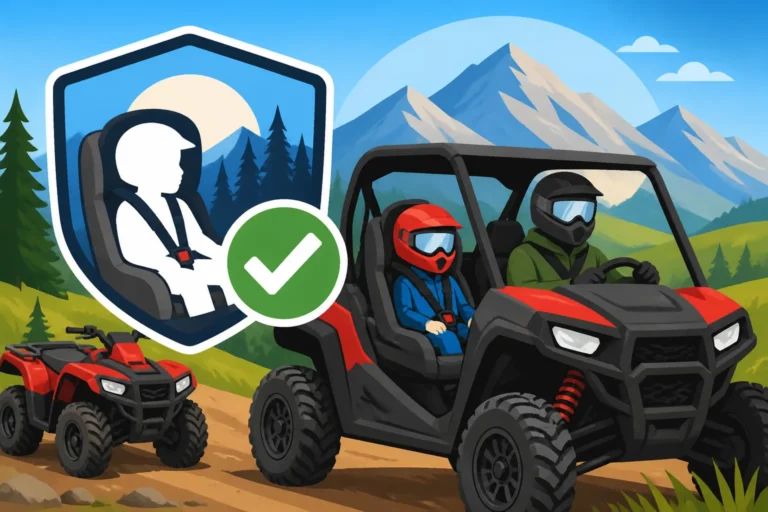
- Seatbelts/Restraints: If your UTV has factory-installed seatbelts, they generally must be worn.
Meeting these requirements often means adding aftermarket components to your stock ATV or UTV. Companies like SuperATV specialize in street-legal kits and individual components such as turn signal kits, mirrors, and horns that help riders comply with these various regulations. It's a smart investment to ensure you're not just allowed on the road, but equipped to be on it safely and legally. For comprehensive details, refer to [What Montana Requires on an OHV Road Ride].
The Rider's Due Diligence: Know Before You Go
Ultimately, the responsibility for knowing where you can and cannot ride, and what equipment your machine needs, rests squarely on your shoulders. It can feel like a lot to keep track of, but the consequences of not doing your homework can range from a simple warning to a costly fine, or worse, an accident.
Before every ride that might involve public roads, make it a habit to:
- Check Local Regulations: If you're heading to a new county or town, call their offices or check their websites for specific OHV ordinances.
- Consult MVUMs: For federal lands, always download and consult the most current Motor Vehicle Use Map.
- Inspect Your Machine: Ensure all required safety equipment (lights, horn, mirrors) is functioning correctly.
- Carry Documentation: Have your registration, proof of insurance, and any necessary permits readily accessible.
- Stay Informed: Join local OHV clubs; they often have the most up-to-date information and can advocate for rider access.
Failing to do your due diligence can lead to citations and fines, which can quickly turn a fun day into an expensive headache. Understanding and respecting the diverse authorities that govern road access in Montana is key to responsible and enjoyable OHV riding. Our article on [Montana Fines for Illegal Road Riding] can give you a sobering look at the potential consequences of not knowing the rules. Additionally, ensure you understand [Driver's License Rules for Montana Road Riding] as this is another critical aspect of compliance.
Road Access Authority in Montana: A Quick Guide
| Road Type | Primary Authority | Typical Access Rules |
|---|---|---|
| State Highways (US, State Routes, Interstates) | Montana Department of Transportation / State Law | Generally closed to OHVs. Exceptions are rare, highly restricted (e.g., crossing at an intersection), and require specific authorization. |
| County Roads | County Commissioners (56 counties) | Closed unless specifically opened by county resolution/ordinance. Rules vary widely by county; must research each county. Often unpaved, rural routes. |
| City / Town Streets | Municipal Government (City Council/Town Board) | Closed unless specifically opened by local ordinance. Rules vary wildly by municipality; can be very specific about routes, hours, and equipment. Often found in trail-friendly towns. |
| Federal Lands (USFS, BLM Roads & Trails) | U.S. Forest Service / Bureau of Land Management | Designated routes identified on Motor Vehicle Use Maps (MVUMs) are open. If not on MVUM, it's closed. Subject to seasonal, fire, and emergency closures. MVUMs are the definitive legal document. |
| Private Land | Landowner | Closed unless explicit permission (preferably written) from the landowner. Trespassing is illegal. Permission is a privilege and often comes with specific stipulations. |
| Ranch Roads (Private) | Landowner | Closed unless explicit permission from the ranch owner. Even for "work machines," permission is paramount. May fall under private land rules, sometimes with agricultural exemptions if explicitly granted for specific purposes by the owner. |
Disclaimer
This article is for general informational purposes only and does not constitute professional advice. Laws, prices and regulations vary by location and change over time. Consult a qualified professional for guidance on your specific situation.