Montana Rules for a Child Passenger
Riding the stunning trails and vast landscapes of Montana on an ATV or UTV is an experience many families dream of sharing. But when you have little ones along for the adventure, the excitement often comes with a heap of questions and, let’s be honest, a good bit of worry about keeping them safe and staying on the right side of the law. This guide is here to walk you through Montana's rules and best practices for having a child passenger, ensuring your family outings are as safe and enjoyable as possible, without any unnecessary headaches.
Understanding Montana's Basic Age and Passenger Rules for OHVs
When you’re thinking about bringing a child along for an off-highway vehicle (OHV) ride in Montana, the first thing to wrap your head around isn't just their age, but also the age of the operator and the design of the machine itself. Montana has specific guidelines in place, not just to avoid fines, but more importantly, to ensure everyone’s safety on the trails. It's easy to assume a small child can just squeeze in, but the regulations are designed with real-world risks in mind.
The 'Under 16' Rule and Operator Requirements
Montana law has clear stipulations regarding who can operate an OHV, particularly when it comes to riders under the age of 16. Generally, if a child under 16 is operating an OHV on public lands, they need to have completed a state-approved safety education course and be under the direct supervision of an adult. This rule often dictates whether a child can even think about carrying another passenger. If a young person is still learning the ropes themselves and is required to have an adult supervisor, it’s highly unlikely they would be permitted to carry a passenger, especially another child. The focus is squarely on the operator's ability to safely control the machine and react to changing trail conditions, a responsibility that doubles when another person is on board.
Consider a scenario where a 14-year-old, who has their safety certificate and is a competent rider, wants to take their 8-year-old sibling on a ride. While the 14-year-old might be a skilled operator, Montana’s regulations prioritize safety above all else. The complexities of managing a passenger, especially a younger, more unpredictable one, can quickly overwhelm a less experienced operator. For this reason, the safest and often legally mandated approach is that if a minor is operating the machine, they should generally not be carrying a passenger. The risks associated with an inexperienced operator trying to manage both the machine and a passenger are simply too high.
Machine Capacity: Is Your OHV Designed for a Passenger?
This is perhaps the most critical factor when it comes to carrying a child passenger: Is your off-highway vehicle actually designed to carry more than one person? Many ATVs are manufactured as single-rider machines, meaning they have one seat and are intended for one person only. Attempting to squeeze a child onto the front or back of a single-rider ATV, even if they're small, is incredibly dangerous and usually illegal. These machines are balanced and designed for a single rider's weight distribution and control. Adding an extra person, especially one who might shift unexpectedly, can drastically alter the ATV's handling, making it prone to rollovers and difficult to maneuver, particularly on uneven terrain.
For those who own a "two-up" ATV, which features an extended seat and often dedicated handholds and footrests for a passenger, or a multi-passenger side-by-side (UTV), the situation is different. These machines are engineered with additional seating capacity in mind, providing a safer environment for a second rider. However, even with these machines, simply having a second seat isn't enough. The passenger, regardless of age, needs to be able to properly reach and utilize all the safety features, including handholds and footrests. A small child might technically fit on a two-up ATV, but if their feet dangle or they can't firmly grasp the handholds, they are at a much higher risk of falling off. For a deeper dive into this specific risk, you might want to read about [Doubling Up on a One-Seat Quad].
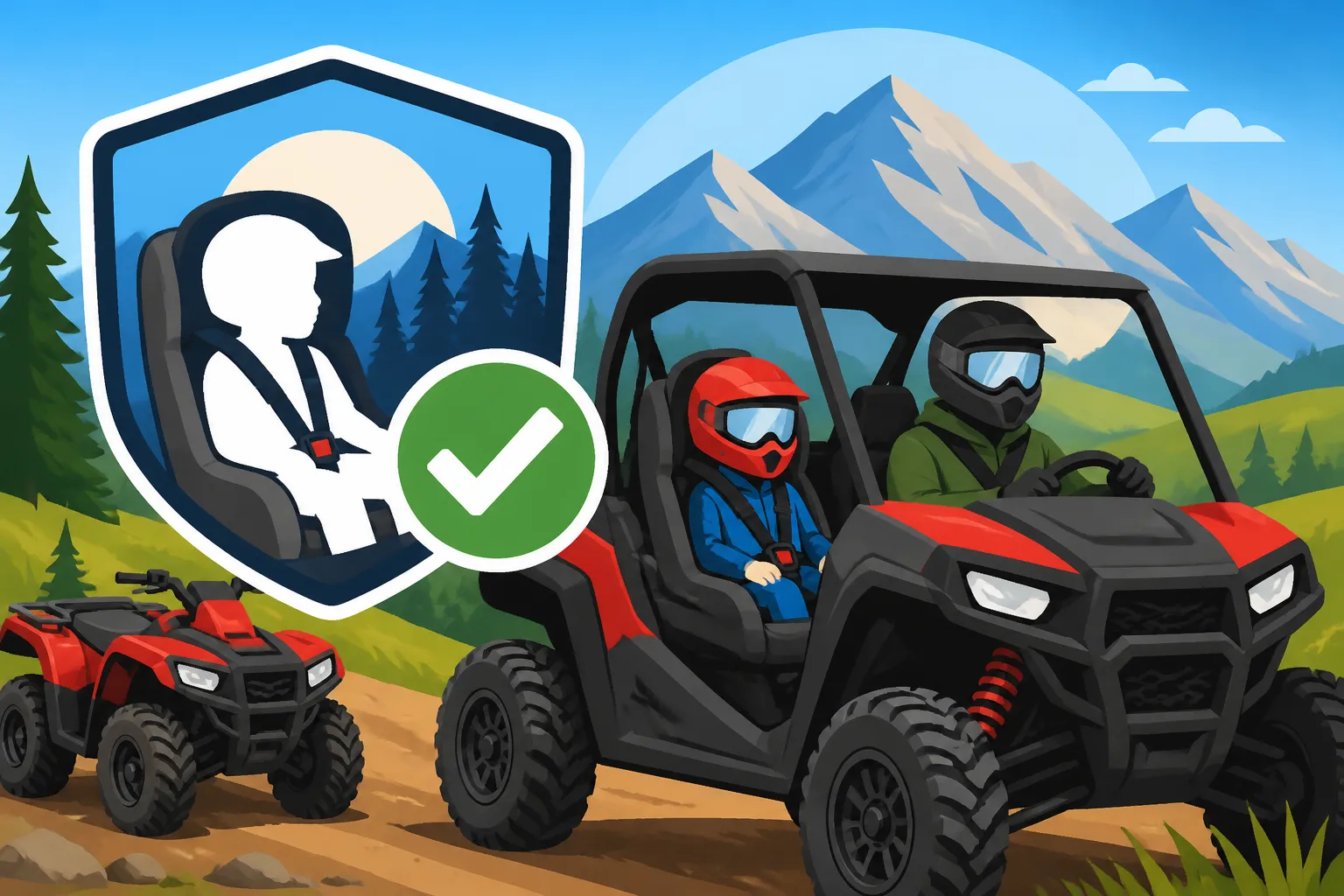
Side-by-sides, with their bucket seats, seat belts, and roll cages, often provide a more secure environment for younger passengers, but even then, careful consideration is needed. A child needs to be properly secured by the seat belt system, and if they are too small for the belt to fit correctly, additional measures like booster seats or child-specific harnesses might be necessary to ensure they are safely restrained. Brands like SuperATV offer a range of aftermarket accessories that can enhance safety and comfort, such as rearview mirrors for better situational awareness or specific harnesses that might better secure a smaller frame within a UTV's existing seating, though always ensure any modification complies with local regulations and doesn't compromise the machine's intended safety features. Always prioritize factory-designed capacity and the child's ability to safely occupy that space.
Helmet and Eye Protection Requirements for All Young Riders
Montana law is quite clear when it comes to head and eye protection for younger riders. Any person under the age of 18 operating or riding as a passenger on an OHV must wear an approved helmet and eye protection. This isn't just a suggestion; it's a critical safety measure designed to protect against head injuries, which are often the most severe in OHV accidents. A proper-fitting helmet is paramount here – one that is too large can shift around and offer inadequate protection, while one that is too small can be uncomfortable and restrict vision. It’s not enough to simply have any helmet; it must be one that is DOT-approved and fits snugly. For more specific details on this, check out [Montana Helmet Rules for Riders Under 18].
Beyond the helmet, eye protection is non-negotiable. Goggles or a face shield are essential for shielding a child's eyes from dust, branches, insects, and other debris that can be kicked up by the machine or encountered on the trail. Imagine riding through a dusty stretch of trail, or having a low-hanging branch snap back – without eye protection, these seemingly minor incidents can cause serious injury or, at the very least, distract the operator if the child suddenly cries out or closes their eyes. Proper eye protection ensures clear vision and prevents painful, potentially damaging impacts to the eyes, allowing the child to enjoy the ride without unnecessary discomfort or risk.
Specific Considerations for Child Passengers in Side-by-Sides vs. ATVs
While the general rules for child passengers apply across all OHVs, the nature of riding with a child differs significantly between a side-by-side (UTV) and an ATV. Each machine type presents its own set of advantages and challenges, and understanding these can help you make the safest choice for your family’s adventures. It’s not just about fitting them in; it’s about their security, comfort, and ability to remain safe throughout the ride.
Side-by-Side Seating and Seat Belts
Side-by-sides (UTVs) often feel like a more secure option for carrying child passengers, largely due to their car-like seating, roll cages, and multi-point seatbelt systems. Most UTVs are factory-designed with multiple bucket seats, allowing passengers to sit side-by-side with the driver, providing a sense of enclosure and stability that an ATV simply can’t match. However, just having a seat isn't enough. The critical component here is the proper use and fit of seat belts. Children, especially smaller ones, can easily slip out of standard adult seat belts or have the shoulder strap sit incorrectly, potentially causing more harm than good in a sudden stop or impact.
This is where you might need to think about additional safety measures. For smaller children, a booster seat designed for vehicles, or an aftermarket child-specific harness system designed for UTVs, can be invaluable. These ensure the child is elevated enough for the seat belt to fit across their collarbone and hips correctly, or provide a more secure 4- or 5-point harness system. Many UTV owners turn to specialized UTV accessory manufacturers for these kinds of solutions. It's crucial that any booster seat or harness is properly installed and doesn't interfere with the UTV's original safety mechanisms. For specific guidance on how these belts should be used, check out [Montana Seat Belt Rules in a Side-by-Side]. A properly secured child in a UTV can enjoy the ride much more safely, reducing the risk of them being jostled around or falling out, even on rough terrain.
ATV Passenger Positioning and Handholds
Carrying a child passenger on an ATV, even a two-up model designed for a passenger, requires a different set of considerations than with a UTV. On an ATV, the passenger is much more exposed and must actively participate in maintaining their balance and position. This means they need to be able to reach and firmly grasp designated handholds and keep their feet securely on the footrests. A child whose legs are too short to reach the footrests or whose hands are too small to grip the handholds effectively is at a significant disadvantage and greatly increased risk. They won't be able to brace themselves properly against bumps, turns, or sudden acceleration, making them highly susceptible to falling off.
Even on a two-up quad, the dynamic nature of ATV riding – leaning into turns, shifting weight over obstacles – means the passenger needs to be somewhat synchronized with the driver. A small child might not have the strength, coordination, or understanding to do this consistently, especially over a long ride. This is why many experienced riders will caution against carrying very young children on ATVs, even those designed for two riders. The risk of fatigue, distraction, or simply being unable to hold on tightly enough, especially on challenging terrain, makes it a riskier proposition compared to the more contained environment of a side-by-side. Always assess the child's physical ability and maturity before placing them on an ATV as a passenger. You might also want to review [Doubling Up on a One-Seat Quad] for further understanding of the inherent dangers.
Supervising and Communicating with Young Passengers
Beyond the legalities and the machine's capacity, the human element of supervision and communication is vital when riding with child passengers. It's not enough to simply buckle them in; you need to actively engage with them throughout the ride. Before you even set off, have a clear conversation about expectations: how they should hold on, what to do if they need to stop, and the importance of not distracting the driver. Establishing simple hand signals or verbal cues can be incredibly helpful, especially in noisy environments or when wearing helmets.
During the ride, frequent check-ins are essential. Ask them if they're comfortable, if they need a break, or if anything hurts. Children, especially young ones, might be reluctant to speak up if they're cold, tired, or scared. Plan for shorter rides than you might typically take alone or with adults, and build in plenty of breaks for snacks, stretching, and just enjoying the scenery. Observing their body language is also key – a child who is slumping, looking away, or holding on too tightly might be reaching their limit. Remember that their tolerance for bumps, vibrations, and continuous motion is likely much lower than an adult's. Keeping the speed appropriate for the terrain and the comfort of your passenger is also crucial. A gentle, steady pace will make for a far more enjoyable and safe experience for everyone.
Here's a quick comparison of ATVs versus Side-by-Sides for child passengers:
| Category | ATV (Two-Up Model) | Side-by-Side (UTV) |
|---|---|---|
| Seating | Extended, saddle-style seat | Bucket or bench seats, car-like interior |
| Restraint | Handholds for passenger, no seat belts | Multi-point seat belts/harnesses |
| Protection | Exposed, no roll cage | Roll cage, often doors/nets, more enclosed |
| Stability | Requires active participation from passenger | More stable, less passenger movement required |
| Body Fit | Child must reach footrests & handholds | Children need proper belt fit (may require boosters/harnesses) |
| Visibility for Kid | Can be limited by driver, more wind/dust exposure | Generally better forward/side views, less direct exposure |
| Ease of Supervision | Less direct communication, harder to see child | Easier verbal communication, child often in sight |
| Typical Age Suitability | Older children who can hold on firmly and actively participate | Generally suitable for a wider range of ages with proper restraints |
Legalities, Safety Gear, and Best Practices for Riding with Kids
When you decide to take your children along for an OHV adventure in Montana, you're signing up for more than just a fun day out; you're taking on significant legal and moral responsibilities. Understanding these facets, from potential penalties to essential gear and smart planning, ensures that your family's experience is not only memorable but also as safe and compliant as possible. It’s about being proactive, not reactive, when it comes to child safety in the backcountry.
Understanding Montana's Legal Penalties and Liability
Ignoring Montana's rules for OHV operation and passenger safety, especially regarding children, can lead to more than just a stern talking-to from a game warden or sheriff. Violations can result in fines, and in some cases, more serious legal repercussions. For instance, being caught with an underage operator without a safety certificate, or carrying a child unsafely on a machine not designed for passengers, can incur penalties. You can get a general idea of potential consequences by looking at resources like [Montana Fines for Illegal Road Riding], though specific child passenger violations may differ. Beyond the immediate financial sting, such incidents could impact your riding privileges.
However, the legal penalties are often the least of your worries compared to the civil liability you could face if an accident occurs. If a child passenger is injured due to negligence, improper machine use, or failure to follow safety regulations, the legal and financial consequences can be devastating. Your personal liability could be significant, and while good insurance is crucial, some policies might not cover incidents where regulations were violated. It’s always wise to review your policy for [Montana ATV Insurance Cost] and coverage details, and to understand exactly what your policy does and doesn’t protect you from in a crash involving a passenger. The peace of mind that comes from knowing you’ve done everything by the book to protect your child is invaluable.
Essential Safety Gear and Accessories for Child Passengers
Beyond the mandatory helmet and eye protection, there's a whole world of safety gear that can significantly enhance a child passenger's protection and comfort. Think of it as building a protective shell around them. Appropriate clothing is a must: long sleeves, long pants, and sturdy closed-toe shoes or boots are essential to protect against scrapes, abrasions, and minor impacts. Gloves, even lightweight ones, can protect small hands from blisters and minor injuries from branches or falls.
For riders tackling more aggressive terrain, or simply for an added layer of security, consider child-specific body armor or chest protectors. These can provide crucial protection for the torso and spine in the event of a fall or impact, absorbing forces that could otherwise lead to serious injury. Reflective elements on clothing or the machine, like safety flags or even reflective tape (especially useful for products from SuperATV, which are often designed with adventurous riding in mind), can improve visibility, which is a major safety factor when sharing trails or crossing roads. Planning for all possibilities, not just the pleasant ride, is a hallmark of responsible OHV enthusiasts, particularly when little ones are along.
Pre-Ride Checks and Route Selection with Kids in Mind
A truly safe and enjoyable OHV ride with children starts long before the key turns in the ignition. It begins with meticulous planning and preparation. A thorough pre-ride check of your machine is always critical, but even more so with children aboard. This means inspecting tires for proper pressure and condition, checking brake function, ensuring all lights are operational, and, most importantly, verifying that all seating and restraint systems for your child passenger are securely fastened and functioning correctly. If you're using aftermarket child seats or harnesses, double-check their installation every single time.
Route selection is equally vital. When riding with kids, challenging terrain, steep inclines, deep water crossings, or high-speed trails should generally be avoided. Instead, opt for easier, more forgiving routes. Look for [Family-Friendly Montana OHV Trails] that offer smoother surfaces, wider paths, and plenty of opportunities for scenic stops and breaks. Consider the duration of the ride – shorter trips are often better for younger children, who can quickly become fatigued, bored, or uncomfortable. Always factor in weather conditions; kids are more susceptible to extreme temperatures, so dress them appropriately and bring extra layers. Planning ahead for fuel, water, and snacks, especially when exploring the vast Montana backcountry, will make a world of difference in keeping everyone happy and safe.
Disclaimer
This article is for general informational purposes only and does not constitute professional advice. Laws, prices and regulations vary by location and change over time. Consult a qualified professional for guidance on your specific situation.