Golf Carts and Low-Speed Vehicles in Montana
There's a lot of chatter out there about golf carts and those increasingly popular low-speed vehicles (LSVs) – can you really drive them on Montana roads? It’s a question that brings up a fair bit of head-scratching, especially for folks who see them cruising around some small towns or retirement communities. This guide is going to cut through the confusion and lay out exactly what Montana law says about getting these smaller machines legally onto our public thoroughfares.
Understanding the Difference: Golf Carts vs. Low-Speed Vehicles (LSVs)
Before we even talk about getting them on the road, it's crucial to understand that Montana law sees golf carts and low-speed vehicles very differently. Many people use the terms interchangeably, but from a legal standpoint, they are distinct categories with different rules, requirements, and limitations. Trying to treat one like the other can land you in a heap of trouble, so let's break down these foundational definitions.
What Exactly is a Golf Cart in Montana's Eyes?
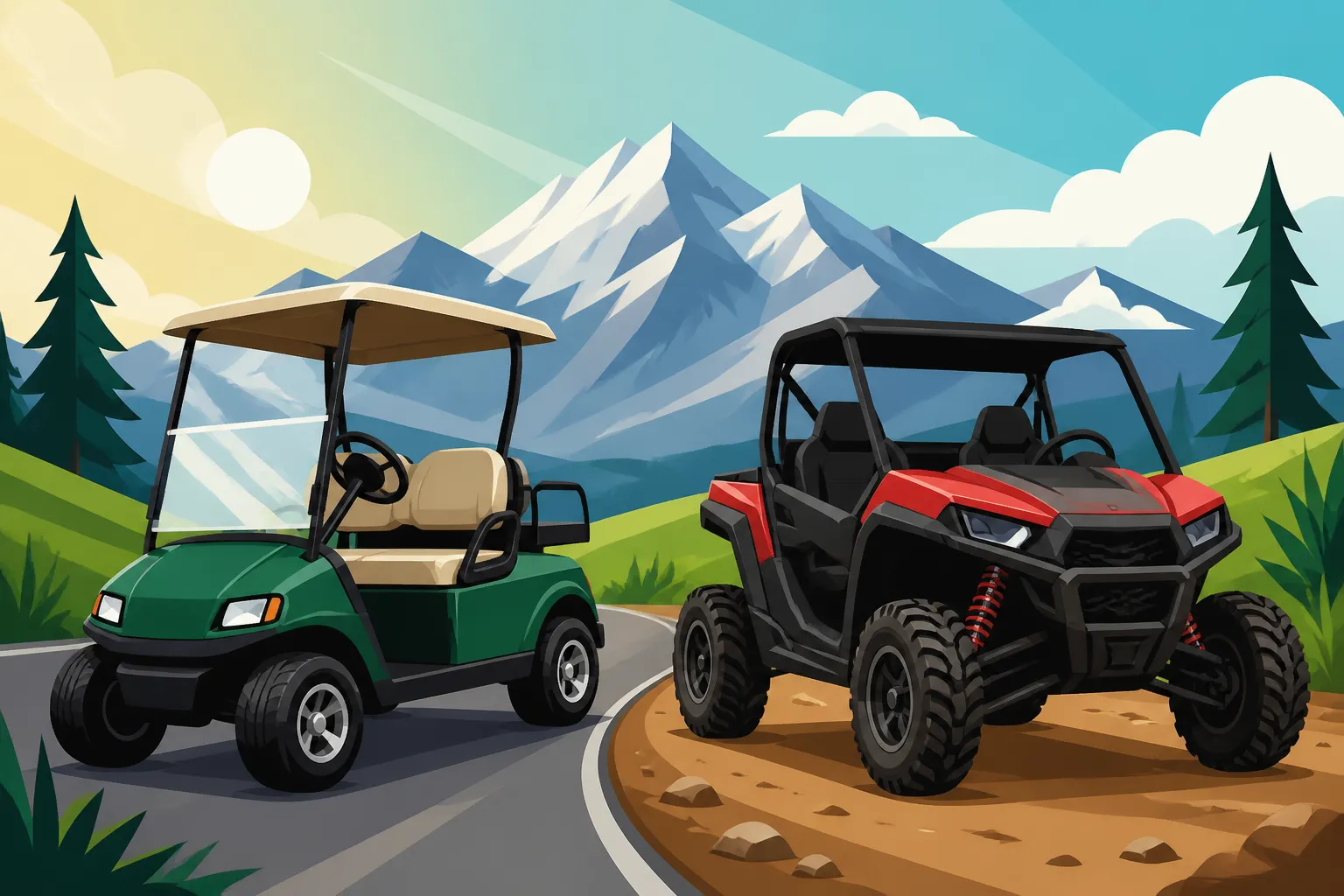
When most of us think of a "golf cart," we picture those quiet, open-air electric or gas-powered buggies used for puttering around a golf course, hauling clubs, and maybe a couple of friends. And that's largely how Montana law views them too. A traditional golf cart is designed for specific, off-highway purposes, primarily for short-distance travel within a defined, usually private, area. They aren't built or intended for the rigors of public roads, traffic, or higher speeds.
These machines typically lack many of the fundamental safety features required for street-legal operation. We're talking about things like proper headlights, taillights, turn signals, seat belts, and robust braking systems suitable for sudden stops in traffic. While you might see someone zipping from their RV to the lake in a campground on a golf cart, that's often on private property or within a dedicated, low-speed community where local rules might apply, not necessarily on a public street where state traffic laws are enforced. If you've ever tried to take a basic golf cart onto a busy road, you'd quickly realize how exposed you feel, and that's precisely why the law limits their use. They're fantastic for what they're designed for, but that usually doesn't include sharing the asphalt with pickup trucks and semi-trailers.
Decoding the Low-Speed Vehicle (LSV) Definition
Now, a Low-Speed Vehicle (LSV) is a horse of a different color entirely. Montana, like many states, has a specific legal definition for an LSV that sets it apart from a golf cart and even from most ATVs or UTVs. The key here is that an LSV is designed and manufactured to be street-legal, albeit with some significant restrictions.
In Montana, an LSV is generally defined as a four-wheeled vehicle with a top speed of more than 20 miles per hour but not more than 25 miles per hour. It must also weigh less than 2,500 pounds. Crucially, LSVs are built with specific safety features that allow them to integrate (to a limited degree) with regular traffic. Think of them as a hybrid between a souped-up golf cart and a very small car. These vehicles come equipped from the factory with features such as headlamps, stop lamps, turn signal lamps, taillamps, reflex reflectors, parking brakes, rearview mirrors, a windshield, seat belts, and a vehicle identification number (VIN). Without these features, it simply isn't an LSV in the eyes of the law, no matter what someone calls it. The entire purpose of the LSV category is to allow for slow-speed, local transportation in areas where it makes sense, providing a safe option for short commutes or errands within a neighborhood without needing a full-sized car.
The Quest for Street Legality: Equipping Your Machine for Montana Roads
If you're dreaming of cruising your golf cart or a newly acquired LSV down a Montana road, the reality is that a standard golf cart almost never qualifies for street legality without significant, often impractical, modifications. LSVs, on the other hand, are built for it. The distinction hinges entirely on the safety equipment they possess. Montana doesn't mess around when it comes to road safety, and for good reason—our roads can be busy, and the weather can be unpredictable.
Essential Equipment for Low-Speed Vehicle Compliance
For a vehicle to be classified and operated as an LSV on Montana public roads, it must be equipped with a specific array of safety features. These aren't optional add-ons; they are fundamental requirements designed to make the vehicle visible, controllable, and reasonably safe in a low-speed traffic environment. You might be surprised by how comprehensive this list is, precisely because it differentiates an LSV from a casual golf cart.
Here's what Montana generally requires:
- Headlamps: Like any car, you need functional headlights for visibility, especially during dawn, dusk, or inclement weather.
- Stop Lamps (Brake Lights): To signal when you're slowing down or stopping, just like a regular vehicle.
- Turn Signal Lamps: Essential for indicating your intentions to other drivers, whether you're turning left, right, or changing lanes.
- Taillamps: Red lights at the rear that illuminate when the headlamps are on, making your presence known to traffic behind you.
- Reflex Reflectors: Additional reflective devices, typically on the sides and rear, to enhance visibility, particularly at night.
- Parking Brake: A mechanism to hold the vehicle stationary when parked.
- Rearview Mirrors: At least one on the driver's side, and often a second mirror on the passenger side or a center rearview mirror, to allow the driver to see traffic approaching from behind.
- Windshield: A sturdy, safety-glass windshield for driver protection from debris and elements.
- Seat Belts: All designated seating positions must have DOT-approved seat belts. This is a critical safety feature often missing from basic golf carts.
- Vehicle Identification Number (VIN): A unique 17-character VIN is crucial for titling, registration, and tracking the vehicle's history, just like a car or motorcycle.
- Speedometer: To monitor your speed and ensure you stay within the legal limits for LSVs and posted road speeds.
- Horn: An audible warning device to alert pedestrians or other drivers to your presence.
Many aftermarket companies, including brands like SuperATV, offer conversion kits that provide many of these components. However, installing a kit on a standard golf cart doesn't automatically transform it into a street-legal LSV. The manufacturer must certify that the vehicle meets federal motor vehicle safety standards (FMVSS) for LSVs, which is usually done at the point of original manufacture. If you're modifying a golf cart, you're essentially trying to re-manufacture it, which is a complicated and often cost-prohibitive endeavor that usually doesn't result in a true, certifiable LSV. It's often much simpler and safer to purchase a vehicle specifically designed and sold as an LSV from the outset.
Speed Limits and Road Restrictions for LSVs
Even with all the right equipment, LSVs aren't free to roam just any road in Montana. They are, by definition, "low-speed" vehicles, and their operation is strictly regulated to ensure they don't pose a hazard to themselves or faster-moving traffic. The primary restriction revolves around their maximum speed and the types of roads they can legally use.
Generally, an LSV's top speed is capped at 25 miles per hour. This speed limitation dictates where they can safely and legally operate. You won't find LSVs on major highways, interstates, or any road where the posted speed limit exceeds 35 miles per hour. The idea is to keep them off roads where their slower speed would create a dangerous impediment to the flow of traffic. Imagine an LSV trying to keep up with traffic on a rural Montana highway where speeds are 70 mph – it simply wouldn't be safe.
However, many smaller towns and counties in Montana do allow LSVs (and sometimes even golf carts, with specific ordinances) on their local streets. These are typically residential areas, main streets in very small communities, or roads with lower speed limits where the LSV can blend more safely with other vehicles. It is absolutely vital to remember that these permissions are highly localized. What's perfectly fine in a small community like Ennis might be strictly prohibited just a few miles down the road in a different county or town. Therefore, before you even think about driving your LSV onto a public road, you must diligently check with the local municipal government or county commissioners to understand their specific ordinances. [Montana Towns That Allow OHVs on Their Streets] often have different rules for LSVs, so don't assume the two categories are treated the same. Always be mindful of the posted speed limits and the character of the road you're on; if it feels too fast or too busy for a 25 mph vehicle, it probably is.
Registration, Titling, and Licensing in Montana
Once you have a machine that fits the Low-Speed Vehicle definition – one truly manufactured as such with all the necessary safety gear – the next hurdle is getting it properly registered, titled, and ensuring you're licensed to drive it. This isn't like simply adding an OHV decal; LSVs are treated more like cars than recreational machines when it comes to official paperwork. Getting this wrong can lead to serious legal issues, including fines and the inability to legally operate your vehicle.
Titling and Registering a Low-Speed Vehicle in Montana
For an LSV to be legally driven on Montana's public roads, it absolutely must be titled and registered with the state, just like any other motor vehicle. This process typically happens at your local county treasurer's office. You can't just slap a "street legal" sticker on it and call it a day; there's official paperwork involved to prove ownership and ensure the vehicle meets state standards.
The first step is usually titling. You'll need proof of ownership, such as a manufacturer's certificate of origin (MCO) if it's new, or a previously issued title if you bought it used. A critical part of this process is often a VIN inspection. A law enforcement officer or authorized VIN inspector will verify that the vehicle's VIN matches your documentation and ensure it isn't stolen or cobbled together improperly. Once titled, you can then proceed to registration. This involves paying the appropriate fees and taxes, after which you'll receive a license plate and registration decals that must be properly displayed on the vehicle. Unlike the [Montana's One-Time Permanent OHV Registration] that some off-highway vehicles enjoy, LSV registration often requires annual renewal, similar to a car. These fees contribute to state and local road funds, acknowledging that your vehicle will be using public infrastructure.
| Feature | Golf Cart (Standard) | Low-Speed Vehicle (LSV) | OHV (ATV/UTV) (Road Legal Setup) |
|---|---|---|---|
| Top Speed | ~15-20 mph | 20-25 mph | Varies (often much higher) |
| Manufacturer | Designed for private property | Designed for public road use (FMVSS) | Designed for off-road (can be modified) |
| VIN | Often absent/limited | Required and Standard | Required and Standard |
| Headlights | Optional/Basic | Required (DOT-approved) | Required for Road Legal |
| Taillights | Optional/Basic | Required (DOT-approved) | Required for Road Legal |
| Turn Signals | Rarely present | Required (DOT-approved) | Required for Road Legal |
| Seat Belts | Rarely present | Required (DOT-approved) | Required in UTVs (Road Legal) |
| Windshield | Optional/Flap | Required (Safety Glass) | Optional/Aftermarket |
| License Plate | No | Yes | Yes (special plate/decal) |
| Registration | No (on public roads) | Required (annual) | Required (often permanent in MT) |
| Driver's License | No (on private property) | Required (valid driver's license) | Required (valid driver's license) |
| Insurance | Not typically required | Required (liability) | Required (liability for road use) |
| Road Use | Generally prohibited | Restricted (low speed, specific roads) | Restricted (local ordinances, special equipment) |
Driver's License and Insurance Requirements
Operating an LSV on a public road in Montana isn't just about the vehicle; it's also about the operator. The state treats LSV drivers similarly to those operating regular motor vehicles, which means you can't just jump in and drive without proper credentials.
First and foremost, anyone operating a legally registered LSV on a public road in Montana must possess a valid driver's license. This means you need to have gone through the standard driver education and licensing process, proving you understand the rules of the road and are capable of operating a motor vehicle safely. This requirement distinguishes LSVs from certain off-highway vehicle (OHV) rules, where younger riders might be permitted with a safety certificate and adult supervision, particularly off-road. [Driver's License Rules for Montana Road Riding] for OHVs vary, but for LSVs, it's a full-fledged license.
Beyond the license, insurance is another non-negotiable requirement. Just like with a car, you are legally required to carry liability insurance when operating an LSV on public roads. This insurance is crucial for protecting yourself and others in the event of an accident. It covers damages or injuries you might cause to another party. The specific coverage amounts will be mandated by state law, so it's always wise to check current requirements. You should contact your insurance provider to ensure your policy extends to an LSV, as it might not be automatically covered under a standard auto or even an OHV policy. [Insuring an ATV in Montana] provides some context, but LSV insurance might fall under a different category due to its road-legal status. Don't assume anything; confirm your coverage before hitting the street.
Navigating Local Ordinances and Community Rules
Here’s where things get really localized and, frankly, a bit complicated. Even if your machine technically qualifies as an LSV and is registered and insured, its practical use on Montana roads largely boils down to what individual cities, towns, and even county commissions decide. Montana grants local jurisdictions a significant amount of control over their roadways, leading to a patchwork of rules that can vary dramatically from one community to the next.
How Montana Towns Decide on Golf Cart and LSV Access
It’s easy to assume that if a vehicle has a license plate, it can go anywhere. But for LSVs and golf carts, this couldn't be further from the truth. In Montana, the power to permit or restrict the use of these vehicles on local streets often rests with the municipal government (for cities and towns) or the county commissioners (for county roads). These bodies can enact specific ordinances or resolutions that either open up certain roads to LSV and golf cart traffic or, conversely, keep them entirely off.
You might find small, picturesque lake towns, certain retirement communities, or even some resort areas that have embraced LSVs and golf carts as a convenient and environmentally friendly mode of local transportation. They might have designated routes, specific speed limits, or even unique permitting systems for residents. For example, a town might specifically allow LSVs on all roads with a posted speed limit of 25 mph or less, while explicitly prohibiting them on busier arterial roads. Conversely, you could drive into the next town over, and find zero allowance for them, regardless of your machine's compliance. [Montana Towns That Allow OHVs on Their Streets] often have very specific rules, and it's not uncommon for them to differentiate between an OHV that might be "street legal" by conversion and a factory-built LSV. Always, always check the local rules. The best approach is to contact the city clerk's office or the county sheriff's department in the specific area you plan to ride. Don't rely on anecdotal evidence or what you see others doing; get the official word.
Common Pitfalls and Misconceptions
The landscape of rules for golf carts and LSVs is ripe for misunderstanding, and these misconceptions can lead to trouble. People often make assumptions that, while seemingly logical, don't align with Montana's specific legal framework. Being aware of these common pitfalls can save you from a citation or worse.
One of the biggest misconceptions is the idea that "if it has a license plate, it's legal everywhere." As discussed, an LSV's license plate only means it's registered; it doesn't grant universal access to all public roads. Its speed and design still restrict it to lower-speed zones. Another common error is confusing OHV laws with LSV laws. While both involve operating smaller vehicles, the legal definitions, equipment requirements, and permissible uses are distinct. An off-highway vehicle (ATV or UTV) that has been made "street legal" with a conversion kit and appropriate registration is still generally governed by OHV road access laws, which can differ significantly from LSV regulations.
Some people also mistakenly believe that simply adding a light kit and a horn to a golf cart makes it an LSV. As we've covered, true LSVs are factory-built to meet federal safety standards, including robust chassis, braking, and safety features that go far beyond basic accessories. Trying to pass a modified golf cart off as an LSV will likely result in fines and the immediate removal of the vehicle from the road. Consequences for illegal operation can range from hefty fines for an unregistered vehicle to impoundment of your machine, and even potential reckless driving charges if you're operating it unsafely in traffic. [Penalties for an Unregistered OHV in Montana] can be significant, and similar penalties would apply to an illegally operated LSV or golf cart. Always err on the side of caution and ensure your machine and your driving habits align perfectly with local and state laws.
Golf Carts on Private Property and in Designated Communities
While the public road use for golf carts is heavily restricted, their utility and legality on private land or within specific, controlled communities are almost universally accepted. This is where the traditional golf cart truly shines and causes far fewer legal headaches. Understanding these distinctions is key to responsible and worry-free operation.
Recreational Use on Private Land
For many Montana residents, a golf cart is a fantastic tool for getting around their own property. Whether you live on a large acreage outside of Bozeman, have a sprawling ranch in eastern Montana, or simply use it to navigate a large backyard in Missoula, operating a golf cart on your own private land is generally entirely permissible and doesn't require any special registration, titling, or licensing from the state. This freedom extends to other private properties where you have explicit permission from the landowner, such as a friend's farm or a privately owned campground.
On private land, the primary considerations shift from legal compliance to common sense and safety. While you don't need a driver's license to operate a golf cart in your own field, exercising good judgment is still paramount. Be mindful of passengers, especially children, and ensure everyone understands basic safety practices. Avoid driving too fast, especially on uneven terrain or near obstacles. While state laws might not apply, internal rules within a private community, HOA, or resort could still dictate how and where golf carts are used. Always respect those boundaries and prioritize safety, even when you're off the public thoroughfare.
Agricultural and Work Exemptions (Distinction from OHVs)
When it comes to agricultural and work-related use, the lines can sometimes blur, but it's important to differentiate golf carts and LSVs from purpose-built utility OHVs (like UTVs). While Montana does offer certain exemptions for agricultural machines operating on roads for work-related tasks, these typically apply to rugged ATVs and UTVs, not standard golf carts. [Montana OHV Rules for Ranch Machines] usually pertain to machines designed for hauling, towing, and navigating rough terrain, often equipped with powerful engines and robust suspensions.
A golf cart, by its very nature and design, is rarely suited for heavy agricultural work. It lacks the ground clearance, torque, and durability required for tasks like hauling feed, fence posts, or navigating muddy pastures. While a highly modified LSV might potentially be used for very light utility tasks on a farm, it's not its primary design. Most ranchers and farmers rely on proper UTVs or ATVs for their daily chores, which are built to handle the demands of the land. It’s crucial not to conflate the agricultural exemptions given to heavy-duty utility OHVs with the limitations placed on golf carts or even LSVs, which are fundamentally different types of vehicles. If your intent is to use a machine for legitimate farm or ranch work that occasionally crosses a road, a UTV that qualifies for agricultural exemptions is likely the appropriate choice, rather than trying to adapt a golf cart.
Disclaimer
This article is for general informational purposes only and does not constitute professional advice. Laws, prices and regulations vary by location and change over time. Consult a qualified professional for guidance on your specific situation.