What Montana Requires on an OHV Road Ride
It's incredibly frustrating, isn't it? You've got your side-by-side or ATV, a perfect Montana day, and you just want to get from your camp to a trail, or even pop into a small town for lunch, but the rules about riding on public roads feel like a tangled mess. This comprehensive guide is here to untangle all those regulations, laying out exactly what Montana requires for your off-highway vehicle (OHV) to be street-legal and what you, as the operator, need to know to ride compliantly and safely on the state's diverse road network.
Understanding Montana's OHV Road Access Philosophy
Montana is a big state with a lot of open land, which makes it an incredible place for OHV enthusiasts. However, when it comes to riding on roads, it's not a simple "yes" or "no" answer. Many riders come here expecting a uniform set of laws, only to find themselves scratching their heads at the local variations. It’s definitely a nuanced landscape to navigate, but with a little understanding, you can figure out how to enjoy the roads responsibly.
Why Road Access Is a Patchwork, Not a Blanket Rule
Unlike some states with a clear, statewide "street legal" designation for OHVs, Montana takes a more decentralized approach. This means that whether you can ride your ATV or UTV on a particular road often depends less on state law and more on decisions made at the county and even city level. County commissioners have significant authority over county roads, and municipal governments create ordinances for their city streets. This local control is why you might be perfectly legal to ride through one small town, but just a few miles down the road in another community, it could be strictly forbidden. This patchwork can be incredibly confusing for both residents and visitors alike, leading to unintended violations if you're not diligent in your research.
It's a system that has evolved to allow local communities to tailor rules to their specific needs, whether that's supporting a thriving OHV tourism economy or preserving quiet residential neighborhoods. But for riders, it means the burden is on you to know the local rules. You can't assume that because a road in Lincoln County is open to OHVs, a similar road in Gallatin County will be too. Each jurisdiction has its own unique considerations, from traffic volume to public safety concerns, and they draft their ordinances accordingly.
Differentiating County Roads from State Highways
A critical distinction to understand in Montana is the difference between county roads and state highways. Generally speaking, county roads are often your best bet for OHV access. These are typically the gravel, dirt, or lightly paved routes that crisscross rural areas, connecting ranches, small communities, and access points to public lands. Many county commissions have passed resolutions to open these roads, in whole or in part, to OHV traffic, especially in areas where OHV recreation is a significant part of the local culture or economy.
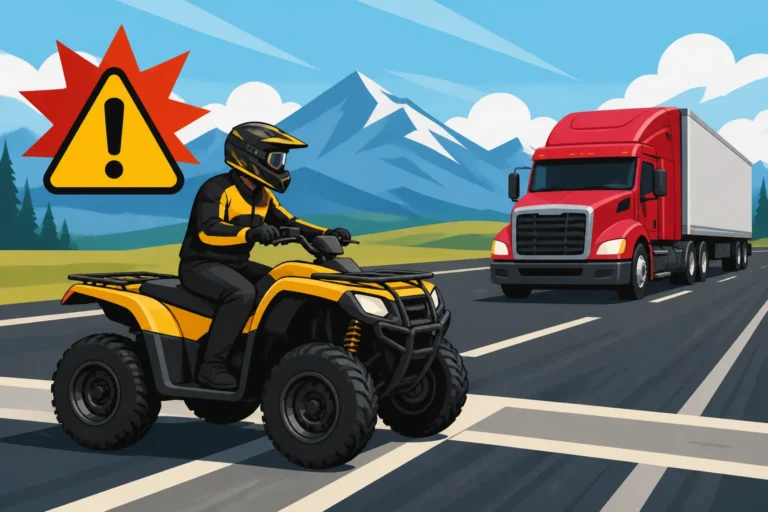
State highways, on the other hand, such as U.S. routes or interstates (like US-93 or I-90), are almost universally off-limits for OHV travel. These roads are designed for higher speeds and heavier traffic, making OHVs inherently more dangerous. There are very few, highly specific exceptions, such as designated crossings where an OHV trail or county road requires you to briefly traverse a state highway. Even in these instances, you'll find strict rules about stopping, signaling, and getting across as quickly and safely as possible. [Crossing a Montana Highway on an OHV] It's vital to respect these boundaries, as violating state highway rules can lead to serious fines and safety risks. Always assume state highways are closed unless explicitly marked otherwise for a designated crossing point.
Essential Equipment for Montana Road Readiness
Beyond knowing where you can ride, you need to ensure your machine is properly equipped for the road. Simply having a running engine isn't enough; Montana law, where OHV road use is permitted, demands specific safety and visibility features. Think of it like this: your OHV needs to be able to interact safely with other vehicles and be clearly seen, just like any car or truck.
Lighting and Visibility: Seeing and Being Seen
When you're sharing the road, day or night, proper lighting is non-negotiable. Montana's rules for OHVs on roads reflect this, requiring certain lights to ensure you can see where you're going and, crucially, that other drivers can see you. First and foremost, you need a functional headlight. This isn't just for night riding; on Montana roads, even during daylight hours, your headlight must be on at all times. This dramatically increases your visibility to oncoming traffic, which is especially important on dusty gravel roads or through shaded forest sections. The headlight must be capable of illuminating objects a certain distance ahead, typically 100 feet.
Equally important are your taillights and brake lights. A red taillight must be visible from a specified distance to the rear, ensuring that following vehicles can spot you. Your brake light, which illuminates when you apply the brakes, is critical for signaling your intentions to traffic behind you, helping to prevent rear-end collisions. Beyond these, reflectors are also generally required, especially on the rear and sides of the machine, to make you more visible when parked or in low light conditions. The specific placement and color (red to the rear, amber to the side) are important for compliance. [Headlight and Taillight Rules in Montana] Investing in good, bright LED lighting, whether factory or aftermarket, is always a wise choice for safety.
Safety and Control: Brakes, Horn, and Mirrors
Beyond lighting, your OHV needs to be equipped with basic safety and control features that are standard on any road-going vehicle. Reliable brakes are paramount. Your OHV must have a braking system capable of stopping the machine safely and effectively, typically with at least two separate means of application (e.g., foot brake and hand brake). This ensures you can react to unexpected road conditions or hazards and maintain control. A brake failure on a gravel road or in traffic could have severe consequences.
Next up, you'll need a working horn. This is not just for alerting wildlife on the trail; on the road, it's a vital communication tool to signal other drivers or pedestrians. It should be audible from at least 200 feet away. Lastly, rearview mirrors are a critical safety feature. You need at least one, and many riders opt for two (one on each side) to provide a comprehensive view of traffic approaching from the rear. These mirrors need to be securely mounted and provide a clear, unobstructed view behind you. Aftermarket options are plentiful for OHVs, and companies like SuperATV offer a range of robust, durable mirrors designed to withstand the rigors of off-road use while providing excellent visibility for road sections. Ensuring your machine has these fundamental safety features isn't just about avoiding a ticket; it's about making your road ride as safe as possible for everyone.
Exhaust and Noise Considerations
While the roar of a powerful engine might be thrilling on the open trail, it can quickly become a nuisance on public roads, especially when passing through residential areas or small towns. Montana law, particularly where OHVs intersect with public lands, requires an adequate muffler to reduce exhaust noise. This isn't just a suggestion; it's a requirement to help mitigate sound pollution. The muffler needs to be in good working order, and any modifications that make your machine excessively loud are generally frowned upon and can lead to citations.
In addition to a muffler, a spark arrester is also mandatory if you're riding on public lands, including many Forest Service and BLM roads that might be open to OHVs. Spark arresters are designed to prevent hot carbon particles from escaping the exhaust and potentially igniting wildfires, which are a serious concern in Montana's dry summers. While the primary purpose is fire prevention, ensuring your machine has a properly functioning spark arrester and muffler contributes to overall community acceptance and respect, making your presence on the roads less impactful on residents. [Mufflers and Spark Arresters in Montana] It’s about being a good neighbor as much as it is about following the law.
Licensing, Registration, and Insurance for Road Use
Just like operating any other motor vehicle on Montana's roads, your OHV and your personal credentials need to be in order. This isn't just about having the right gear on your machine; it's about proving you're a responsible operator with a legally recognized vehicle.
Your Driver's License and Safety Education
When you take your OHV onto a public road in Montana, you're transitioning from a recreational activity to operating a motor vehicle on shared infrastructure. Because of this, a valid driver's license is a fundamental requirement. Anyone operating an OHV on a public road must possess a current, valid driver's license, just as if they were driving a car or truck. This ensures that the operator has demonstrated a basic understanding of traffic laws and safe driving practices. This is not a place for learners or unlicensed drivers. [Driver's License Rules for Montana Road Riding]
Furthermore, Montana has specific safety education requirements, especially for younger riders. If you are under 18, you generally need to have completed an approved OHV safety course to operate an OHV on public lands and, by extension, on public roads where allowed. Even for adults, taking a safety course is highly recommended. It provides crucial knowledge about safe operation, rider responsibility, and understanding trail and road etiquette. While adults with a valid driver's license might not always be legally mandated to take the course for road use, the knowledge gained is invaluable for preventing accidents and ensuring compliance. [Montana's Safety Education Requirement]
Montana OHV Registration and Decals
Every off-highway vehicle operated in Montana, whether on public land or on a public road where permitted, must be properly registered. Montana offers a unique "one-time permanent" registration for OHVs, which is a fantastic feature for residents. Once you register your ATV or UTV, it's generally good for the lifetime of the machine in your ownership, eliminating annual renewal hassles. This registration ensures your machine is recognized by the state and contributes to funding for OHV programs and trail maintenance. [Montana's One-Time Permanent OHV Registration]
Upon registration, you'll receive a registration decal. This decal must be prominently displayed on the machine, typically on the rear. Correct placement ensures that law enforcement and other officials can easily verify your registration status. For UTVs, the decal typically goes on the rear, often on a fender or roll bar, while ATVs usually have it on the rear fender. Failure to display a current decal can lead to a citation. Remember, this registration is tied to the owner and the machine. If you sell your OHV, the "permanent" registration does not transfer to the new owner; they must register it themselves. [Why a Sold Machine Loses Its Registration] [Where a Montana OHV Decal Goes]
Insurance for Road-Legal Peace of Mind
This is an area where specific state law doesn't always mandate OHV liability insurance for all instances of road use, but it is unequivocally smart practice, and local ordinances can require it. Some counties or municipalities that open their roads to OHVs may include a requirement for liability insurance as part of their ordinance, mirroring the expectation for automobiles. Even if a specific local rule doesn't explicitly demand it, consider the significant financial risk. If you're involved in an accident on a public road and you're at fault, you could be held personally liable for property damage, medical bills, and other expenses.
Your standard auto insurance policy almost certainly does not cover your OHV, especially when it's being operated on public roads. [Does Auto Insurance Cover a Montana OHV?] You'll need a separate OHV-specific insurance policy. Many insurance providers offer policies tailored for ATVs and UTVs, including options for liability, collision, and comprehensive coverage. While the cost might seem like an extra expense, the peace of mind and financial protection it offers are invaluable. Before you venture onto any public road, always check with your insurance provider to ensure you have adequate coverage for the specific type of riding you plan to do.
Rider and Passenger Requirements
Beyond the machine itself, Montana's road rules also focus on the safety of the people riding in or on the OHV. These guidelines are designed to protect you, your passengers, and especially younger riders, from the increased risks associated with mixing OHVs with other road traffic.
Helmets, Eye Protection, and Seatbelts
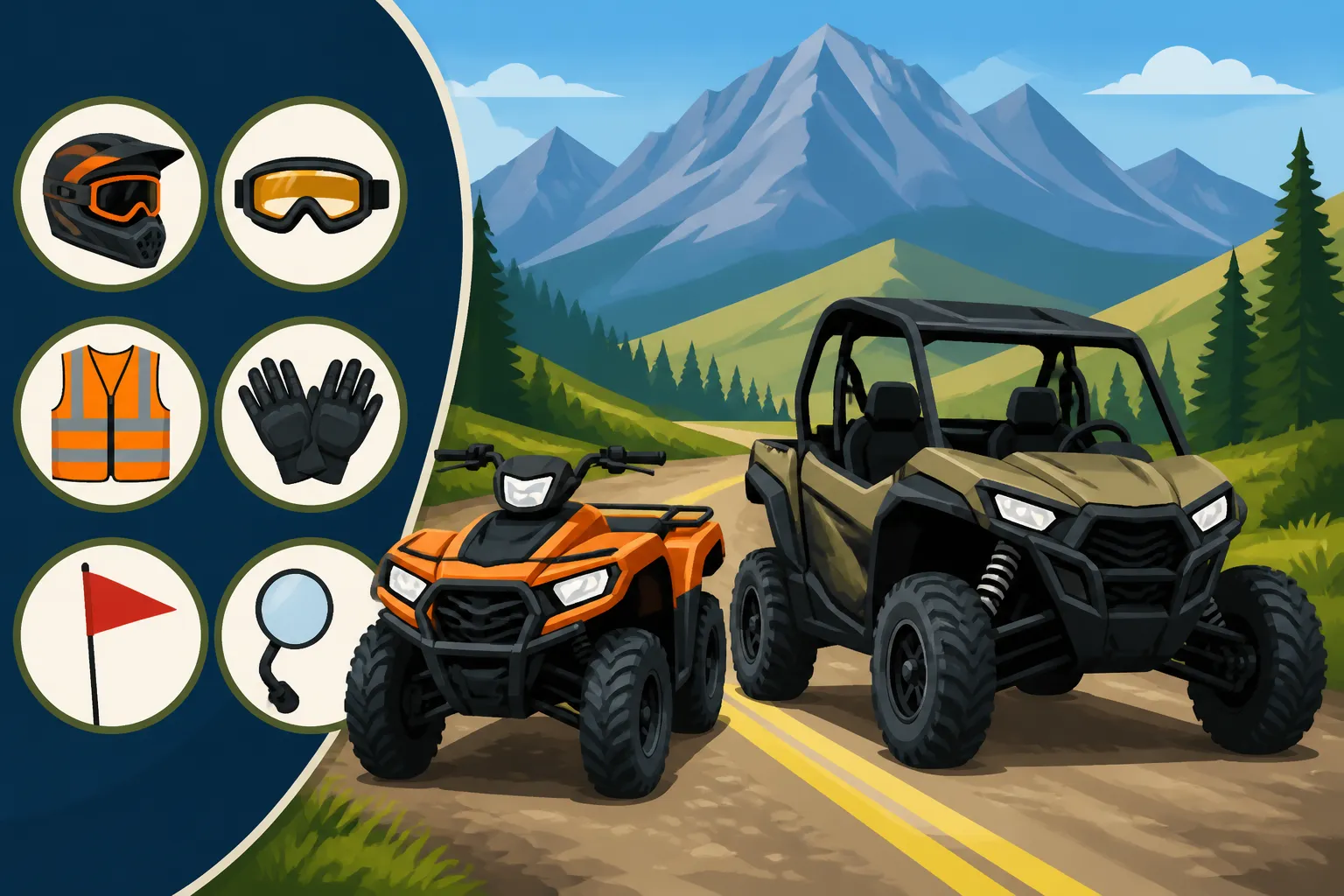
When you're riding an OHV on a public road, personal protective equipment (PPE) becomes incredibly important. Montana law is clear on helmets: any operator or passenger under the age of 18 must wear a U.S. DOT-approved helmet. This is not optional; it's a critical safety measure designed to protect against head injuries in the event of a crash. Even if you're over 18 and not legally required to wear a helmet, it's a practice highly recommended by safety experts, especially given the open nature of many OHVs. [Montana Helmet Rules for Riders Under 18]
Eye protection is also a must for all riders on public roads, regardless of age. Goggles, a face shield on a helmet, or shatter-resistant eyewear are essential to protect your eyes from dust, debris, insects, and other hazards that can impair vision and lead to accidents. Finally, if your OHV, particularly a side-by-side, is equipped with seatbelts from the factory, they must be worn by all occupants. These safety devices are engineered to keep you secure in your seat during sudden stops or impacts, significantly reducing the risk of ejection or injury. Always make sure everyone buckles up before you hit the road.
Passenger Rules and Machine Capacity
Every OHV is designed with a specific carrying capacity for passengers, and it's crucial to adhere to these limits, especially on public roads. You are only permitted to carry as many passengers as the machine was originally designed and manufactured for. For example, a single-rider ATV should never carry a passenger on a public road. A two-seat side-by-side should only carry one passenger in addition to the driver. Overloading your machine not only makes it unstable and harder to control, increasing the risk of an accident, but it's also a violation of the law. [Montana Passenger Rules on a Road Section]
When it comes to children, additional considerations apply. Any child passenger must be able to reach the footrests and securely grasp handholds, if applicable, to maintain their balance and stability. They should not be too small for the machine's design, and their weight should be within the manufacturer's recommendations. Ensuring passengers, especially children, are properly seated and secure is vital for their safety and for maintaining the machine's handling characteristics, which are already different from a conventional car.
Age and Supervision for Young Riders on Roads
Montana has specific rules governing who can operate an OHV on a public road, with particular attention paid to age and experience. Generally, a person must hold a valid driver's license to operate an OHV on a public road. However, there are provisions for younger riders on county roads. For riders aged 12 to 15, they may be able to operate an OHV on a county road if certain conditions are met, such as having completed an approved OHV safety course and being under the direct supervision of an adult who is at least 18 years old and holds a valid driver's license. [Montana's Rule for Riders Aged 12 to 15]
This adult supervision means they must be close enough to observe and provide immediate direction or assistance. It's not about letting a young rider out of sight; it's about a responsible adult taking direct responsibility for their safety and compliance. These rules are in place because operating an OHV on a road introduces complexities and risks not typically found on a designated trail. The goal is to gradually introduce younger riders to these environments under controlled conditions, ensuring they develop the necessary skills and judgment before riding independently on roads.
Navigating Specific Road Types and Jurisdictions
Understanding the general requirements is one thing, but knowing which roads allow OHV access is another challenge entirely. As mentioned earlier, Montana's approach means that road access is highly localized, requiring riders to be diligent researchers before they hit the pavement or gravel.
County Roads: The Most Common Access Point
For many OHV enthusiasts in Montana, county roads offer the most accessible opportunities for road riding. These are the roads managed by individual counties, and it is the county commissioners who hold the power to open or close them to OHVs. Many rural counties, especially those with significant recreational tourism, have passed resolutions to permit OHV use on some or all of their unpaved roads. This is often done to facilitate access to trail systems, connect small towns, or allow ranching operations to use UTVs for agricultural purposes. [County Commissioners and Montana County Roads]
To figure out if a specific county road is open, you'll need to do some homework. The best approach is to check the county's website, look for county commission meeting minutes, or directly contact the county clerk or sheriff's office. You might also find signs posted at county lines or on specific road entrances indicating OHV access status. While some counties have blanket ordinances, others might only open certain segments or specific classes of roads. Always assume a road is closed until you confirm it's open, and never assume that an unposted road is free game. Always show respect for private property too; even on open county roads, trespassing onto adjacent posted land is strictly prohibited.
City and Town Streets: Highly Variable Access
Riding your OHV into a city or town is where the rules become even more granular and varied. Each municipality in Montana has the authority to enact its own ordinances regarding OHV use within its corporate limits. Some smaller, trail-oriented towns, particularly in Western Montana, have embraced OHV tourism and have ordinances that permit OHVs on most or all of their streets, often with specific speed limits and designated routes. They might see it as a way to encourage riders to come into town, visit local businesses, and fuel up. [Montana City Streets and Municipal Ordinances]
However, larger towns and cities, or those not focused on OHV tourism, may have strict prohibitions against OHVs on their streets due to traffic concerns, noise, or public safety. It’s absolutely critical to research the specific town's ordinances before attempting to ride there. A quick call to the city clerk's office or a search of the city's official website can save you a significant fine or even impoundment. Don't rely on word-of-mouth or assume that because you see one local riding, it's universally permitted. Even in towns where OHV use is allowed, there may be restrictions on parking (e.g., [Parking an OHV on a Montana Main Street]), specific times of day, or particular streets that remain off-limits.
Federal Lands: Forest Service and BLM Roads
Montana is home to vast stretches of federal land managed by agencies like the U.S. Forest Service (USFS) and the Bureau of Land Management (BLM). These lands contain a huge network of roads, and many of them are open to OHVs. However, it's not a free-for-all. Both agencies manage their road and trail systems using Motor Vehicle Use Maps (MVUMs), which are the definitive guide for where motorized travel is permitted. These maps delineate which roads and trails are open to specific vehicle types (like ATVs, UTVs, dirt bikes, or full-size vehicles), the seasonal restrictions, and any other relevant rules. [Reading a Montana Motor Vehicle Use Map]
It is your responsibility to obtain and understand the MVUM for the specific national forest or BLM district you plan to ride in. These maps are often available for free at ranger stations, BLM field offices, or for download online. While many federal roads are open, particularly those designated as "system roads," riding off these designated routes is generally prohibited and can lead to significant fines and environmental damage. The focus on federal lands is on staying on designated routes to protect natural resources and wildlife. When riding to and from a trailhead on federal land, you'll still need to ensure your machine meets all state and local requirements for road use if you are traversing county or state roads to get there.
General Road Rules and Etiquette for OHV Operators
When you take your off-highway vehicle onto a public road, you are, by law, expected to follow the same traffic laws as any other motor vehicle operator. This isn't just about avoiding a ticket; it's about ensuring safety for yourself, other drivers, and pedestrians. Operating an OHV on the road requires a shift in mindset from trail riding to responsible road sharing.
Speed Limits and Safe Operation
This might seem obvious, but it bears repeating: when operating an OHV on a public road, you must obey all posted speed limits. In many cases, particularly on county roads or in small towns, the speed limit for OHVs might be lower than for cars, even if a sign isn't specific to OHVs. Always err on the side of caution and maintain a speed that is safe for the conditions. This means adjusting your speed for curves, hills, blind spots, dust, and any other potential hazards. Your OHV handles differently than a car, especially at speed on pavement or loose gravel, so responsible speed management is critical. [Montana Speed Limits for OHVs on Roads]
Beyond speed, safe operation includes yielding the right-of-way, stopping at stop signs and traffic lights, and using proper hand signals or turn signals (if equipped) to communicate your intentions. Always assume other drivers may not be expecting an OHV on the road, so ride defensively. Give other vehicles plenty of space, especially larger trucks or farm equipment, and be prepared to pull over to the side of the road to allow faster traffic to pass safely, especially on narrow roads where visibility is limited.
Alcohol and Impaired Operation
This is a zero-tolerance area. The same laws that apply to driving a car under the influence of alcohol or drugs apply to operating an OHV on a public road in Montana. [Montana Alcohol Limits for OHV Operators] A DUI on an OHV carries the exact same severe penalties as a DUI in a car, including significant fines, loss of driving privileges, potential jail time, and a lasting criminal record. It is never acceptable to operate an OHV on a public road (or any public land, for that matter) while impaired.
The consequences of impaired OHV operation are not just legal; they are also about safety. Alcohol and drugs impair judgment, slow reaction times, and reduce coordination, all of which are critical for safe OHV operation, especially when interacting with other vehicles and road hazards. It's a risk that is simply not worth taking, for your own safety and the safety of everyone else on the road. If you plan to consume alcohol, do so responsibly and ensure your OHV stays parked.
Protecting the Environment and Local Communities
Operating an OHV on roads carries an implicit responsibility to respect both the natural environment and the local communities you pass through. One of the most important aspects is to stay on designated routes. Riding off-road, whether it's into ditches, through fields, or cutting across private property, is illegal, environmentally damaging, and can lead to severe fines and public backlash against OHV recreation. Adhere strictly to the boundaries of the road.
Be mindful of dust, especially on gravel roads passing by homes or businesses. Slow down and consider pausing if your dust cloud is impacting visibility for others or coating nearby properties. Noise is another significant factor; while your OHV might be legal, excessive noise can be a source of irritation for residents. Many aftermarket parts, like those offered by SuperATV, are designed with responsible use in mind, balancing performance with compliance. Keeping your machine well-maintained, with a proper muffler, helps keep noise levels in check. By being considerate and responsible, OHV riders can foster a positive image and ensure continued access to Montana's incredible landscapes.
Practical Tips for a Montana Road Ride
Before you embark on any road ride with your OHV in Montana, a little preparation goes a long way. Thinking ahead can save you from potential headaches, fines, or even dangerous situations. It’s about being proactive and ensuring you’re ready for whatever the road might throw at you.
Pre-Ride Check and Necessary Documents
Just like you'd check your vehicle before a long road trip, a quick pre-ride inspection of your OHV is essential before heading onto public roads. Check your tire pressure and condition, ensuring they're properly inflated and free of damage. Test your brakes to confirm they're functioning correctly. Verify all your lights – headlight, taillight, and brake light – are working. Make sure your horn is functional and your mirrors are clean and properly adjusted. Check fluid levels and ensure your machine is in overall good mechanical order. A breakdown on a remote county road can be more than just an inconvenience; it can be a safety issue.
Equally important is having all your necessary documents readily accessible. This includes your valid driver's license, your OHV registration certificate, and proof of insurance (if required or carried). While you don't necessarily need to carry every single piece of paper on your person, having it securely stored on your machine in a waterproof bag or compartment is vital. Should you encounter law enforcement, being able to quickly produce these documents demonstrates your compliance and responsibility. [Keeping Registration Papers on the Machine]
Planning Your Route and Knowing the Local Rules
Given Montana's patchwork of OHV road access, thorough route planning is arguably the most critical step. Don't just head out hoping for the best. Utilize resources like county websites, city clerk offices, local sheriff departments, and federal land agency MVUMs to confirm which roads are open to OHVs. Mapping apps and GPS devices can be incredibly helpful here. Some apps, like onX Offroad, integrate MVUM data, showing you precisely where you can and cannot ride.
Consider calling ahead to local authorities if you're unsure about a specific road or town. It’s always better to ask than to guess and face a citation. Pay attention to signage as you ride; local jurisdictions often post signs indicating OHV restrictions or allowances. Having a general idea of your route, including potential fuel stops and any areas with known restrictions, will ensure a smoother, more enjoyable, and compliant ride.
Essential Gear to Carry on a Road Ride
While you might carry a comprehensive toolkit for deep backcountry adventures, a road ride calls for a slightly different set of essentials. For minor mechanical issues, a basic tool kit with wrenches, pliers, a tire plug kit, and a small air pump can be invaluable. A flat tire on a county road is a common annoyance that you can often fix yourself with the right tools.
Safety gear beyond your PPE should include a well-stocked first-aid kit. Even on a road, accidents can happen, and having supplies for cuts, scrapes, or other injuries is crucial. If you're heading into areas with limited cell service, consider carrying a satellite messenger or a two-way radio for emergency communication. Water, snacks, and extra layers of clothing (Montana weather can change quickly!) are also wise additions. Finally, consider a small tow strap in case you or a fellow rider needs a gentle pull. Being prepared ensures that even minor incidents don't turn into major headaches far from home.
Montana OHV Road Ride Requirements Summary
To help you quickly grasp the core requirements for riding your OHV on Montana roads, here's a summary of the key elements. Remember, while this table provides a general overview, local ordinances can add further specific rules, so always check with the local jurisdiction.
| Requirement | County Roads (where permitted) | City/Town Streets (where permitted) | Federal (USFS/BLM) Roads (on MVUM) | Notes |
|---|---|---|---|---|
| Valid Driver's License | Required | Required | Required | Operator must hold a current, valid driver's license. |
| OHV Registration & Decal | Required | Required | Required | Montana's one-time permanent registration applies. Decal must be displayed. |
| Liability Insurance | Recommended (sometimes required by local ordinance) | Recommended (sometimes required by local ordinance) | Recommended | Always check local ordinances. Separate OHV policy generally needed. |
| Headlight (on at all times) | Required | Required | Required | Must be functional and on, day or night. |
| Taillight | Required | Required | Required | Must be visible from the rear. |
| Brake Light | Required | Required | Required | Functional brake light essential for signaling. |
| Horn | Required | Required | Recommended (often implies for road-legal machines) | Must be audible from 200 feet. |
| Rearview Mirror | At least one required | At least one required | Recommended (often implies for road-legal machines) | Must provide clear view to the rear. Many riders prefer two. SuperATV offers great options. |
| Muffler & Spark Arrester | Required | Required | Required | Muffler to reduce noise; spark arrester for fire prevention (especially on public lands). |
| Helmets (Under 18) | Required (DOT-approved) | Required (DOT-approved) | Required (DOT-approved) | Mandatory for all operators and passengers under 18. |
| Eye Protection (All riders) | Required | Required | Required | Goggles, face shield, or shatter-resistant eyewear. |
| Seatbelts (if equipped) | Required | Required | Required | Must be worn by all occupants in machines equipped with them. |
| Passenger Limits | Adhere to manufacturer's capacity | Adhere to manufacturer's capacity | Adhere to manufacturer's capacity | Only carry as many passengers as the machine is designed for. Children must be able to reach footrests. |
| Youth Rider Rules (12-15 yrs) | Specific conditions apply, adult supervision required | Generally not permitted, check local ordinance | Specific conditions apply, adult supervision required | Check [Montana's Rule for Riders Aged 12 to 15] and local rules. |
| Obey Speed Limits | Required | Required | Required | Follow all posted speed limits, which may be lower for OHVs. Adjust for conditions. |
| No Impaired Operation | Prohibited | Prohibited | Prohibited | DUI laws apply to OHVs on public roads. |
| Stay on Designated Routes | Required | Required | Required | Do not ride off the road or onto private property without permission. Use MVUMs on federal land. |
Disclaimer
This article is for general informational purposes only and does not constitute professional advice. Laws, prices and regulations vary by location and change over time. Consult a qualified professional for guidance on your specific situation.