Roll Cages on a Road Ride
There's a lot of head-scratching that goes on when folks from out of state – or even long-time Montanans – try to figure out what's required for riding their ATV or UTV on our roads. One of the biggest questions that pops up is about roll cages: Are they sufficient? Do they count as safety equipment in a specific way? This guide is here to clear up the confusion and help you understand the role of your roll cage when you're taking your machine from the trail to the pavement in Big Sky Country.
The Role of a Roll Cage on Montana Roads
For many of us who love hitting the backcountry, our side-by-side or UTV is an extension of our adventurous spirit. These machines are built with serious terrain in mind, and a critical component of that design is the roll cage. But when you transition from a gnarly mountain trail to a paved county road, the function and perception of that roll cage can get a little muddled. You might wonder if it's considered a safety feature in the same vein as a car's roof, or if it has special legal standing.
What a Roll Cage Is (and Isn't) For
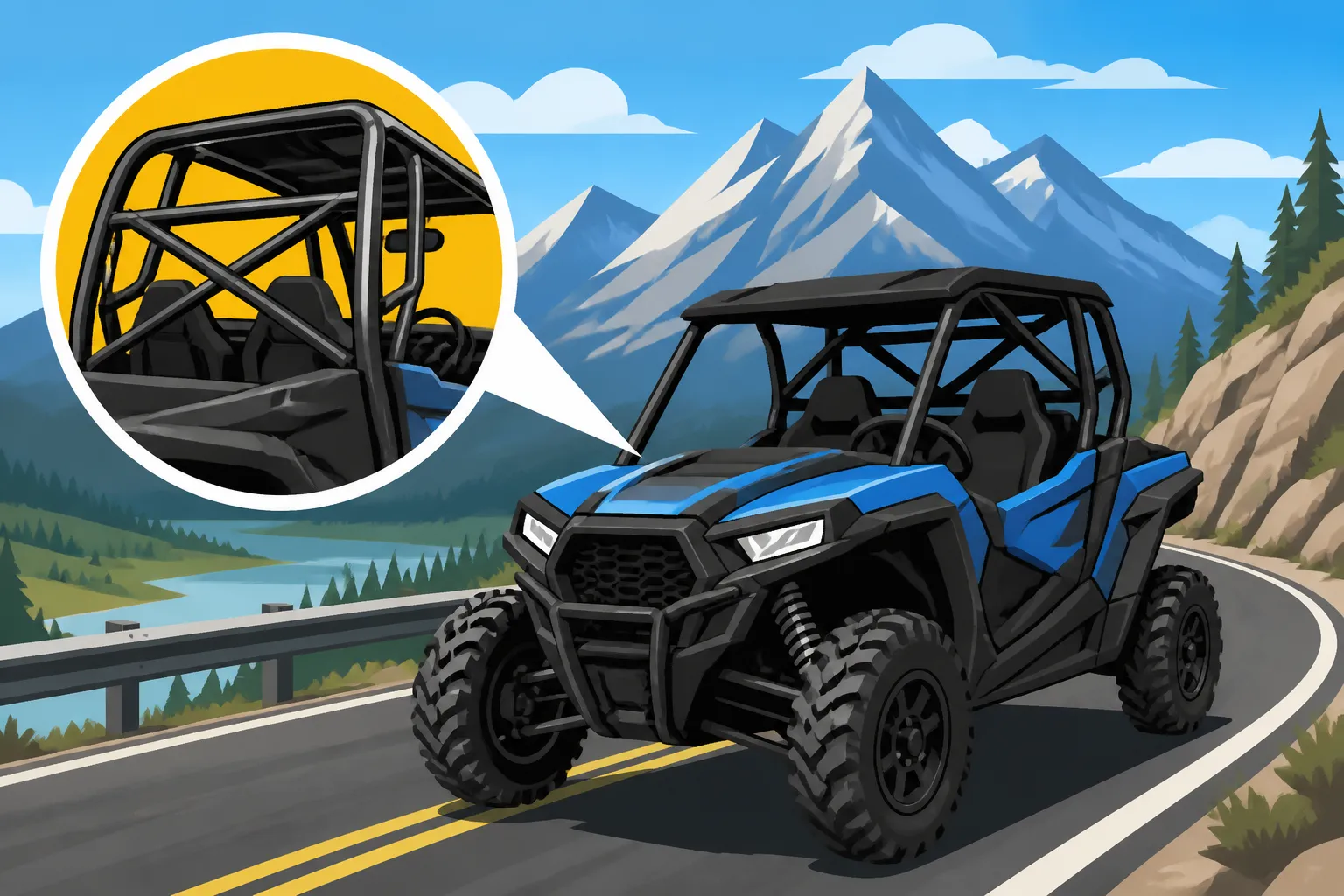
A roll cage, often called a Roll-Over Protective Structure (ROPS), is fundamentally designed to protect occupants in the event of a rollover. It provides a survival space, preventing the vehicle's weight from crushing passengers. Think of it as a skeletal fortress. Manufacturers like Polaris, Can-Am, and Honda engineer these cages to meet certain industry standards for off-road use, anticipating the dynamic and often unpredictable forces encountered on trails. It's a lifesaver when you're navigating steep inclines, off-camber sections, or just misjudging a corner on a rutted track.
However, a roll cage isn't designed as a passenger compartment in the same way a car's roof and pillars are for highway speeds and multi-vehicle collisions. While it offers protection in a rollover, it doesn't offer the same level of occupant containment or impact absorption from a broadside collision with a full-size truck, for example, that a passenger car would. This distinction is crucial when we start thinking about "street legal" requirements. It's about protection from a specific type of incident, primarily in an off-road environment.
Why the Confusion About Road Use?
The confusion often stems from the varied nature of OHV laws across different states and even within Montana itself. Some states might have more explicit rules about the structural integrity or design of vehicles allowed on public roads, blending the lines between utility vehicles, low-speed vehicles, and traditional cars. Here in Montana, the laws are often interpreted through the lens of allowing OHVs on certain county or municipal roads, but they don't necessarily re-classify the OHV as a "car" just because it's on the street.
Many riders, myself included, assume that because our UTV has a robust roll cage, it automatically provides a level of protection comparable to a car's roof. We feel secure, and often, we are more secure than if the machine lacked a cage entirely. But the law doesn't always see it that way. The legal framework around [Riding an OHV on the Road in Montana] focuses more on ensuring the machine has basic road-specific safety equipment like lights, mirrors, and sometimes turn signals, rather than delving into the specifics of structural occupant protection designed for high-speed impacts. This disconnect between perceived safety and legal definition is where many riders get tripped up, wondering if their factory or aftermarket cage is "enough" in the eyes of the law.
Montana's Stance on OHV Road Legality and Roll Cages
Montana is a fantastic state for OHV enthusiasts because we do have a good amount of access to roads, especially county and local routes. However, that access comes with rules, and it's easy to misunderstand them. When it comes to roll cages, the state's approach is more about what the machine must have in terms of accessories to be road-legal, rather than scrutinizing the inherent safety structures.
Are Roll Cages Specifically Addressed in Montana Law?
Here's the straight talk: Montana state law generally does not explicitly detail requirements for roll cages on OHVs operating on designated public roads. Unlike passenger vehicles that must meet federal motor vehicle safety standards (FMVSS) which include roof crush resistance, OHVs are primarily regulated for their off-highway use and specific road-riding equipment. The focus for street legality is on making the OHV visible and controllable, not necessarily on its crashworthiness in a multi-vehicle incident on a paved road.
What this means in practice is that while your factory roll cage is a critical safety feature for off-road riding – and honestly, no one should be without one in a UTV – the law doesn't treat it as a replacement for other safety features like seatbelts or helmets, which are indeed regulated. The presence of a roll cage doesn't negate the need for a driver's license, proper registration, or carrying liability insurance. It's an inherent part of the machine's design, but not a separate "road-legal" component that you need to certify.
What Montana Law Does Require for Road-Legal OHVs
Instead of focusing on the roll cage itself, Montana law focuses on equipping your OHV to operate safely in mixed traffic. This means your machine needs to have a specific set of features that allow it to interact predictably with other vehicles and be seen clearly. These requirements are laid out clearly in the statutes that permit OHV use on certain public roads.
For example, you'll need working [Headlight and Taillight Rules in Montana] that stay on even during the day, sufficient [Brakes a Montana Road Ride Requires] to bring your machine to a safe stop, and a rearview mirror. Depending on the county or municipality, you might also need turn signals. Riders need to have a valid [Driver's License Rules for Montana Road Riding] and, if they're under 18, must adhere to [Montana Helmet Rules for Riders Under 18]. The machine itself needs current registration and a visible decal. Essentially, the state wants your OHV to look and act like a safe, predictable vehicle when it's sharing the road, not just to survive a rollover in the wilderness.
Practical Considerations for Road Riding with a Roll Cage
So, while the law might not explicitly call out your roll cage, that doesn't mean it's not important. In fact, it's one of your primary defenses against serious injury in the event of an accident. When you're driving on a public road, even a quiet county road, you're interacting with different types of traffic and at potentially higher speeds than you might always hit on a trail. Therefore, thinking critically about your roll cage and overall machine safety is paramount.
Enhancing Safety Beyond the Bare Minimum
Even though Montana doesn't mandate specific roll cage designs for road use, smart riders always think about how to enhance their safety. Your factory roll cage is good, but sometimes, you might want more. For instance, adding additional bracing or a full cage extension can increase protection, especially if you're pushing the limits with modifications or more aggressive riding. Roofs, windshields, and doors, while not part of the structural cage, also offer protection from environmental elements and potential debris kick-up from other vehicles.
Furthermore, always ensure your seatbelts are in perfect working order and always worn. A roll cage only works effectively if you stay within its protective envelope. If you're not belted in, you could be ejected from the vehicle during a roll or impact, rendering the cage useless. Many riders also add grab handles for passengers, ensuring they have a secure point of contact during unpredictable maneuvers, even on pavement. Remember, a road can surprise you just as much as a trail can.
Aftermarket Cages and Modifications
The aftermarket world for ATVs and UTVs is huge, offering everything from lift kits to performance exhausts. Roll cages are no exception. Companies like SuperATV, for example, offer a wide range of aftermarket roll cages and components that can significantly upgrade the protection offered by your stock setup. These can be full replacement cages, cage extensions, or even specific add-ons like tree kickers that provide additional side protection.
When considering an aftermarket cage or making modifications to your existing one, it's vital to ensure they are properly installed and don't compromise the machine's structural integrity or handling characteristics. A poorly designed or installed cage could do more harm than good. Always choose reputable brands and if you're not confident in your own wrenching skills, have a professional handle the installation. While these upgrades are fantastic for off-road peace of mind, they don't change the basic road-legal requirements. You still need to meet Montana's standards for lights, mirrors, etc., regardless of how robust your cage is. The goal is to be both safe and compliant.
Staying Compliant and Safe on Montana's Roads
Riding an OHV on Montana's roads is a privilege, not an inherent right. We share these roads with cars, trucks, and often, large agricultural equipment. Being a responsible and well-prepared rider is key to ensuring that this privilege continues for all of us. This means not only adhering to the letter of the law but also riding with common sense and a proactive approach to safety.
Pre-Ride Checks and Maintenance
Before you even think about hitting a paved road, a thorough pre-ride check is non-negotiable. This is where you confirm that all those road-legal requirements are actually working. Check your [Headlight and Taillight Rules in Montana] and ensure they are clean and fully functional. Test your [Brakes a Montana Road Ride Requires] – both front and rear – to make sure they're responsive and not spongy. Verify your tires are properly inflated for road use (often a bit higher pressure than for trails) and that your tread is still good. Inspect your steering and suspension components for any excessive play or damage.
Don't forget the small but critical items like your horn and mirrors. Are your mirrors clean, adjusted, and free of cracks? Does your horn emit a clear, audible sound? These components might seem minor compared to a roll cage, but they are essential for communicating with other drivers and navigating traffic safely. Taking just a few minutes before each ride can prevent a breakdown or, worse, an accident on the road.
Being a Responsible Rider in Shared Spaces
Ultimately, the best defense on any road, regardless of your roll cage, is responsible riding. This means understanding and following all local ordinances, not just state laws. Remember that [Montana City Streets and Municipal Ordinances] can vary wildly, so what's legal in one town might not be in another. Always ride sober, never exceeding the [Montana Speed Limits for OHVs on Roads], and be acutely aware of your surroundings.
If you have passengers, ensure they understand [Montana Passenger Rules on a Road Section] and are also properly secured. Maintain a safe following distance, signal your turns, and anticipate the movements of other drivers. Remember that other drivers might not expect an OHV on the road or understand its handling characteristics. Riding defensively and predictably helps prevent misunderstandings and keeps everyone safe. It's about being a good ambassador for the entire OHV community, showing that we can share the roads respectfully and safely.
| Feature | Purpose | Legal Requirement (Montana Roads) | Safety Recommendation (Montana Roads) |
|---|---|---|---|
| Roll Cage (ROPS) | Protection in vehicle rollover | Implicit (machine design) | Ensure integrity, consider upgrades |
| Seatbelts | Keeps occupants secured within ROPS | Yes (for UTVs/side-by-sides) | Always wear, check condition |
| Helmet | Head protection from impact/abrasion | Yes (riders under 18) | Recommended for all, especially ATVs |
| Headlights | Visibility to others, illuminates path | Yes (on at all times) | Bright, working, properly aimed |
| Taillights/Brake | Visibility from rear, indicates braking | Yes | Bright, working |
| Mirrors | Awareness of rear traffic | Yes (at least one rearview) | Clean, adjusted, wide-angle if possible |
| Brakes | Stopping/slowing the vehicle | Yes (effective stopping ability) | Well-maintained, responsive |
| Horn | Audible warning to others | Yes | Clear, loud |
| Turn Signals | Communicating intentions to turn/change lanes | Varies by county/ordinance | Recommended, clear visibility |
| Fenders/Mudguards | Prevents debris kick-up | Yes (if applicable) | Prevents throwing rocks on road |
Disclaimer
This article is for general informational purposes only and does not constitute professional advice. Laws, prices and regulations vary by location and change over time. Consult a qualified professional for guidance on your specific situation.