Montana Rules for a Golf Cart on a Town Street
Trying to figure out if your golf cart can legally cruise down Main Street in your charming Montana town can be a real headache. It feels like every municipality has its own quirky rules, making you wonder if that leisurely trip to the ice cream shop or to visit a neighbor is even possible without breaking the law. It’s a common frustration for many Montanans who love the convenience and eco-friendliness of their golf carts. This guide is here to break down the ins and outs of Montana's regulations for golf carts and other low-speed vehicles on public streets, helping you understand what's allowed and what's not so you can ride with confidence.
Understanding What Montana Calls a Golf Cart or LSV
Before we dive into the rules, it's crucial to understand how Montana actually classifies these smaller, typically slower vehicles. Many people use the term "golf cart" broadly, but the state's definitions are quite specific, and those distinctions make all the difference when it comes to street legality. What you think of as a "golf cart" might actually fall into a different legal category, like a "low-speed vehicle" (LSV), and each category has its own set of regulations.
The True Definition of a Golf Cart
A traditional golf cart, as defined by Montana law, is primarily designed for operation on a golf course. These machines are typically limited in speed, usually topping out around 15-20 miles per hour, and aren't built with the standard safety features you'd expect on a regular road vehicle. Think about it: a golf course doesn't have stop signs, traffic lights, or the need for turn signals, so the carts aren't equipped for those scenarios.
Because of their design and intended use, most standard golf carts are not inherently street legal on most public roads in Montana. They lack things like proper headlights, taillights, brake lights, turn signals, mirrors, seatbelts, and often a Vehicle Identification Number (VIN) that's recognized for road registration. You might see one crossing a road near a golf course, but that's usually under very specific local ordinances or highway crossing rules, not as a regular mode of transportation on public streets.
What is a Low-Speed Vehicle (LSV) in Montana?
This is where many people get confused, and it’s a critical distinction. A Low-Speed Vehicle (LSV) is a vehicle that looks a lot like a golf cart but is specifically manufactured to meet certain federal and state safety standards for operation on public roads. In Montana, an LSV is generally defined as a four-wheeled vehicle whose top speed is greater than 20 miles per hour but not greater than 25 miles per hour. It's often electric, but not always, and it's designed for use on public streets with speed limits of 35 mph or less.
To be an LSV, the vehicle must have a VIN and be certified by the manufacturer to meet federal safety standards (often indicated by a sticker). It also needs specific equipment, which we'll get into shortly, to ensure it's safe for shared road use. This classification is key because if your "golf cart" meets these criteria, it opens up a whole different set of possibilities for legal street use. You'll also be looking into [Registering a Low-Speed Vehicle in Montana] specifically, rather than trying to make a basic golf cart fit.
How LSVs Differ from OHVs
You might also be wondering how an LSV differs from a regular Off-Highway Vehicle (OHV) like an ATV or UTV. The primary distinction lies in their design and intended purpose. OHVs are built for off-road terrain – rugged trails, mud, rocks, and diverse landscapes. They often have higher ground clearance, aggressive tires, and powerful engines designed for challenging conditions. While many UTVs can be made street legal in certain areas of Montana, their core identity is off-road.
LSVs, on the other hand, are engineered for paved or well-maintained urban/suburban streets. They're typically lighter, quieter (especially electric models), and have less robust suspension systems compared to OHVs. While an OHV might be able to go 60 mph and climb a mountain, an LSV is capped at 25 mph and is meant for neighborhood cruising or short commutes within a town. The legal requirements for [What Montana Requires on an OHV Road Ride] are often different from those for an LSV.
Navigating State and Local Golf Cart Regulations
Montana's approach to golf carts and LSVs on public roads is a bit of a two-tiered system. The state sets some overarching rules, but a significant amount of power is delegated to local authorities – your county commissioners and city councils. This means that what's legal in one Montana town might be completely against the rules just a few miles down the road, which can certainly lead to some confusion for residents and visitors alike.
State-Level Guidelines for LSVs
At the state level, Montana does recognize Low-Speed Vehicles (LSVs) as distinct from traditional golf carts and regular motor vehicles. This recognition is crucial because it provides the legal framework for these vehicles to operate on public roads, albeit with specific limitations. Generally, if your vehicle qualifies as an LSV (meeting the speed and safety equipment requirements), it is permitted on roads with a posted speed limit of 35 miles per hour or less. It cannot be operated on highways, interstates, or roads with higher speed limits.
Beyond speed limits, state law also dictates some fundamental operational rules. For instance, just like any other motor vehicle, the operator of an LSV must possess a valid driver's license. You can't just let anyone hop in and drive it on a public street. Additionally, standard traffic laws apply; you must obey stop signs, traffic lights, and yield rules. While the state provides this foundation, it explicitly allows local governments to add further restrictions or permissions.
The Power of Local Ordinances
This is where the rubber meets the road, so to speak, for golf cart owners. Montana law gives significant autonomy to local jurisdictions – cities, towns, and even county commissioners – to regulate the use of golf carts and LSVs on their specific streets. This means that while state law might allow LSVs on certain roads, a city council can pass an ordinance that further restricts or even prohibits them. Conversely, a town that might not typically allow golf carts might create a special ordinance to permit them in certain areas or under specific conditions. This patchwork can be frustrating, especially if you live near county lines or frequently travel between towns. For more general information on how towns make these rules, you might want to read about [Montana City Streets and Municipal Ordinances].
For example, a small town like Eureka might have an ordinance allowing golf carts on specific, low-traffic residential streets for local errands, while a larger city like Bozeman might have much stricter rules due to higher traffic volumes and safety concerns. This local control means that simply knowing the state law isn't enough; you absolutely must check with your local city or county government. The ultimate authority often rests with the [County Commissioners and Montana County Roads] when it comes to unincorporated areas or county routes.
Examples of Local Restrictions and Permissions
Local ordinances can vary wildly. Some towns might require a special permit in addition to state registration. Others might designate specific routes where golf carts or LSVs are allowed, perhaps only on streets connecting to a golf course or within a certain residential development. I've seen towns that permit them only during daylight hours, or only for residents within a specific community, or even only if they're electric.
On the other hand, some Montana communities, often those with a strong resort or recreational focus, have embraced golf carts and LSVs. Think about certain areas in West Yellowstone or communities around Flathead Lake, where these vehicles offer a convenient way to get around without firing up a truck. These towns often have clear signage and readily available information about where and how you can operate your vehicle. It's truly a local decision, and your best bet is always to contact your local city clerk's office or sheriff's department for the most up-to-date and specific information for your area.
Making Your Golf Cart or LSV Street-Legal
If you're dreaming of cruising your golf cart or LSV around your Montana town, there are some specific steps you'll need to take to ensure it's legally equipped and registered for road use. This isn't just about avoiding a ticket; it's about safety for yourself, your passengers, and everyone else on the road.
Essential Equipment for Street Legality
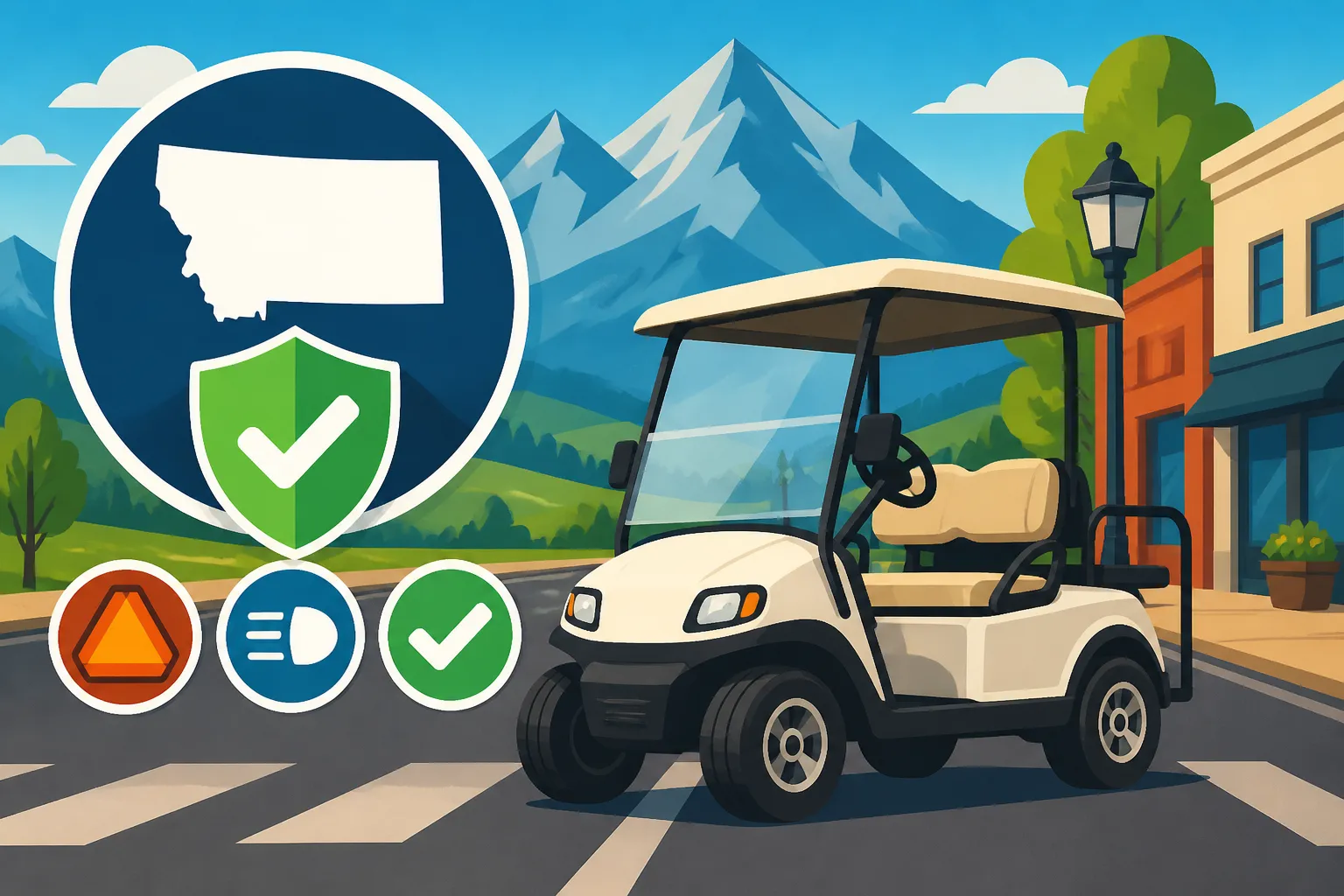
For a golf cart to be considered an LSV and operate on public streets, it must meet specific equipment requirements. These are usually mandated by both state and federal standards for LSVs. These aren't just suggestions; they are non-negotiable safety features. If you're starting with a basic golf cart, you'll need to invest in upgrades. Companies like SuperATV offer a range of products that can help you get compliant, from universal turn signal kits to robust mirrors.
Here's a breakdown of the typical requirements:
- Headlights: Must be DOT-approved and capable of illuminating the road effectively, especially if you plan to ride at dusk or dawn. For [Headlight and Taillight Rules in Montana] you'll learn that these aren't just for seeing, but for being seen.
- Taillights and Brake Lights: Essential for visibility from the rear and to signal when you're slowing down or stopping.
- Turn Signals: Both front and rear, to clearly indicate your intentions to other drivers.
- Windshield: Must be automotive-grade safety glass or a durable, clear, non-shattering material.
- Mirrors: At least one rearview mirror, and often side mirrors are required as well, to provide adequate visibility of traffic behind and beside you.
- Seatbelts: For all occupants, securely mounted and functional.
- Horn: A working horn to alert pedestrians or other drivers.
- Parking Brake: A functional parking brake to keep the vehicle stationary when stopped.
- Reflectors: Often required on the sides and rear for added visibility.
- VIN: A proper Vehicle Identification Number is crucial for registration.
Registration and Titling Process
Once your LSV is properly equipped, the next step is registration and titling. Unlike a typical golf cart that might not require formal registration, an LSV operating on public roads absolutely does. This process typically involves a visit to your local county treasurer's office.
You will need to bring proof of ownership, which might be a manufacturer's certificate of origin (for new LSVs) or a bill of sale (for used ones). The treasurer's office will inspect your documentation and verify the VIN. Once everything is in order, you'll pay the necessary fees to title and register your LSV, and you'll receive a license plate and registration decals, much like a regular car. This process ensures your vehicle is recognized by the state and your home county.
Driver's License and Insurance Requirements
Operating an LSV on Montana public roads isn't just about the machine; it's about the operator, too. Anyone driving an LSV on public streets must possess a valid driver's license. This isn't a situation where a younger rider can just hop on; they need to be of legal driving age and hold a full license. This is consistent with [Driver's License Rules for Montana Road Riding] for other motorized vehicles.
While Montana doesn't have a specific law mandating liability insurance solely for LSVs, it's always a good idea to have it. If you're in an accident on a public road, even at low speeds, you can be held liable for damages or injuries. Many auto insurance providers can add an LSV to your existing policy, or you might need a separate policy. Check with your insurance agent to ensure you have adequate coverage before you hit the streets. It's better to be safe than sorry when it comes to financial protection.
Specific Town Ordinances: How to Check Your Area
As we've discussed, the most important factor in whether you can legally ride your golf cart or LSV on the streets of your specific Montana town is the local ordinance. There's no single statewide "yes" or "no" for every community, and it's up to you to do your homework. Trust me, it’s much better to know the rules before you get pulled over.
Finding Your Local City or County Rules
The best way to find out the specific rules for your town or county is to go directly to the source. Start by contacting your city clerk's office if you live within an incorporated town. They are the keepers of all local ordinances and should be able to tell you if golf carts or LSVs are permitted, and under what conditions. Don't be afraid to ask for a copy of the ordinance itself so you can read it directly. Sometimes the information can be found on the city's official website under "Municipal Codes" or "Ordinances."
If you live in an unincorporated area, meaning outside of official city limits, you'll need to contact your county commissioners' office or the county sheriff's department. They will be able to advise you on any county-level regulations regarding the use of these vehicles on county roads. Often, county roads have fewer restrictions than busy city streets, but this is not always the case, especially in residential subdivisions that might have adopted their own rules through homeowner associations.
Common Local Restrictions You Might Encounter
Even if a town allows LSVs or even golf carts, they often come with a laundry list of specific limitations. These are put in place to ensure public safety and minimize disruption. Knowing these potential restrictions can help you prepare or adjust your plans.
- Speed Limits: LSVs are generally restricted to roads with speed limits of 35 mph or less. Many towns will further restrict them to 25 mph or even 15 mph within city limits, regardless of the posted speed limit for cars.
- Operating Hours: Some ordinances might only allow operation during daylight hours. This means no nighttime trips to the grocery store, even if your LSV has headlights.
- Designated Routes: Rather than a blanket permission, a town might only allow golf carts or LSVs on specific, clearly marked routes, often in residential areas or connecting to recreational facilities. You might find maps of these routes available at the city clerk's office.
- Age and Licensing: While state law requires a driver's license, some local ordinances might have additional age restrictions or require a special local permit.
- Passenger Limits: Some rules might dictate how many passengers you can carry, or if children need to be in specific seats or use booster seats.
- Parking Restrictions: Just like any other vehicle, there might be specific rules about where you can and cannot park your LSV on town streets. For example, some towns won't allow them to be parked on Main Street during peak business hours.
Comparing Golf Carts and LSVs for Street Use
To help clarify the differences in requirements and potential uses, here’s a quick comparison of traditional golf carts and Low-Speed Vehicles (LSVs) when it comes to riding on town streets in Montana.
| Feature | Traditional Golf Cart | Low-Speed Vehicle (LSV) |
|---|---|---|
| Primary Design | Golf course use | Low-speed street use |
| Top Speed | Generally 15-20 mph | 20-25 mph (by definition) |
| Manufacturer Cert. | No federal certification for street use | Federally certified to meet safety standards |
| VIN | Often lacks a recognized VIN for street registration | Has a VIN recognized for road registration |
| Required Equipment | Basic (lights for course use only) | Headlights, taillights, brake lights, turn signals, windshield, mirrors, seatbelts, horn, parking brake |
| Registration | Typically not registered for street use | Required to be titled and registered with the county treasurer |
| License Plate/Decal | None | Yes, requires standard Montana license plate and decal |
| Driver's License | Not required for course use, but may be for road use (if allowed) | Required for street operation |
| Insurance | Optional, usually covered by homeowner's policy | Recommended liability insurance |
| Street Access | Highly restricted; generally only by specific local ordinance | Generally allowed on roads ≤ 35 mph, subject to local ordinances |
| Cost to Convert | Significant investment in safety equipment | Often manufactured with equipment already installed, less conversion needed |
It's clear that while a traditional golf cart might be allowed in very specific, limited circumstances by a unique local ordinance, an LSV is the category of vehicle Montana truly recognizes for regular street use within towns. If your goal is to have a versatile, low-speed vehicle for errands and neighborhood cruising, an LSV is often the path of least resistance, provided your specific community has embraced their use.
Disclaimer
This article is for general informational purposes only and does not constitute professional advice. Laws, prices and regulations vary by location and change over time. Consult a qualified professional for guidance on your specific situation.