OHV Access on Montana State Park Roads
It's a common dilemma for us off-road enthusiasts: you've packed up your side-by-side or ATV, eager to explore the stunning landscapes Montana offers, perhaps with a state park as your destination. You pull up, gear ready, only to wonder, "Can I actually ride my OHV on these roads inside the park?" This question can cause real frustration because the rules aren't always immediately clear, and no one wants to accidentally break the law or damage sensitive ecosystems. This guide is here to clarify the ins and outs of OHV access on Montana State Park roads, helping you plan your adventures without the guesswork.
Understanding the General Rules for OHVs in Montana State Parks
Montana's State Parks are treasured places, managed by Montana Fish, Wildlife & Parks (FWP) for conservation, recreation, and education. Unlike some vast stretches of national forest or BLM land, these parks often have much stricter rules regarding motorized vehicle use, and that includes your beloved ATV or UTV. It’s crucial to understand this fundamental difference from the outset.
The Primary Focus: Conservation and Designated Use
The main objective of a Montana State Park is to protect natural, cultural, and historical resources while providing recreational opportunities. This means that motorized access, particularly for off-highway vehicles, is generally considered secondary to preserving the park's natural state and ensuring a tranquil experience for all visitors. Think about it: a peaceful hike or a quiet picnic by a lake wouldn't be quite the same with the constant hum of engines.
This focus on conservation dictates that if motorized use is allowed, it's typically for specific purposes and on designated routes. These areas are carefully managed to minimize impact on wildlife, fragile ecosystems, and historical sites. It’s a very different management philosophy than, say, a sprawling national forest where [Montana's National Forest Trail Systems] are explicitly designed for motorized recreation. In a state park, the emphasis is usually on non-motorized activities like hiking, birdwatching, or boating.
General Prohibitions and Limited Exceptions
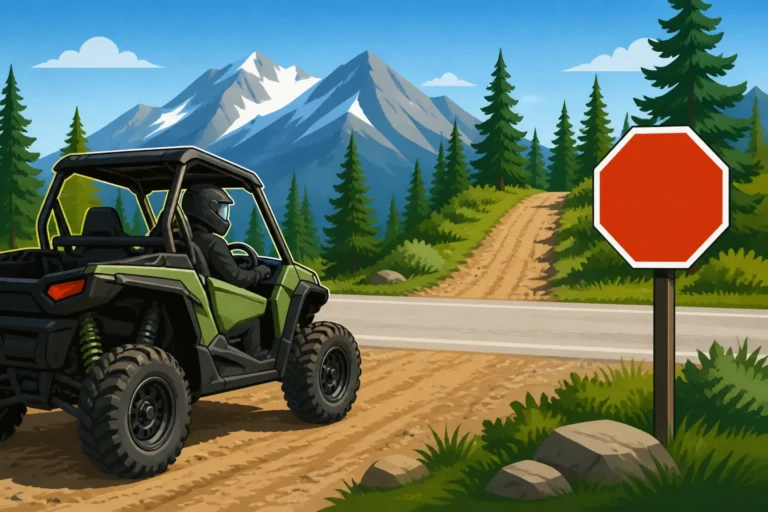
Here’s the straightforward truth: as a general rule, off-highway vehicles (OHVs) like ATVs and UTVs are not permitted on roads or trails within Montana State Parks unless there’s a very specific, explicit designation otherwise. This isn't just about trail riding; it extends to paved or gravel park roads that a car could use. You shouldn't assume that because your OHV is street-legal or registered for road use elsewhere, it automatically gains access to state park roads.
There are rare exceptions, of course, but these are few and far between. Sometimes, park staff might use OHVs for administrative duties, like maintenance or search and rescue. Occasionally, a special event or a specific concessionaire might operate a guided tour within a very limited, designated area, but these are exceptions you'd need to verify directly with the park. For the average recreational rider, the default assumption should always be that you cannot ride your OHV on state park roads. It’s not like the much broader access you might find on [Montana Rules on Forest Service Roads].
Specific Regulations for Roads Within Montana State Parks
Even when a Montana State Park has roads that are open to general vehicle traffic (think paved roads to a campground or a gravel access road to a boat ramp), this doesn't automatically extend to OHVs. The rules for these specific roads are often tied to the "street legal" status of the vehicle and how the park interprets what kind of vehicles are allowed.
The "Designated Roads Only" Principle
When it comes to motorized access within Montana State Parks, the key phrase you'll encounter is "designated roads only." This typically refers to the main entrance roads, paved arteries leading to campgrounds, day-use areas, or boat launches. These are built for conventional passenger vehicles, not necessarily for OHV recreation.
The challenge for OHV owners is that while your machine might be registered and legally able to operate on certain county roads in Montana, it might not be considered a "street-legal vehicle" in the same context as a car or truck when entering a state park. Park rules often default to conventional vehicle definitions, and OHVs don't always fit neatly into that category for internal park use. For more on the general rules for [Riding an OHV on the Road in Montana], it's important to remember that these general rules may be superseded by specific park ordinances. Just because you can ride on a county road outside the park doesn't mean you can transition seamlessly onto a park road.
Identifying Allowed Routes and Permitting Requirements
Given the general restrictions, identifying any allowed routes for OHVs within a state park becomes crucial. Your best course of action is always to directly contact the specific Montana State Park you plan to visit. Their official website or a phone call to the park office will provide the most up-to-date and accurate information. Don't rely on general maps or assumptions, as rules can vary even between parks.
When you're researching, look for information explicitly stating OHV allowances. If it's not mentioned, assume it's prohibited. Signage at park entrances and within the park itself is also your guide. If you don't see signs explicitly permitting OHV use, consider it off-limits. There are typically no special permits available just for OHV use on state park roads; if access is granted, it's usually under the same conditions as other street-legal vehicles.
Equipment and Enforcement on Park Roads
If, by some rare chance, you find a Montana State Park that does allow OHVs on certain designated roads (perhaps to access a remote boat launch or a specific trailhead that is not a state park trail), your machine will be subject to all standard Montana road rules. This means your OHV must be properly registered with the county treasurer and display the correct decals, as detailed in guides like [Montana County Treasurer OHV Registration]. Youth riders will need helmets, and your machine must have appropriate lighting, mirrors, and other safety equipment for road use.
Park rangers and FWP wardens are the primary enforcement agents within state parks. They are knowledgeable about local regulations and will not hesitate to issue citations for non-compliance. These penalties can range from fines for riding in prohibited areas to warnings about improper equipment. Ignorance of the rules is rarely an excuse, and serious violations can lead to significant [Fines for an Unregistered OHV in Montana] or riding where prohibited.
For those rare instances where limited road access might be permitted, you might consider ensuring your machine is fully equipped for any road use. For example, some riders might add specific turn signal kits, mirrors, or DOT-approved windshields from a company like SuperATV to make their machine more compliant with general road legal requirements, though always double-check if such upgrades meet specific park regulations. However, it's important to reiterate that these enhancements don't automatically grant you access where OHVs are generally prohibited.
Here's a quick overview of how OHV access generally compares across different types of public lands in Montana:
| Land Type | General OHV Access on Roads/Trails | Primary Regulatory Body | Key Considerations |
|---|---|---|---|
| Montana State Parks | Highly restricted; generally not allowed on roads/trails unless explicitly designated for OHVs. | Montana Fish, Wildlife & Parks (FWP) | Focus on conservation; always check specific park rules. |
| National Forests | Extensive designated trails and roads are often available for OHVs. | USDA Forest Service | Requires checking Motor Vehicle Use Maps (MVUMs); typically requires a [Montana's Non-Resident Temporary Use Permit] or resident trail pass. |
| BLM Lands | Generally more open access, but still "designated routes only." | Bureau of Land Management (BLM) | Check field office maps; often requires a Montana trail pass. |
| County Roads | Many county commissioners allow OHV use on specific roads. | County Commissioners/Local Sheriff | Local ordinances vary widely; always verify specific county rules. |
| Private Land | Allowed with landowner permission. | Landowner | Always get explicit permission to avoid [Montana Trespass Law for Riders]. |
Navigating Limited OHV Access and Exploring Alternatives Near State Parks
Since direct OHV riding within Montana State Parks is largely off-limits, the savvy rider's strategy shifts to finding fantastic riding opportunities near these parks. Montana is a vast state, and while state parks are gems, they represent only a fraction of the incredible terrain available for off-highway vehicle recreation.
Planning Your Base Camp and Trailheads Outside Park Boundaries
Your best bet for combining a state park visit with OHV adventures is to plan your base camp strategically. Look for lodging or campgrounds outside the state park boundaries that offer good access to designated OHV trailheads. Many excellent private campgrounds, national forest campgrounds, or dispersed camping areas can serve as a perfect launching point for your rides.
For example, you might camp at a national forest campground adjacent to a state park, giving you easy access to both. You can then drive your truck and trailer with your OHV to a designated staging area within the national forest or on appropriate BLM land. From there, you can unload your machine and hit the trails, exploring thousands of miles of varied terrain. This approach allows you to enjoy the beauty and amenities of the state park (like a peaceful lake or historic site) by day, and then venture out on your OHV on appropriate trails when you're ready for some throttle therapy. Looking at guides like [Where to Ride an OHV in Montana] can help you find these prime locations.
Connecting to Broader OHV Networks
Montana boasts an incredible network of OHV-friendly trails and roads, predominantly managed by the Forest Service and the Bureau of Land Management. These areas often surround or are in close proximity to state parks, creating opportunities to connect to vast riding zones. You might find a county road that is open to OHV use, which then leads directly into a national forest system with miles of trails.
When planning these trips, ensure you have the necessary permits, such as the Montana OHV trail pass, which is typically required for riding on state and federal public lands. This pass funds trail maintenance and improvements, benefiting all riders. Remember, even if you can't ride directly into a state park, you can often find a ride that skirts its boundaries or offers breathtaking views from nearby peaks. For these longer rides that transition from pavement to aggressive trails, having high-quality components like SuperATV heavy-duty axles or a well-tuned suspension system can make a significant difference in comfort and durability.
Respecting Boundaries and Protecting Future Access
Responsible riding is paramount. Always stay on designated routes and never venture off-trail, especially near state parks or other sensitive areas. Riding in prohibited zones not only risks a citation from a warden but also causes resource damage, such as soil erosion and disturbance to wildlife. This kind of irresponsible behavior can lead to trail closures and harm the reputation of the entire OHV community, potentially jeopardizing future access for everyone.
By being a good steward of the land, you help maintain positive relationships with land managers, local communities, and other recreational users. Stick to the marked trails, observe all signage, pack out what you pack in, and ensure your machine is in good working order to minimize noise and environmental impact. Understanding and respecting these boundaries is key to enjoying Montana's beauty for generations to come. [What a Montana Warden Asks a Rider For] can give you an idea of the scrutiny you might be under if you're not following the rules.
Tips for Planning Your Montana State Park Visit with OHVs
Planning a successful trip that combines a visit to a Montana State Park with your OHV adventures requires a bit of foresight and preparation. Since direct OHV access within the parks is usually limited, the trick is to integrate the two experiences thoughtfully.
Researching Each Specific Park Thoroughly
This cannot be stressed enough: each Montana State Park has its own set of rules and regulations. What might be allowed at one park could be strictly prohibited at another. Before you hitch up your trailer, visit the official Montana FWP website for the specific park you intend to visit. Look for sections on "recreation," "motorized use," or "park rules." If the information isn't crystal clear, pick up the phone and call the park ranger station directly. They are the best source for current and accurate access policies.
Beyond the state park itself, remember to also research the surrounding public lands. If your goal is to ride nearby, familiarize yourself with the Motor Vehicle Use Maps (MVUMs) for any adjacent National Forests or BLM areas. These maps are the definitive guide for where you can and cannot legally operate your OHV on federal lands. Don't rely solely on general navigation apps, as they may not show OHV-specific restrictions.
Preparing Your Machine for Montana Conditions
While you might not be riding in a state park, you’ll be riding around them, which means you'll still be tackling Montana's diverse and often rugged terrain. Ensure your OHV is in peak condition. This includes performing all regular maintenance, checking tire pressure, fluid levels, and brakes. Always carry a basic tool kit, a spare tire (if applicable), and a method for tire repair.
Beyond mechanical readiness, ensure your OHV is legally compliant for riding on public lands. This means having current registration and decals, carrying your [Montana OHV Title Fee] proof of ownership, and securing a Montana OHV Trail Pass (or a [Montana's Non-Resident Temporary Use Permit] if you're visiting from out of state). Don't forget safety gear: helmets, eye protection, sturdy footwear, and appropriate clothing for varying weather conditions. For those who push their machines on the challenging trails often found near Montana's parks, consider reinforcing your rig. Installing SuperATV heavy-duty bumpers or rock sliders can offer crucial protection against unexpected impacts, ensuring your machine is ready for whatever the Montana backcountry throws at it.
Always Have a Backup Plan and Be Flexible
Montana weather can be unpredictable, and trail conditions can change rapidly. Fire season can bring extensive closures in late summer, and early spring runoff can make many trails impassable due to mud or high water. Always have a backup plan for your riding days. What will you do if your primary trail system is closed? Knowing other OHV-friendly areas or having alternative non-motorized activities planned can save your trip from disappointment.
Sometimes, the best plan is simply to enjoy the state park for what it offers – fishing, hiking, wildlife viewing, or simply relaxing by a campfire – and save the high-adrenaline OHV riding for the designated areas just outside the park boundaries. Being flexible and adaptable is key to a rewarding Montana outdoor experience, especially when combining different types of recreation.
Disclaimer
This article is for general informational purposes only and does not constitute professional advice. Laws, prices and regulations vary by location and change over time. Consult a qualified professional for guidance on your specific situation.