Montana OHV Rules During Elk Season
For many of us, elk season in Montana isn't just a time to hunt; it's a deeply cherished tradition, a chance to connect with the wild, and often, a demanding physical challenge. The last thing any hunter wants is to have their experience ruined by an unexpected ticket or a confrontation with a warden because they weren't clear on the rules for their ATV or UTV. This guide is here to walk you through the specific regulations and best practices for using your off-highway vehicle responsibly and legally while chasing those majestic Montana elk.
Understanding the Overlap: OHVs and Hunting Season
When elk season rolls around, the excitement is palpable, but it's crucial to remember that your OHV isn't just a tool for fun anymore; it's an integral part of your hunting strategy, and as such, it comes with a heightened set of responsibilities. Many hunters, especially those new to Montana or visiting from out of state, might assume that simply having their machine registered is enough. However, using your ATV or UTV during hunting season often means navigating a complex web of general OHV laws, land-specific regulations, and even hunting-specific rules that can change based on the area.
General OHV Regulations Still Apply
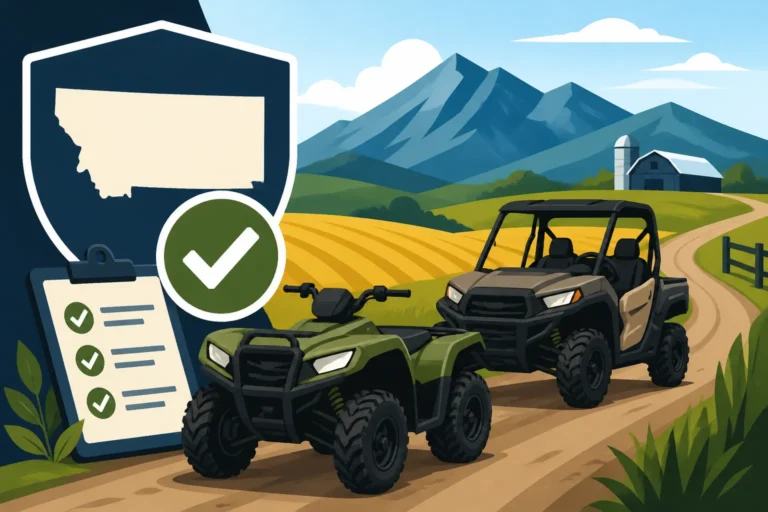
First and foremost, every OHV rule you'd normally follow still applies when you're out hunting. This means your machine needs to be properly registered with the state of Montana, and you'll need the appropriate decals displayed correctly. For Montana residents, this typically involves a one-time permanent registration fee, while non-residents will need a temporary use permit. You’ll still need to carry your registration paperwork on the machine, just as you would for any other ride. For anyone new to the state or just visiting, understanding [Montana's Non-Resident Temporary Use Permit] is absolutely critical, as relying on an out-of-state registration simply won't cut it on Montana's public lands.
Beyond registration, equipment requirements are also in full effect. If you plan to ride on any roads where OHVs are permitted—and remember, road access for OHVs in Montana can be surprisingly limited and often depends on local county ordinances—your machine must meet specific safety standards. This can include working headlights, taillights, a horn, and proper mufflers to keep noise levels down. Many hunters use their UTVs to get closer to their hunting grounds, often on designated two-track or gravel roads. Ensuring your machine is up to snuff can prevent a simple roadside check from turning into a costly fine before you even start hunting. Manufacturers like SuperATV offer a range of accessories that can help ensure your machine meets these safety requirements, from turn signal kits to durable mirrors.
Specific Restrictions During Hunting Seasons
Now, here's where things get a bit more nuanced. While general OHV rules are your baseline, hunting seasons, especially big game seasons, often come with additional restrictions on motorized travel, particularly on public lands managed by the Forest Service or Bureau of Land Management (BLM). These restrictions are usually put in place to reduce disturbance to wildlife, prevent resource damage, and enhance the hunting experience for everyone by encouraging fair chase. It's not uncommon for certain roads or trails that are open during the summer recreation season to be closed to motorized use during parts of the hunting season.
These closures are typically well-marked on Motor Vehicle Use Maps (MVUMs), which are indispensable tools for any hunter planning to use an OHV. These maps clearly designate which roads and trails are open to motorized vehicles, which are seasonally closed, and which are completely off-limits. You'll often find specific dates for these closures, which might align directly with deer or elk rifle seasons. Ignorance of these maps is not an excuse, and wardens are diligent in enforcing these rules to protect wildlife and habitats. Always consult the latest MVUM for the specific national forest or BLM district you plan to hunt in. You can usually find these online on the respective agency's website or pick up paper copies at local ranger stations.
Navigating Montana's Block Management Areas and Public Lands
Montana offers incredible hunting opportunities, with a mix of vast public lands and unique private land access programs. Understanding how your OHV fits into these different landscapes during elk season is paramount to a successful and legal hunt. It's not a "one size fits all" situation, and what's allowed in one area might be strictly prohibited just down the road.
Rules for Block Management Access
Montana's Block Management Program (BMP) is a fantastic initiative that provides public hunting access to private lands. However, access to these areas comes with its own set of rules, often determined by the individual landowner and the specific block management agreement. While some Block Management Areas (BMAs) might allow limited OHV use for retrieval of game, many explicitly restrict motorized access beyond designated parking areas. The primary goal of BMAs is often to provide walk-in hunting opportunities, preserving the quality of the hunt and minimizing disturbance.
When you secure a Block Management Area permission slip, pay very close attention to any stipulations regarding vehicle use. These might be printed directly on the permission form or discussed during your check-in with the landowner or local Fish, Wildlife & Parks (FWP) office. Attempting to drive your UTV down a two-track that's designated for foot traffic only, even if it looks like a road, can instantly jeopardize your hunting privileges and potentially the entire BMA program. Always err on the side of caution and assume motorized use is restricted unless explicitly stated otherwise. Many of us have seen hunters lose access for everyone because of one individual's disregard for these simple, yet critical, rules. Understanding [Montana Block Management Land and OHVs] is key to making sure you're a responsible visitor.
Forest Service and BLM Road Etiquette
Public lands, encompassing National Forests and BLM areas, are where many hunters rely heavily on their OHVs. These vast tracts offer a network of forest roads and trails that can get you deep into elk country. However, as mentioned earlier, "open" can be a very nuanced term. While many main forest roads remain open, side roads, two-tracks, and designated trails often have seasonal closures during hunting season. This is where your MVUM becomes your bible. It will detail which routes are open to what type of vehicle and when.
Beyond legal access, there's a strong component of etiquette and responsibility. Driving slowly and carefully on open forest roads helps minimize dust, reduce wear and tear, and prevents startling game that might be near the road. Respecting other hunters, hikers, and equestrians by giving them space and reducing your speed is also crucial. Remember, many people are out there seeking solitude and a quiet experience. Your machine's noise levels are also important; a loud, unmodified exhaust can carry for miles and disrupt the tranquility of the backcountry. Aftermarket parts like a durable winch from SuperATV can be a lifesaver for navigating rugged forest roads, but always ensure any modifications comply with local noise ordinances and spark arrester requirements.
| Land Type | Typical OHV Rules During Elk Season | Key Considerations |
|---|---|---|
| Private Land (Non-BMA) | Varies by landowner agreement, typically restricted. | Obtain explicit written permission for OHV use. |
| Block Management Areas | Often restricted to designated parking, walk-in access. | Check specific BMA rules, usually on permission slip. |
| National Forest / BLM | Governed by Motor Vehicle Use Maps (MVUMs). | MVUMs detail open/closed roads, seasonal restrictions. |
| State Lands | Generally similar to federal lands, check FWP rules. | Consult FWP land use regulations for specific parcels. |
| County Roads | Some allow OHVs, often with specific equipment needs. | Check local county ordinances, speed limits, and signage. |
Transporting Game and Gear Legally
The moment you've been dreaming of has arrived: you've successfully harvested an elk! Now comes the real work, and for many, this is where the OHV truly shines. But just as with hunting itself, there are rules and best practices for using your ATV or UTV to transport game and gear that you need to be aware of.
Proper Equipment for Hauling Game
Packing out an entire elk, or even quarters, is a monumental task, and an OHV can dramatically lighten the load. However, your machine needs to be properly equipped for the job. Overloading your ATV or UTV is not only dangerous—affecting stability, braking, and handling—but it can also lead to mechanical breakdowns deep in the backcountry. Consider investing in sturdy cargo racks, trailer hitches, and even small utility trailers specifically designed for OHV use. Brands like SuperATV offer heavy-duty cargo boxes and rack extensions that can significantly increase your machine's hauling capacity, but always be mindful of your vehicle's maximum payload capacity.
When securing game, use robust tie-downs and ensure the load is balanced. Loose quarters can shift, throwing off your machine's center of gravity and making it incredibly difficult to navigate uneven terrain. Many hunters quarter their elk in the field, making it more manageable to transport. Remember that in some areas, leaving certain parts of the animal, like the hide or skull, in the field might have specific regulations, so always check local hunting laws. And, for your own safety and the preservation of the meat, it's a good idea to have tarps or game bags to protect the meat from dirt and debris during transport. For more on this, check out [Packing Out an Elk by OHV].
Avoiding Resource Damage and Trespass
While the convenience of an OHV for game retrieval is undeniable, it's absolutely critical to stick to designated roads and trails. "Going off-road" to retrieve an animal, even if it's just a short distance, can lead to severe fines and penalties for resource damage and trespass. Rutting up sensitive soils, damaging vegetation, or crossing private property without permission are serious offenses. Even if you're on public land, driving cross-country to get to your downed animal is almost always illegal.
Always carry a map and GPS (and know how to use them) to ensure you stay on legal routes. If your animal is down in an area that requires off-trail retrieval, you'll need to do it the old-fashioned way: by hand or with a game cart. This is where fitness and teamwork really come into play. It's a tough pill to swallow, but protecting the land is part of being a responsible hunter. Remember, [Montana Trespass Law for Riders] applies just as much to hunters as it does to recreational riders. If you're on your way back to camp, consider that [Carrying a Rifle on an OHV in Montana] has its own set of rules, often requiring the firearm to be unloaded and properly cased.
Common Misconceptions and Proactive Steps
Hunting season brings its own set of challenges, and navigating OHV rules doesn't have to be one of them. Many misunderstandings arise from assuming rules are universal or from simply not knowing where to look for accurate, up-to-date information. Being proactive can save you a lot of headache and keep your focus on the hunt.
Why Local Ordinances Matter
One of the biggest pitfalls for OHV users during hunting season is assuming that statewide or federal regulations are the only rules that apply. This is a common misconception, especially when it comes to riding on roads. While Montana has some general state laws regarding OHVs, local jurisdictions—meaning counties and specific towns—have the authority to create their own ordinances regarding OHV use on county roads and city streets. A county road that might be open to OHVs in one part of the state could be entirely closed in another.
This is particularly relevant if your hunting strategy involves riding your OHV from a camp to a trailhead, or even making a quick run into a small town for supplies. You might assume since it's a gravel road, it's fair game. However, many counties prohibit OHV use on their roads, or they might require additional equipment like turn signals, mirrors, or even a driver's license, even if the state rules are less stringent. Always check with the county sheriff's office or local government for the areas you plan to hunt in. A quick phone call before your trip can prevent a nasty surprise in the form of a ticket, which can easily be a [Montana Fines for Illegal Road Riding] situation.
Essential Gear and Preparedness
Being prepared for anything Montana's backcountry throws at you is always a good idea, and this is doubly true when you're combining OHV use with hunting. Beyond your hunting gear, think about what you need for your machine and for your own safety. A comprehensive toolkit for minor repairs, a tire repair kit, and a small air compressor can get you out of a bind if you experience a flat far from civilization. A reliable winch, especially a heavy-duty model, is an invaluable piece of equipment if you get stuck or need to move downed timber to clear a path.
Always pack extra fuel, sufficient food and water, a first-aid kit, and communication devices like a satellite messenger, especially since cell service in much of Montana's backcountry is non-existent. Dress in layers, including blaze orange for visibility, as weather conditions can change rapidly. Sharing your travel plans with someone not on the trip is also a wise precaution. Remember, you're not just riding; you're often [Riding to a Hunting Camp in Montana] and into potentially dangerous, remote areas. These steps ensure that your OHV is a reliable asset to your hunt, not a source of added risk or stress.
Disclaimer
This article is for general informational purposes only and does not constitute professional advice. Laws, prices and regulations vary by location and change over time. Consult a qualified professional for guidance on your specific situation.