Riding to a Hunting Camp in Montana
Heading out to a remote hunting camp in Montana with your ATV or UTV is often the highlight of the fall, promising adventure and the thrill of the chase. But let's be real, the thought of navigating the complex rules for riding on public and private land, figuring out what gear you actually need, and how to legally transport your prize can feel more daunting than the hunt itself. This guide is here to untangle those complexities, offering practical, down-to-earth advice so you can focus on the crisp air, the incredible scenery, and the pursuit of your quarry, rather than worrying if you're breaking a rule or forgetting something vital back at the truck.
Understanding Montana's Rules for OHVs on Hunting Trips
Montana is a land of vast open spaces and incredible hunting opportunities, but that doesn't mean it's a free-for-all when it comes to riding your off-highway vehicle (OHV) to your hunting camp. There are specific rules governing where you can ride, what permits you need, and how you can use your machine during hunting season. Knowing these upfront will save you a lot of headaches, and potentially hefty fines, down the trail.
Public Land Access: Forest Service, BLM, and State Land
When you're planning to ride into a hunting camp on public land, which often includes vast stretches of National Forests and Bureau of Land Management (BLM) areas, it's absolutely crucial to understand the designated access points and routes. Not all trails and roads are open to OHV use, especially during hunting season when wildlife populations are most sensitive to disturbance. Each National Forest and BLM district has what's called a Motor Vehicle Use Map (MVUM). These maps are your bible. They show exactly which roads and trails are open to motorized vehicles, what types of vehicles are allowed, and any seasonal restrictions. Don't rely on old maps or hearsay; these rules can change, and ignorance is rarely an excuse that flies with a game warden.
Many hunters make the mistake of assuming a two-track road is fair game, only to find themselves deep in an area closed to motors. Always check the MVUM for the specific area you plan to hunt in. You can usually find these maps online through the Forest Service or BLM websites, or pick up a physical copy at a local ranger station. Remember, even if a road is open, there might be width restrictions, meaning your wider side-by-side might not be allowed where a standard ATV is. It's also important to remember that most state lands in Montana have very strict rules, often prohibiting OHV use off of designated roads entirely, unless otherwise posted for specific purposes. Make sure your machine is properly registered and that you have a [Montana's Resident OHV Trail Pass] or [Montana's Non-Resident Temporary Use Permit] if you're from out of state.
Private Land and Access Agreements
Riding across private land to reach your hunting camp, even if it's just a short stretch, requires explicit permission from the landowner. This isn't just common courtesy; it's the law. [Montana Trespass Law for Riders] is serious, and violating it can lead to legal trouble, not just a stern talking-to. Before you even think about crossing someone's property, make sure you have a clear, written agreement if possible, detailing the access points and the duration of your permission. Verbal agreements can be easily misunderstood or forgotten, leading to disputes, especially if you're on a multi-day trip.
Sometimes, hunting camps are accessed via a mix of public and private roads. In these scenarios, you need to understand where the property lines are and respect them. Look for signs, fences, or purple paint on posts and trees, which is a common indicator of private property in Montana. If you're unsure, find out who owns the land beforehand and seek permission. Showing up at a ranch house unannounced with your side-by-side loaded for bear can lead to a less-than-friendly encounter. Many landowners are happy to grant access to respectful hunters, but they need to be asked.
Road Riding to Reach Your Camp
Often, the most direct route to your hunting camp involves riding on county roads or even paved highways for short stretches. Montana has specific laws regarding [Riding an OHV on the Road in Montana]. Generally, OHVs are permitted on county roads unless a specific ordinance prohibits it, but rarely on state highways or interstates. When riding on any public road, your OHV must meet certain equipment requirements: headlights, taillights, brake lights, mirrors, and often a horn. Check local municipal ordinances as well, as some towns may allow OHVs on their streets for limited purposes, while others strictly forbid it.
If you're under 16, there are additional restrictions, including mandatory helmet use. Even if you're an adult and not legally required to wear a helmet, it's always a good idea when mixing with road traffic. Remember, wardens and sheriffs can and do enforce these rules. Make sure your machine is legally registered for road use where allowed and that you carry proof of ownership and insurance. [What Montana Requires on an OHV Road Ride] goes into much greater detail about what you need to be street legal, even for short distances.
Prepping Your ATV or UTV for a Montana Hunting Camp Ride
A hunting trip into the Montana backcountry is no joyride. It demands a well-prepared machine and a thoughtful packing list. Neglecting these steps can turn a dream hunt into a frustrating, or even dangerous, ordeal.
Machine Maintenance and Essential Gear
Before you load up your ATV or UTV, give it a thorough once-over. Check tire pressure, fluid levels (oil, coolant, brake fluid), and belt condition. Inspect your brakes, lights, and winch (if you have one). A breakdown miles from the nearest road, especially when you're loaded with gear or game, is not what you want. Carry a basic tool kit with wrenches, screwdrivers, a tire repair kit, and a small air pump. Spare fuses and a fully charged battery jump starter are also smart additions. Consider adding aftermarket accessories like a sturdy SuperATV winch for recovery, or heavy-duty skid plates to protect your machine's underside from unforgiving Montana rocks.
Beyond the machine itself, think about what you’ll need for the journey and the camp. A robust GPS unit with detailed topographic maps is essential, as cell service is often nonexistent in the backcountry. Always carry a paper map and compass as a backup – and know how to use them! Pack enough food, water, and emergency supplies for at least an extra day or two beyond your planned trip, just in case you get stuck. Warm layers of clothing are critical; Montana weather can change in an instant, even in early fall. A high-quality first-aid kit is non-negotiable, and if you're heading into grizzly country (much of Western Montana is), bear spray and knowledge of how to use it should be at the top of your list.
Carrying Your Hunting Gear and Game
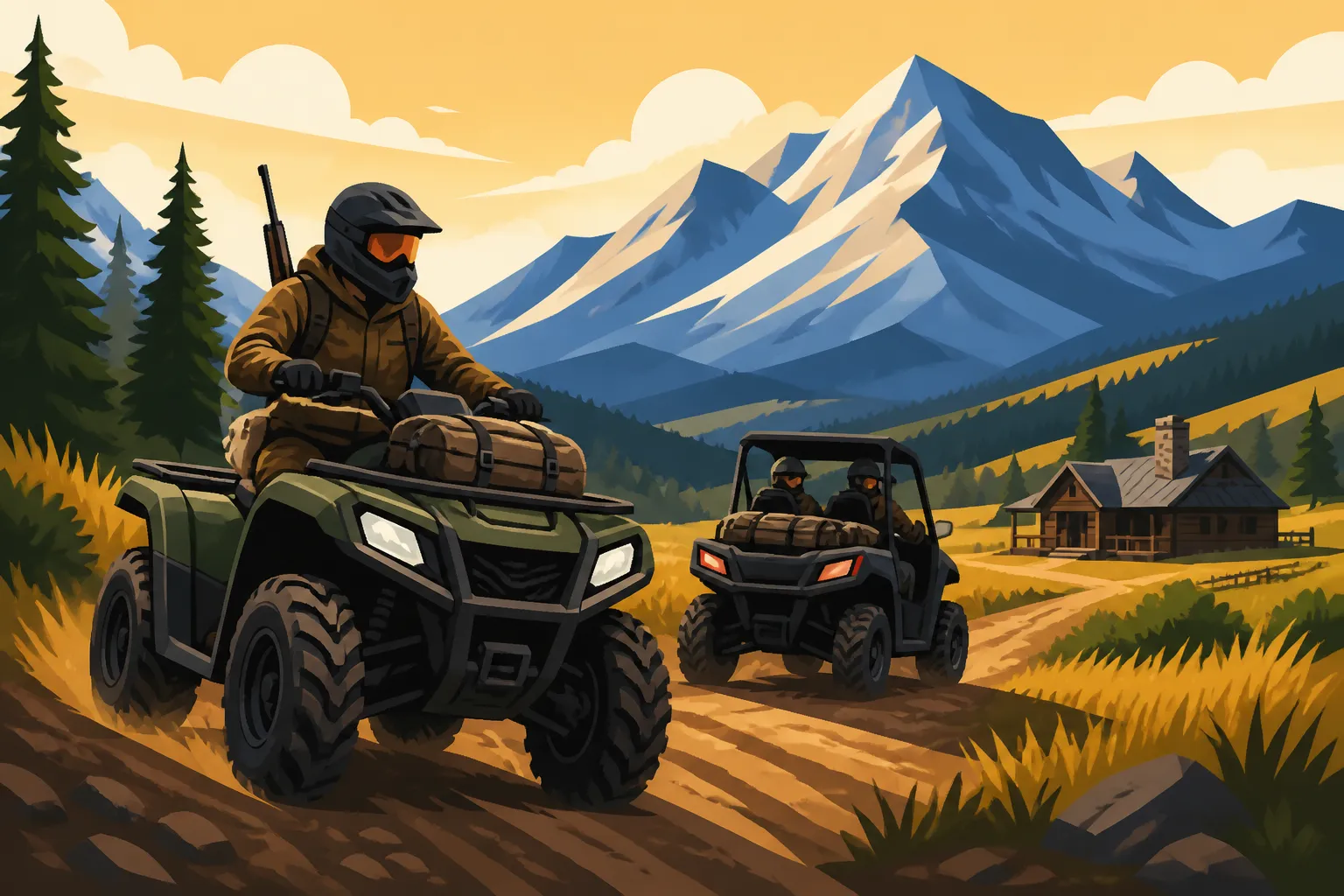
One of the biggest advantages of an ATV or UTV for hunting is its ability to carry gear and, hopefully, game. But how you load your machine is key. Secure all your rifles, bows, ammunition, and other hunting equipment properly. Gun cases should be waterproof and mounted securely so they don't shift or get damaged on rough trails. Many hunters invest in specialized racks or cargo boxes that integrate with their OHV for safe and efficient transport. Aftermarket cargo solutions from brands like SuperATV can dramatically improve your storage capacity and security.
Once you've made a kill, the real work begins. [Packing Out an Elk by OHV] or other large game requires foresight. You’ll need game bags, a good knife, a bone saw, and perhaps a small cooler or dry ice if temperatures are warm. Plan how you'll quarter and load the animal. Overloading your OHV can damage the machine, make it unstable, and even be illegal on some trails. Distribute weight evenly and keep the center of gravity low. If you're using a trailer, make sure it's properly registered, maintained, and capable of handling the load on rough terrain.
Navigating the Backcountry and Handling Game by OHV
Montana's backcountry is beautiful but unforgiving. Effective navigation, smart game recovery, and adherence to ethical standards are paramount when using your OHV for hunting.
Trail Navigation and Wildlife Encounters
Even with a GPS, navigating remote Montana trails requires vigilance. Pay attention to trail markers, watch for changing conditions, and be aware of your surroundings. Weather can turn quickly, making trails muddy, icy, or snow-covered in a matter of hours. Always let someone know your route and expected return time. When you encounter other trail users – hikers, horseback riders, mountain bikers – slow down, be courteous, and yield the right-of-way. They might not hear you coming, especially if you're running aftermarket exhaust, so approach cautiously.
Montana is wild country, and encountering wildlife is part of the experience. Slow down and give animals a wide berth. Remember, your OHV isn't a tool for harassing wildlife. If you're driving through areas with active cattle grazing, be mindful of livestock and close gates behind you. Also, be particularly aware during hunting season. [Blaze Orange on a Montana Fall Ride] is not just a suggestion; it's a critical safety measure to ensure you are highly visible to other hunters, reducing the risk of accidents.
Game Recovery and Ethical Considerations
Using an OHV to retrieve game can be a huge advantage, especially for larger animals like elk or deer. However, there are strict rules about how far off a designated trail or road you can go to retrieve an animal. In most cases, you cannot drive off-trail for game recovery on public lands. You'll need to bone out or quarter the animal and pack it to your OHV on foot. This is where a good packing frame and strong back become invaluable. Always confirm the specific regulations for the area you are hunting, as these can vary.
[Carrying a Rifle on an OHV in Montana] has its own rules, often requiring the firearm to be unloaded and cased. Don't use your OHV to chase or pursue game. That's not just illegal; it's unethical and gives all OHV users a bad name. The goal is a clean, fair chase, and your machine is a tool for access and recovery, not an unfair advantage in the hunt itself. Leave no trace; pack out everything you pack in, including gut piles and any trash. Respect the land, the wildlife, and other users.
Safety, Ethics, and What to Expect on a Montana Hunting Trip
A successful hunting trip isn't just about bagging an animal; it's about a safe, enjoyable, and ethical experience in nature. When you incorporate an ATV or UTV into that experience, a few extra considerations come into play.
Staying Safe in the Backcountry
Safety should always be your top priority. Accidents can happen, and in remote Montana, help can be hours away. Always ride within your limits and the limits of your machine. Don't attempt trails that are beyond your skill level or where your machine might get stuck. If you're riding alone, carry a satellite messenger or personal locator beacon (PLB) to communicate in emergencies where cell service fails. Share your trip plan with someone responsible before you leave.
In addition to the physical dangers, be aware of the hunting season environment. Other hunters will be in the woods, so visibility is key. Wearing blaze orange, even if not legally required in all situations, is a smart move. Always assume every sound might be another hunter and act accordingly. Avoid riding or retrieving game in low light conditions if possible, when visibility is poor, and shadows can play tricks on the eyes. [Montana OHV Accident Reporting Rules] are in place for a reason; know what to do if the unthinkable happens.
Ethical Riding and Hunting Practices
Being an ethical hunter and rider goes hand-in-hand. This means respecting private property, staying on designated trails, and minimizing your impact on the environment. Excessive noise from loud exhaust systems can disturb wildlife and other backcountry users; consider quiet exhaust options. Avoid tearing up trails, especially in wet conditions. If a trail looks too muddy or fragile, turn around and find an alternative route. This kind of responsible behavior helps ensure that motorized access remains available for future generations of hunters and outdoor enthusiasts.
Remember that a negative encounter or observation by a non-hunter can quickly lead to public outcry and potentially new restrictions on OHV use. By being a respectful and responsible rider, you contribute to a positive image for all OHV recreation. This includes proper disposal of game waste, packing out all your trash, and leaving your campsite cleaner than you found it.
What a Warden May Ask For
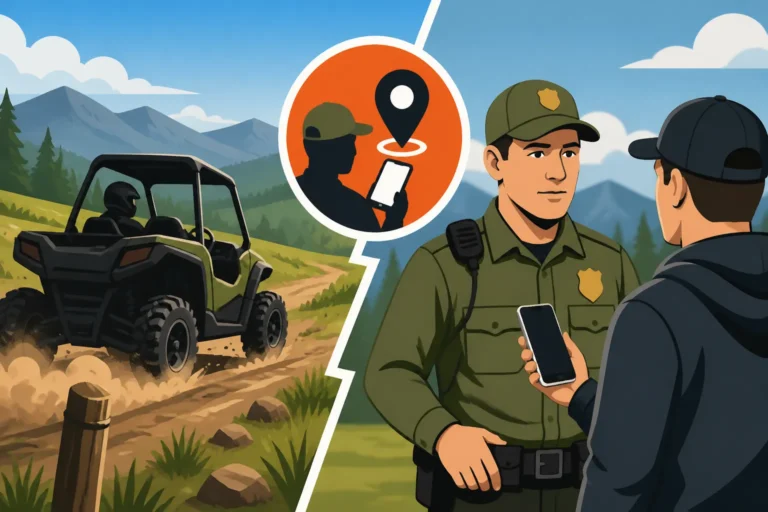
When you're out in the backcountry during hunting season, it's not uncommon to encounter game wardens or other law enforcement officers. They are there to ensure everyone is adhering to both hunting and OHV regulations. Be prepared for them to stop you and ask for your documentation. [What a Montana Warden Asks a Rider For] typically includes proof of OHV registration, your driver's license, hunting license, conservation stamps, and a valid trail pass. They may also inspect your machine to ensure it meets requirements for safety equipment and proper gun transport.
Being polite, cooperative, and having all your paperwork in order will make these encounters quick and painless. It's a warden's job to protect the state's resources and ensure fair and safe hunting for everyone. They're usually happy to answer questions if you have them, so don't be afraid to ask for clarification on a specific rule if you're unsure. A little preparation and knowledge go a long way in ensuring a smooth and enjoyable hunting trip in Big Sky Country.
Disclaimer
This article is for general informational purposes only and does not constitute professional advice. Laws, prices and regulations vary by location and change over time. Consult a qualified professional for guidance on your specific situation.