Montana Access to a Boat Ramp by OHV
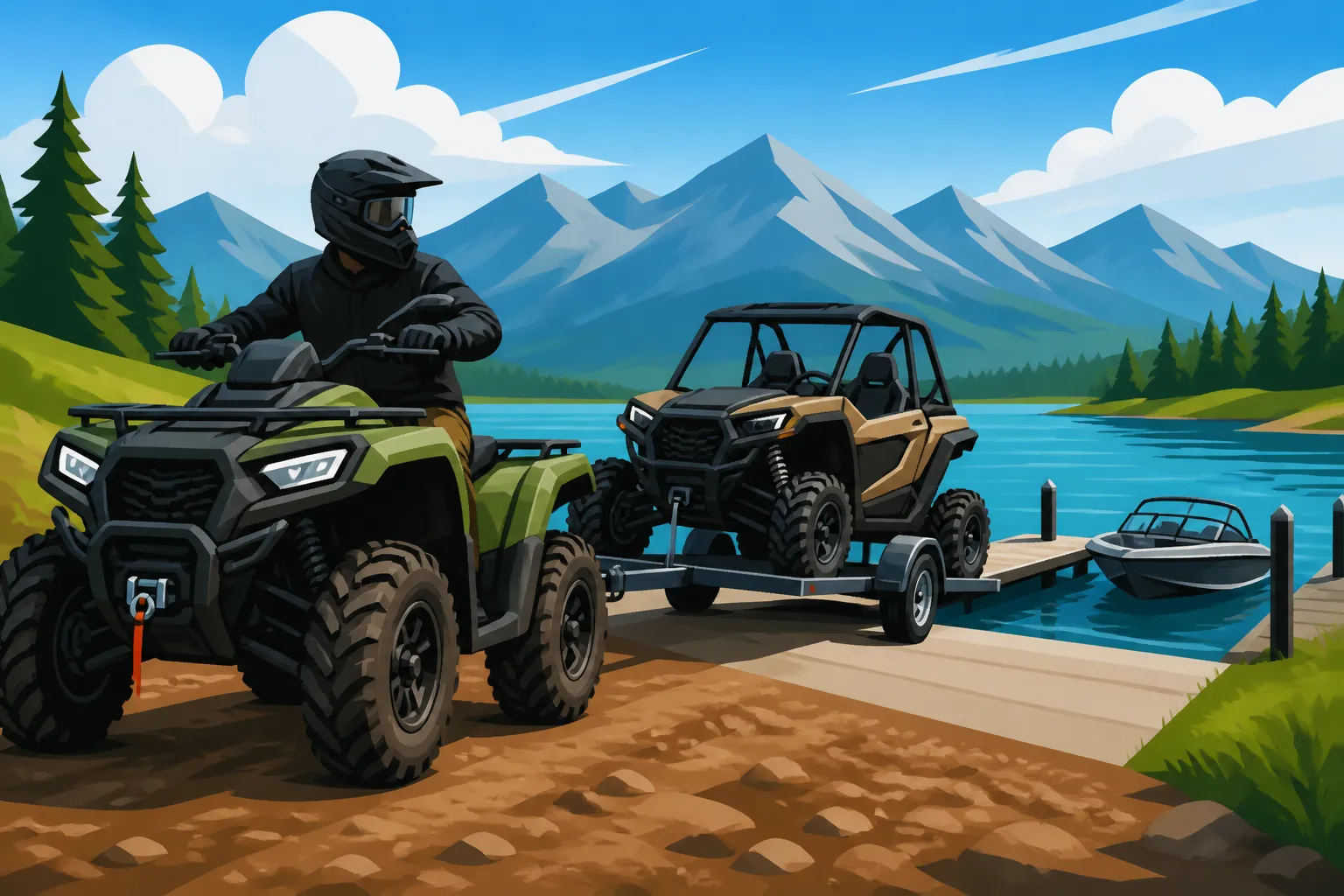
Picture this: a beautiful Montana morning, the lake is calm, and you've got your small fishing boat or kayak on a trailer, hooked up to your trusty side-by-side. You're ready to hit the water, but then you wonder: can I even get my OHV to the boat ramp? It's a common dilemma for many Montana riders who want to blend the utility of their ATV or UTV with their love for the water. This guide will walk you through the ins and outs of legally accessing Montana boat ramps with your off-highway vehicle, covering everything from road rules to local ordinances and practical considerations.
Montana's OHV Road Legality: The Gateway to Boat Ramps
Before you even think about pulling up to a boat ramp with your ATV or UTV, you need to understand Montana's rules regarding operating these vehicles on public roads. Boat ramps are, almost without exception, accessed via roads – sometimes paved, sometimes gravel, but always falling under some form of road classification. Simply owning an OHV doesn't automatically grant you the right to drive it on any public road, even if it's just a short hop to the nearest boat launch.
Montana law has specific provisions for making an OHV "street legal" or "road legal," which is absolutely essential for any kind of road travel, including the approach to a boat ramp. Without meeting these requirements, you're not just risking a ticket; you're potentially putting yourself and others in danger, and you could even face significant fines for an unregistered OHV in Montana.
Equipping Your OHV for Road Use
Transforming your off-highway vehicle into a road-legal machine involves more than just slapping a license plate on it. Montana law requires a suite of equipment for OHVs to be legally operated on public roads. This isn't just about passing an inspection; it's about ensuring your machine is visible, controllable, and predictable to other drivers.
First and foremost, your OHV needs proper lighting: headlights, taillights, brake lights, and turn signals. Think about how a car signals its intentions; your OHV needs to do the same. Many aftermarket companies, like SuperATV, offer comprehensive kits that include these essential components, often designed for easy installation on popular ATV and UTV models. You'll also need at least one rearview mirror (though two are always better for visibility), a horn, and a windshield if your machine has a cab. Your tires need to be DOT-approved, meaning they meet certain safety standards for road use, which isn't always the case for knobby off-road tires. Finally, a muffler and spark arrester are required, not just for noise control but also for fire prevention, especially when you're near dry vegetation or public lands often surrounding boat ramps. For a deeper dive into the specifics, you might want to read [What Montana Requires on an OHV Road Ride].
Registration and Licensing for Road Access
Once your machine is properly equipped, the next step is ensuring it's legally registered for road use. In Montana, this typically means applying for a specific "street legal" designation through the county treasurer's office. This is distinct from your regular off-highway registration, which only allows you to ride on designated trails. You'll also need to have a valid driver's license to operate your OHV on any public road. This isn't like riding on private land where a license might not be necessary; if you're on a public road, even just a gravel lane leading to a reservoir, you need to be a licensed driver.
Furthermore, your OHV will need to be insured with at least liability coverage, just like any other vehicle on the road. Without proper registration, a valid driver's license, and insurance, even a fully equipped OHV is not legally permitted on roads leading to boat ramps. These steps ensure that you're not just compliant with the law but also prepared for the responsibilities that come with sharing the road with other vehicles. Understanding [Montana Liability Insurance for Riders] is critical for any road-legal aspirations.
Local Control: Boat Ramps, County Roads, and City Streets
While Montana state law sets the baseline for OHV road legality, it's crucial to remember that local jurisdictions—counties, cities, and even specific land management agencies—often have the final say on where OHVs can and cannot be ridden within their boundaries. This is especially true for accessing facilities like boat ramps, which might be located within a city park, on county land, or within a state park or national forest.
County and City Ordinances Near Boat Ramps
Many boat ramps are situated near or even within the limits of towns and cities, or they are accessed via county roads. Even if your OHV is fully street legal under state law, a local ordinance could prohibit OHV use on specific city streets or county roads that lead directly to a boat ramp. For instance, a small town might have an ordinance allowing OHVs on certain designated streets for accessing fuel or food, but explicitly prohibiting them from streets that access popular recreational areas like lakefront parks or boat launches.
It's not enough to assume; you absolutely must do your homework. Check with the city clerk's office, the county commissioner's office, or the local sheriff's department for specific rules pertaining to the area around your chosen boat ramp. Sometimes, these rules are clearly posted at the ramp itself or at the entrance to the park or recreation area. Ignoring these local rules could lead to fines, or worse, losing your riding privileges. Always remember that local rules often trump general state allowances. If you're wondering about general road access, [Montana City Streets and Municipal Ordinances] can shed more light.
State and Federal Land Regulations
Montana is blessed with vast amounts of state and federal lands, including numerous lakes and rivers with public boat ramps. If a boat ramp is located within a Montana State Park, a National Forest, or Bureau of Land Management (BLM) land, then the rules of that specific agency will apply in addition to state and local laws. These agencies might have their own permit requirements, designated routes, or even blanket prohibitions on OHV use in certain sensitive areas, even if those areas include a boat ramp.
For example, a National Forest might have specific "Motor Vehicle Use Maps" (MVUMs) that clearly delineate which roads are open to OHVs and which are not. A boat ramp might be on a road that is not designated for OHV travel. Similarly, state parks often have their own unique regulations concerning vehicle access and usage. Always consult the managing agency's website or visitor center for the most up-to-date information before you head out. A quick call to a local ranger station or park office can save you a lot of headache and potential fines.
| Access Type | What to Check | Typical Challenges |
|---|---|---|
| State Roads | Montana state law for "street legal" OHVs, registration, driver's license, insurance. | General access, but local ordinances can override. |
| County Roads | County ordinances, local sheriff's department regulations. | Specific roads might be closed to OHVs by county commissioners. |
| City Streets | City ordinances, municipal codes. | Often the most restrictive; some streets may be entirely off-limits. |
| State Parks | Park-specific rules and regulations, entrance fees, designated routes. | Restrictions on vehicle type, hours of operation, or specific areas within the park. |
| National Forests/BLM | Motor Vehicle Use Maps (MVUMs), Forest Service/BLM regulations. | Roads not designated for OHVs, wilderness boundaries, specific area closures. |
Practical Considerations for Using an OHV at a Montana Boat Ramp
So, you've done your homework, your OHV is street legal, and you've confirmed that local ordinances allow you to access your chosen boat ramp. Great! Now, let's talk about the practical side of actually using your OHV to launch or retrieve a boat. It's a bit different than rolling up in a pickup truck, and there are some specific things you'll want to keep in mind.
Maneuvering and Towing Capacity
ATVs and UTVs are incredibly capable machines, but they do have their limits, especially when it comes to towing. While many UTVs, particularly utility models, boast impressive towing capacities, you need to be realistic about what your specific machine can handle. Towing a boat and trailer, especially up a wet, slippery boat ramp, puts significant strain on your drivetrain, brakes, and tires. Make sure your OHV's towing capacity safely exceeds the combined weight of your boat, motor, fuel, and trailer. Overloading your machine is dangerous and can lead to damage.
When maneuvering a trailer at a boat ramp, the compact size and tighter turning radius of an OHV can be both a blessing and a curse. It might be easier to line up precisely, but the shorter wheelbase can make backing up a trailer feel twitchier and more sensitive. Practice backing up with your trailer in an open, flat area before you attempt it at a busy boat ramp. Also, ensure your hitch and ball are properly rated for the weight you're towing and securely attached. Many folks running side-by-sides, especially those used for ranch work, equip them with beefy rear hitches, sometimes even from brands like SuperATV, knowing they'll be pulling trailers regularly.
Safety and Etiquette at the Ramp
Boat ramps can be busy, chaotic places, especially on weekends or during prime fishing season. Operating an OHV, which might be less familiar to other boaters than a truck, requires extra caution and courtesy. Always yield to larger vehicles and keep your launching/retrieving process as efficient as possible. Don't block the ramp unnecessarily. Be mindful of pedestrians, children, and other vehicles moving around the area.
Consider installing a whip flag on your OHV, especially if it's smaller and might be less visible in a busy parking lot. This increases your visibility to other drivers who might not be expecting an ATV or UTV to be pulling a trailer. If your OHV is on the louder side, be extra considerate of others at the ramp and surrounding areas. Remember, you're representing the OHV community, and positive interactions help ensure continued access. For general information on responsible riding, check out [Group Etiquette Riding Through a Montana Town].
What to Know Before You Go: Permits, Gear, and Etiquette
Making sure your OHV is legally able to reach a boat ramp is one thing; being prepared for everything else is another. Just like any other outdoor adventure in Montana, a bit of planning goes a long way.
Essential Gear for Boat Ramp Access
Beyond the required road-legal equipment, consider some additional gear for a smoother boat ramp experience. Traction mats or a small shovel can be invaluable if you find yourself on a slick, muddy ramp. A good set of gloves will protect your hands when maneuvering the trailer or securing your boat. If you plan to be out after dark, make sure your OHV's lighting is in top condition, and perhaps even carry a powerful spotlight.
Also, don't forget the basics for your boat itself: life jackets, throwable flotation devices, bailing bucket, paddle, and a fully charged battery. Having a small toolkit and a tire repair kit for your OHV can also be a lifesaver in remote areas. Even though you're just accessing a boat ramp, you might be in an area with limited cell service. Carrying a satellite messenger or simply informing someone of your plans is always a smart move when venturing into Montana's wild spaces. For an overview of safety items, consider [What to Carry on a Remote Montana Ride].
Understanding Waterway Etiquette and Rules
Once your boat is in the water, the focus shifts from OHV road rules to waterway regulations. Montana has specific rules for operating watercraft, including speed limits in certain areas, no-wake zones, and rules of navigation. Be sure you understand these before you launch. You'll also need to have all the required safety equipment on board your boat, such as life vests for every passenger.
When it comes to the boat ramp itself, basic courtesy goes a long way. Prepare your boat before you get on the ramp – load all your gear, attach lines, remove tie-downs, and put in your drain plug. This minimizes the time you spend blocking the ramp. Once you've launched, move your OHV and trailer quickly to a designated parking area to make room for the next boater. These courtesies ensure a positive experience for everyone sharing Montana's beautiful waterways.
Non-Resident Considerations
If you're visiting Montana from out of state and plan to use your OHV to access boat ramps, there's another layer of permits to consider. While your home state's registration might be valid for off-highway use on trails (depending on reciprocity agreements), operating on Montana roads as a non-resident requires you to fully comply with Montana's street-legal requirements, just like a resident. Additionally, [Montana's Non-Resident Temporary Use Permit] is often required for off-highway riding, but remember that the permit covers trails only, not road use, so a separate street-legal registration is still necessary for the roads leading to the ramp. Always clarify with the Montana Fish, Wildlife & Parks (FWP) or local authorities regarding non-resident rules before your trip to avoid any surprises.
Remember, the goal is to safely and legally enjoy Montana's incredible recreational opportunities. Taking the time to understand and follow these guidelines ensures that your OHV can be a valuable tool for accessing the water, rather than a source of frustration.
Disclaimer
This article is for general informational purposes only and does not constitute professional advice. Laws, prices and regulations vary by location and change over time. Consult a qualified professional for guidance on your specific situation.