Montana Roads Closed to Off-Highway Vehicles
It's incredibly frustrating, isn't it? You've got your side-by-side or ATV ready for an adventure in Montana, visions of wide-open spaces dancing in your head, only to be hit with the nagging uncertainty of where you can actually legally ride. The rules often feel like a complicated maze, and the last thing anyone wants is to accidentally wander onto a closed road and face a hefty fine. This guide is here to untangle that confusion, helping you understand which Montana roads are typically closed to off-highway vehicles and how you can confidently navigate the legal landscape.
Understanding Montana's Default Stance on OHV Road Use
Montana's approach to off-highway vehicle (OHV) use on public roads can feel a bit counter-intuitive if you're used to other states. Unlike some places where all roads are generally open unless specifically marked closed, Montana often operates on a "closed unless opened" principle, particularly when it comes to state highways and interstates. It's a critical distinction to grasp before you even think about airing up those tires and hitting the pavement, even if just for a short stretch.
The "Closed Unless Opened" Principle
Imagine driving down a paved or gravel road in Montana. For most conventional vehicles, it's assumed open. For an OHV, however, the default is often that it's not permitted unless there's a specific sign or ordinance that explicitly allows it. This can be a real head-scratcher, especially for visitors or new residents who are eager to explore. This principle is deeply rooted in how Montana defines OHVs as recreational vehicles primarily intended for off-road use, not as general transportation on public roadways. It means that the onus is often on the rider to prove or confirm that a road is open, rather than assuming it is. This is especially true on non-federal lands and within city limits. You can't just hop on the nearest paved road expecting it to connect to a trail, and this distinction is crucial for avoiding costly mistakes and potential run-ins with law enforcement.
State Highways Versus County Roads
This is where the distinction gets even more granular, and frankly, a bit more complex. When we talk about Montana roads, we're generally looking at a few different categories: state highways (like U.S. routes or state routes), county roads (managed by individual counties), and city or town streets. Each category has its own set of rules, and they're rarely uniform across the state.
State highways, which are maintained by the Montana Department of Transportation (MDT), are almost universally closed to OHVs. These are high-speed thoroughfares, often with significant traffic, and OHVs are simply not designed or permitted for sustained use on them. Trying to ride your side-by-side down a U.S. highway is a surefire way to get a ticket and potentially put yourself and others in serious danger. There are very limited, specific instances, usually involving crossing a highway at a designated intersection, where this rule might bend, but continuous travel is absolutely out.
County roads, on the other hand, offer a different picture. Montana law grants county commissioners the authority to designate certain county roads as open for OHV use. This means that what's legal in Flathead County might be entirely different from what's legal in Gallatin County. A county road might be open for OHV use for its entire length, or only for specific sections, or during certain times of the year. This patchwork of regulations is one of the biggest challenges for OHV enthusiasts. You might find a beautiful gravel road connecting two trail systems, but if the county hasn't specifically opened it, it's still off-limits. It's important to remember that even if a county road is open, your machine still needs to meet certain equipment requirements, like headlights, taillights, and sometimes even mirrors, for [What Montana Requires on an OHV Road Ride].
Specific Roads and Areas Where OHVs Are Typically Restricted
While the "closed unless opened" principle guides much of Montana's OHV road use, there are very clear lines drawn in the sand for certain types of roads. Knowing these absolute no-gos can save you a world of trouble, from fines to serious safety hazards. This isn't just about technicalities; it's about making sure everyone on the road stays safe, including you.
Montana's Federal Highways and Interstates
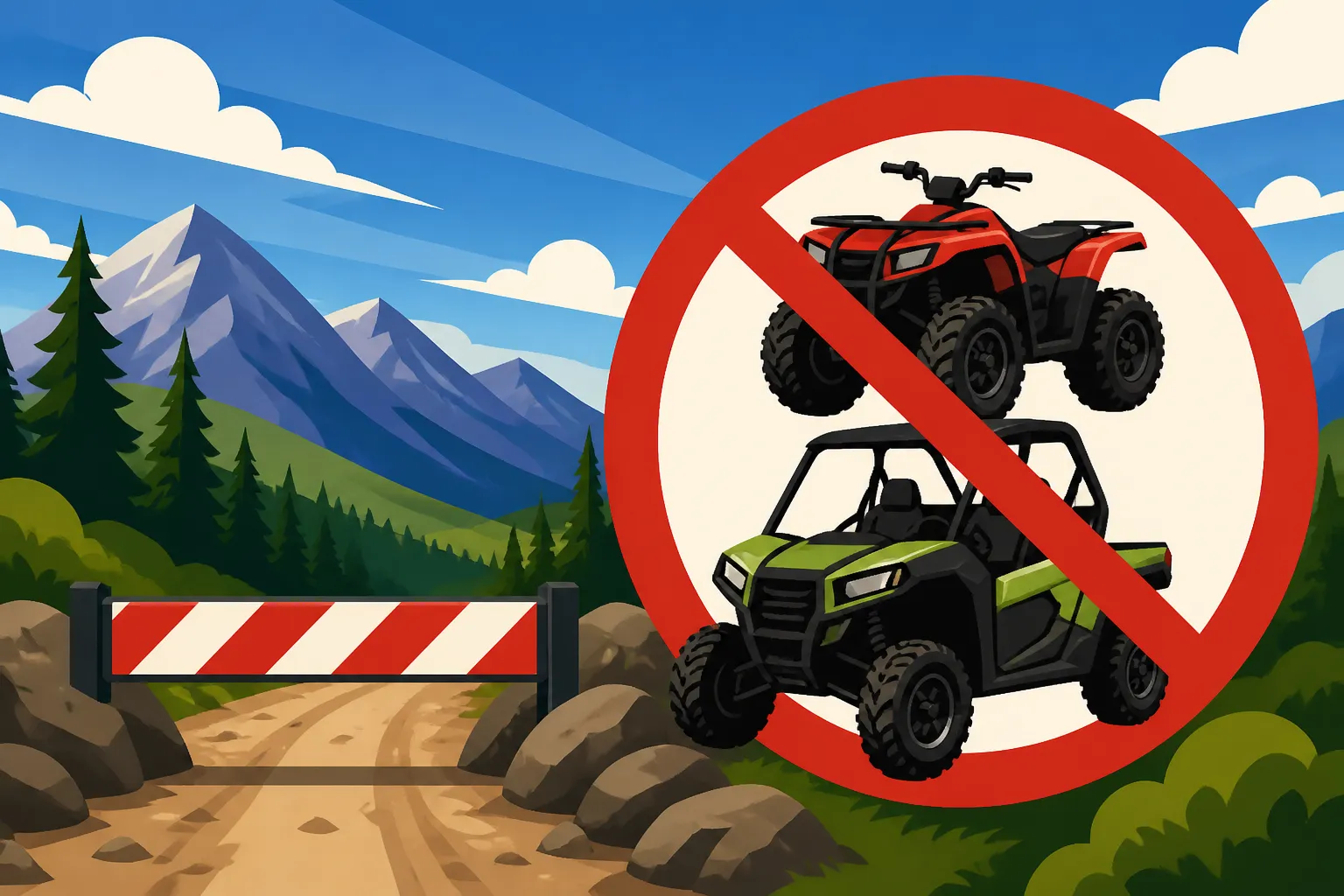
Let's make this crystal clear: You cannot operate an OHV on federal highways (like U.S. Highway 2, U.S. Highway 93, or U.S. Highway 12) or interstates (like I-15, I-90, or I-94) in Montana. Period. These roads are designed for high-speed, conventional vehicle traffic, and OHVs simply do not belong there. The risks involved are immense, both to the OHV operator and to other motorists. These highways are not trail connectors, shortcuts, or scenic routes for your side-by-side. Trying to sneak a ride on them, even for a short distance, is not only illegal but incredibly dangerous. Enforcement on these major arteries is strict, and the penalties for violation, including hefty fines and potential machine impoundment, are significant. The only exception you might ever encounter is a designated crossing, where a trail might directly intersect a highway at a specific point, but this is clearly marked and meant only for crossing, not for travel on the highway itself. Even then, extreme caution and adherence to all traffic laws are paramount.
County Roads and Local Ordinances
As we touched on earlier, county roads fall into a more nuanced category. While the default is often "closed," county commissioners have the power to change that. They can, through a formal resolution or ordinance, open specific county roads or segments of them to OHV traffic. This is where the local research really comes into play. You might find that a county like Flathead, with its extensive trail systems and recreation economy, has opened more roads for connecting trails than a county in a more agricultural region.
The challenge here is that these ordinances are not always widely advertised or immediately obvious on the ground. A road might look like any other gravel county road, but without an official opening, it remains closed to your OHV. This creates a real headache for riders who are just trying to get from point A to point B legally. You can't assume that because a road is gravel and out in the sticks, it's fair game. It's also worth noting that even on open county roads, there might be specific restrictions, such as speed limits, daylight-only use, or requirements for specific safety equipment like [Montana Helmet Rules for Riders Under 18] or mirrors. The variability from one county to the next means that what was okay last month in Missoula County might not be acceptable this month in Ravalli County.
City Streets and Municipal Regulations
When you venture into an incorporated city or town, you enter another layer of jurisdiction: municipal regulations. Just like counties, cities and towns have the authority to regulate OHV use within their corporate limits. Many towns will have ordinances that restrict OHV use on city streets, often due to noise concerns, traffic congestion, or safety considerations. However, some towns, especially those that cater to outdoor recreation and serve as hubs for trail access (think West Yellowstone or Seeley Lake), have proactively adopted ordinances to allow OHVs on certain city streets. This often happens to facilitate access between lodging, fuel stations, and trailheads.
These city ordinances are usually very specific, outlining which streets are open, during what hours, and under what conditions. For example, a town might allow OHVs on certain arterial roads to reach a gas station or restaurant, but prohibit them on residential side streets. Again, these rules are rarely consistent from one town to the next. What's permissible in Red Lodge might not be allowed in Ennis or Whitefish. It's a prime example of why asking local officials, or checking municipal websites, is so important before you roll into town on your side-by-side. Without a clear local ordinance, assume city streets are closed to OHV traffic.
Identifying Closed Roads: How to Find the Information You Need
Feeling overwhelmed yet? You're not alone. The patchwork of rules across Montana's various jurisdictions can make even the most seasoned rider scratch their head. But don't despair! There are definite, reliable ways to figure out where you can and cannot ride. It just takes a little bit of homework before you hit the trails. Knowing how to access this information is your best defense against accidental violations and the associated [Montana Fines for Illegal Road Riding].
Decoding Motor Vehicle Use Maps (MVUMs)
If you plan on riding on federal lands – that's land managed by the U.S. Forest Service or the Bureau of Land Management (BLM) – the single most important tool in your arsenal is the Motor Vehicle Use Map, or MVUM (pronounced "M-V-U-M"). These maps are the official record of where motorized vehicles are permitted on federal lands, including which roads are open to OHVs. They are legally binding and supersede general assumptions.
MVUMs typically show designated roads, trails, and areas where motorized vehicles are allowed, along with seasonal restrictions or specific vehicle types allowed (e.g., 50-inch width restriction, full-size vehicles only). Critically, if a road or trail isn't specifically shown as open on an MVUM, then it is closed to motorized public use. This is the federal land equivalent of the "closed unless opened" rule. You can find these maps for free online on the websites of individual National Forests or BLM field offices, or often pick up paper copies at ranger stations. [Finding a Forest's Motor Vehicle Use Map] is essential for responsible riding on federal land, as these maps are updated regularly to reflect changes in land management decisions, seasonal closures, or environmental concerns. Always download or print the most current version for the area you plan to visit, as older maps can quickly become obsolete.
Checking with Local Authorities
For county roads and city streets, your best bet is to go straight to the source: the local authorities.
- County Commissioners: For county roads, you'll want to check with the county commissioners' office or the county road department. Many counties now publish their OHV ordinances on their official websites. You might find a map or a list of roads designated as open. If you can't find it online, a quick phone call to the county clerk or road department can often get you the information you need. Don't be shy; they deal with these questions all the time. They can tell you about any specific resolutions or ordinances that open roads for OHV use.
- City or Town Clerks: For city streets, contact the city or town clerk's office. They can provide you with a copy of any municipal ordinances related to OHV use within their limits. Again, many progressive trail towns will have this information readily available online, sometimes even with maps indicating permissible routes to help riders navigate. If you're planning a trip to a specific [Montana Town That Allows OHVs on Their Streets], checking their official website first is highly recommended.
Remember, what one county or city allows might be completely different in the next. Taking the time to do this research is an investment in a stress-free and legal ride.
Riding Smart: Signs and Posted Restrictions
While MVUMs and direct contact with authorities are your primary tools, always pay attention to signs on the ground. These signs provide real-time information and can often clarify ambiguities or warn of temporary closures. Look for:
- "OHV Use Permitted" or "Motorized Vehicles Allowed" signs: These are your green lights, often indicating a road or trail is open.
- "No OHVs," "Motorized Vehicles Prohibited," or "Road Closed" signs: These are your red lights. Heed them immediately. Sometimes roads are closed seasonally, for logging operations, or due to environmental concerns like excessive mud.
- Width restriction signs: Many trails are designed for specific machine widths. [A 64-Inch Machine on a Narrow Montana Trail] can be problematic if the trail is only 50 inches wide.
- Specific rule signage: You might see signs detailing speed limits, helmet requirements, or other local rules that apply to OHVs on that particular stretch of road.
Always assume that if a road isn't explicitly marked as open for OHVs, and it's not on an MVUM as such, then it's closed. This cautious approach will save you headaches. I’ve seen some riders use tools from SuperATV like their full windshields or specific lighting kits to enhance visibility, which while not a legal requirement for all road sections, can be a great safety addition when navigating any designated open road sections or even just crossing them.
| Road Type | Typical OHV Status (Default) | Primary Authority | How to Verify Open Status |
|---|---|---|---|
| Interstate Highways | CLOSED | Montana MDT (State) | Almost never open; designated crossings only. Assume closed. |
| Federal Highways | CLOSED | Montana MDT (State) | Almost never open; designated crossings only. Assume closed. |
| State Routes | CLOSED | Montana MDT (State) | Almost never open; designated crossings only. Assume closed. |
| County Roads | CLOSED (Unless Opened) | County Commissioners | Check County Clerk/Road Dept. ordinances or websites. |
| City/Town Streets | CLOSED (Unless Opened) | Municipal Government (City) | Check City/Town Clerk for local ordinances. |
| Forest Service Roads | CLOSED (Unless Shown Open) | US Forest Service | Consult current Motor Vehicle Use Maps (MVUMs). |
| BLM Roads | CLOSED (Unless Shown Open) | Bureau of Land Management | Consult current Motor Vehicle Use Maps (MVUMs). |
Navigating the Grey Areas and Staying Legal
Montana's diverse landscape offers incredible riding opportunities, but the complex tapestry of road regulations can sometimes feel like walking a tightrope. Even with the best intentions and diligent research, you might encounter situations where the rules aren't perfectly clear. Knowing how to approach these "grey areas" and prioritize safety and legality will ensure your adventures remain positive.
When in Doubt, Don't Go
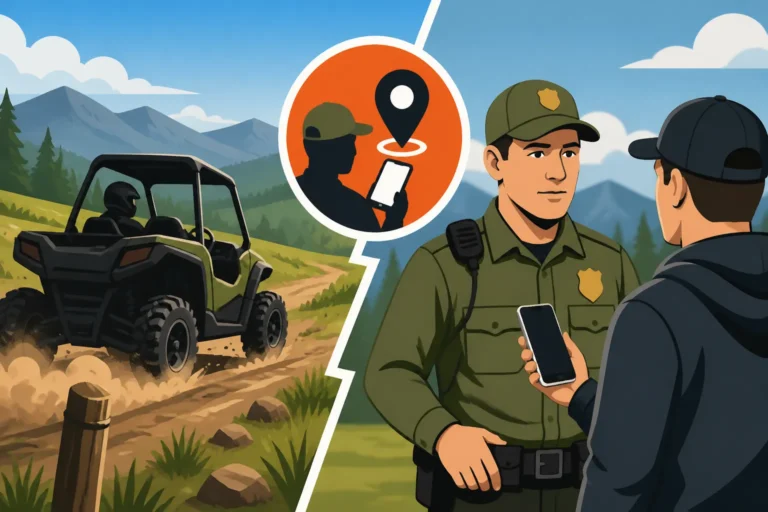
This is perhaps the most important piece of advice when dealing with OHV road access in Montana: if you are unsure whether a road is open to OHVs, do not ride on it. It’s always better to err on the side of caution. The consequences of illegally riding on a closed road can range from a significant fine and potential court costs to impoundment of your machine, and even criminal charges in some extreme cases, especially if you cause damage or are reckless. Beyond the legal ramifications, there are significant safety concerns. Many roads are closed to OHVs for a reason – perhaps they are too narrow, have blind curves, heavy traffic, or are used by large equipment that wouldn't expect to encounter an OHV.
Think about it: is that one questionable stretch of road worth the risk of a citation, or worse, an accident? Often, there's an alternative route, even if it adds a few miles to your journey. Respecting posted closures and exercising caution not only protects you but also helps preserve access for all OHV riders by fostering a positive relationship with land managers and local communities. A few bad actors can quickly lead to more widespread closures.
The Importance of Current Information
Rules and regulations are not static. They can, and do, change. County commissioners might pass new ordinances opening or closing roads, seasonal restrictions come and go, and federal land managers might update their MVUMs due to trail damage, fire closures, or new resource management plans. Relying on outdated information is almost as risky as not having any information at all.
- Check frequently: Before each major riding trip, make it a habit to check the most current MVUMs for federal lands and any local ordinances for county roads or city streets you plan to use. Don't assume that because a road was open last year, it's still open this year.
- Seasonal Changes: Pay close attention to seasonal closures, especially in the spring when roads can be soft and easily damaged, or in the fall for hunting seasons or winter snow. [Montana Trails Open in June] might be much different in April due to snowmelt.
- Fire Closures: Montana experiences wildfire season every year, and fires can lead to widespread road and trail closures for safety and recovery. Always check for current fire information and closures before heading out. [Montana Road Closures During Fire Season] can pop up quickly.
Being proactive about gathering current information is a hallmark of a responsible OHV rider.
Equipping Your Machine for Legal Road Use (When Permitted)
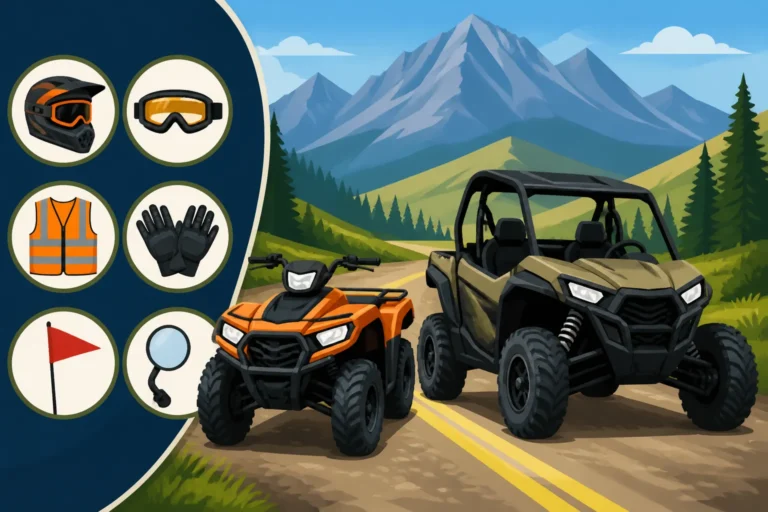
Even on roads that are specifically designated as open for OHV use, your machine will likely need to meet certain requirements to be considered "street legal" for that particular stretch. These requirements vary but commonly include:
- Headlights and Taillights: Must be functional and often required to be on during operation, even in daylight.
- Brakes: In good working order.
- Muffler and Spark Arrester: To control noise and prevent fires.
- Mirrors: At least one, often two, rearview mirrors are required.
- Horn: A functional horn.
- Turn Signals: Some jurisdictions may require turn signals for road use.
- License Plate/Decal: Your current [Montana OHV Decals and Rear Placement] must be visible.
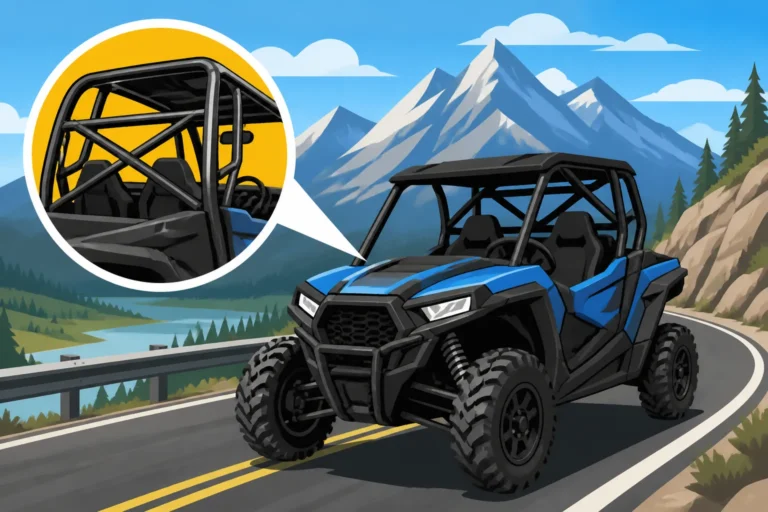
For riders looking to enhance their machines for these requirements, or just for overall durability and performance, aftermarket accessories can be a game-changer. Companies like SuperATV offer a wide range of products, from full-size windshields that improve comfort on open roads to robust bumpers and skid plates that protect your machine whether you're on a permitted road section or back on the trail. They also have various lighting options that can help ensure you meet visibility requirements if your stock setup isn't quite up to par for specific road use. Equipping your OHV with proper safety gear, like a sturdy roll cage (common on UTVs) and seatbelts, is also a must for any road riding, even if it’s a short connection to a trail. Remember, if you're riding a road that requires these elements, you need to have them. Don't gamble.
Disclaimer
This article is for general informational purposes only and does not constitute professional advice. Laws, prices and regulations vary by location and change over time. Consult a qualified professional for guidance on your specific situation.