Wildflower Season on Montana Trails
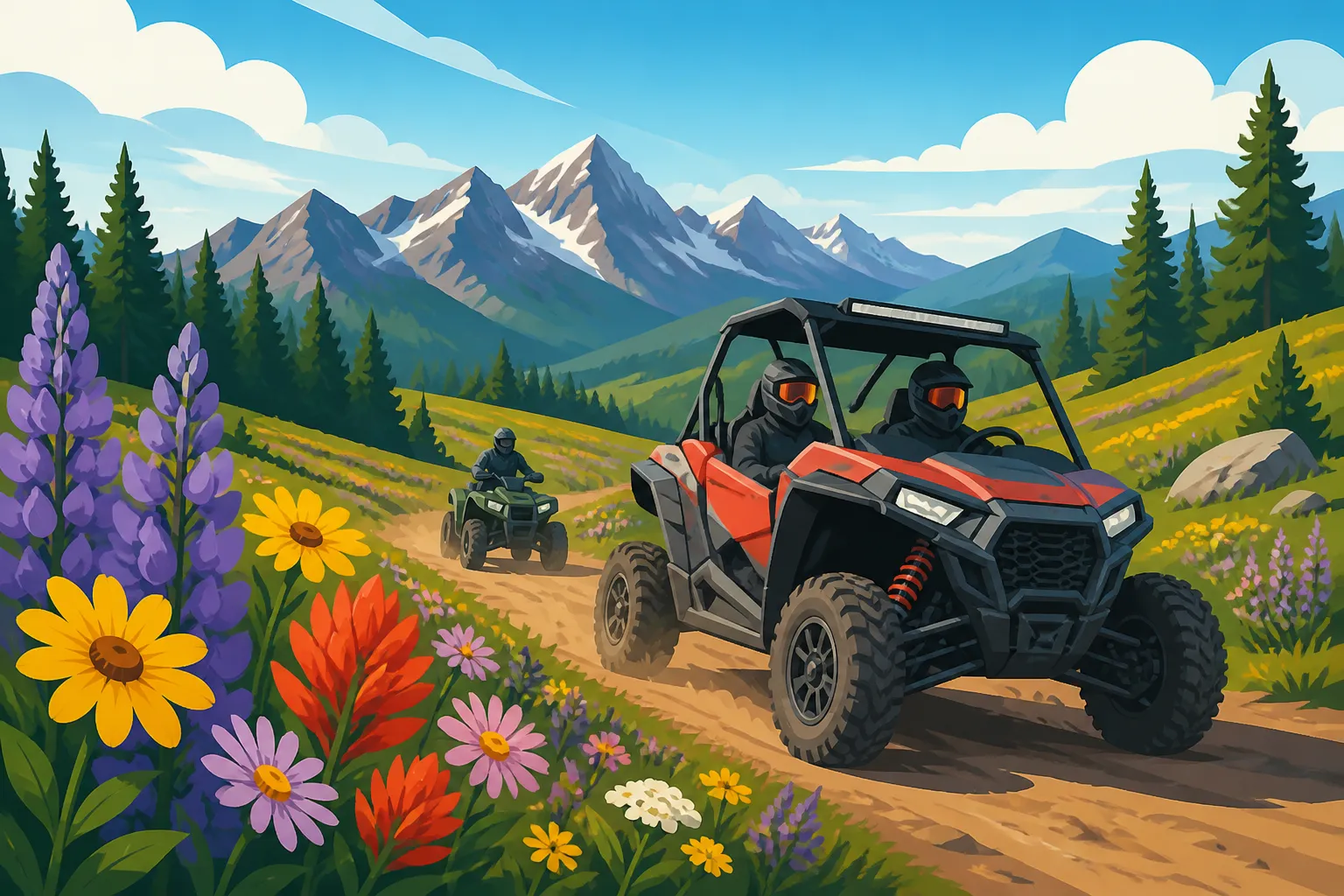
Wildflower season can make a Montana ATV or UTV ride feel especially memorable, but bloom timing is hard to predict. Snowmelt, elevation, recent rain, and trail conditions can shift the best window from one area to another. This guide explains how to plan a flower-focused ride, enjoy the scenery without damaging delicate ground, and check that your route is open and suitable.
When wildflowers bloom on Montana trails
Snowmelt and elevation matter more than the calendar
There isn’t one statewide wildflower week. Lower-elevation areas may begin showing blooms while higher trails are still snowy or muddy. Even nearby routes can differ: a sunny, south-facing slope may dry out and flower earlier than a shaded north-facing hillside. After a late winter, spring blooms may arrive later; after a dry spell, flowers may be less abundant or shorter-lived.
That variation is part of the appeal, but it can make trip planning frustrating. A date that worked well on a previous visit may not line up with this year’s conditions. Instead of planning around a single expected peak, choose a flexible window and a few possible riding areas. For ideas on matching a route to the season, see Best Month to Ride Montana High Country and Trail Conditions After Snowmelt.
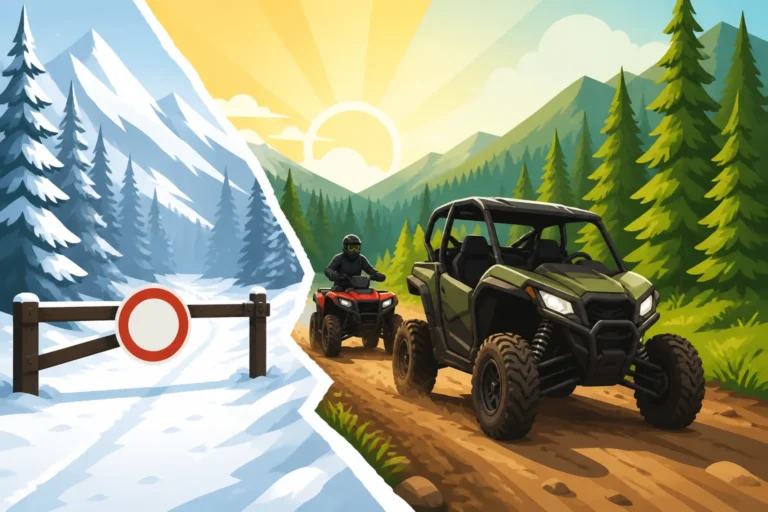
Elevation is a useful planning clue, not a guarantee. A lower route might be dry and flower-speckled while a nearby climb is still wet, snow-covered, or closed. Before setting out, check the trail’s current status and any seasonal restrictions. A flower-filled hillside is not worth reaching by riding around a gate or crossing soft ground.
Think in terms of landscapes, not a guaranteed bloom date
Different parts of Montana offer different riding settings, and each has its own mix of elevation, exposure, and seasonal conditions. Routes near the Flathead Valley, around Blue Mountain near Missoula, or in the Garnet area can all make scenic outings, but no one should assume the same flowers will be showing at the same time in each place. Use an area as a starting point, then confirm access and conditions for the specific route you intend to ride.
A useful approach is to make your ride about the landscape rather than a particular flower. You might plan a slow outing with time for overlooks and short breaks, then treat blooms as a bonus rather than a promise. If a higher trail is still muddy, a lower and drier legal route may offer a better day—and a lighter impact on the ground.
For regional ideas, browse Riding Montana’s Flathead National Forest, Blue Mountain Recreation Area Near Missoula, or Garnet Backcountry Byway Near Greenough. These topics can help you compare areas, but always verify which routes are currently open and permitted for your machine.
Planning a flower-focused ATV or UTV ride
Check maps, closures, and machine limits before leaving
A scenic route is only a good choice if it is open to your vehicle and the conditions are appropriate. Start with the managing agency’s current information and the relevant Motor Vehicle Use Map, or MVUM. An MVUM indicates where motorized travel is allowed; a general recreation map may show trails without explaining every vehicle restriction or seasonal closure. For help reading those route details, see Finding a Forest’s Motor Vehicle Use Map and Seasonal Dates on a Montana MVUM.
Apps can be useful for seeing your position and comparing route options, but they should not replace official land-management information. onX Offroad can help riders review mapped routes and plan around a broader area, especially when cell coverage is limited. Download maps for offline use before you lose service, and compare the app’s route information with the current official MVUM and closure notices.
| Planning question | What to check | Why it matters |
|---|---|---|
| Is the route open? | Current agency notices and seasonal dates | A mapped route may be closed for snow, wildlife, maintenance, or other reasons |
| Is my machine allowed? | MVUM designation and width restrictions | Some trails do not accommodate every ATV or UTV |
| Is the surface ready? | Recent conditions, snowmelt, and mud | Soft ground can rut easily and may be unsafe |
| Can I navigate without service? | Offline maps, route notes, and a paper backup | Cell reception can disappear in the backcountry |
| Do I have the required pass or permit? | Rules for the land and type of riding | Registration and trail-access requirements may differ |
The map and the ground both matter. If the trail is signed closed, blocked, or visibly too soft, don’t try to skirt the obstacle. Stay on the designated route and choose an alternative that is open. The article Checking Montana Trail Status Before You Drive is a useful companion when you’re deciding whether to make the drive.
Build flexibility into the day
Flower viewing is easier when the ride doesn’t depend on reaching one exact spot at one exact time. Pick a main route and one or two legal alternatives in the same general area. If snow, mud, smoke, or a closure changes your plan, you can adjust without improvising a shortcut through vegetation or private land.
Allow extra time for a slower pace. Riders often want to stop for a view, take a photograph, or let another group pass on a narrow trail. A schedule that leaves room for those pauses feels more relaxed than trying to cover the maximum distance. Bring water, food, weather layers, and enough fuel for your planned route, with a sensible margin for detours.
Navigation can also be more demanding than it looks on a phone screen. Download your chosen map before departure, carry a backup route reference, and let someone know where you expect to ride and when you expect to return. onX Offroad may be helpful for offline navigation, but battery life, device settings, and downloaded map coverage should be checked before the trip—not at the trailhead.
Protecting wildflowers and staying safe
Keep wheels on durable, designated surfaces
Wildflowers can grow in places that look like open ground but are easily damaged. A tire crossing a wet meadow or a patch of fragile plants can flatten vegetation and leave ruts that persist after the ride. The temptation to pull off for a photo or to make room for another vehicle is understandable, especially on a crowded route, but avoid riding off the designated trail. Stop only where it is safe and allowed, and use established pullouts or durable surfaces.
Do not pick flowers or dig them up. A photograph is a better souvenir, and close-up pictures can be taken from the trail edge without stepping into a patch. Be considerate of other visitors, too: slow down where people are walking, keep dust and noise in mind, and avoid blocking the trail while taking a break.
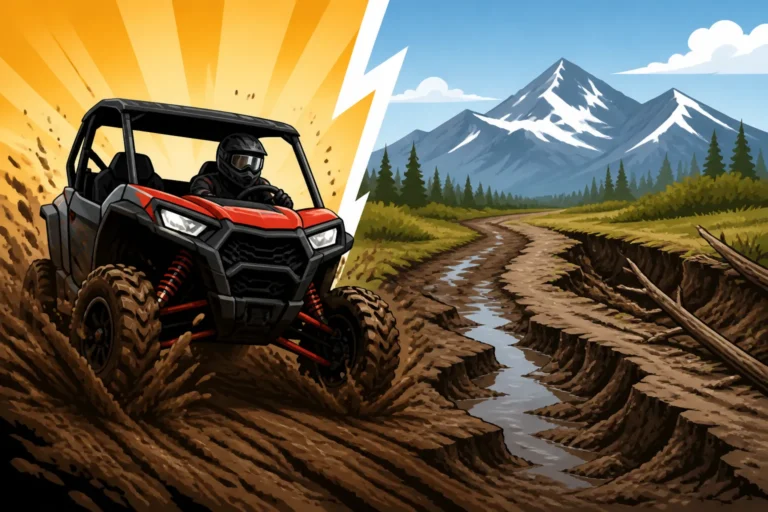
When you encounter a wet or muddy stretch, don’t widen the trail by driving around it. If the route is becoming damaged or difficult to pass without leaving the established track, turn back or choose another open route. Spring Mud and Montana Trail Damage explains why riding on saturated ground can cause problems well beyond a single outing.
Prepare for changing conditions and backcountry limits
A warm afternoon doesn’t guarantee comfortable conditions for the whole ride. Mountain weather can change, and shade, wind, elevation, or a passing shower can make temperatures feel different from those in town. Wear layers that are easy to adjust, bring water, and carry basic first-aid and repair supplies appropriate to your group and machine. Let a passenger know where essentials are stored rather than packing everything where it can’t be reached.
Plan for limited cell service. Save maps offline, make sure your phone or GPS is charged, and consider carrying a backup power source. Tell someone your route and return plan before you leave. If you’re riding in remote country, include enough time and supplies to handle a delay without relying on a quick call for help. For more preparation ideas, see What to Carry on a Remote Montana Ride.
Wildlife may also be active along trails and near open areas. Give animals room, avoid crowding them for a photograph, and follow any posted restrictions. In bear country, carry bear spray where it is accessible and know how to use it. Stay alert around blind corners, other riders, hikers, and changing trail surfaces; enjoying the scenery shouldn’t mean taking your attention away from the route.
Choosing a route and making the most of the ride
Match the trail to your vehicle and your group
A flower-focused ride does not have to be a long or difficult one. A shorter route with safe places to stop may be a better fit than a challenging trail that leaves little time to enjoy the views. Consider the narrowest trail section, not just the machine’s overall capability. A full-size side-by-side may be too wide for some routes, while an ATV may suit narrower trails more comfortably. Confirm the designated vehicle class and width limits before you go.
Think about everyone in your group. New riders may prefer a route with uncomplicated navigation, manageable terrain, and room to pull over safely. Families should check age, supervision, and helmet requirements that apply to their situation. If different machines are traveling together, agree on a pace and a meeting plan before entering areas where groups can become separated.
Use an official map to confirm that every section of a planned loop is open to your machine. A route shown on a phone app may connect to a road or trail with a different designation. If the connection is not legally open to your vehicle, don’t assume you can ride it just because it appears to form a convenient loop. Montana Trails That Suit a 50-Inch Machine and Wide Side-by-Sides on Narrow Trails offer useful context when trail width is part of the decision.
Leave room for the season to surprise you
A successful wildflower outing doesn’t require a wall-to-wall carpet of blooms. Sometimes the best part is the contrast between a green valley, snow lingering on a higher ridge, and a few bright flowers along the route. If the bloom is early, late, or sparse, the ride can still be worthwhile when you’ve chosen a route for its scenery and conditions.
Before departure, do a final check of the route, weather, closure notices, permits, and machine requirements. At the trailhead, read signs carefully; posted information may clarify restrictions that aren’t obvious from a general map. During the ride, stay on the designated route, stop only in safe places, and be ready to turn around when conditions call for it.
If the day’s conditions don’t work, postponing can be the better choice. Wet ground, a seasonal closure, or poor visibility can turn a hoped-for scenic outing into a frustrating one. A flexible plan—and a willingness to choose another day—helps protect both the trail and the experience you came for.
Disclaimer
This article is for general informational purposes only and does not constitute professional advice. Laws, prices and regulations vary by location and change over time. Consult a qualified professional for guidance on your specific situation.