Busy Montana Trails on a Holiday Weekend
A holiday weekend can turn a Montana trailhead into a parking puzzle: trailers arrive early, narrow roads get dusty, and popular routes feel much busier than expected. This guide explains how to plan around crowds, choose a suitable riding area, share trails safely, and keep a long weekend enjoyable even when other riders have the same idea.
Why Montana Trails Get Busy on Holiday Weekends
Crowds gather at a few familiar starting points
Montana has a large range of motorized riding opportunities, but riders often gravitate toward places with recognizable names, established staging areas, and routes within reach of a town. That can concentrate traffic around systems near the Flathead Valley, Missoula, Bozeman, and Red Lodge. Popular destinations such as Wild Bill near the Flathead Valley, Blue Mountain near Missoula, and routes in the Custer Gallatin area may draw different kinds of riders, but their busiest access points can still feel crowded during a holiday break.
The trail itself may not be the only bottleneck. A small parking area, a narrow approach road, a busy fuel stop, or one popular viewpoint can bring people together even when the route network is extensive. If several groups start at the same trailhead around midmorning, the first few miles may feel more congested than trails farther into the system.
Crowds also vary by day and time. The start of a long weekend can bring a wave of arrivals, while later mornings often see more groups pulling out after breakfast and loading up. Conditions, weather, seasonal openings, and special events all affect where people go. A trail system that was quiet on an ordinary weekday may be a very different experience on a holiday Saturday.
More machines mean more interactions
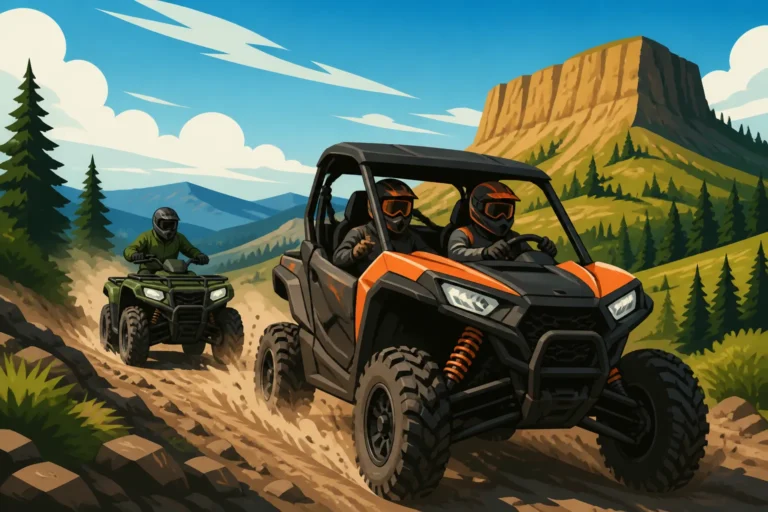
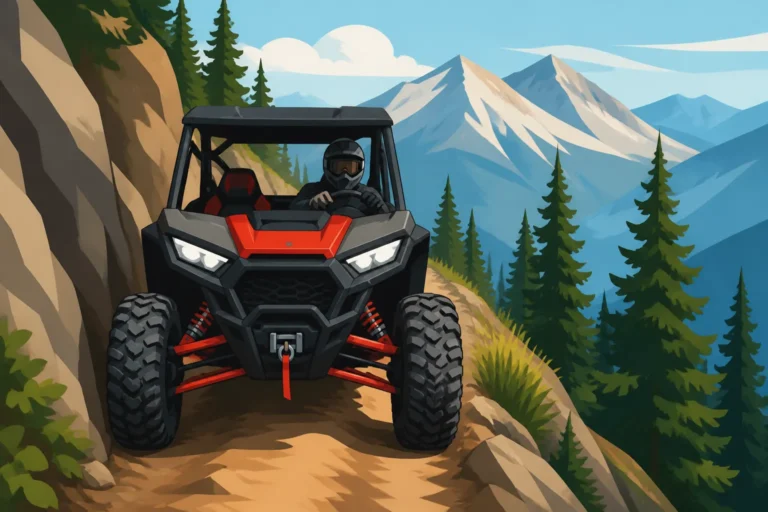
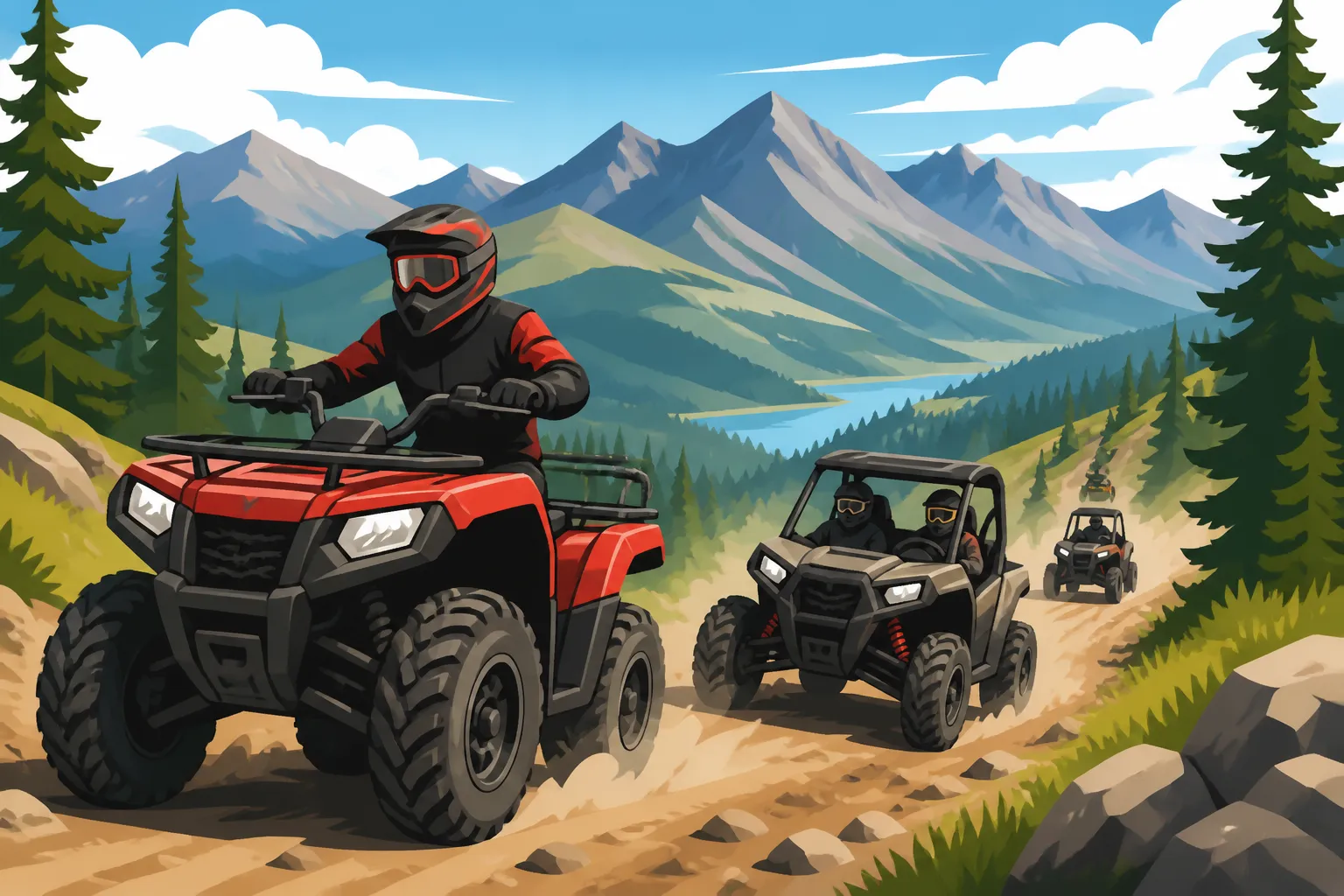
A busy trail brings together riders moving at different speeds and using different equipment. A family on a smaller ATV, a side-by-side carrying several passengers, and a dirt-bike group may all share parts of the same route. Passing opportunities can be limited on narrow tracks, and dust can make it difficult to see what is ahead.
The mix of experience matters, too. Some riders know the area well; others may be visiting for the first time and stopping often to check a map. A group that loses its way or pauses at a junction can block the route unintentionally. That is not necessarily poor etiquette—sometimes it is simply the challenge of figuring out an unfamiliar trail network while other riders approach.
A realistic plan treats extra traffic as part of the conditions, much like changing weather or rough terrain. Leave room in the schedule for slower travel, breaks, and route adjustments. If your group is expecting a quiet, fast ride, a major holiday weekend may not be the right time for a well-known trailhead.
Busy does not always mean unsafe, but it changes your margin
The main risks often come from reduced visibility, limited space, and hurried decisions. Dust can hide a stopped rider around a bend. A driver may pull over where there is little room to pass. A group may bunch up at a junction, making it harder for others to get through.
Give yourself more time and space than you would on a quiet day. Slow before blind corners, avoid following closely in dust, and stop only where other riders can see you and pass safely. Keep children and newer riders close enough to supervise, but not so tightly grouped that a sudden stop creates a pileup.
If the trail feels crowded, changing your pace or route is usually better than trying to push through. A less famous route, a shorter loop, or an earlier start can make the day more relaxed without requiring a complicated plan.
How to Choose a Trail and Plan Around Traffic
Match the route to your machine and your group
A holiday is a poor time to discover that a trail is too narrow for your side-by-side or too challenging for the least experienced rider in your group. Check the route’s permitted vehicle width and other posted restrictions before setting out. A full-size UTV and a narrow ATV do not have the same access options, and a route that looks wide on a screen can still feel tight around trees, rocks, or washouts.
Consider the people riding as carefully as the machines. A long, technical route may be tiring for young riders or anyone new to the area. A short loop with clear turnarounds can be a better choice when traffic is heavy, because the group can return to the trailer without committing to a full-day route. For machine-width considerations, start with Montana Trails Rated for Full-Size Rigs.
It also helps to agree on a simple group plan before unloading. Choose a lead rider who knows how to navigate, a tail rider who watches for anyone falling behind, and a regrouping point at major junctions. If there are several machines, decide in advance how many riders will wait when the group stops. That avoids a common holiday-weekend problem: some riders continue ahead while others assume everyone is still together.
Use maps and official access information together
A navigation app can help you understand the layout of a trail network, but it should not be treated as proof that a route is open or legal for your machine. On public lands, routes may have seasonal restrictions, vehicle-type limits, closures, or other rules that are not obvious from a line on a screen. Check the applicable land manager’s information and the current route map before leaving home.
A Motor Vehicle Use Map, often called an MVUM, can help identify routes designated for motorized travel and show restrictions that matter to riders. Read it alongside local notices and signs at the trailhead, since closures or conditions can change. Reading a Montana Motor Vehicle Use Map and Checking Montana Trail Status Before You Drive are useful places to start when planning a route.
onX Offroad can help riders examine route options and keep a digital map available during a trip. It is most useful as part of a layered plan: compare the route information with official maps, save the map for offline use where possible, and carry a backup map if you are entering an area with limited service. Do not assume that a route displayed in an app is automatically open, permitted, or appropriate for your vehicle.
Choose your start time and staging area deliberately
An early departure can help you avoid the busiest arrival period, but it is not a guarantee of an empty trail. The benefit is practical: parking is often easier, your group can finish more of the ride before fatigue or afternoon weather becomes a concern, and you have more flexibility if the route is slower than expected.
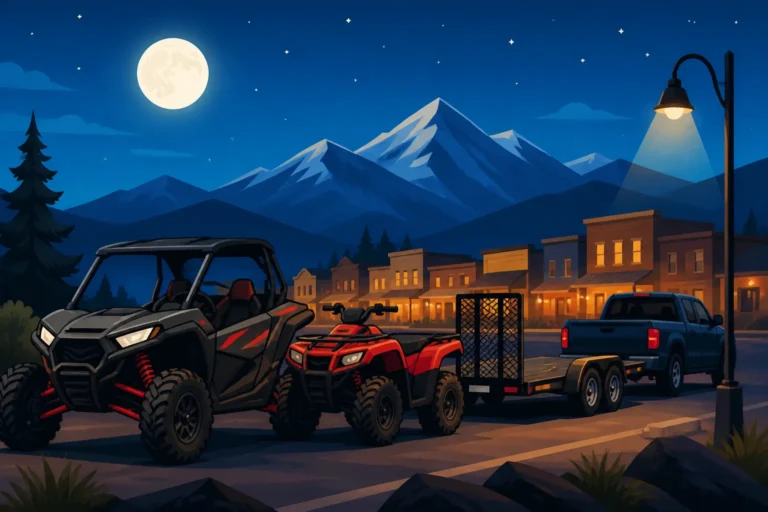
Before towing to a trailhead, confirm where you can park and turn around. A trailer that fits in an ordinary lot may be difficult to maneuver when the lot is full. Avoid blocking gates, road shoulders, access for emergency vehicles, or other users’ trailers. If a staging area is full, do not create a new parking spot in vegetation or on an unapproved roadside area.
The Montana Trailhead Parking and Staging guide can help you think through trailer space and staging logistics. Planning a different starting point may also reduce pressure on the most popular access area, provided the alternate access is legal and suitable for your machine.
| Planning choice | What it can help with | What to check |
|---|---|---|
| Start early | Easier staging and more time for the ride | Gate access, weather, and daylight |
| Pick a shorter loop | Less pressure to keep pace or finish late | Turnaround points and route restrictions |
| Use a less popular access point | Fewer crowds at one trailhead | Legal access, parking, and road condition |
| Ride on a quieter holiday day | A more relaxed pace | Local events, closures, and expected weather |
| Save maps for offline use | Navigation when service drops | Route legality and the map’s update status |
How to Ride Considerately When the Trail Is Crowded
Keep speed and spacing suited to the conditions
Dust reduces visibility, especially when several machines are traveling the same route. Leave enough distance that you can slow down without entering another rider’s dust cloud at close range. If you cannot see the trail clearly, ease off the throttle rather than assuming the route ahead is clear.
Slow down before corners, junctions, and areas where riders may stop to regroup. On a narrow section, wait for a safe place to pass rather than squeezing past another machine. If you are the slower group, pull over only where there is room to do so safely and where you will not block the trail or damage the surrounding ground.
A side-by-side can take up much of a narrow route. Be especially alert when approaching smaller machines, riders on foot, or people who may be moving at a different pace. A friendly wave or clear signal can help, but do not rely on gestures alone if visibility is poor or the trail is noisy.
Make stops that do not block the route
It is tempting to stop at the first scenic overlook or wide-looking patch of ground, especially when someone wants a photo. On a crowded weekend, those spots may also be the only places where other riders can pass. Look for a designated staging or rest area, or a broad location where your entire group can pull fully off the traveled route without disturbing vegetation.
When your group reaches a junction, move out of the way before checking the map. A quick pause directly at the intersection can leave following riders unsure which direction to take or force them to wait. Decide who is navigating and have that person check the route where the group can gather safely.
If onX Offroad is part of your navigation setup, check the route before the group reaches a confusing junction when possible. That reduces the chance of stopping suddenly in a narrow spot. Keep your phone secured, and avoid trying to read a screen while operating the machine.
Share the route with other kinds of users
Some motorized routes connect with areas used by hikers, cyclists, equestrians, or other recreationists. Do not assume that every person on a trail expects motorized traffic. Slow down, give people room, and follow posted rules for yielding and route use. If you are unsure whether a route allows your type of machine, stop somewhere safe and verify before continuing.
Wildlife and livestock can also appear without warning, particularly along open roads and in forested areas. Slow down when visibility is limited, and do not chase animals or drive close to cattle. A crowded weekend is not an excuse to leave the designated route or make a new path around a stopped group.
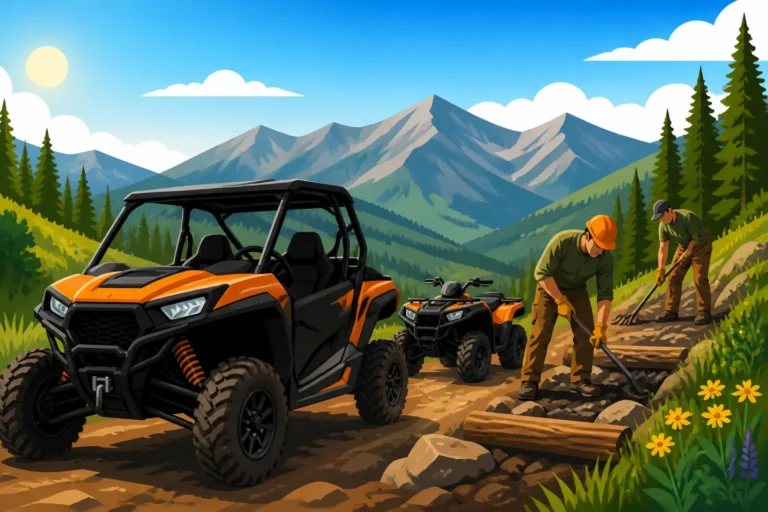
The broader context of access is covered in Montana’s National Forest Trail Systems. Staying on designated routes and respecting closures helps protect continued access for everyone, including the riders who will return after the holiday crowds have gone home.
What to Bring and What to Do if Plans Change
Prepare for delays, not just the planned ride
A day that looks short on a map can take longer when the trail is busy. Add time for slow sections, regrouping, stops, and unexpected route decisions. Bring enough water and food for the whole group, along with clothing for changing mountain conditions. Weather can differ between a town and a higher trail, and a clear morning does not guarantee a clear afternoon.
Fuel planning deserves particular attention. A crowded trail, a detour, or a wrong turn can add distance. Start with a full tank where practical, know where refueling is available, and plan a reserve rather than calculating fuel only for the ideal route. The guide to Fuel Planning for a Montana Trail Day can help you build a more realistic trip plan.
Carry basic first-aid supplies, tools suited to your machine, a tire-repair option appropriate for your setup, and a way to contact help. Cell service can be unreliable in remote areas, so do not assume you will be able to call someone from every trail junction. Review Cell Service in the Montana Backcountry before relying on a phone as your only communication plan.
Have a backup route and a clear turnaround point
Before leaving the staging area, agree on what will make the group shorten or end the ride. That might be a full parking area at a second trailhead, worsening weather, a machine problem, a rider becoming tired, or a route that is more crowded than expected. Picking a turnaround time or landmark in advance helps prevent the group from debating the decision after everyone is already tired.
A backup route should be more than a line on a screen. Confirm that it is open, legal for your machine, and reachable from where you expect to be. If a route is closed, do not go around a barrier or follow tracks that appear to continue past it. Turn back and choose a lawful alternative.
If a trailhead is full when you arrive, find an approved alternative rather than parking in a way that blocks access or damages the area. Sometimes the best holiday-weekend decision is to ride a shorter route somewhere else, take a break, or return another day. Flexibility is not a failed plan; it is part of traveling responsibly in a busy recreation area.
Keep the post-ride plan simple
Crowds can continue after the ride ends. Leave room to load without obstructing other trailers, check that tie-downs are secure, and make sure everyone in your group is accounted for before pulling onto a public road. If dust has settled over the parking area, take extra care when maneuvering.
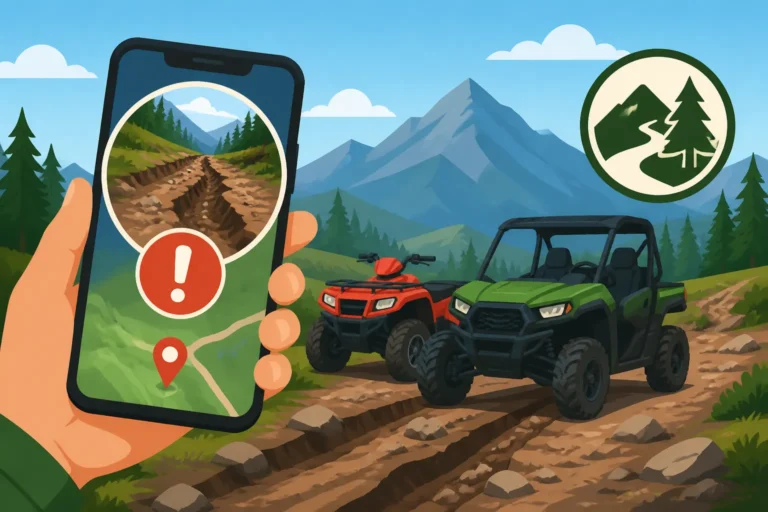
Carry out your trash and avoid leaving food or gear at the staging area. If you noticed a damaged sign, a blocked route, or a safety issue, report it through the appropriate land manager rather than attempting repairs or changing the route yourself. Responsible reporting can help the people who manage the area understand what needs attention.
For many riders, the best holiday weekend is not the one with the longest route or the most dramatic destination. It is the one where the group gets home safely, respects other users, and leaves the trail in good condition for the next person.
Disclaimer
This article is for general informational purposes only and does not constitute professional advice. Laws, prices and regulations vary by location and change over time. Consult a qualified professional for guidance on your specific situation.