Overnight Trailer Parking in a Montana Town
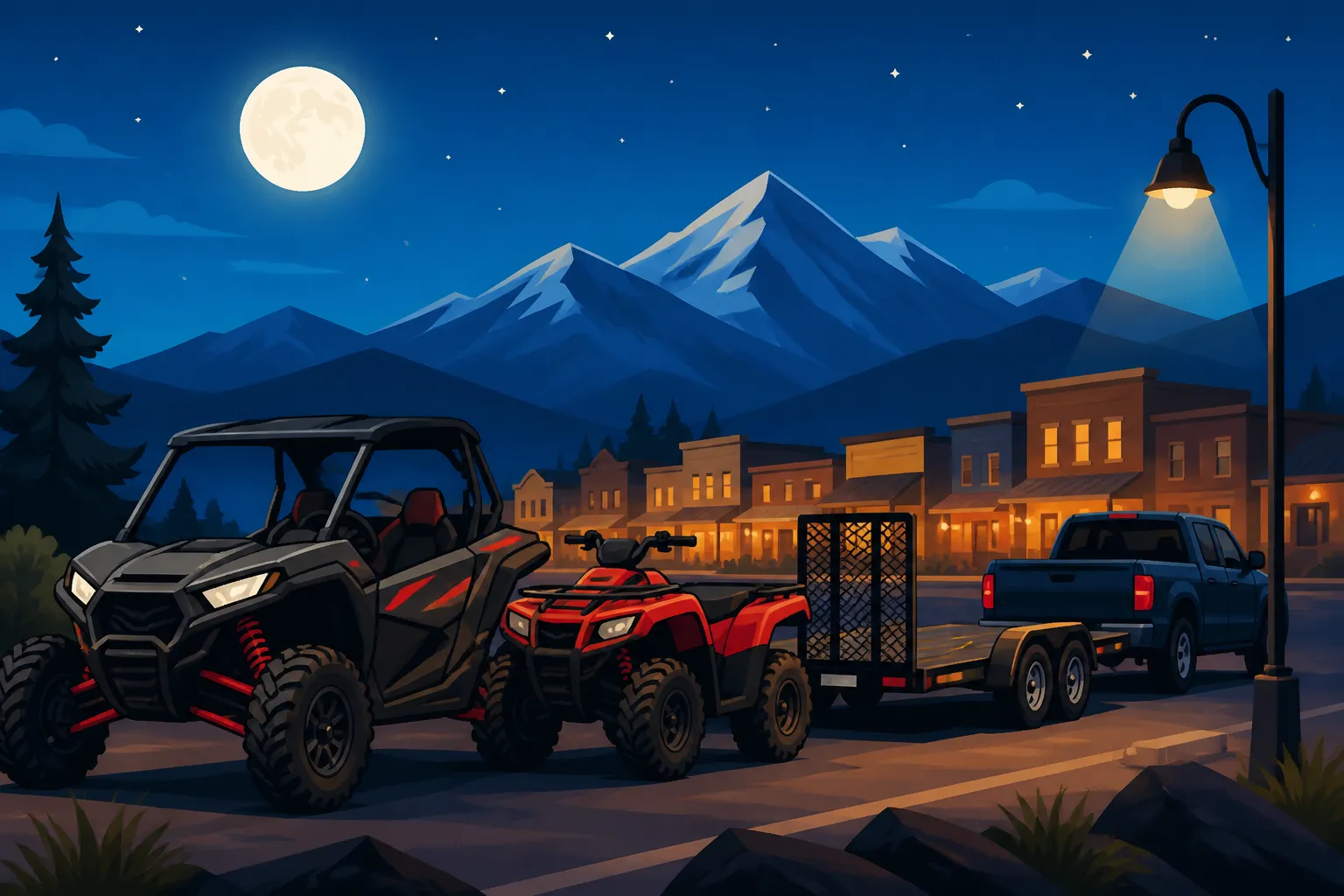
Finding a place to leave an ATV or UTV trailer overnight in a Montana town can be harder than finding a place to sleep. A long truck-and-trailer combination may not fit a hotel lot, and a trailhead that works for daytime staging may prohibit overnight parking. This guide explains how to arrange a lawful, practical spot before you arrive.
Start with permission, not an assumption
Ask your lodging provider about the whole rig
When you book a room or cabin, explain what you’re bringing: the tow vehicle, trailer, number of machines, and approximate trailer length. “Do you have parking?” is too broad; a standard car stall may not fit a truck and trailer, and the property may have limited space to turn around.
Ask whether overnight trailer parking is allowed, where the rig should go, and whether you can leave it there while you ride the next day. Confirm whether the space is reserved or simply available if room allows. If the answer is uncertain, request a description of the lot or a photo so you can judge whether your combination can maneuver safely.
This is especially useful in busy riding bases such as West Yellowstone, Whitefish, Red Lodge, and Bozeman, where lodging layouts and seasonal demand vary. A motel on a main road may have a larger lot than a small downtown property, but that is not something to count on. Get the arrangement in writing, even if it’s just a message from the property, and keep it with your trip details.
Treat public and commercial lots as permission-only
A large, empty-looking lot is not automatically a place to leave a trailer overnight. A store, restaurant, gas station, or other business may have rules against unattended trailers, overnight parking, or leaving a vehicle after closing. A lot can also be private property even when it looks open to the public.
Ask the property owner or manager directly. Be clear about how long you’ll be there and whether the truck will remain attached. If staff say overnight parking is acceptable, follow any instructions about where to park, when to move, and whether the vehicle must be attended. Do not assume another traveler’s rig is proof that the same arrangement is allowed.
Public streets and municipal lots can have their own restrictions, including time limits, overnight prohibitions, seasonal rules, or limits on oversized vehicles. Check with the town or the agency responsible for the lot rather than relying on a sign you saw elsewhere. Rules can differ between towns, and a spot that works in one community may not be permitted in another.
Separate trailhead staging from overnight storage
A trailhead may be suitable for unloading and beginning a ride without being suitable for leaving a trailer overnight. Some areas have designated staging space; others have limited parking, seasonal closures, or restrictions intended to keep roads and access points clear. Check the site’s rules before treating it as a place to store your rig.
For trip planning, Montana Trailhead Parking and Staging can help you think through the difference between a staging area and an overnight parking plan. Also check the managing agency’s posted information for the specific trailhead or recreation area. A map pin alone cannot establish that overnight parking is allowed.
Compare your parking options before you arrive
Match the parking choice to your rig
The best option depends on the trailer’s length, whether it is loaded, how long it will be unattended, and whether you need to keep the tow vehicle with it. A compact trailer may fit a lodging lot that cannot accommodate a long enclosed trailer. A trailer left behind while you ride may also need a different arrangement from one that stays attached to the truck.
| Parking option | What to confirm | Common practical concern |
|---|---|---|
| Hotel, motel, or campground | Overnight permission, space dimensions, maneuvering room, and whether parking is reserved | A full lot or tight turning area |
| Private business lot | Permission from the owner or manager, allowed hours, and any conditions | The lot may close, be monitored, or prohibit unattended trailers |
| Town or public lot | Rules from the responsible town or agency, posted limits, and overnight allowance | Time limits, seasonal restrictions, or vehicle-size rules |
| Trailhead or staging area | Managing agency rules and whether overnight parking is specifically allowed | Day-use staging does not necessarily mean overnight storage |
| Secure storage facility | Trailer size accepted, access hours, security arrangements, and retrieval logistics | You may need a separate ride between storage and lodging |
The table is a planning aid, not a substitute for checking local rules. In particular, a commercial property’s permission applies only to that property, while a public parking area may have requirements that are not obvious from its appearance.
Make lodging part of the route plan
Think about parking and riding as one itinerary. A lodging spot may offer trailer space but add a long drive to your intended trail system. Conversely, staying near a trailhead can save time but leave you without a permitted overnight place for the rig.
If you’re choosing between a few bases, Montana Trail Towns Worth a Base Camp can help you compare the role a town might play in a riding trip. Then check the actual parking arrangement with the accommodation. A general description of a town or nearby trail network does not confirm that any particular property can take your trailer.
In West Yellowstone, for example, ask how the property handles larger vehicles and whether you can leave the trailer parked while riding. Around Red Lodge, clarify whether the proposed space is on the lodging property or somewhere else. In Whitefish or Bozeman, make sure the location suits the whole combination—not just the truck. These are examples of the questions to ask, not claims about the parking policies of any specific business.
Have a backup before you need one
A late arrival, full lot, unexpected road closure, or poor turning access can leave you searching for somewhere to park after dark. Before leaving home, identify a second option and confirm that it accepts your trailer. If your first choice is lodging, the backup might be another property, a permitted storage facility, or a different town where you have already arranged parking.
Include the backup’s address and contact information in your trip notes. If you will arrive after the office closes, ask how to get instructions or who to call. Do not count on being able to leave the trailer temporarily in an unapproved lot while you sort out the next step.
For broader preparation, Planning a Montana Riding Trip is a useful companion to organizing the route, lodging, and daily logistics together.
Use maps carefully and protect the rig
Use mapping tools to plan access, not to infer permission
A mapping app can help you estimate driving time between lodging and a riding area, examine road approaches, and find possible services along the way. onX Offroad can be useful for researching routes and nearby public-land access as you plan a ride. Still, a mapped point does not tell you whether a parking lot allows overnight trailer storage, whether it is open to your rig, or whether a road is suitable for towing.
Use onX Offroad alongside official land-manager information and direct confirmation from the property or town responsible for parking. When the trailer is long or heavy, consider the approach as carefully as the destination: a narrow entrance, steep grade, low clearance, tight turn, or limited place to turn around can make an otherwise convenient spot impractical.
Before setting out, Checking Montana Trail Status Before You Drive can help you build a habit of checking conditions and access information before committing to a route. Keep a separate note of the parking permission and contact details; don’t rely on a map marker as proof of approval.
Choose a spot that makes loading and departure manageable
A parking space can be technically available but awkward to use. Ask whether you’ll have room to back in, unload or load machines, and reconnect the trailer without blocking other vehicles. If you arrive after dark, a tight lot can be especially frustrating: it is harder to judge clearances, spot obstacles, and maneuver without disturbing guests.
Whenever possible, arrive with enough daylight to inspect the space. If the property assigns a specific area, follow the directions instead of choosing a more convenient-looking spot. Keep access lanes, fire routes, sidewalks, and neighboring spaces clear. Avoid unloading machines in a traffic lane or leaving ramps and gear where others may trip over them.
Think about departure time, too. If you plan an early start, ask whether the truck can leave without waking guests or blocking another rig. A little advance coordination can prevent a rushed morning of moving vehicles around a crowded lot.
Reduce theft and weather risks
An unattended trailer can attract attention, particularly if machines or riding gear are visible. Lock the trailer, secure the hitch, and remove valuables when practical. A lock is a deterrent, not a guarantee, so ask whether the property has a designated, well-lit area and consider whether your insurance covers the machines and equipment while they are parked.
Montana weather can also change quickly. Secure covers and loose items, and avoid leaving gear where wind can carry it into another space. If you’re parking through winter or during a longer stay, make a plan for snow removal, access, and checking on the trailer. Storing a Quad Through a Montana Winter covers related considerations for keeping a machine stored between rides.
For towing preparation, Strapping a Machine Down for a Montana Pass is a useful read before a long drive through changing road and weather conditions. Recheck tie-downs after the first part of the trip, and do not leave ramps, fuel containers, or loose equipment unsecured.
Use a simple confirmation routine
Confirm the details by phone or message
A short confirmation can prevent the most common parking headaches. Contact the property, town office, or facility that controls the space and ask specific questions:
- Is overnight parking allowed for my tow vehicle and trailer?
- Can the trailer remain there while I ride, or does it need to stay attached to the truck?
- Is there a length, height, or vehicle-size restriction?
- Is the space reserved, or is it first come, first served?
- Where should I park, and is there room to turn around?
- Are there rules about unloading machines, using ramps, or arriving after hours?
- Is parking allowed for every night of my stay, including any day I leave the vehicle unattended?
Write down the name of the person who confirmed the arrangement and any instructions. If you receive permission through a booking platform or message, save the response offline in case cell service is limited. That record will not override posted rules, but it can help resolve a misunderstanding with the property.
Reconfirm if plans change
If your trailer size changes, you add another machine, arrive later than expected, or decide to leave the trailer while taking the truck elsewhere, contact the property again. The original permission may not cover a different vehicle or parking setup. Recheck if your reservation changes or the property directs you to a different lot.
When you arrive, follow the agreed arrangement. If the designated area is full or blocked, ask staff before using a different space. A quick conversation is much easier than discovering that your rig is in the way after the office has closed.
Keep parking and riding paperwork separate
Parking permission does not replace the documents and permits you may need for riding. Carry the relevant registration and machine paperwork, and check the requirements for the routes and land you plan to use. If you are visiting from outside Montana, review Montana Rules for Visiting Riders before the trip. If your route includes a public riding area, confirm its access and permit requirements independently of your overnight parking plan.
A useful final checklist is simple: a confirmed overnight space, a backup option, a route suitable for your trailer, secure equipment, and the right information for the ride itself. Sorting those details before you pull into town can spare you a stressful search at the end of a long towing day.
Disclaimer
This article is for general informational purposes only and does not constitute professional advice. Laws, prices and regulations vary by location and change over time. Consult a qualified professional for guidance on your specific situation.