Buying a Quad at a Montana Ranch Auction
Buying a quad or side-by-side at a ranch auction here in Montana can feel like a thrilling treasure hunt, full of potential bargains and unique finds. However, it also comes with a unique set of challenges and paperwork pitfalls that can leave you scratching your head or, worse, with a machine you can't legally ride. This guide will walk you through everything you need to know to confidently navigate a Montana ranch auction for an ATV or UTV, ensuring you bring home a machine that's ready for the trails.
The Allure and The Pitfalls of Ranch Auctions
There's something incredibly appealing about a ranch auction. It’s a glimpse into Montana’s agricultural backbone, often held in a picturesque setting, and brimming with equipment that has real history. For off-highway vehicles (OHVs), these auctions can be a fantastic way to find a workhorse ATV or UTV that's been well-maintained for specific tasks, or even a classic quad that just needs a little TLC. You might find machines that were used for checking fences, moving cattle, or just getting around large properties, often with lower mileage than recreational machines.
However, the "as-is, where-is" nature of auctions means you're largely on your own once the hammer drops. Unlike buying from a licensed dealer, there are fewer consumer protections, and the paperwork process can be less straightforward. You won't get a warranty, and inspecting the machine thoroughly before bidding is paramount. It’s not uncommon for buyers to get swept up in the excitement, only to realize later they've overlooked a critical detail about the machine's condition or, more importantly, its documentation. The last thing you want is to bring home a great machine that you can't title or register for legal use on Montana's incredible trails.
Why Ranch Auctions Are Different from Dealer Sales
When you buy from a Montana dealer, they handle most of the heavy lifting. They're responsible for ensuring the machine has a clear title, providing you with a bill of sale, and often even submitting the initial registration paperwork to the county treasurer. This streamlines the process considerably and gives you peace of mind that the machine is legitimate.
Ranch auctions, on the other hand, are typically private party sales in a public forum. The seller is often an individual or estate, and their primary goal is to liquidate assets quickly. They might not be experts in OHV titling and registration, or they might not have all the necessary documents readily available. The auction house itself acts as a facilitator, but usually takes no responsibility for the condition or legal status of the items sold beyond what the seller provides. You, the buyer, bear the full responsibility for due diligence. This includes understanding what documentation you'll need to satisfy the Montana Department of Justice and your local county treasurer. Missing paperwork can turn a "bargain" into a real headache when you try to get your [Titling an OHV in Montana] completed.
The "As-Is, Where-Is" Reality
This phrase is the golden rule of auctions. It means exactly what it sounds like: you're buying the item in its current condition, wherever it happens to be, with no guarantees from the seller or the auctioneer. For an ATV or UTV, this means you need to do your homework before you bid.
- Mechanical Condition: Can you start it? Does it smoke? Are the tires shot? Is there visible damage to the frame or suspension? Bring a flashlight and get underneath if possible. Check the oil, brake fluid, and coolant levels. Look for leaks. Ask if you can take it for a short spin, though this is often not allowed on auction grounds.
- Missing Parts: Are all the essential components there? Sometimes, smaller items like mirrors, winches, or even seats might be missing or heavily damaged. Factor the cost of replacements into your bidding strategy.
- Paperwork: This is arguably the most critical "as-is" factor for OHVs. The machine must have a title or sufficient proof of ownership to get one. Without it, you're buying a very expensive paperweight for trail riding. We'll dive much deeper into this in the next section because it's where most auction buyers run into trouble. Always remember that Montana has no sales tax on machines, but without proper ownership documents, that benefit means little. [Montana Charges No Sales Tax on a Machine]
Essential Documents You Need Before the Hammer Drops
This is the make-or-break section for any OHV purchase at a ranch auction. Montana requires a title for most ATVs and UTVs for them to be registered for public land use. If the machine doesn't have a clear title, or the proper paperwork to get a title, you're looking at significant hurdles. Do not assume the seller or auction house has this handled. It's on you.
The Montana Certificate of Title
For most ATVs and UTVs purchased in Montana, you'll need a Certificate of Title. This document proves legal ownership and is absolutely necessary for registering your machine. When you're inspecting a machine at an auction, always ask to see the title before you bid.
Here's what to look for on the title:
- Clear Title Status: Ensure the title is "clear," meaning there are no active liens against the machine. If there's a lienholder listed and it hasn't been officially released, that machine isn't fully the seller's to transfer.
- Seller's Name: The name on the title should match the name of the person or entity selling the machine, or the estate's representative. If it's different, there might be missing transfer paperwork.
- VIN Matching: Crucially, verify that the Vehicle Identification Number (VIN) on the title precisely matches the VIN stamped on the machine itself. On many side-by-sides, the VIN can be tricky to find, often stamped on the frame under the driver's seat, or near one of the wheels. Don't be afraid to ask for help finding it. For ATVs, it's usually on the frame near the handlebars or foot pegs. A mismatched VIN is a massive red flag and will prevent you from getting a new title or [Registering an OHV in Montana].
- Signatures: The seller must sign the title over to you in the designated area. If it's an estate sale, the executor's signature with proper documentation (like a death certificate and letters of testamentary) will be needed.
If the seller cannot produce the title, or it has errors, proceed with extreme caution. Sometimes, an older machine might not have been titled previously if it was solely used on private land. In such cases, you’ll need a robust [Proof of Ownership for a Montana Title] and potentially a bond to secure a new title. This adds complexity and cost, so be aware.
A Robust Bill of Sale
Even with a perfect title, a detailed bill of sale is critical. This document protects both you and the seller and provides a clear record of the transaction. The auction house may provide a generic bill of sale, but it's often wise to have your own template ready, or use a service like LawDepot to generate one, just in case.
Your bill of sale should include:
- Buyer and Seller Information: Full legal names, addresses, and contact information for both parties.
- Machine Details: Make, model, year, and the full VIN.
- Purchase Price: The exact amount you paid for the machine.
- Date of Sale: The date the transaction took place.
- "As-Is" Clause: A statement acknowledging the machine is sold "as-is, where-is" with no warranties.
- Signatures: Signatures of both the buyer and the seller. If you're buying from an estate, ensure the executor signs and provides their credentials.
A comprehensive bill of sale is your primary document if there are any discrepancies or if you need to apply for a bonded title later. It’s also crucial for [Montana County Treasurer OHV Registration] since it serves as proof of purchase and value.
What if There's No Title or a Missing Title?
This is a common scenario at ranch auctions. A machine might be old, never titled because it stayed on private property, or the title could be lost.
- Lost Title: If the seller states the title is lost, they should ideally obtain a replacement before selling. This is their responsibility. If they can't or won't, you'll be in a tricky position. You might have to apply for a duplicate title yourself, but you'll need robust proof of ownership from the original seller, which can be hard to get after an auction.
- Never Titled: For very old ATVs, especially, they might predate titling requirements, or were never titled because they were only used on private land. In this case, you'll need the seller to provide a notarized statement of ownership and a detailed bill of sale. You may then need to apply for a [Bonded Title for an ATV in Montana] through the Montana Department of Justice. This involves purchasing a surety bond, which is an extra cost and takes time. It’s a riskier path, so weigh the potential savings against the hassle.
Key takeaway: If there's no title, or the title situation is murky, factor in the time, cost, and potential headaches of obtaining a bonded title before you bid. It's often easier to walk away.
Inspecting the Machine Like a Pro
Beyond the paperwork, the physical condition of the ATV or UTV is critical. Remember, "as-is, where-is" means you're buying all its quirks and problems too. Here's a checklist for your pre-bid inspection:
Mechanical Walk-Around and Testing
Even if you're not a mechanic, a thorough visual and auditory inspection can reveal a lot.
- Engine & Drivetrain:
- Cold Start: Ideally, you want to see the machine start cold. If it's already warmed up, that could be a red flag the seller is hiding a difficult cold start. Listen for any knocking, tapping, or excessive smoke.
- Fluids: Check oil, coolant, and brake fluid levels. Look for milky oil (a sign of water contamination) or low levels. Inspect for leaks under the machine.
- Transmission/Clutch: Cycle through the gears if possible. Does it shift smoothly? Is the clutch engaging properly (if manual)? Listen for grinding or whining noises.
- Axles/Driveshafts: Check for torn CV boots (on independent suspension machines) or excessive play in the driveshafts.
- Suspension & Steering:
- Shocks: Look for leaky shock seals or bent components.
- Bushings/Bearings: Grab each wheel at 12 and 6 o'clock, then 3 and 9 o'clock, and try to wiggle it. Excessive play indicates worn wheel bearings or suspension bushings, which can be expensive to replace.
- Steering: Turn the handlebars or steering wheel lock-to-lock. Feel for binding, excessive play, or strange noises.
- Brakes:
- Lever/Pedal Feel: Does the brake lever or pedal feel firm, or spongy? Sponginess indicates air in the lines or worn components.
- Pads/Rotors: Visually inspect the brake pads for wear and rotors for scoring or excessive rust.
- Tires: Check for tread depth, dry rot, and any punctures or plugs. Are they holding air? New tires can be a significant expense.
- Frame: Look for cracks, bends, or signs of welding, especially near suspension mounting points. This can indicate a hard impact or previous accident.
- Electrics: Test lights, winch (if equipped), and horn. Ensure the battery terminals are clean and secure.
Spotting Signs of Abuse or Neglect
Ranch machines often lead hard lives, but there's a difference between honest wear and tear and outright abuse.
- Deep Scratches/Dents: While cosmetic, excessive damage can suggest rough handling.
- Mud/Debris: Is the machine caked in mud or grass? This indicates it hasn't been cleaned or maintained, and could hide deeper issues.
- Aftermarket Modifications: Be wary of extensive, poorly done modifications. "Bubba's garage" wiring jobs can be a nightmare.
- Rust: Surface rust is common in Montana, but excessive rust on critical frame components or underbody parts can be a dealbreaker.
- Odometer/Hour Meter: Does the reading seem consistent with the machine's overall condition? A low reading on a beat-up machine might indicate tampering.
Taking the time to perform this inspection will help you avoid buying a money pit. Remember, the auction is often fast-paced, so be ready to quickly assess multiple machines.
After the Bid: Navigating the Paperwork to Ride
Congratulations, you won the bid! Now comes the critical part: making sure you can legally ride your new machine. This involves getting a proper title, and then registering it at your local county treasurer's office.
Securing the Title Transfer
Immediately after the auction, find the seller or the auction house representative to complete the title transfer.
- Obtain the Signed Title: Ensure the original Montana title is signed over to you by the seller (or their legal representative, like an estate executor). Double-check that all fields are correctly filled out.
- Get a Bill of Sale: Secure a detailed bill of sale, including all the information we discussed earlier. If you used a service like LawDepot to prepare a template, have it ready for the seller to sign.
- Confirm VIN: Take one last look at the VIN on both the title/bill of sale and the machine itself to confirm they match perfectly. This is your last chance before leaving the auction.
If there are any issues at this stage—the seller can't produce a signed title, or the VINs don't match—do not leave with the machine. Address it with the auction house immediately. It's much harder to resolve these issues once you've driven away. You may be able to rescind the sale if the documentation isn't as advertised.
Registration at the County Treasurer
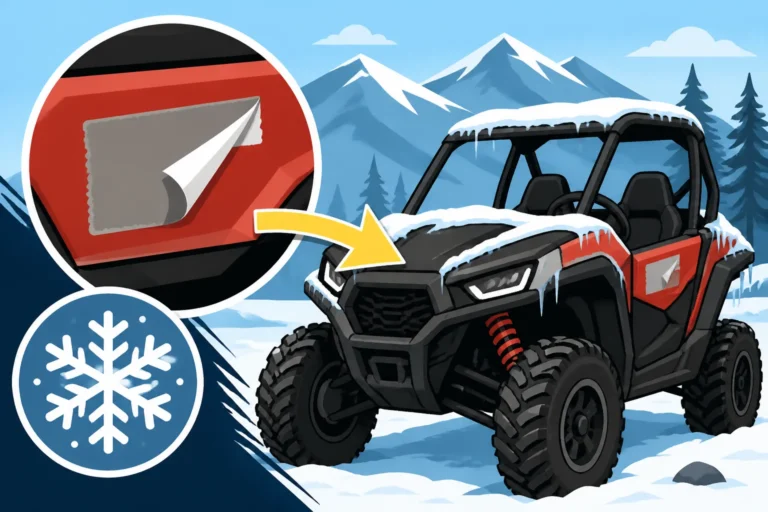
With your properly signed title and bill of sale in hand, your next stop will be your local Montana County Treasurer's office. This is where you'll register your OHV and get your [Montana OHV Decals and Rear Placement].
Here's what you'll typically need to bring:
- Signed-Over Certificate of Title: The original title, properly endorsed by the seller.
- Bill of Sale: Your proof of purchase and the price paid.
- Photo ID: Your valid Montana driver's license or state ID.
- Proof of Montana Residency: If you're a new resident, you might need additional documents. [Montana Registration for a New Resident]
- Payment: Be prepared to pay the registration fees. Montana offers a [Montana's One-Time Permanent OHV Registration] which is a great value, meaning you won't have to renew it annually. There will also be a small [Montana OHV Title Fee].
The County Treasurer's office will process your paperwork, collect the fees, and issue you a temporary registration permit and your OHV decals. Your new physical title will typically be mailed to you within a few weeks. Remember, your permanent registration decal indicates that the machine is registered to you, not the machine itself. [Why a Montana Registration Does Not Follow the Machine] means that when you eventually sell it, the registration does not transfer to the new owner.
| Document | Purpose | Where to Get It | Key Info to Check |
|---|---|---|---|
| Montana Certificate of Title | Proof of legal ownership | From Seller at Auction (Original) | Seller Name Matches, Clear of Liens, VIN Matches Machine |
| Bill of Sale | Record of transaction, proof of purchase price | From Seller at Auction (Auction House or LawDepot Template) | Buyer/Seller Info, VIN, Price, Date, "As-Is" Clause, Signatures |
| Photo ID | Identity verification for registration | Your Valid Driver's License/State ID | Current and Valid |
| Payment | Fees for title transfer and registration | Cash, Check, or Card (check with Treasurer's office for accepted methods) | Sufficient funds for all required fees |
What if You Face Problems?
Sometimes, despite your best efforts, you run into a snag.
- Missing Signatures/Errors: If you discover a problem with the title after leaving the auction, you'll need to contact the seller. This can be difficult if they're no longer accessible. The auction house might be able to help mediate, but they're not legally obligated.
- Bonded Title Process: If you can't get a proper title from the seller, and the machine qualifies (usually based on value and age), you might need to pursue a bonded title. This means contacting the Montana Department of Justice's Motor Vehicle Division. You'll apply, provide your proof of ownership (like the bill of sale), get a VIN inspection, and then purchase a surety bond. It's a bureaucratic process that can take weeks or months.
- Penalties for Unregistered OHV: Be aware that riding an unregistered OHV on public lands in Montana can lead to [Penalties for an Unregistered OHV in Montana], including fines. Do not take your new auction machine out on the trails until you have at least a temporary registration.
Buying a quad at a Montana ranch auction can be a rewarding experience, offering unique machines and potential savings. However, it requires a sharp eye for both mechanical condition and, especially, for proper documentation. By preparing ahead of time and being diligent about the paperwork, you can ensure your auction find becomes a fantastic addition to your Montana outdoor adventures.
Disclaimer
This article is for general informational purposes only and does not constitute professional advice. Laws, prices and regulations vary by location and change over time. Consult a qualified professional for guidance on your specific situation.