Buying From a Montana Dealer: What They File
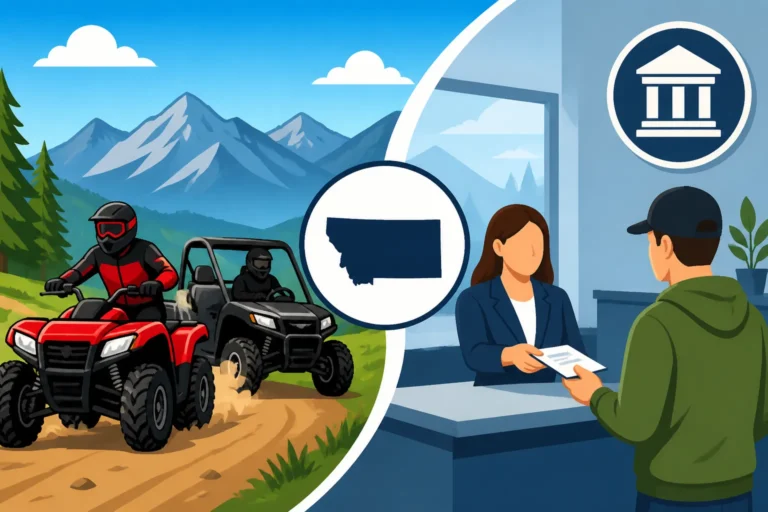
Buying a new or used ATV or UTV is an exciting adventure, especially when you're looking forward to hitting those amazing Montana trails! But let's be honest, the excitement can quickly turn into a headache when you start thinking about all the paperwork. Many folks wonder exactly what a Montana powersports dealer takes care of behind the scenes, and what responsibilities fall squarely on their shoulders as the new owner. This guide is here to untangle that knot, meticulously breaking down the specific documents and filings a Montana dealer handles for you, so you can confidently drive off with your new machine, ready for adventure.
The Initial Paperwork: What Happens at the Dealership Desk
When you're sitting across from the sales associate, buzzing with the anticipation of your new side-by-side or quad, a stack of papers will inevitably land in front of you. Don't let it overwhelm you! Most of these documents are standard procedure, designed to protect both you and the dealer, and to ensure a smooth transfer of ownership. The dealer takes on the heavy lifting of preparing these, but understanding what you're signing is always a smart move.
The Purchase Agreement and Bill of Sale
These are arguably the most fundamental documents you'll encounter. The purchase agreement is essentially the contract outlining the terms of the sale: the price of the machine, any trade-in value, additional accessories, financing details, and often an itemized breakdown of fees. It’s the master plan for the transaction. Every dollar and every agreement point should be clearly laid out here. Before you initial or sign anything, take your time to read through it, line by line. It's easy to get swept up in the excitement, but this is where you confirm all the numbers match what you discussed.
The bill of sale, on the other hand, is the formal proof of ownership transfer. It states who sold what to whom, for how much, and on what date. While the purchase agreement might have more intricate details about the deal, the bill of sale is the critical document proving you legally own the machine. For a Montana dealer, preparing a comprehensive bill of sale is standard practice. They'll ensure it includes the full legal names and addresses of both parties (the dealership and you), the complete VIN of the ATV or UTV, the purchase price, and the date of sale. This document is absolutely vital for your records and for proving ownership later, whether you're registering the machine or, down the road, selling it yourself. It’s also what your home state will look at if they’re assessing use tax, even if Montana doesn't have a general sales tax.
Odometer Statements and Disclosure Forms
Especially if you're buying a used ATV or UTV, the dealer has specific responsibilities regarding the machine's history. An odometer statement is a legal requirement for most motor vehicles, including ATVs and UTVs, if they are subject to titling laws that require odometer disclosure. This document certifies the mileage shown on the machine's odometer at the time of sale. For newer machines, this might be a simple affirmation of low mileage, but for older or more heavily used units, it provides a clear record. Dealers are obligated to provide an accurate statement and to disclose any known discrepancies or if the odometer reading is not the actual mileage (e.g., if it's broken or replaced).
Beyond mileage, dealers are also responsible for disclosure forms that highlight any significant known issues or title discrepancies. This is where you'd learn if a used machine had a [Salvage and Rebuilt Machines in Montana] title, indicating it was previously deemed a total loss by an insurer. Dealers must inform you of such critical details to ensure you're making an informed purchase. They'll typically have you sign off on these disclosures, acknowledging you've been made aware of them. This transparency is one of the distinct advantages of buying from a licensed dealer versus a private party, where such disclosures might be less formal or even overlooked.
Dealer Responsibilities for Montana Registration and Titling
This is where a good dealer truly earns their keep. Navigating the world of vehicle registration and titling can be a maze, but Montana dealers are well-versed in the process and typically handle a significant portion of it on your behalf. This saves you valuable time and helps ensure all the "i's" are dotted and "t's" are crossed, so you can focus on planning your first ride.
Applying for Your Montana Title
In Montana, all off-highway vehicles (OHVs) that operate on public lands must be registered and titled. When you purchase an OHV from a Montana dealer, they are generally responsible for initiating the title application process. This means they will prepare and submit the necessary forms, like the Montana Application for Certificate of Title (Form MV100), along with supporting documents. These supporting documents typically include the Manufacturer's Certificate of Origin (MCO) or Manufacturer's Statement of Origin (MSO) for a new machine, or the previous owner's signed-over title for a used one. They'll also include the official bill of sale from the dealership.
The dealer will typically forward these documents to the appropriate [Montana County Treasurer OHV Registration] office. While you might pay a title fee at the dealership, the actual processing is done by the county. It’s the dealer’s job to get that initial paperwork to the right place. They act as the intermediary, ensuring your official proof of ownership starts its journey through the state system. It's a critical step, as you cannot legally register or operate your OHV on public land without a valid title in your name. For more on the overall process, you can read about [Titling an OHV in Montana].
Facilitating Your OHV Registration
Alongside the title application, the dealer will also facilitate your OHV registration. In Montana, this usually involves collecting the necessary registration fees, which cover your [Montana's One-Time Permanent OHV Registration] and the annual OHV trail pass. Many dealers will provide you with a temporary registration document or tag right on the spot. This allows you to legally operate your new machine for a short period while the permanent paperwork is being processed by the county treasurer. This temporary tag is a huge convenience, meaning you don't have to wait weeks before taking your new ride out.
The dealer ensures that all the required information for registration—your name, address, the machine's VIN, etc.—is accurately transferred from the purchase documents onto the registration forms. Once the County Treasurer's office processes your application, you will eventually receive your official Montana title and your permanent OHV registration decals in the mail. The decals are crucial for displaying on your machine, proving it's properly registered and ready for the trails. Understanding the cost breakdown can be helpful, so check out [Montana OHV Registration Cost at the Treasurer].
Tax Implications and Dealer Filings
One of Montana's most talked-about features, especially for out-of-state buyers, is its lack of a general sales tax. This significantly impacts the financial side of buying an OHV, and dealers play a key role in explaining what this means for your transaction and what, if anything, they file in relation to taxes.
Montana's No Sales Tax Advantage
It's true – Montana does not have a general sales tax. This is a massive benefit when you're purchasing a large item like an ATV or UTV. When you buy from a Montana dealer, you won't see an additional percentage tacked onto the purchase price for state sales tax. The price you negotiate for the machine itself, plus any standard registration and titling fees, is what you'll pay at the counter. The dealer, therefore, doesn't have to collect or remit sales tax to the state of Montana on your behalf. This makes the transaction considerably simpler and often more affordable than in states with high sales tax rates. For a deeper dive into this, check out [No Sales Tax on a Montana Machine Purchase] and [Why Montana Has No General Sales Tax].
What the dealer will file, in this context, are their internal sales records and any federal tax documents related to their business operations, but these do not involve collecting sales tax from you for the state. This streamlined process is a big draw for many buyers, both local and those traveling to Montana specifically for a vehicle purchase.
Understanding Potential Use Tax for Out-of-State Buyers
While Montana dealers don't collect sales tax, it's crucial for out-of-state buyers to understand that this doesn't necessarily mean your purchase is tax-free forever. Most states have a "use tax" that applies to items purchased outside the state and brought back for use within the state. This use tax is typically equivalent to your home state's sales tax. While a Montana dealer is not responsible for collecting or remitting your home state's use tax, many reputable dealers will inform out-of-state buyers about this potential liability. They often encourage you to check with your local Department of Revenue or DMV regarding your specific state's laws.
The dealer's primary responsibility here is to provide you with a clear and accurate bill of sale, as this document will be vital if your home state requires you to pay use tax. It provides undeniable proof of the purchase price, which your home state will use to calculate any taxes owed. While the dealer won't file anything with your home state, having a comprehensive paper trail from the dealership is your best defense and documentation. If you ever need to create a similar, legally sound document for your own future transactions, resources like LawDepot can be incredibly helpful for drafting clear, compliant legal forms, offering templates for bills of sale that you can customize for private party sales, ensuring all necessary details are included. Knowing what [Use Tax Your Home State Still Wants] is important, as is understanding [Paying Your Own State After a Montana Purchase].
Financing and Liens: What Dealers Process
For many buyers, financing an ATV or UTV is a necessary step. When you arrange financing through a dealer, they become a central player in coordinating with the lender and ensuring all the financial paperwork is correctly processed. This involves everything from loan applications to securing the lender’s interest in the machine.
Managing Loan Documents and Lien Filings
If you're financing your OHV through the dealership, they will facilitate the entire loan application process. This means gathering your financial information, submitting it to various lenders they partner with, and presenting you with financing options. Once a loan is approved and you sign the agreement, the dealer is responsible for submitting all the necessary loan documents to the lender. This includes the finalized purchase agreement, any credit applications, and the signed promissory note.
A crucial part of this process is the lien filing. When you finance a vehicle, the lender places a lien on the title to secure their interest. The dealer's responsibility includes ensuring that the lender's lien is properly recorded with the state of Montana when the title application is submitted. This means that the title certificate, when issued, will show the lienholder's name. This process protects the lender until the loan is paid off in full. For a full picture of financing, you can look at [Financing a Side-by-Side in Montana], and specifically how the lien process works in [Liens on a Montana OHV Title]. This meticulous handling by the dealer ensures that the lender's interest is secured and that the machine can eventually be fully yours once the loan is satisfied.
Completing Secure Transactions
One of the biggest advantages of buying from a dealer, especially for a large purchase like an ATV or UTV, is the security and transparency of the transaction. Dealers operate under state licensing and regulations, meaning they have established procedures for handling funds and paperwork. They use secure methods for processing payments, whether it's through credit card machines, bank transfers, or handling cashier's checks. This minimizes the risk of fraud or issues that can sometimes arise in private party sales.
Unlike a private transaction where you might be unsure about [When the Seller Never Signed] the title or if the machine actually belongs to them, a dealer provides a clean, verifiable chain of ownership. They are required to have clear title to the machines they sell, or at least a documented process for obtaining it quickly. This peace of mind is invaluable. The dealer's legal obligation to follow specific protocols means you can be confident that the machine you're buying is legitimately theirs to sell and that your payment is going through a proper, secure channel.
Post-Sale Documentation for Your Records
After the excitement of driving your new machine off the lot, it’s important to understand what documents you should immediately have in hand and what you should expect to arrive later. Keeping organized records is key, not just for legal compliance, but also for any future transactions or inquiries you might have.
What You Should Take Home from the Dealer
Before you even leave the dealership, make sure you have a clear understanding of the documents you're taking with you. This isn't just a suggestion; it's a vital step for your own protection and peace of mind. Here's a quick checklist of what you should walk out with:
- Copy of the Final Purchase Agreement: This should reflect all the agreed-upon terms, prices, and any add-ons. It's your official record of what you paid and what you agreed to.
- Original or Certified Copy of the Bill of Sale: This is your proof of purchase and essential for registration and titling. Ensure it has the correct VIN, purchase price, and dealer information.
- Odometer Statement (if applicable): For used machines, this verifies the mileage at the time of sale.
- Temporary Registration/Permit: If provided, this allows you to ride legally until your permanent registration and decals arrive. Make sure you know its expiration date.
- Proof of Insurance: If you arranged insurance before leaving, you'll want this in your possession. You'll definitely want to ensure you have [Insuring an ATV in Montana] coverage before hitting public trails.
- Lien Holder Information: If you financed, know who your lender is and keep their contact information handy.
Keep all these documents organized in a safe place. A dedicated folder or digital scan can be a lifesaver if you ever need to reference them quickly. While a dealer ensures these documents are accurately generated, it's your responsibility to keep them secure.
What to Expect in the Mail
Once the dealer has submitted all your paperwork to the County Treasurer's office, there's a waiting period. The most important documents you'll be waiting for in the mail are your official Montana title certificate and your permanent OHV registration decals. The title certificate is the ultimate proof of ownership. It can take some time to arrive, sometimes a few weeks, sometimes longer, depending on the volume of work at the county office. If you're wondering how long it might take, check out [How Long a Title Takes to Arrive].
The registration decals, which you'll need to affix to your machine, confirm that your OHV is properly registered for use on public lands. For information on where these decals specifically go, you can read [Where a Montana OHV Decal Goes]. If you've financed your machine, the original title with the lienholder listed will often be sent directly to your lender, and you might receive a copy for your records. If your title or decals don't arrive within the expected timeframe, don't hesitate to contact the dealership first, as they can often help you track the status of your application with the County Treasurer. Should the title somehow go missing, there's a process for [Replacing a Lost Montana Title].
Dealer vs. Private Sale Paperwork: A Quick Comparison
To help you visualize the differences, here’s a breakdown of who generally handles what when buying an OHV in Montana. This table highlights the advantages of buying from a dealer, particularly concerning the paperwork burden.
| Aspect | Buying from a Montana Dealer | Buying from a Private Seller |
|---|---|---|
| Purchase Agreement | Dealer prepares comprehensive agreement; buyer reviews and signs. | Buyer and seller negotiate terms, often verbally or via simple text. May use a basic handwritten note or a template from a resource like LawDepot. |
| Bill of Sale | Dealer provides official, detailed bill of sale with all required information. | Seller provides (or buyer requests) a bill of sale. Quality and detail can vary widely. Buyers might consider using a template from a site like LawDepot for clarity. |
| Odometer Statement | Dealer provides legally required odometer disclosure for used machines. | Seller may provide a statement, but it's not always legally formalized; buyer should insist on it. |
| Title Application | Dealer submits all necessary documents (MCO/MSO or previous title, bill of sale) to County Treasurer. | Seller provides signed-over title; buyer is responsible for submitting all documents to County Treasurer. |
| Registration | Dealer facilitates fee collection, often provides temporary registration, and initiates permanent registration process. | Buyer is solely responsible for paying fees and completing registration at the County Treasurer. |
| Sales Tax (MT) | No sales tax collected by dealer. | No sales tax collected by seller. |
| Use Tax (Out-of-State) | Dealer may inform buyers of potential liability; provides bill of sale for buyer's documentation. | Seller has no responsibility; buyer must understand and self-report. |
| Lien Filings | Dealer coordinates with lender to ensure lien is properly recorded on title. | Buyer coordinates directly with lender to ensure lien is filed correctly. |
| Documentation Quality | Professional, standardized, and legally compliant forms. | Varies widely; can be informal, potentially incomplete, or incorrect. |
Ultimately, buying an ATV or UTV from a Montana dealer offers a significant advantage in terms of paperwork. They are equipped and required to handle the majority of the administrative burden, from drawing up detailed purchase agreements to initiating your title and registration. This allows you, the buyer, to spend less time worrying about bureaucracy and more time enjoying the vast, incredible landscapes Montana has to offer on your new machine.
Disclaimer
This article is for general informational purposes only and does not constitute professional advice. Laws, prices and regulations vary by location and change over time. Consult a qualified professional for guidance on your specific situation.