Fines for an Unregistered Machine in Montana
It’s a scenario many Montana ATV and UTV owners can find themselves in, often without even realizing the risk: you’ve got a machine, you ride it, and maybe you figure if it’s mostly on private land or just short hops, you don’t really need to bother with all that registration paperwork. But in Big Sky Country, that assumption can lead to a lot of headaches, and more importantly, some pretty hefty fines. This guide will walk you through the serious consequences of operating an unregistered off-highway vehicle (OHV) in Montana, helping you understand the rules and avoid those costly mistakes.
Why Your OHV Absolutely Needs Registration in Montana
Montana is vast, beautiful, and full of incredible places to ride, but with that freedom comes responsibility. Many folks mistakenly believe that registration is only for machines that see extensive road use or are taken to state trails every weekend. The truth is, Montana's rules are quite clear, and ignoring them can quickly turn a fun day out into a financially painful lesson.
The Law's Expectation for Every Rider
Think of it this way: when you buy a car, you don't just drive it off the lot without registering it, right? The same principle generally applies to ATVs and UTVs in Montana, especially if you plan to use them on any public land, which includes things like Forest Service roads, BLM land, designated trail systems, and even just crossing a county road from one section of your ranch to another. The state wants to know who owns these machines for various reasons, from ensuring responsible recreation to aiding in theft recovery. Even if your machine is primarily a ranch hand, if it ever touches public ground, it needs to be registered.
It’s easy to think, "Oh, I'm just putting around my 40 acres, who's going to know?" But what happens when you need to cross the county road to get to your neighbor's property, or you venture onto a forest road that looks like private ground but isn't? These are the moments when a lack of registration can catch up with you. The state's interest is in managing public resources and ensuring everyone plays by the same rules, which means properly registered machines. You can learn more about the process in our guide on [Registering an OHV in Montana].
What "Unregistered" Truly Means
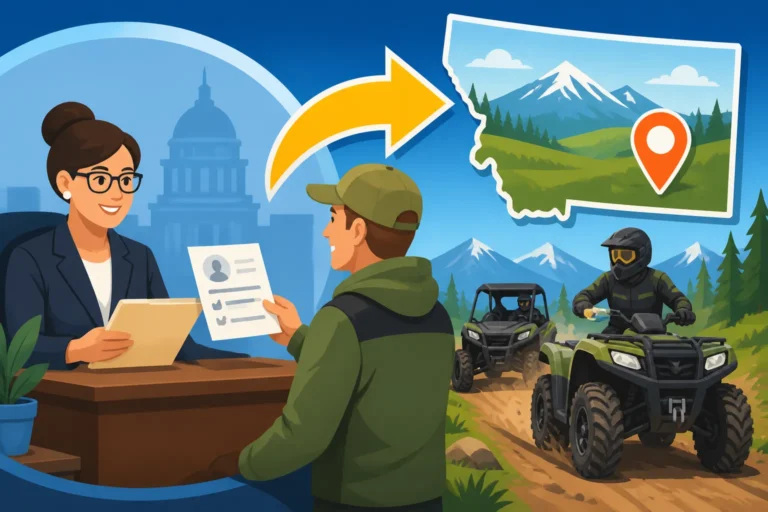
Being "unregistered" isn't just about missing a sticker; it means the machine hasn't gone through the formal process with the county treasurer's office. This process involves proving ownership, paying the necessary fees, and receiving your permanent registration certificate and the all-important OHV decal. That decal is your visual proof that you've done your due diligence. Without it, or the accompanying paperwork, your machine is essentially invisible to the state's system.
Many people think of "permanent" registration as a one-and-done deal, and for the most part, it is for the life of your ownership. But it still needs to be done. It's not just a suggestion; it's a legal requirement for public land use. This registration also contributes to maintaining the very trails and access points we all enjoy. We delve deeper into what this means in [What Permanent Registration Actually Buys You]. If you've just bought a machine, especially from a private seller, making sure it gets registered in your name is one of the very first things you should do to avoid issues.
The Slippery Slope of "Just This Once"
We've all been there: a quick trip to the mailbox at the end of the driveway, which happens to be across a county road. Or maybe you're moving your machine from one pasture to another and decide it's easier to just drive it down the shoulder for a short stretch. These small, seemingly harmless deviations can put you squarely in violation of registration laws. Montana Fish, Wildlife & Parks wardens, sheriff's deputies, and even local police departments are familiar faces in many riding areas, and they are trained to spot unregistered machines.
It only takes one interaction to turn "just this once" into a citation. Imagine you're out enjoying a beautiful Montana afternoon, perhaps just pulling a small trailer with firewood down a well-used gravel forest road near Flathead Lake. A warden spots your machine, notices the missing decal, and suddenly your peaceful ride is interrupted by a stop. The excuse of "I was only going a short distance" or "I didn't think this was public land" won't prevent a ticket. It’s critical to remember that if you're on public land, or a public right-of-way, your OHV needs to be registered.
The Nitty-Gritty of Montana Penalties
Nobody wants to face a fine, and the penalties for operating an unregistered OHV in Montana are designed to be a deterrent. These aren't just minor inconveniences; they can hit your wallet hard and create a lot of stress.
Initial Fines and Citations
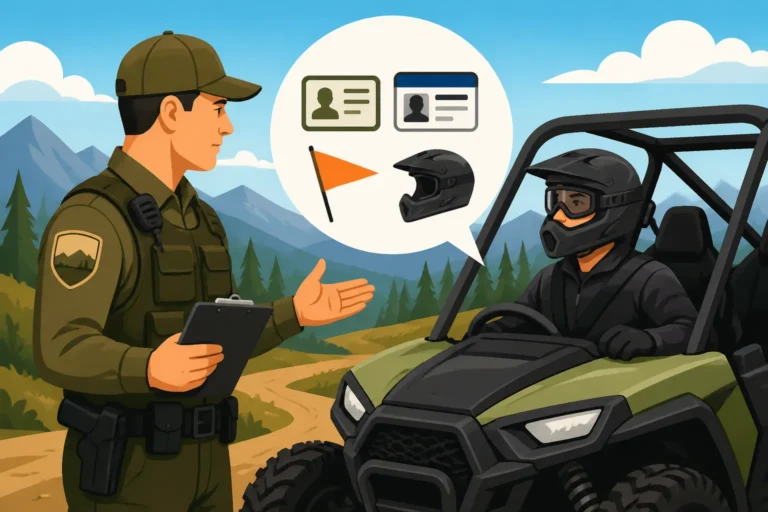
When a law enforcement officer encounters an unregistered OHV on public land in Montana, the first step is typically a citation. The amount of the fine can vary, but generally, it's a set figure that acts as a base penalty. This isn't a small parking ticket; these fines are significant enough to make you wish you'd gone through the registration process in the first place. Officers are looking for the current decal, proof of registration, and sometimes even proof of ownership. If any of these are missing or incorrect, you're at risk.
The fine isn't just a slap on the wrist; it's a financial penalty intended to enforce compliance. For example, you might be pulled over on a backcountry road in the Custer Gallatin National Forest while heading to a favorite fishing spot. An officer checks your machine, sees no current registration decal, and writes you a ticket. This immediate financial hit can quickly sour any outdoor adventure.
Additional Complications and Costs
Beyond the initial fine, there can be additional layers of frustration and expense. In some cases, especially if there are other violations involved (like operating on closed trails, reckless driving, or repeated offenses), law enforcement might even have the authority to impound your machine. Imagine having your prized side-by-side or ATV towed away from a remote trailhead. Retrieving an impounded vehicle is a lengthy and costly process that involves towing fees, storage fees, and often proof of current registration before release.
Think about the time investment: you'll likely have to appear in court, which means taking time off work, traveling to the courthouse, and explaining your situation to a judge. This isn't just about the money; it's about the disruption to your life and the stress of dealing with the legal system. It's a far cry from the simple, one-time trip to the county treasurer that could have prevented all of it.
Impact on Future Registration and Insurance
While an unregistered OHV citation might not permanently "mark" your record in the same way a traffic felony would, it can still have ramifications. Repeat offenses certainly won't put you in good standing with local law enforcement, and if you're ever involved in an incident, an unregistered status could complicate matters.
More critically, consider your insurance. If you're involved in an accident on public land with an unregistered machine, your insurance provider might have grounds to deny a claim. Most policies require that the vehicle be legally operated. An unregistered status could be a major hurdle to getting your repairs covered or protecting yourself from liability in an accident. Always ensure you have adequate coverage, and that your machine is legally registered to avoid any loopholes. You can find more information in our article on [Insuring an ATV in Montana].
Here's a quick look at the typical situation:
| Scenario | Registration Status | Typical Outcome | Potential Additional Problems |
|---|---|---|---|
| Riding on public land, no decal | Unregistered | Citation & fine | Machine impoundment, court appearance, insurance claim denial |
| Riding on private land only | Not required | No penalty (if truly only private) | Still need proof of ownership for sale/theft; easy to mistakenly enter public land |
| Missing or expired decal, valid reg. | Registered | Citation & fine (for missing decal) | Possible confusion with law enforcement, minor inconvenience |
| Riding on public land, with decal | Registered | No penalty (for registration) | Other violations (e.g., speeding) still apply |
Beyond the Monetary Fine: Other Headaches
The financial cost of a fine is only one part of the problem. Operating an unregistered OHV can lead to a cascade of other issues that impact your ownership experience and peace of mind.
Title and Ownership Woes
Proper registration goes hand-in-hand with clear ownership. When you register your OHV, you’re also typically solidifying your title. If your machine is unregistered, it can create a murky situation regarding who officially owns it, especially if you bought it from a private party and didn’t get all the necessary paperwork. This becomes a real problem if your machine is ever stolen. How do you prove it’s yours if the state has no record of you as the owner? Law enforcement relies on registration and title records to identify rightful owners and return stolen property.
Without clear title and registration, selling the machine also becomes a nightmare. Most buyers, and certainly all reputable dealers, will insist on proper documentation. This means a clear title and proof of registration are essential for a smooth transaction. For many, a simple bill of sale might seem sufficient, but for official purposes, a proper title transfer is key. Services like LawDepot can be incredibly useful here, helping you draft a robust bill of sale and other legal documents that provide clear proof of ownership, which is crucial for titling. Our article [Titling an OHV in Montana] provides more context on this important step, and [Proof of Ownership for a Montana Title] details what you need to provide.
Insurance Implications
We touched on this briefly, but it's worth expanding. Insuring your ATV or UTV is a smart move, protecting you from property damage, theft, and liability. However, insurance policies have terms and conditions. If your machine is unregistered and you're operating it illegally on public land, your insurance company might find a clause that lets them off the hook if you have an accident. Imagine a serious collision on a trail in the Lolo National Forest. If your machine isn't properly registered, you could be left footing the bill for thousands of dollars in repairs and medical expenses, not to mention potential legal costs if another party is involved.
Insurance companies require that you operate your vehicle legally. An unregistered OHV being used on public land is not operating legally. This can invalidate your coverage, leaving you exposed to significant financial risk. Don't let a simple oversight in registration jeopardize your financial security.
Dealing with Law Enforcement
No one looks forward to being pulled over, especially when you know you've made a mistake. The experience can be stressful, embarrassing, and time-consuming. When an officer issues a citation for an unregistered OHV, it’s not just a quick exchange. They’ll need to gather your information, the machine’s details, and explain the violation. You might feel the need to argue your case, which rarely works in your favor on the side of a trail.
This interaction can escalate if you don't have other required documents, or if there are other suspected violations. The best way to avoid these unpleasant encounters is simply to be compliant. Ensure your machine is properly registered, carries its decal, and that you have all necessary paperwork on hand, as discussed in [Keeping Registration Papers on the Machine]. It not only saves you money but also ensures that any interaction with law enforcement is brief and positive, built on the foundation of responsible riding.
How to Avoid Fines and Ride Legally
The good news is that avoiding fines for an unregistered machine in Montana is straightforward. It just requires a little proactive effort and understanding of the rules.
Get Registered Promptly
The simplest and most effective way to avoid fines is to register your OHV as soon as you purchase it. Whether it's a brand-new model from a dealer or a used machine from a private seller, make the trip to your county treasurer's office a priority. Montana's permanent OHV registration simplifies things immensely by being a one-time fee for as long as you own the machine. This means you don't have to remember to renew it every year, which is a huge convenience.
When buying a used machine, ensure you get a clear title from the seller. If they've lost it, they'll need to apply for a replacement before you can register it in your name. If you've just purchased a machine, our guide on [Re-Registering a Machine You Just Bought] provides a step-by-step process to ensure a smooth transition of ownership and registration. Don't delay; the moment you take possession, consider the registration clock ticking, especially if you plan to hit the trails.
Keep Your Documents Handy
Once registered, don't just file the paperwork away and forget about it. It’s crucial to keep a copy of your registration certificate with your machine. While the decal on your machine is the visual proof, the physical document is what an officer will want to see if they pull you over. Many riders keep a laminated copy in a waterproof bag stored securely on their ATV or UTV.
This also applies to your proof of ownership, like a bill of sale. Even if you've titled and registered the machine, having a solid bill of sale as a backup, especially for a private party purchase, can be invaluable. If you're ever questioned about the machine's provenance, it helps to have that documentation ready. You can find more details on what should be included in [What a Montana Bill of Sale Should Say].
Understand Montana's OHV Rules
Beyond just registration, take the time to familiarize yourself with all of Montana’s OHV laws. This includes rules about where you can ride, age restrictions, helmet laws, and equipment requirements (like spark arresters). Ignorance of the law is never an excuse, and knowing the rules prevents accidental violations. Check county and federal land management agency websites for specific rules in the areas you plan to ride.
For instance, understanding that certain county roads are open to OHVs while others are not, or knowing that even a short section of a paved highway is off-limits, can save you from a ticket. Many resources are available from Montana Fish, Wildlife & Parks and local OHV clubs to help educate riders. Staying informed is a key part of responsible OHV operation in Montana.
Using a Service Like LawDepot for Documentation
When it comes to documenting the purchase of a used OHV, having professional-grade paperwork is essential for smooth registration and to avoid future headaches. This is where services like LawDepot can be incredibly helpful. Instead of relying on a handwritten note or a generic template, LawDepot allows you to create customized, legally sound documents like a bill of sale.
A comprehensive bill of sale drafted through LawDepot can clearly outline the terms of sale, including the VIN, sale price, and transfer of ownership details, providing robust proof for your trip to the county treasurer. This clarity prevents ambiguity and ensures that all parties understand the transaction, laying a solid foundation for getting your machine legally registered in your name. Especially if you’re buying from a private party, having this level of detail is a smart move that protects both buyer and seller. Proper documentation ensures you meet the requirements for [Montana County Treasurer OHV Registration] and helps avoid issues that could lead to fines for an unregistered machine.
Disclaimer
This article is for general informational purposes only and does not constitute professional advice. Laws, prices and regulations vary by location and change over time. Consult a qualified professional for guidance on your specific situation.