Insuring a Side-by-Side Used for Feeding Cattle
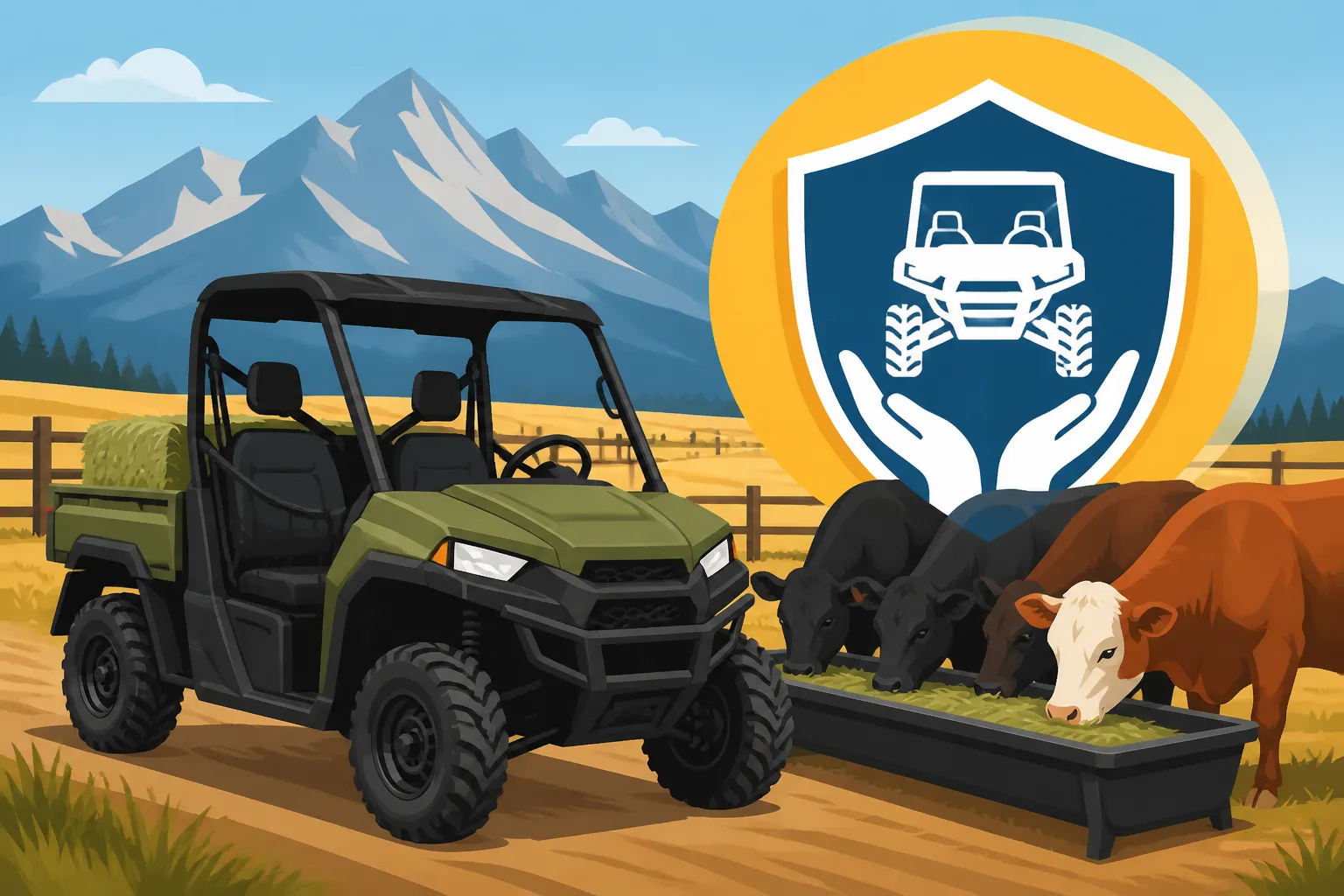
In Montana's vast ranching landscapes, a side-by-side isn't just a recreational toy; it's a vital piece of farm equipment, often working harder than a pickup truck. But when that same machine is used for everything from feeding cattle in a snowdrift to checking fence lines, figuring out the right insurance can feel like trying to herd cats in a hailstorm. This guide will walk you through the nuances of insuring your side-by-side when its primary job is working your ranch, helping you protect your investment and livelihood.
Why Your Ranch Side-by-Side Needs Special Insurance Attention
It’s easy to assume that your existing insurance policies, like your auto insurance or homeowner’s policy, will just naturally extend to cover your hard-working side-by-side. After all, it’s on your property, and you’re using it for legitimate work. However, this is a common misconception that can lead to significant financial headaches if an accident occurs. A side-by-side, or UTV, used for agricultural purposes has a very different risk profile than one used solely for trail riding, and most standard policies aren't designed to encompass these unique demands.
Think about the daily grind your machine endures. It’s not just cruising well-maintained trails; it’s traversing pastures riddled with gopher holes, navigating muddy corrals, and perhaps even pushing snow in conditions that would make a lesser vehicle quit. This intense, often rugged, usage inherently increases the risk of damage or an incident, and those specific risks often fall outside the typical definitions of "recreational use" or "personal vehicle" found in most insurance contracts. Getting this right is crucial for anyone relying on their machine for their operation.
The Gaps in Standard Policies
Most auto insurance policies are written with conventional vehicles in mind – cars, trucks, SUVs – that operate predominantly on public roads. While some might offer a very limited "off-road" rider, these often have severe restrictions on usage, horsepower, or location, making them ill-suited for a ranch UTV. They certainly won't cover damage incurred from, say, backing into a feed bunk or getting bogged down in a frozen creek while hauling supplies. The focus is usually on collisions with other vehicles or stationary objects on a paved surface, which is a far cry from the challenges your UTV faces daily.
Similarly, relying solely on your homeowner's or farm and ranch liability policy for coverage might leave you vulnerable. While these policies typically cover general liability for incidents occurring on your property, they often have exclusions for motorized vehicles, particularly those used in a commercial or quasi-commercial agricultural operation. The moment your side-by-side is deemed "equipment" rather than a "personal recreational vehicle," it can shift how a claim is assessed, potentially leaving you without coverage for damage to the machine itself or injuries it causes. It's a tricky line, and insurance companies are quite particular about how they define these things. For more details on what isn't typically covered, you might want to read [Does Homeowners Insurance Cover a Quad?].
The Realities of Ranch Work Hazards
Operating a side-by-side on a working Montana ranch introduces a host of hazards that are unique to the agricultural environment. For starters, there’s the sheer physicality of the terrain: uneven ground, hidden rocks, sudden drops, and dense brush are common. These conditions increase the likelihood of roll-overs, punctured tires, or structural damage to the UTV itself. Add to this the variable weather – from icy conditions in winter when feeding hay to dusty, dry fields in summer – and the stress on the machine, and the operator, multiplies.
Then there’s the direct interaction with livestock. Anyone who has fed cattle knows that a side-by-side can be a magnet for curious, hungry, or sometimes aggressive animals. A cow leaning against the side panel, a steer kicking out at a fender, or a herd jostling the machine while you're trying to unload feed are all real scenarios that can result in dents, scrapes, or more significant damage. Beyond property damage, there's the risk of injury to yourself, ranch hands, or even visitors who might be assisting or merely observing. Protecting against these specific, very real ranch-related risks requires a policy that explicitly understands and covers agricultural use. If you're wondering about other specific exemptions for ranch machines, check out [Montana OHV Rules for Ranch Machines] and [Farm and Ranch Exemptions in Montana].
Key Insurance Coverages for Agricultural UTVs
When your side-by-side is a working ranch vehicle, you need to think beyond basic trail riding coverage. Your insurance policy needs to be robust enough to handle the unique demands and potential liabilities that come with agricultural use. This means looking for specific types of coverage designed for the wear and tear, the equipment, and the varied environments your UTV will encounter daily on a Montana ranch. It's about ensuring that if something goes wrong, you're not left holding the bag for repairs or, even worse, for someone's medical bills.
Don't settle for a generic policy that an agent might try to push on you if they don't fully understand your needs. Be clear and upfront about how you use your machine. Many insurers offer specialized endorsements or entirely separate policies tailored for farm equipment, which is often the best route to comprehensive protection. It might take a bit more digging, but the peace of mind is well worth the effort.
Liability Protection for On and Off the Ranch
Liability coverage is arguably the most critical component of any insurance policy, and it's especially vital for a side-by-side used in agricultural operations. This coverage protects you financially if your UTV causes bodily injury or property damage to another person. On a ranch, "another person" could be a hired hand, a visiting family member, a delivery driver, or even a trespasser. For example, if your side-by-side accidentally backs into another vehicle parked on your property, or if a bystander is injured by flying debris while you're doing field work, liability coverage would kick in to cover medical expenses or repair costs, up to your policy limits.
Furthermore, if you ever use your side-by-side to cross county roads, even briefly, or move between different parcels of your land, your liability needs change again. Many Montana county roads allow for limited OHV use, but liability for such incidents can be complex. [Liability Insurance for Montana Road Riding] is a good resource to review. The stakes are high; a serious incident could lead to significant legal fees and judgments against you, potentially jeopardizing your ranch's financial stability. Ensure your policy's liability limits are adequate for the risks involved, and explicitly confirm that the coverage extends to your agricultural activities, both on and off your private property when legally permissible.
Physical Damage Coverage for Your Workhorse
While liability protects others, physical damage coverage protects your valuable side-by-side itself. This typically breaks down into two main types: collision and comprehensive. Collision coverage pays for damages to your UTV resulting from an impact with another vehicle or object, like hitting a fence post while backing up a trailer of feed, or rolling the machine while climbing a steep, muddy incline. Given the rugged nature of ranch work, collision incidents are a very real and frequent possibility.
Comprehensive coverage, on the other hand, protects against non-collision incidents. This could include damage from theft, vandalism, fire, or natural disasters like hail storms or floods – all common occurrences in Montana. It also covers damage from encounters with animals, which, as any rancher knows, is a daily hazard. Imagine a deer running into your UTV on a remote track, or a curious calf chewing on your wiring harness – comprehensive coverage would be your ally. For advice on what information insurers will need to properly assess your coverage needs, particularly if your machine is ever stolen, check out [What Insurers Ask After a Theft]. Without this coverage, every dent, scrape, or mechanical failure from an unforeseen event comes directly out of your pocket, potentially disrupting your ability to keep your ranch running smoothly.
Specialized Equipment and Attachments
A side-by-side on a ranch is rarely a standalone machine; it's often a platform for a variety of essential attachments. From front-end loaders and snowplows to sprayers, seeders, and specialized feed bunks, these accessories turn your UTV into a multi-purpose workhorse. The problem is, many standard ATV/UTV policies might not automatically cover the value of these expensive additions, or they might only offer very limited coverage. If your sprayer attachment gets damaged beyond repair, or your plow is bent beyond recognition, you need to know it's covered.
When discussing insurance with your agent, be sure to provide a detailed list and estimated value of all permanently attached or frequently used accessories. Some insurers offer specific "equipment coverage" or "implement of husbandry" riders that can be added to your policy to ensure these valuable tools are protected. Without this, you could face substantial out-of-pocket costs to repair or replace vital equipment. It's not just about the UTV itself; it's about all the gear that makes it an indispensable part of your ranching operation. For broader considerations, especially if you're registering multiple machines for business use, you might find [Registering an OHV Under a Montana Business] helpful.
| Coverage Type | What it Typically Covers | Why it's Important for Ranch UTVs |
|---|---|---|
| Liability | Injuries/damage to others caused by your UTV. | Protects against lawsuits from ranch hands, visitors, or road incidents. |
| Collision | Damage to your UTV from impacts with objects/vehicles. | Essential for frequent bumps, scrapes, and accidental impacts on rough terrain. |
| Comprehensive | Damage to your UTV from non-collision events (theft, fire, animals, weather). | Guards against deer strikes, hail damage, animal interaction, or vandalism. |
| Equipment/Accessory | Damage/theft of attached plows, sprayers, feed bunks, etc. | Ensures your valuable tools and attachments are covered, not just the base vehicle. |
| Uninsured/Underinsured Motorist | Damage/injuries to you/your UTV if hit by an uninsured driver. | Relevant for any public road use, protecting you from others' lack of coverage. |
Navigating the Policy Process for Ranch Machines
Securing the right insurance for your ranch side-by-side might seem daunting, especially with all the specifics we’ve discussed. However, with a clear understanding of your needs and the right approach, you can ensure your invaluable workhorse is properly protected. It’s not just about getting a policy; it’s about getting a tailored policy that truly reflects the reality of your machine's daily grind on a Montana ranch. This process starts with open and honest communication with insurance professionals who understand the nuances of agricultural operations.
Remember, insurance is there to mitigate risk. For a rancher, those risks are constant and varied, from the weather to livestock to the demands of the land itself. Investing the time now to get your policy right can save you a world of trouble and expense down the line, ensuring that your UTV continues to be an asset rather than a potential liability. Being proactive and informed is your best strategy in this often-complex landscape.
Talking to Your Agent
The most crucial step in insuring your ranch UTV is having a detailed and explicit conversation with your insurance agent. Don't just say, "I need to insure my side-by-side." Instead, explain its primary function: "I use this Polaris Ranger almost daily for feeding cattle, hauling fencing supplies, checking water lines, and occasionally crossing the county road between my pastures." Be very clear about the agricultural nature of its use. This distinction is vital because it might trigger different policy options or endorsements than a standard recreational UTV policy.
Ask specific questions: "Does this policy cover damage if I hit a fence post while backing up a hay bale?" or "Am I covered if a cow kicks the side of the UTV?" Discuss any heavy-duty attachments or modifications you've made. Some agents might automatically try to put you on a recreational policy, so you need to be firm and ensure they understand it's an agricultural implement first and foremost. A good agent, especially one familiar with farm and ranch policies in Montana, will guide you toward the right product. For general insurance needs, you might also find [Insuring an ATV in Montana] a useful read before you dive into the specifics of ranch use.
Comparing Providers and Customizing Policies
Not all insurance providers are created equal, especially when it comes to specialized coverage for agricultural equipment. Some companies might have extensive experience with farm and ranch policies, while others might mostly cater to recreational users. It's worth comparing quotes and coverage options from a few different providers to find the best fit for your unique situation. Don't be afraid to get multiple quotes and ask for line-by-line breakdowns of what is and isn't covered.
Many providers will allow for customization. You might be able to add riders for specific perils, increase liability limits, or add coverage for specialized equipment. This is where being thorough in your initial conversation with the agent pays off. You might find that one insurer categorizes your UTV as "farm machinery" and offers a more comprehensive package, while another insists on treating it as a "recreational vehicle" with limited work use coverage. Look for policies that explicitly mention "agricultural use," "farm implements," or "commercial UTV" in their descriptions. Tools like LawDepot can also be useful for creating specific use agreements or liability waivers for anyone operating your UTV on the ranch, adding another layer of protection.
Keeping Your Policy Up-to-Date
Once you've secured your policy, the work isn't over. Ranch operations are dynamic, and your insurance needs can change. It’s good practice to review your policy annually with your agent, or whenever significant changes occur on your ranch. Did you purchase a new, expensive attachment for your side-by-side? Did you expand your acreage, requiring the UTV to cover more ground or cross different types of roads? Did you hire new ranch hands who will be operating the machine? These are all factors that could impact your coverage.
If you make major modifications to the UTV itself, like an engine swap or significant frame alterations, inform your insurer. Also, be mindful of any state or local regulations that might affect your UTV's use, especially if it's ever on public roads. For example, [Using a UTV for Ranch Work on a Road] and [Hauling Hay by UTV on a County Road] highlight specific scenarios that might have insurance implications. Keeping your policy current ensures that you maintain continuous, appropriate coverage, protecting you from unexpected gaps and ensuring your ranch side-by-side remains a reliable workhorse without becoming a financial risk.
Disclaimer
This article is for general informational purposes only and does not constitute professional advice. Laws, prices and regulations vary by location and change over time. Consult a qualified professional for guidance on your specific situation.